Avoiding common structural steel erection mistakes is critical to project safety, cost control, and long-term performance. From improper structural steel connection details to misunderstandings of structural steel properties, small errors can lead to major delays and rework. This guide highlights key risks, practical prevention tips, and what buyers should know when working with a reliable structural steel manufacturer or structural steel supplier.
Why structural steel erection errors create costly project risks
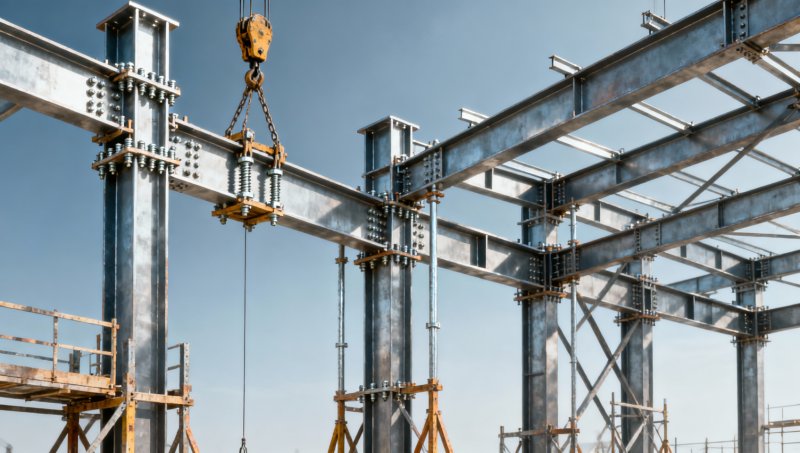
Structural steel erection is not only an installation stage. It is the point where design intent, fabrication accuracy, site management, and safety execution must align. In most steel projects, even a small mismatch of hole position, member orientation, or bolt sequence can trigger a chain reaction across 3 critical areas: schedule, safety, and cost. For project managers, technical reviewers, and procurement teams, this means erection quality must be planned before the first truck arrives on site.
A common mistake is assuming that erection problems begin on site. In reality, many failures start earlier, during drawing review, material selection, or supplier communication. If structural steel members are fabricated to one standard while the project team inspects to another, confusion follows. This is especially important for international sourcing, where ASTM, EN, JIS, and GB references may appear in the same project documentation.
For contractors and end users, the most damaging issue is rework. A 2-stage installation may become a 4-stage corrective process if braces are installed in the wrong order or if temporary stability was not considered. Rework affects crane time, labor allocation, welding inspection, and downstream trades. It also increases the risk of coating damage, dimensional distortion, and nonconforming connections.
For buyers and decision-makers, the lesson is clear: structural steel erection quality depends on supplier reliability as much as field execution. A professional structural steel manufacturer with stable production control, consistent tolerances, and export experience can reduce avoidable site issues before the shipment leaves the factory.
Where mistakes usually begin
- Drawings are not fully coordinated between fabrication, erection, and connection detailing teams.
- Member marking, packing sequence, and bundle identification are unclear for fast site handling.
- Tolerance expectations are not agreed in advance, such as ±1% dimensional tolerance or permitted alignment deviation.
- Temporary bracing, lifting points, and erection sequence are not reviewed before mobilization.
What are the most common structural steel erection mistakes to avoid?
The most frequent structural steel erection mistakes are rarely dramatic at first. They usually appear as “minor” issues: one beam rotated incorrectly, one set of bolts mixed, one connection left finger-tight too long, or one column base set outside the intended tolerance range. Yet these small errors can compromise frame stability during the first 24–72 hours of erection, when the structure is most vulnerable.
Another repeated problem is misunderstanding structural steel properties in the field. Operators may treat all sections as if they have the same stiffness, weight distribution, or edge condition. In fact, hot rolled members, cold formed profiles, galvanized sections, and perforated components all behave differently during lifting, alignment, and connection. The wrong handling method can damage coatings, deform thin sections, or misalign connection points.
Connection-related mistakes are especially expensive. Improper bolt installation, wrong washer orientation, poor weld preparation, or unverified fit-up can delay an entire steel frame. For quality control teams, at least 5 checks should be standard before sign-off: member identification, connection plate position, bolt grade, hole condition, and final alignment. Skipping these checks creates hidden defects that surface later during cladding, equipment mounting, or service loading.
The table below summarizes the structural steel erection mistakes that most often affect safety, cost, and project continuity.
These issues are preventable when procurement, engineering, and erection teams work from the same technical package. That package should include connection details, marking plans, material grade confirmation, and a defined inspection path from factory to site. In steel construction, coordination is often the cheapest risk-control tool.
A practical site checklist before lifting begins
- Confirm the latest approved drawing revision and erection sequence.
- Verify member tags, quantities, and packing list against unloading records.
- Check base levels, anchor bolt positions, and initial alignment tolerances.
- Inspect bolts, connection plates, weld areas, and surface condition before assembly.
- Review temporary bracing and crane handling points for the first 3–5 lifts.
How material choice and section type affect erection quality
Not all steel sections create the same erection challenges. Heavy steel beams, channel steel, angle steel, and cold formed profiles each require different handling logic. Thin-wall or perforated members can be more sensitive to local deformation during lifting or stacking, while larger rolled sections require stronger rigging control and more precise sequencing. This is why technical assessment should begin before procurement is finalized.
In many building and light industrial applications, secondary framing members play a major role in erection speed. Purlins, wall beams, brackets, and lightweight roof trusses are often installed in large quantities, so consistency matters. A section with stable dimensions, suitable coating, and predictable hole layout can reduce installation interruptions across dozens or even hundreds of connection points.
For projects using cold formed support components, C Sections Steel can be a practical option in purlins and wall beams of steel structure buildings, as well as in lightweight roof trusses, brackets, and some mechanical light industry applications. Available materials commonly include Q195, Q235, Q345, A36, SS400, and S235JR, with thickness ranges from 1mm to 12.mm and standard lengths of 6m, 9m, and 12m. Large quantity customization is also typical when project schedules and cutting plans require it.
From an erection perspective, buyers should also review whether the section is perforated, galvanized, powder coated, or supplied with black varnish. Surface treatment influences storage, handling, and post-installation touch-up requirements. Processing services such as bending, welding, punching, decoiling, and cutting can simplify site work when coordinated early with the manufacturer.
Key technical points to compare before ordering steel sections
The following comparison helps procurement teams, estimators, and engineers review section characteristics that directly affect erection efficiency and field risk.
For many buyers, the real value is not only section price per ton. It is the total installed outcome: fewer field cuts, fewer alignment delays, and fewer coating repairs. When evaluating a structural steel supplier, these factors often matter more than a small unit price difference.
Standards and certifications to review
- Check whether the supplied section can align with project references such as ASTM, EN, JIS, or GB.
- For exported products, request available certification records such as CE, SGS, BV, or ISO when required by the project or buyer process.
- Confirm tolerance commitments, coating description, and processing scope in the purchase documents before production starts.
How should buyers evaluate a structural steel manufacturer before delivery?
Procurement teams often focus on quote speed and ex-works price, but erection success depends on a broader evaluation. At minimum, buyers should assess 4 dimensions: manufacturing consistency, standards familiarity, export coordination, and documentation quality. If one of these dimensions is weak, site teams may pay for that weakness later through delays, clarification requests, and corrective work.
A dependable structural steel manufacturer should be able to support both standard specifications and OEM solutions without losing process control. This matters when a project includes mixed components such as angle steel, channel steel, steel beams, cold formed steel profiles, and customized connection elements. The more varied the package, the more important the supplier’s internal quality discipline becomes.
For overseas buyers, delivery reliability is not only about shipping date. It also includes packing logic, traceability, material test documentation, and response speed when site questions arise. In many international projects, a delay of 7–15 days can affect crane bookings, subcontractor schedules, and installation windows. A supplier that communicates clearly before shipment can reduce these risks significantly.
Hongteng Fengda serves global buyers in North America, Europe, the Middle East, and Southeast Asia with structural steel products and customized solutions. Its product coverage, modern manufacturing facilities, and quality control focus are particularly relevant for buyers who need stable production capacity, dependable lead times, and alignment with common international standards.
A practical supplier assessment table for procurement and technical review
Use the following table to compare structural steel suppliers before issuing a purchase order or approving a long-term sourcing plan.
A strong supplier evaluation process helps all stakeholders. Technical teams gain specification confidence, buyers reduce sourcing risk, project managers protect schedules, and safety teams face fewer field modifications. In structural steel erection, upstream discipline produces downstream stability.
What procurement teams should request before shipment
- Final approved drawings and revision records for fabrication and erection reference.
- Material grade list, standards reference, and available inspection documents.
- Packing list by zone, sequence, or installation area to support faster site organization.
- Clarification on lead time, typical export transit window, and response path for after-sales technical questions.
FAQ: practical answers for engineers, buyers, and site teams
The questions below reflect common concerns from information researchers, operators, technical evaluators, procurement teams, safety managers, and business decision-makers. They focus on issues that directly influence structural steel erection quality and purchasing decisions.
How can I reduce structural steel erection mistakes before site work starts?
Start with a 3-part review: drawing coordination, material verification, and erection sequencing. Confirm member marks, connection details, and tolerance requirements before dispatch. Then check whether the packing plan matches the installation order. Finally, hold a pre-erection review covering temporary bracing, lifting points, and the first 1–2 days of frame assembly. This process is simple, but it eliminates many avoidable field issues.
Which structural steel products are more sensitive during erection?
Thin-gauge cold formed profiles, perforated sections, and long lightweight members often require extra care because they can twist or deform more easily than heavier rolled sections. Galvanized surfaces also need attention to avoid coating damage during stacking and lifting. When the project uses repeated secondary framing members, consistency of dimensions and hole positions becomes just as important as steel grade.
What should buyers focus on besides price?
Look at total installed cost, not only product cost. Review dimensional tolerance, processing scope, standards compatibility, coating condition, packaging logic, and communication speed. A lower quote can become more expensive if crews spend extra hours on site cutting, shimming, touch-up work, or waiting for replacement parts. In many cases, the better supplier saves money through fewer disruptions rather than lower tonnage price.
How long does a typical structural steel supply process take?
The answer depends on section type, customization level, and shipping destination. For standard items, internal production and preparation may fit a shorter cycle, while customized or mixed-component packages may require several stages from drawing confirmation to processing, inspection, and export arrangement. Buyers should ask for a stage-based schedule covering at least production, inspection, and shipment planning, rather than relying on one general delivery promise.
Why choose a coordinated manufacturing partner for structural steel projects?
If your project involves multiple structural steel categories, international standards, and time-sensitive delivery, supplier coordination becomes a strategic decision. A manufacturer that understands fabrication accuracy, export requirements, and installation consequences can help prevent many erection problems before they reach the jobsite. This is especially valuable for EPC contractors, importers, distributors, and industrial buyers managing several stakeholders at once.
Hongteng Fengda supports global construction, industrial, and manufacturing projects with angle steel, channel steel, steel beams, cold formed steel profiles, and customized structural steel components. For buyers comparing structural steel suppliers, this means one source can support both standard specifications and OEM-oriented needs while maintaining attention to quality control and applicable standards such as ASTM, EN, JIS, and GB.
If you are reviewing a current project, you can consult on 6 practical areas before ordering: parameter confirmation, section selection, drawing review, processing options, delivery schedule, and certification requirements. This helps procurement teams reduce sourcing uncertainty and helps engineering teams avoid field-fit problems later.
For new inquiries, it is useful to prepare your required steel grades, section list, quantity range, surface treatment expectations, target market standards, and desired delivery window. With that information, a more accurate quotation and a more realistic supply plan can be discussed, including sample support, customization feasibility, and export packing arrangements.
What you can contact us about
- Confirming structural steel parameters, grades, and section dimensions for your application.
- Comparing standard products and customized solutions for project-specific requirements.
- Checking delivery lead times, export packing details, and order sequencing support.
- Reviewing certification expectations, processing services, and sample or quotation requests.
Please give us a message


Please enter what you want to find