Choosing a stainless steel square plate is the right move when your project demands corrosion resistance, dimensional stability, and reliable load performance in demanding environments. For technical evaluators, understanding material grade, thickness tolerance, surface finish, and fabrication compatibility is essential to balancing service life, compliance, and total procurement cost.
What is the core decision point for technical evaluators?
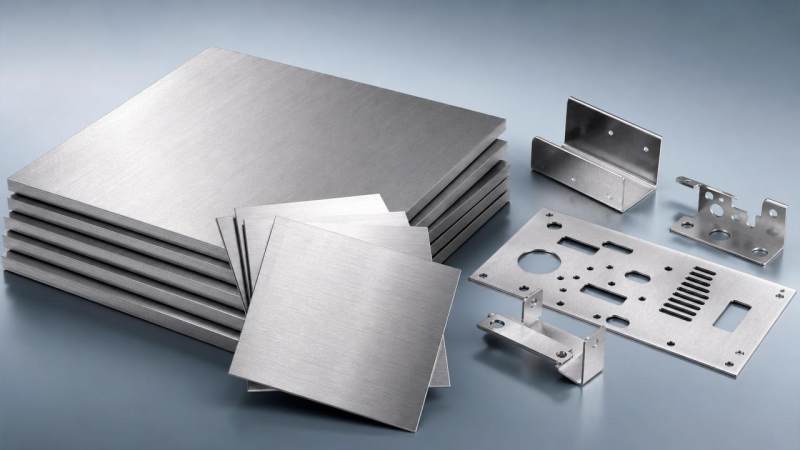
For most technical evaluators, the real question is not simply whether a stainless steel square plate can work, but whether it is the best fit technically and commercially.
A stainless steel square plate becomes the right choice when exposure conditions, structural requirements, hygiene needs, or lifecycle expectations make coated carbon steel, aluminum, or other metals less reliable.
In practical procurement terms, the decision usually depends on four filters: corrosion environment, mechanical demand, fabrication route, and total cost over the intended service period.
If the application involves moisture, chemicals, food contact, outdoor weathering, washdown cycles, or appearance retention, stainless steel often justifies its higher initial material price.
If the part must remain dimensionally stable during welding, cutting, machining, or repeated service loading, plate flatness, thickness consistency, and grade selection become equally important to the evaluation.
When does a stainless steel square plate make the most engineering sense?
The most common trigger is corrosion resistance. When a component faces water, marine air, industrial pollutants, chloride exposure, or cleaning chemicals, stainless steel reduces premature degradation risk.
Technical teams often specify a stainless steel square plate for base plates, cover plates, equipment panels, machine guards, architectural features, tanks, supports, and custom fabricated assemblies.
It is especially suitable where localized rust would create safety concerns, contaminate products, damage brand appearance, or increase maintenance shutdown frequency over time.
Another clear use case is hygienic or clean environments. Food processing, pharmaceutical, water treatment, and laboratory systems often need surfaces that are easy to clean and resistant to staining.
In these settings, the right finish can be just as important as the grade. Surface roughness, passivation condition, and weld treatment influence both performance and inspection outcomes.
A square plate format is also practical when buyers need standardized blanks for CNC cutting, laser profiling, punching, or secondary fabrication into brackets, frames, and structural accessories.
Where design repeatability matters, square geometry helps improve nesting efficiency, reduce handling variation, and simplify stock management across multiple part numbers.
Which material properties should be checked before approval?
Grade selection should always come first. In many general industrial and architectural applications, 304 stainless steel is chosen for balanced corrosion resistance, formability, and cost.
Where chlorides, seawater, deicing salts, or more aggressive chemicals are present, 316 or 316L is usually the safer option because of its improved pitting resistance.
For welded assemblies, low-carbon grades such as 304L or 316L may reduce sensitization concerns and support better corrosion performance in heat-affected zones.
Mechanical properties also matter. Yield strength, tensile strength, elongation, and hardness should align with the load path, deflection allowance, and forming method planned for the part.
Thickness tolerance is a major technical checkpoint. A plate that varies too much in thickness can affect weld fit-up, bolt clamping, machining depth, and structural consistency.
Flatness is equally important for assemblies requiring accurate contact surfaces, sealing interfaces, or precision fabrication. Poor flatness can add rework cost before installation even begins.
Evaluators should also review edge condition, surface defects, and internal quality where critical cutting or machining operations are expected. These details directly affect downstream productivity.
How do service environment and compliance requirements change the answer?
The same plate may perform very differently depending on the installation environment. Indoor dry service is far less demanding than coastal infrastructure or chemical processing exposure.
That is why technical review should focus on actual media contact, humidity cycles, temperature range, cleaning agents, and expected damage mechanisms rather than generic material assumptions.
For example, a stainless steel square plate used near seawater splash zones may need molybdenum-bearing grades, better surface finish control, and stricter fabrication cleanliness than inland applications.
Where compliance matters, buyers should verify the applicable standards for chemistry, mechanical properties, dimensional tolerances, and documentation before comparing offers from different suppliers.
International buyers often look for material compatibility with ASTM, EN, JIS, or GB frameworks, especially when projects involve multiple contractors or export-driven quality control procedures.
Mill test certificates, heat traceability, and inspection records are not just paperwork. They reduce approval uncertainty and help technical teams confirm the delivered plate matches the specification.
What fabrication questions should be answered before sourcing?
A technically suitable plate can still become a poor procurement choice if it is difficult to cut, weld, bend, machine, or finish within the buyer’s production workflow.
That is why fabrication compatibility should be reviewed early. The selected grade, thickness, and finish must support the intended manufacturing route without excessive distortion or scrap.
Laser cutting quality, plasma edge condition, drillability, weld response, and post-fabrication surface restoration all influence the actual delivered value of the material.
For welded structures, it is wise to confirm filler compatibility, heat input control, and whether pickling or passivation will be needed to restore corrosion resistance after fabrication.
For decorative or exposed applications, protective film, scratch control, and consistent finish orientation can prevent visual rejection during installation or customer acceptance inspection.
Technical evaluators should also ask whether square plates are supplied as standard stock, custom cut blanks, or OEM components, because this affects lead time and waste rate.
A supplier with strong customization capability can often reduce total process cost by delivering material closer to the required finished dimensions and tolerances.
How should technical buyers compare stainless steel with other options?
In many projects, the choice is not between good and bad materials, but between acceptable options with different tradeoffs in capital cost, maintenance, and risk exposure.
Compared with carbon steel, stainless steel usually costs more upfront, but it may eliminate coating systems, reduce corrosion maintenance, and lower replacement frequency.
Compared with aluminum, stainless steel may offer better strength, wear resistance, and temperature stability, although it is heavier and may require different fabrication settings.
Compared with galvanized steel, stainless steel is often preferred where coating damage, edge exposure, chemical attack, or hygiene requirements would shorten service life.
The best evaluation method is lifecycle-based rather than price-only. Material cost, fabrication yield, field maintenance, downtime risk, and expected replacement interval should all be included.
When technical teams use a total cost framework, a stainless steel square plate often becomes easier to justify in harsh environments or quality-sensitive applications.
What purchasing risks should evaluators try to avoid?
One common risk is treating all stainless material as equivalent. Similar names do not guarantee the same corrosion behavior, tolerance control, or fabrication performance.
Another risk is approving based on nominal thickness alone. Actual tolerance range, flatness, and edge quality may determine whether the plate works smoothly in production.
Surface finish mismatch is also frequent. A finish suitable for industrial hidden parts may be unacceptable for food-contact, sanitary, or visible architectural applications.
Buyers should also watch for incomplete traceability, unclear origin of raw material, inconsistent heat numbers, and missing certification support for destination market requirements.
Lead time reliability matters as much as material quality on project-driven orders. Delayed plate supply can affect fabrication schedules, shipping windows, and site installation sequencing.
Working with a manufacturer experienced in export projects can reduce these risks through better packaging, specification review, documentation control, and communication discipline.
How does this evaluation mindset apply to broader structural steel sourcing?
Technical buyers often evaluate stainless steel plates alongside other engineered steel products, especially in projects combining corrosion-resistant parts with heavy structural systems.
In such cases, supplier capability matters beyond one item category. A manufacturer that understands standards, customization, and export compliance can simplify mixed-product procurement.
For example, foundation and waterfront works may rely on high-strength structural solutions such as Steel Sheet Piles in addition to stainless components.
These products are used in deep water construction and cofferdam formation, where strength, penetration performance in hard soil layers, and reuse value are critical.
Available grades include S275, S355, S390, S430, SY295, SY390, and ASTM A690, with production aligned to EN10248, EN10249, JIS5528, JIS5523, and ASTM standards.
With single lengths exceeding 80 meters and flexible dimensions, such structural products illustrate how technical sourcing often depends on matching specification detail to real site conditions.
For evaluators, the broader lesson is clear: whether selecting a stainless plate or another structural product, project performance begins with specification discipline and supplier competence.
What should a strong supplier be able to provide?
A reliable supplier should do more than quote a price. They should help confirm grade, tolerance, finish, and fabrication suitability based on the actual application.
They should also be able to support standard and customized requirements, especially when buyers need nonstandard dimensions, OEM processing, or project-specific inspection points.
For global sourcing, quality management and export experience are especially important. Consistent production, dependable lead times, and clear communication reduce procurement uncertainty.
Hongteng Fengda, as a structural steel manufacturer and exporter from China, supports international buyers with customized steel solutions and production aligned to major global standards.
With experience serving North America, Europe, the Middle East, and Southeast Asia, the company focuses on stable capacity, strict quality control, and practical support for project execution.
For technical evaluators, this matters because supplier responsiveness can directly affect specification accuracy, approval speed, and downstream manufacturing efficiency.
So, when is a stainless steel square plate the right choice?
It is the right choice when corrosion resistance, durability, cleanability, appearance retention, or lifecycle economics matter more than the lowest initial purchase price.
It is also the right choice when the application demands reliable thickness control, stable fabrication performance, and compliance with recognized international material standards.
For technical evaluators, the strongest decisions come from linking grade, finish, tolerance, and fabrication requirements to the real service environment rather than using generic preferences.
If your project involves aggressive exposure, quality-sensitive production, or long service life expectations, a stainless steel square plate is often a sound and defensible specification.
The key is to evaluate it as a system decision, not just a raw material purchase. When selected correctly, it can reduce risk, improve reliability, and support better long-term value.
Please give us a message


Please enter what you want to find