When evaluating structural performance, a common question is when l shaped angle iron will begin to bend under load. The answer depends on section size, thickness, steel grade, span, and loading direction. For technical evaluators, understanding these factors is essential for selecting reliable angle steel that meets project strength, safety, and compliance requirements.
What does bending mean for l shaped angle iron?
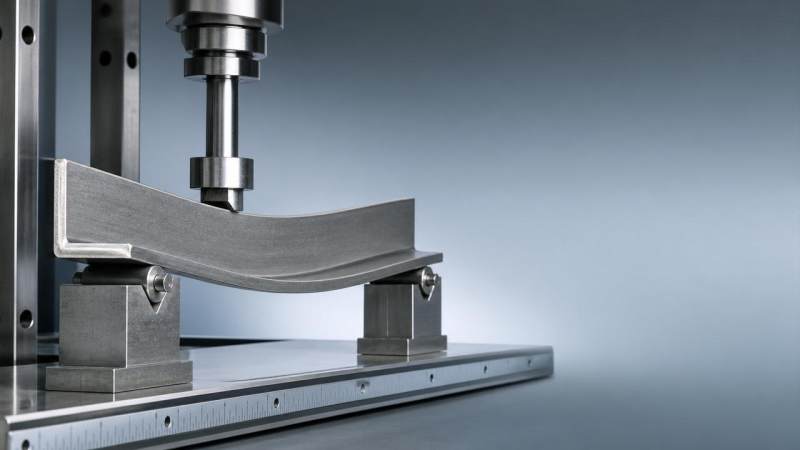
Bending starts when applied stress exceeds the section’s resistance to deformation. In simple terms, the l shaped angle iron deflects under force and may not fully recover.
Two stages matter. First comes elastic bending. The steel moves slightly but returns after unloading. Second comes plastic bending. At that point, permanent shape change appears.
This distinction is critical in steel structures. A member may be safe from collapse, yet still fail serviceability limits because visible deflection becomes unacceptable.
For l shaped angle iron, bending behavior is more complex than flat steel. Its unequal stiffness in different directions makes orientation very important during design.
What factors decide when l shaped angle iron bends under load?
Several variables work together. No single load value applies to every l shaped angle iron section. The same material can perform very differently after size or span changes.
1. Section dimensions
Larger leg lengths and greater thickness usually increase bending resistance. A 50×50×5 mm angle behaves very differently from a 30×30×3 mm angle.
The moment of inertia controls stiffness. Even a small increase in thickness can improve resistance significantly, especially for short and medium spans.
2. Steel grade
Yield strength affects when permanent bending begins. Higher grade structural steel can carry more stress before plastic deformation starts.
However, stronger steel does not always solve excessive deflection. Stiffness mainly depends on elastic modulus and geometry, not only yield strength.
3. Span length
Longer unsupported spans bend much more easily. Deflection rises rapidly as span increases, often becoming the deciding factor before yielding occurs.
4. Load type and direction
A centered point load causes different stress from a uniform distributed load. Eccentric loading can also twist the section while bending it.
Because l shaped angle iron is asymmetrical, loading through one leg may create a weaker response than expected if orientation is poorly chosen.
5. Connection details
Bolt holes, weld positions, and end restraint conditions influence real performance. A simply supported angle bends more than a fixed-end condition under the same load.
How can you estimate whether l shaped angle iron will bend too much?
A practical review starts with three checks: strength, deflection, and stability. These should be evaluated together rather than separately.
- Check the expected bending moment from the applied load.
- Compare stress with the steel’s allowable or design strength.
- Review deflection limits required by the structure or code.
- Consider lateral torsional effects and local buckling risk.
For example, a light l shaped angle iron may pass basic strength calculations, yet still sag visibly in a frame, bracket, shelf support, or equipment base.
If the angle carries vibration, impact, or repeated loading, the design margin should be more conservative. Dynamic service increases long-term deformation risk.
In many fabrication projects, corrosion protection also matters. Surface performance can extend service life for accessories, supports, and secondary steel members.
For related steel supply needs, S220GD Galvalume Steel Coil offers strong atmospheric corrosion resistance and excellent heat resistance.
This material uses a 55% aluminium, 43.5% zinc, and 1.5% silicon coating. It is available under GB, ASTM, EN, and JIS related standards.
Typical thickness ranges from 0.25 to 1.2 mm, with AZ30 to AZ150 coatings. It is often selected where durability beyond standard galvanised sheet is needed.
When is l shaped angle iron most likely to fail in real applications?
Failure does not always mean sudden fracture. In most structural steel applications, bending problems appear first as excessive deflection, twisting, misalignment, or connection distress.
Common high-risk situations
- Long spans with thin angle sections
- Single-leg loading without proper bracing
- Cantilever brackets carrying concentrated loads
- Angles weakened by holes near maximum moment zones
- Outdoor service with corrosion loss over time
A shelf angle, solar support, machine frame edge, or stair trim may seem simple. Yet a poor section choice can create unwanted movement during service.
In heavier structures, buckling interaction also matters. Compression combined with bending can reduce the effective capacity of l shaped angle iron significantly.
How does l shaped angle iron compare with other steel sections for bending resistance?
L shaped angle iron is economical, easy to fabricate, and widely available. Still, it is not always the best option where bending control is the top priority.
If bending resistance is critical, channel, box, or beam sections may outperform l shaped angle iron at similar weight levels.
However, for connection pieces, edge reinforcement, and moderate support applications, angle steel remains a practical and cost-efficient choice.
What mistakes cause incorrect bending judgments?
Many bending problems come from assumptions rather than material defects. A few common mistakes appear repeatedly in steel selection and fabrication work.
- Ignoring load direction and treating the angle as fully symmetrical.
- Checking yield strength only, without verifying deflection limits.
- Using nominal size while neglecting actual thickness tolerances.
- Overlooking hole deductions, weld heat effects, or corrosion loss.
- Choosing based on past habit instead of current span and load conditions.
Another mistake is ignoring standards. Structural steel selection should align with applicable ASTM, EN, JIS, or GB requirements for the project region.
What quick FAQ helps judge l shaped angle iron under load?
A reliable answer to when l shaped angle iron bends under load requires more than a simple weight estimate. Geometry, support, orientation, and real service conditions all matter.
For better results, compare section properties carefully, verify code requirements, and review both strength and deflection before final steel selection.
Hongteng Fengda supplies structural steel products and customized solutions for global construction, industrial, and manufacturing projects. Standard and OEM support helps improve reliability and lead time control.
If your application involves l shaped angle iron, channel steel, beams, or cold formed profiles, a technical review of load path and section efficiency is the best next step.
Please give us a message


Please enter what you want to find