Choosing the wrong stainless steel sheet supplier can expose your project to hidden defects, delays, and rising costs. For buyers comparing a Steel Beam manufacturer, stainless steel tube manufacturer, or steel tube supplier, quality is more than a spec sheet—it affects safety, compliance, and long-term performance. Understanding these risks is the first step to sourcing structural steel with confidence.
What turns a stainless steel sheet supplier into a real quality risk?
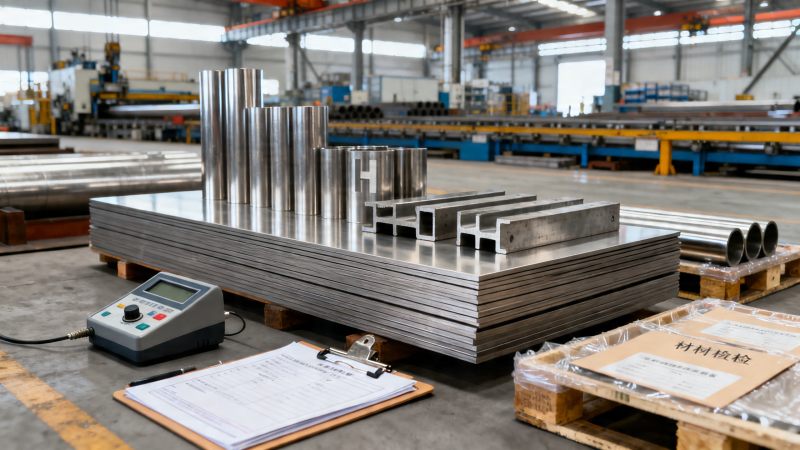
In steel sourcing, risk rarely starts with a dramatic failure. It usually begins with small inconsistencies: sheet thickness drifting outside tolerance, surface finish differing from the approved sample, heat numbers that do not match the mill test certificate, or packing that allows edge damage during transit. In practical terms, a supplier becomes a quality risk when documentation, manufacturing control, and delivery execution stop matching the buyer’s technical and commercial expectations.
For procurement teams, quality risk is not limited to stainless steel sheet alone. The same supplier behavior can affect structural sections, steel beams, channels, cold formed profiles, and fabricated components. A project manager may first notice the problem as a 7–15 day schedule slip. A quality inspector may detect it as inconsistent mechanical properties. A finance approver may only see the issue later, when rework, claim handling, and urgent replacement freight increase total project cost.
This is why experienced buyers do not evaluate a supplier only by unit price. They assess at least 5 core checkpoints: material traceability, dimensional tolerance control, compliance with ASTM, EN, JIS, or GB requirements, packaging reliability, and response speed when nonconformity appears. If any one of these is weak, the sourcing risk rises sharply, especially for construction and industrial projects with multi-stage installation plans.
Hongteng Fengda works from a different logic. As a structural steel manufacturer and exporter from China, the focus is not just on shipping steel products, but on helping buyers reduce uncertainty before production, during inspection, and across the delivery cycle. For global customers in North America, Europe, the Middle East, and Southeast Asia, stable quality means fewer disputes, fewer site interruptions, and more predictable project execution.
Common warning signs before a quality failure happens
- Quoted specifications are broad, but tolerance ranges, surface condition, and testing method are not clearly confirmed before order release.
- Certificates are provided late, incomplete, or inconsistent with batch markings and shipment labels.
- The supplier responds quickly on price, but slowly on technical questions, corrective actions, and claim documentation.
- Lead time looks attractive at first, yet production updates, inspection photos, and packing details remain unclear until dispatch.
These signals matter because steel is often integrated into larger systems. A single batch problem can delay welding, machining, coating, erection, or field installation. The farther the goods travel, the more expensive a replacement becomes. In export business, even a 2–4 week corrective cycle can damage the commercial viability of the whole purchase.
How poor supplier quality affects cost, compliance, and site performance
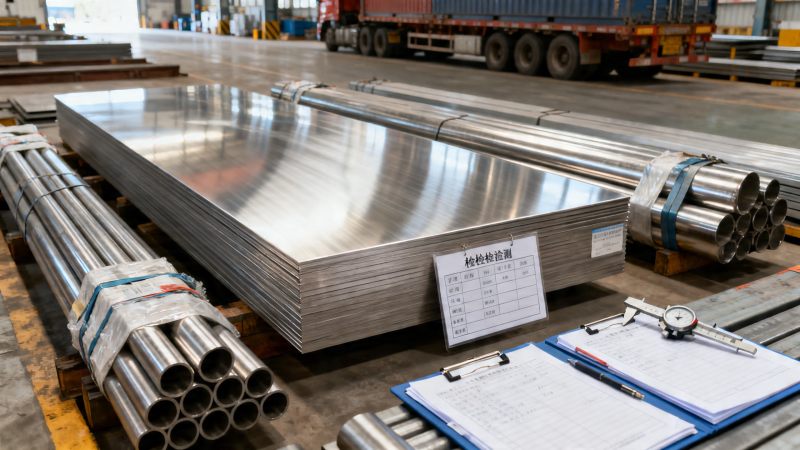
Not every quality issue causes immediate rejection. Some problems remain hidden until fabrication or use. Stainless steel sheet with inconsistent flatness may create difficulties in forming. Incorrect grade substitution may reduce corrosion performance. Structural steel with poor dimensional consistency can slow assembly and force on-site adjustment. In each case, the buyer pays twice: first for the material, then for the operational disruption that follows.
For technical evaluators and quality managers, the most serious consequence is loss of control. If incoming material lacks reliable traceability, then inspection records, production records, and installed components can no longer be linked with confidence. That weakens audit readiness and increases the risk of non-compliance in sectors where material verification, mill documentation, and inspection evidence are required at multiple stages.
For business decision-makers, the damage often appears through margin erosion. A supplier with a lower offer may still create a higher landed cost once packaging losses, sorting labor, sample retesting, delayed installation crews, and replacement logistics are added. In many steel procurement cases, the gap between quoted price and real project cost becomes visible only after 3 stages: receiving inspection, fabrication, and final installation.
The table below summarizes how supplier quality risk typically moves through a steel project and where buyers should focus their controls.
The pattern is clear: quality risk is rarely isolated. Once it begins, it spreads from inspection to schedule, then to cost and client confidence. That is why global buyers increasingly prefer suppliers that combine production capability with clear communication, document discipline, and export execution experience.
Why this matters beyond stainless steel sheet
Many procurement teams source multiple steel categories from one channel. They may compare a stainless steel tube manufacturer for corrosion resistance projects, a steel tube supplier for industrial fabrication, and a Steel Beam manufacturer for structural frames. The quality logic should remain consistent across all of them. If a supplier cannot manage traceability, inspection, and delivery discipline on one product line, it is risky to assume stronger performance on another.
For this reason, a capable structural steel partner should support both standard products and OEM requirements, translate technical drawings into manufacturing controls, and communicate deviations before shipment rather than after complaint. This reduces sourcing friction for distributors, contractors, and project owners handling mixed product portfolios.
What should buyers check before placing a steel order?
A reliable sourcing process should start before price negotiation is finished. Buyers who only compare offers line by line often miss the real quality variables. A stronger approach is to evaluate the supplier across 4 stages: technical clarification, production control, inspection evidence, and shipment readiness. This applies whether the order is for stainless steel sheet, structural sections, fabricated profiles, or rail products for infrastructure use.
In the middle of a project, many buyers also need complementary products with very different operating conditions. For example, infrastructure and industrial customers may require Rail products for railway lines, bridge railings, or deck handrail systems. In such cases, technical review should cover grade options such as U74, U71Mn, PD2, PD3, BNbRE, Q235, 55Q, 50Q, U71, and 45Mn, along with dimensional ranges like 12m–30m length, 3mm–24mm thickness, 134–170mm rail height, 68–73mm head width, and 114–150mm bottom width.
These details are not minor. They affect wheel guidance, load transfer to sleepers, rolling surface stability, and compatibility with electrified railway or automatic blocking sections. Buyers should also note practical supply points such as available specifications from 4kg/m to 50kg/m and QU70, QU80, QU100, QU120, as well as finishes including oil, black, galvanized, and painted. When a supplier can explain both the technical purpose and the delivery implications of these options, the procurement risk is lower.
The checklist below helps procurement teams, quality engineers, and project managers compare steel suppliers using criteria that affect real project outcomes rather than only invoice price.
A practical 6-point supplier review checklist
- Confirm standard and grade in writing. ASTM, EN, JIS, and GB references should be linked to the exact product and batch documentation.
- Ask for tolerance control details. Thickness, length, straightness, and section dimensions should follow project requirements, not generic assumptions.
- Define inspection milestones. For many export orders, 2 checkpoints are practical: pre-packing verification and pre-shipment document review.
- Review packaging and loading method. This is especially important for long products in the 12m–30m range and for visible surfaces subject to handling damage.
- Check communication speed on technical questions. A supplier that answers within 24 hours usually supports faster issue closure during production.
- Assess export experience. For global projects, document accuracy, labeling, and shipment coordination are as important as mill production itself.
A disciplined supplier review creates measurable value. It reduces the chance of mismatch between quotation and delivered goods, shortens internal approval cycles, and helps finance teams compare total acquisition cost with more confidence. It also gives end users and installers a better chance of receiving steel that performs as expected in the field.
Supplier comparison table for steel procurement teams
The following table can be used by purchasers, technical reviewers, and commercial managers to screen steel suppliers during RFQ or final negotiation.
This type of comparison helps teams move from reactive buying to controlled sourcing. It is particularly useful when evaluating multiple vendors across structural steel, stainless steel, and specialized sections in one procurement package.
How do standards, testing, and documentation reduce sourcing risk?
In steel trade, quality is proven through a combination of manufacturing control and evidence. For buyers, this means the supplier should not only claim compliance, but also support it through production records, certificates, dimensional checks, and shipment identification. For structural steel and related products, common reference systems include ASTM, EN, JIS, and GB. The exact standard depends on project location, design code, and end-use requirement.
Documentation becomes even more important in cross-border orders. Goods may travel for several weeks, pass through multiple warehouses, and arrive long after factory dispatch. If markings, paperwork, and inspection records are not aligned, the receiving team has difficulty verifying what was actually supplied. A careful exporter reduces that risk by keeping batch identity clear from production to packing to shipping documents.
For specialized infrastructure products, buyers also look at management system support. In the case of the linked rail product family, ISO9001-2008 and ISO14001:2004 are listed as reference certifications. While these do not replace project-specific material checks, they indicate that the supplier understands controlled production and environmental management practices. Buyers should still verify whether the certification scope matches the ordered product and current business needs.
The most effective way to reduce risk is to align 3 things before production starts: technical specification, inspection method, and acceptance criteria. Once these are fixed, site teams, quality inspectors, and commercial staff all work from the same baseline, which helps prevent disputes later.
Typical documents buyers should request
- Mill test certificate or equivalent batch documentation linked to the supplied grade and heat number.
- Dimensional inspection records for key parameters such as thickness, height, width, and length range.
- Packing list, marking photos, and loading evidence for export shipments with mixed bundles or long-length products.
- If required by the project, a pre-shipment verification record covering 4–6 major acceptance points.
When suppliers can provide these materials consistently, buyers gain more than compliance. They gain speed in internal approval, faster receiving inspection, and clearer accountability across departments.
FAQ: what do buyers usually ask before approving a steel supplier?
Steel purchasing decisions often involve several stakeholders, and each one asks different questions. The user wants reliable performance. The quality manager wants traceability. The procurement manager wants stable delivery. The finance team wants cost control. The answers below address the most common concerns that appear during supplier evaluation.
How can I tell if a low price hides a quality risk?
Look beyond the base quotation. Check whether the offer includes exact grade, dimensional tolerance, testing scope, document package, packing method, and lead time. If these items are missing, the price may not represent the final delivered condition. A cheaper offer can become more expensive after reinspection, sorting, damage claims, or emergency replenishment. In many projects, the true difference appears over a 2–4 week execution window, not on day one.
What lead time is usually reasonable for steel export orders?
Lead time depends on product type, quantity, and whether customization is required. For common structural steel items with stable rolling schedules, buyers often see production windows around 2–6 weeks, followed by document preparation and shipping arrangement. For special grades, OEM sections, or long products up to 30m, planning may take longer. The important point is not only the total duration, but whether the supplier can define milestone updates clearly.
What should quality inspectors focus on first during incoming inspection?
Start with 3 basic checks: identity, dimensions, and visible condition. Confirm that markings match the documents, verify key dimensions against the purchase order, and inspect the surface and edges for transit damage or contamination. If the product is intended for fabrication or exposed application, finish consistency also matters. This first screening helps determine whether deeper testing or quarantine is needed.
Is one supplier for multiple steel product categories a good idea?
It can be a strong advantage if the supplier has real manufacturing and export coordination capability. Consolidating structural steel, profiles, beams, and selected specialty items may simplify communication and logistics. However, buyers should confirm that each product line has appropriate production control and documentation support. Multi-category sourcing only works when the supplier is organized enough to maintain consistency across all ordered items.
Why work with Hongteng Fengda for lower-risk steel sourcing?
For many buyers, the best supplier is not the one with the shortest quotation, but the one that keeps projects under control. Hongteng Fengda supports this need through practical strengths: structural steel manufacturing experience, export service for global markets, standard and OEM supply capability, and quality control aligned with major international specifications such as ASTM, EN, JIS, and GB. This combination is valuable when project teams need both technical clarity and dependable execution.
The company’s product scope includes angle steel, channel steel, steel beams, cold formed steel profiles, and customized structural steel components. That allows buyers to discuss sourcing packages in a coordinated way instead of treating each item as an isolated purchase. For contractors, distributors, and industrial buyers, this can reduce communication loops and support more efficient planning across production and delivery stages.
If you are evaluating a stainless steel sheet supplier, a Steel Beam manufacturer, a stainless steel tube manufacturer, or a steel tube supplier, the next step should be a detailed technical and commercial review. You can ask about parameter confirmation, product selection, grade matching, lead time range, OEM customization, certification expectations, sampling support, packing method, and quotation structure. These are the topics that directly influence sourcing safety.
Contact Hongteng Fengda when you need practical support on 4 key points: selecting suitable steel products for your application, confirming standards and dimensions before order, planning delivery schedules for export projects, and reducing quality risk through clearer documentation and inspection coordination. A well-managed steel supply starts with the right questions, and the right supplier should be ready to answer them with specifics.
Please give us a message


Please enter what you want to find