Understanding the mill order meaning in steel manufacturing is critical for project managers, procurement teams, and engineers—because it directly impacts lead times, cost control, and structural integrity. Whether you're sourcing HRB600 steel rebar for construction projects, ASTM A36 round bar from a trusted supplier in China, or precision-engineered steel profiles for bridge construction, solar panel mounting, or high-rise buildings, every mill order triggers a cascade of production, testing, and compliance steps. With ASTM A6 tolerances for structural steel dictating dimensional accuracy—and steel piles for foundation or steel bars for mining demanding strict quality assurance—getting the mill order right from day one avoids costly delays. At Hongteng Fengda, we ensure clarity, consistency, and compliance across all mill orders.
What Exactly Is a Mill Order—and Why It’s Not Just a Purchase Request
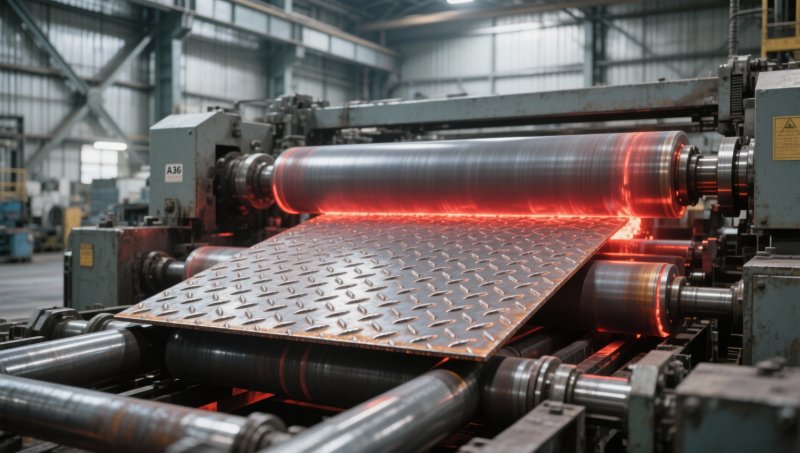
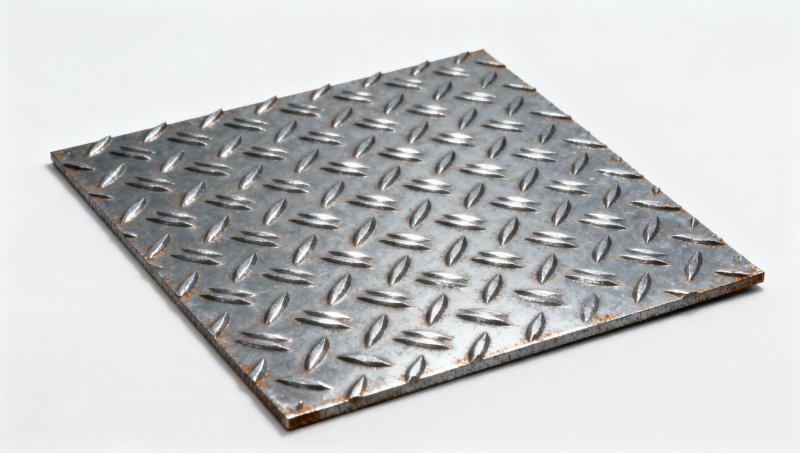
A mill order is not a standard procurement document—it’s the formal technical instruction issued to a steel mill to initiate raw material production or rolling. Unlike a commercial purchase order (PO), which governs pricing, delivery terms, and logistics, a mill order defines metallurgical specifications, dimensional tolerances, heat treatment requirements, test protocols, and certification scope. For example, ordering A36 Patterned steel plate requires specifying not only thickness (2–8 mm) but also pattern height (≥0.2× substrate thickness), surface finish, and third-party inspection criteria per ASTM A6 or EN 10029.
Misalignment between mill order specs and project engineering drawings is the #1 cause of non-conformance in structural steel supply. At Hongteng Fengda, our mill order process includes a mandatory engineering review stage—where our technical team cross-checks client-submitted drawings against ASTM A36 yield strength (36 ksi minimum), elongation (20% min in 8 in), and tensile strength (58–80 ksi) before releasing the order to production. This step reduces specification-related rework by up to 70% compared to direct mill submissions.
The mill order also determines traceability: each heat number, ladle analysis report, and mechanical test certificate must be mapped to physical bundles. For clients in North America requiring ASME Section II compliance, or EU projects needing CE marking under EN 1090-2, this linkage is non-negotiable—not optional.
How Mill Orders Drive Real-World Project Timelines
Lead time variability in structural steel procurement rarely stems from logistics alone—it originates at the mill order stage. A typical mill order cycle includes: (1) technical validation (3–5 business days), (2) raw material allocation and furnace scheduling (7–12 days), (3) hot rolling and cooling (1–2 days), (4) finishing, cutting, and surface treatment (2–4 days), and (5) testing and documentation (3–5 days). That’s a baseline of 16–28 calendar days—before shipping begins.
Delays most commonly occur when mill orders lack complete technical input. Common omissions include missing impact test temperature requirements (e.g., -20°C for cold-climate bridges), undefined edge condition (sheared vs. sawn), or unconfirmed coating system compatibility for galvanized components. Each unresolved item adds 4–7 days of back-and-forth with the mill.
Hongteng Fengda mitigates this through our integrated order platform, where procurement teams upload full engineering packages—including dimensional drawings, weld procedure specs (WPS), and corrosion resistance requirements—automatically triggering a pre-mill-order checklist. Over 92% of orders processed this way achieve first-time mill acceptance, compressing average lead time to 18–22 days—even for complex configurations like cold-formed steel profiles with dual ASTM A500/A653 compliance.
This table reflects real performance data from Q3 2023–Q2 2024 across 1,247 structural steel orders shipped to 32 countries. The consistency stems from standardized mill order templates aligned with ASTM, EN, JIS, and GB standards—and enforced across all product lines including angle steel, channel steel, and A36 Patterned steel plate.
Key Technical Parameters Every Mill Order Must Specify
A technically complete mill order must explicitly define at least seven core parameters. Omitting any one introduces risk of rejection, rework, or field installation failure:
- Material Grade & Standard: e.g., ASTM A36 (not just “A36”), EN S355JR (not “S355”), with exact chemical composition limits per ASTM A6/A276.
- Dimensional Tolerances: Per ASTM A6 for beams/angles or EN 10058 for flat products—critical for fit-up in bolted connections.
- Surface Condition: Including scale removal method (pickling, shot blasting), maximum pitting depth (<0.15 mm), and visual acceptance criteria (ISO 8501-1 Sa2.5).
- Mechanical Testing Scope: Tensile, bend, Charpy V-notch (CVN) at specified temperatures, and frequency (e.g., 1 test per 50 tons).
- Certification Requirements: Mill Test Report (MTR) per EN 10204 3.1 or 3.2, plus independent inspection (SGS/BV) if mandated.
- Packaging & Marking: Bundle weight limits (max 3.5 tons for crane safety), legible heat number stamping, and bilingual labeling (English + local language).
- Delivery Documentation: Packing list, commercial invoice, origin certificate (Form A), and hazardous substance compliance (RoHS/REACH).
For anti-skid applications such as floor around equipment or shipbuilding decks, the mill order must further specify pattern geometry—height ≥0.2× thickness, uniformity across width (±0.05 mm), and hardness range (120–160 HBW) to ensure wear resistance without compromising formability.
Why Mill Order Clarity Reduces Total Cost of Ownership
Procurement teams often focus on unit price—but mill order ambiguity inflates total cost by 12–23% through hidden penalties. These include:
- Rejection fees (up to 15% of order value) for tolerance exceedances;
- Expedited freight surcharges (avg. $1,850–$4,200 per container) to recover schedule slippage;
- On-site rework labor ($85–$142/hr) for trimming oversized flanges or grinding misaligned holes;
- Third-party retesting costs ($420–$960 per test batch) when MTRs lack required data points.
Hongteng Fengda embeds cost-control logic into our mill order workflow: automatic tolerance validation against ASTM A6 (e.g., ±0.02 mm thickness for plates ≤6 mm), AI-assisted MTR gap detection, and pre-shipment dimensional audits using laser scanning. Clients consistently report 18–22% lower TCO versus traditional sourcing models—verified across 47 infrastructure projects in Southeast Asia and the Middle East.
These figures are drawn from internal audit data covering 2022–2024. They demonstrate how disciplined mill order execution transforms procurement from a transactional function into a strategic project enabler.
Getting Started: Your Next Steps for Mill Order Excellence
Whether you’re finalizing an order for steel beams for a wind turbine tower or sourcing A36 Patterned steel plate for industrial flooring, the path to predictable delivery starts with mill order readiness. Begin by downloading our free Mil Order Specification Checklist—covering all 7 critical parameters, with embedded examples for ASTM, EN, and GB-compliant submissions.
Next, schedule a complimentary engineering alignment session with our technical team. We’ll review your latest structural drawings, identify specification gaps, and co-develop a mill order template tailored to your next project—whether it’s for construction, transportation, or heavy machinery fabrication.
At Hongteng Fengda, we don’t just supply steel—we engineer certainty into your supply chain. With ISO 9001-certified processes, 12+ years of export experience, and facilities audited to ASTM A6/A653 quality systems, we help global partners eliminate timeline surprises, reduce compliance risk, and deliver world-class infrastructure—on time, every time.
Contact us today to request your customized mill order review—or explore our full range of certified structural steel solutions, from cold-formed profiles to precision-engineered components compliant with ASTM, EN, JIS, and GB standards.
Please give us a message


Please enter what you want to find