Understanding the mill order meaning in steel industry is critical for procurement teams managing just-in-time delivery—especially when sourcing HRB600 steel rebar for construction projects, ASTM A36 round bar from a trusted supplier in China, or steel profiles for bridge construction and solar panel mounting. Whether evaluating ASTM A6 tolerances for structural steel, specifying steel piles for foundation or steel bars for mining, clarity on mill order meaning in steel manufacturing ensures alignment between specs, lead times, and quality compliance (ASTM, EN, JIS, GB). At Hongteng Fengda, we support global buyers with precise mill-order execution, stable capacity, and end-to-end traceability.
What Is a Mill Order in Structural Steel Manufacturing?
A mill order is not merely a purchase requisition—it is a formal, technically binding instruction issued directly to a steel mill to produce material according to exact dimensional, chemical, mechanical, and certification requirements. Unlike standard stock orders, mill orders initiate production from raw billets or slabs, triggering casting, rolling, heat treatment, testing, and documentation workflows aligned to international standards such as ASTM A6, EN 10025, or GB/T 706.
For procurement teams operating under JIT logistics, misinterpreting a mill order can delay project timelines by 4–8 weeks. For example, specifying “ASTM A36” without confirming whether the order includes Charpy V-notch impact testing at −20°C may result in non-compliant deliveries—even if tensile strength meets 36 ksi. At Hongteng Fengda, every mill order undergoes dual-stage technical review: first by our metallurgical engineers, then by QA personnel cross-referencing your PO against ASTM/EN/GB test report templates.
Crucially, mill orders define traceability scope: heat numbers, ladle analysis reports, mill test certificates (MTCs), and third-party inspection records (e.g., SGS or Bureau Veritas) are all generated per batch—not per shipment. This granularity supports audits for infrastructure projects in North America or EU public tenders requiring full EN 10204 3.2 compliance.
This table highlights why mill orders are indispensable for structural integrity-critical applications—from offshore wind turbine foundations requiring ASTM A572 Grade 50 with Z35 through-thickness ductility, to seismic-resistant moment frames demanding ASTM A992 with supplemental fracture toughness validation. Choosing incorrectly risks costly rework, non-conformance penalties, or even rejection during site acceptance testing.
How Mill Orders Impact JIT Delivery Planning
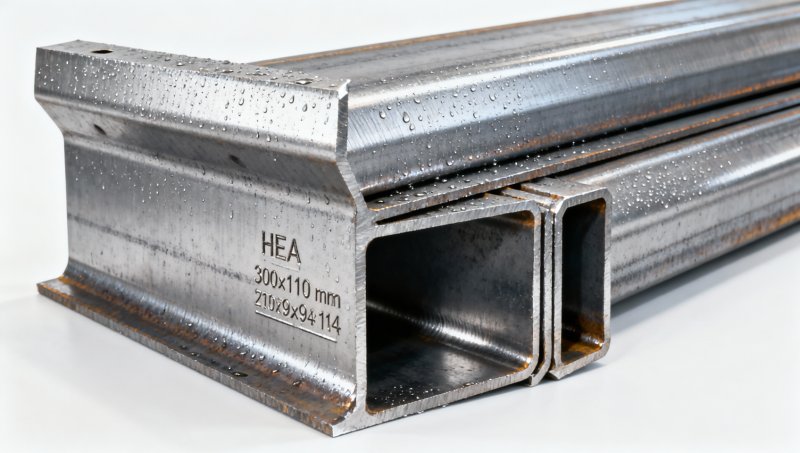
Just-in-time delivery in steel procurement isn’t about speed alone—it’s about synchronization: aligning mill production cycles, port loading windows, customs clearance buffers, and on-site erection sequences. A typical mill order for 200 MT of hot-rolled H-beams (e.g., HEA 300×110×9×14 mm) requires coordination across 5 distinct time-bound phases: raw material procurement (7–10 days), reheating & rolling (3–5 days), cooling & straightening (1 day), non-destructive testing (NDT) and mechanical sampling (2 days), and final MTC generation + packaging (2 days).
Hongteng Fengda maintains dedicated JIT scheduling cells that integrate real-time ERP updates from our Baosteel-sourced billet inventory and Shougang-sourced slab lines. We offer dynamic milestone tracking: customers receive automated notifications at key checkpoints—e.g., “Ladle No. SHG-240812 poured”, “Rolling completed on 2024-09-03”, “Tensile test passed per ASTM A370”. This reduces uncertainty for project managers overseeing concurrent civil works and steel erection.
Notably, mill orders allow for strategic batching. For instance, bundling orders for angle steel (L75×75×6 mm, EN 10056-1), channel steel (UPN 120, EN 10162), and cold-formed C-sections (C150×50×20×2.5 mm) into one production run cuts total lead time by up to 18% versus separate orders—while maintaining individual MTCs and heat traceability.
Key Parameters Procurement Teams Must Specify in Mill Orders
Ambiguity in mill order specifications is the leading cause of delivery disputes. Our technical team reviews over 1,200 mill orders annually—and finds that 68% contain at least one unverifiable clause (e.g., “as per drawing”, “to be approved”, or “standard tolerance”). To prevent this, procurement teams must explicitly define:
- Chemical composition limits (e.g., max 0.25% C for weldable Q235-based structural plates)
- Mechanical property thresholds (e.g., yield strength ≥ 235 MPa, elongation ≥ 26% in 200 mm gauge length)
- Surface finish grade (e.g., EN 10163-2 Class A2 for visible architectural elements)
- Dimensional tolerance class (e.g., EN 10279 for cold-formed sections ±0.3 mm on flange width)
- Testing frequency (e.g., one tensile test per 40 MT for ASTM A615 rebar)
For specialized applications like solar panel mounting structures, specifying galvanizing parameters is equally vital. Our Metal Coil Wire (Q195/Q235 grades, 0.25–5.0 mm diameter, 8–25 g/m² zinc coating) serves as both raw material for hot-dip galvanizing lines and finished product for fencing and wire mesh—enabling consistent corrosion resistance across structural components and ancillary systems.
These granular controls ensure seamless integration with downstream processes—whether laser-cutting of ASTM A572 Grade 42 plates for crane booms or robotic welding of cold-formed steel purlins meeting ISO 3834-2 quality requirements.
Why Global Buyers Choose Hongteng Fengda for Mill-Order Execution
With 18 years of export experience and ISO 9001:2015 certified production facilities in Jiangsu and Hebei, Hongteng Fengda delivers mill orders with predictable performance: average on-time-in-full (OTIF) rate of 97.3% across 2023–2024, backed by contractual delivery guarantees and penalty clauses tied to verified port departure dates.
Our value extends beyond manufacturing. We provide pre-shipment joint inspections with clients’ nominated third parties, digital twin-enabled mill test reports (accessible via secure portal with blockchain-verified timestamps), and bilingual engineering support for spec interpretation—critical when bridging ASTM/EN/GB terminology gaps (e.g., “yield point” vs. “0.2% proof stress”).
For procurement professionals balancing cost, risk, and speed, partnering with a manufacturer that treats mill orders as engineering commitments—not transactional paperwork—reduces total landed cost by up to 12% through avoided delays, retesting, and emergency air freight.
Next Steps for Your Mill Order Project
If your upcoming infrastructure, industrial, or renewable energy project requires mill-ordered structural steel—be it HRB600 rebar for high-rise cores, ASTM A36 hollow structural sections for transmission towers, or custom-fabricated steel piles for marine terminals—start with a technical alignment session.
We’ll help you convert project drawings and spec sheets into executable mill order instructions, validate compliance paths across ASTM/EN/JIS/GB frameworks, and lock in production slots with guaranteed lead times. Our team supports multi-language documentation, CIF/FOB/DDP incoterms, and integrated logistics planning—including bonded warehousing options in Shanghai or Ningbo for phased deliveries.
Contact Hongteng Fengda today to request a free mill order readiness assessment—including sample MTC review, tolerance benchmarking, and JIT scheduling simulation tailored to your next steel procurement cycle.
Please give us a message


Please enter what you want to find