Understanding a fair SS sheet 304 price per kg requires more than checking market quotes. Buyers must compare material grade, thickness, finish, order volume, and supplier reliability to avoid hidden costs. For contractors, fabricators, and procurement teams, knowing how ss sheet 304 price per kg relates to industrial steel plate standards and broader structural steel solutions helps improve sourcing decisions, budget control, and long-term project value.
In the steel business, price fairness is not defined by the lowest number on a quotation. It is defined by whether the buyer receives the correct 304 stainless material, the agreed tolerance, the required surface finish, and a reliable delivery schedule without quality claims later. This matters to technical evaluators, project managers, purchasing teams, finance reviewers, and distributors who all look at cost from different angles.
For international buyers sourcing from China and other major supply regions, a practical assessment of SS sheet 304 price per kg should include raw material trends, specification matching, processing cost, logistics, packaging, and inspection standards. For companies working across structural steel and industrial metal supply, this broader view supports more accurate comparison and better procurement outcomes.
What Determines a Fair SS Sheet 304 Price Per Kg?
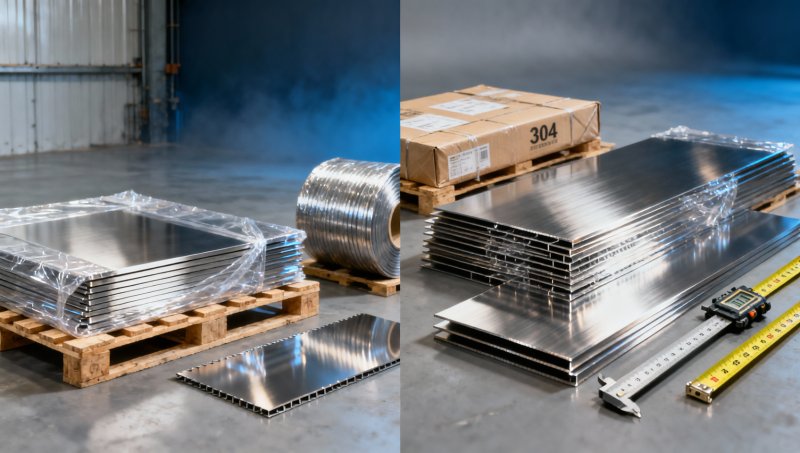
A fair SS sheet 304 price per kg starts with the actual stainless steel grade. Many buyers assume all “304” sheets are equal, but in practice the nickel content, chromium balance, origin of raw material, and compliance with ASTM, EN, or JIS standards can create noticeable differences. Even a price gap of 3%–8% may reflect better chemical consistency, tighter tolerances, or more stable corrosion performance.
Thickness is another major factor. A 0.5 mm sheet, a 2.0 mm plate, and a 6.0 mm cut-to-size panel do not carry the same manufacturing, flatness, and handling cost profile. Thin sheets often require stricter surface control, while thicker material may involve higher rolling and processing costs. In many transactions, tolerance requirements of ±0.05 mm to ±0.20 mm can influence the final price per kg.
Surface finish also changes what is considered fair. A standard 2B finish is commonly priced lower than No.4, HL, or mirror finish because polishing, film protection, and visual control add labor and equipment time. If the sheet is intended for food processing equipment, architectural cladding, or visible fabrication work, the finish requirement must be specified before comparing quotations.
Order quantity has a direct effect on unit economics. A 500 kg trial order usually costs more per kg than a 5-ton or 20-ton contract because setup, packing, documentation, and freight allocation are spread across fewer units. For export orders, container utilization, typically at 20 ft or 40 ft loading plans, can further change the landed cost.
Supplier reliability is the last piece that many buyers underestimate. A lower quoted price becomes expensive if the shipment arrives 2–3 weeks late, material certificates are incomplete, or sheet flatness causes rework in fabrication. A fair price should always be evaluated against usable delivered value, not only invoice value.
Key Cost Drivers Buyers Should Verify
- Grade confirmation: 304 versus lower-cost substitutes or mixed-stock supply.
- Thickness tolerance: tighter tolerances usually add cost but reduce downstream rejection risk.
- Finish requirement: 2B, BA, No.4, HL, and protective film options vary in processing cost.
- Cutting and customization: slit coils, laser-cut panels, and edge treatment increase conversion cost.
- Packaging and export handling: seaworthy packing, interleaving, and palletization matter for damage control.
The table below helps compare the most common factors that shape SS sheet 304 price per kg in international steel procurement.
A fair deal is usually one where specification, inspection, delivery, and downstream usability are aligned. If one quote is 5% lower but lacks mill test documentation or agreed packaging, it may not be fair in total project cost terms.
How Buyers Compare 304 Sheet Pricing Without Hidden Cost Surprises
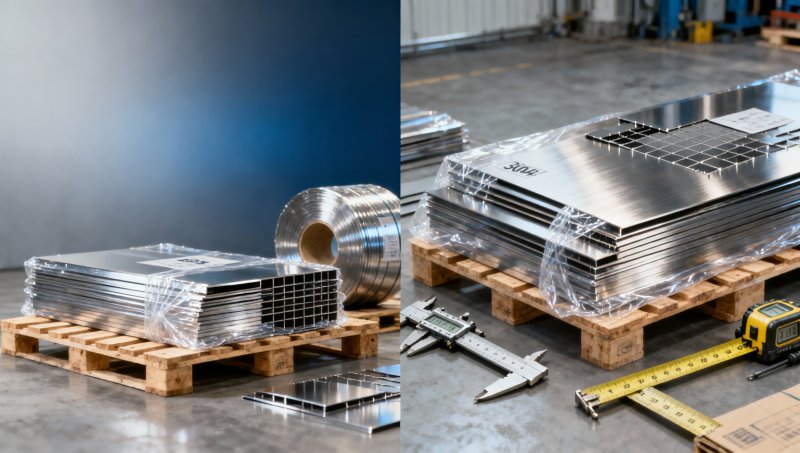
Professional procurement does not stop at comparing price per kg. It compares landed cost, fabrication efficiency, and risk exposure. In many projects, the hidden cost items are more damaging than the base metal price itself. Freight, customs paperwork, local duties, protective film quality, sheet flatness, and replacement lead time can alter the true cost by 8%–15% or more.
For purchasing teams, one useful method is to compare at least 4 dimensions: technical compliance, commercial terms, delivery commitment, and supplier responsiveness. Finance approvers may focus on unit price and payment terms, but quality managers and project engineers usually care more about consistency between batches, certificate availability, and whether the sheets can be processed without extra grinding, leveling, or scrap loss.
A reliable quote should clearly state grade, size, tolerance, finish, protective packing, inspection basis, Incoterms, and lead time. If these items are missing, the quoted SS sheet 304 price per kg is incomplete. For export projects, lead times often range from 15–35 days depending on stock status, mill schedule, and whether slitting or cut-to-length processing is required.
Another practical point is batch consistency. Some buyers receive an acceptable first shipment, then a lower-quality repeat batch. This is why experienced importers request chemical composition confirmation, heat number traceability, and visual inspection criteria before approving long-term supply agreements. Quality stability over 3–6 monthly orders is often a better indicator of fairness than a single low quote.
A Simple 5-Step Quote Evaluation Process
- Confirm exact application: fabrication, decorative, food-grade, industrial enclosure, or structural support component.
- Lock in specifications: thickness, finish, size, tolerance, and required standards.
- Compare 3 or more suppliers on equal terms, not mixed specifications.
- Check total landed cost, including packaging, freight, inspection, and possible wastage.
- Review supplier capability for repeat orders, not just one shipment.
The comparison table below shows how purchasing teams can separate a “cheap” quote from a genuinely fair one.
This kind of structured review is valuable not only for stainless sheet buying but also for broader steel sourcing strategies where delivery reliability and specification control matter as much as base price.
Why SS Sheet 304 Pricing Should Be Viewed Alongside Broader Steel Supply Planning
Many industrial buyers do not source stainless steel in isolation. A construction, fabrication, or manufacturing project may require stainless sheet for exposed or corrosion-sensitive parts, while also needing structural steel profiles, beams, channels, or carbon steel piping for load-bearing or utility systems. In this context, SS sheet 304 price per kg becomes part of a larger sourcing model rather than a standalone figure.
This is especially relevant for project managers and business decision-makers who want to reduce the number of suppliers, standardize quality review, and shorten procurement cycles. Working with a supplier familiar with ASTM, EN, JIS, and GB standards can simplify documentation across multiple categories of steel products and reduce coordination time by 1–2 weeks on complex orders.
For example, some global industrial applications require stainless sheet for corrosion resistance and carbon steel pipe for pressure handling, mechanical strength, or cost balance. In such cases, a buyer may also evaluate products like High Carbon Steel Pipe alongside sheet materials to optimize the total material package. The pipe range can cover outer diameters from 15 mm to 1200 mm, multiple wall thickness schedules from SCH10 to SCH160, and standards such as API 5L, ASTM A106 Gr.B, and ASTM A53 Gr.B.
This cross-category perspective helps procurement teams align material selection with function. Stainless 304 may be justified where hygiene, appearance, or corrosion resistance are critical, while carbon steel pipe can be more cost-effective for structural or transport systems when protected by black paint, varnish, oil, galvanizing, or anti-corrosion coating. A fair price is therefore not just about one material being cheaper, but about each material being correctly assigned.
Hongteng Fengda, as a structural steel manufacturer and exporter from China, operates in this practical procurement environment. Buyers across North America, Europe, the Middle East, and Southeast Asia often need stable production, clear standards compliance, and dependable lead times across multiple steel categories. That supply reliability can reduce sourcing risk and support better budget control over the full project cycle.
When Multi-Product Sourcing Makes Sense
- Projects requiring both corrosion-resistant sheet and structural or utility steel components.
- Procurement teams that want unified documentation, inspection coordination, and shipment planning.
- Distributors building inventory across stainless, carbon, and structural steel categories.
- Contractors seeking to reduce communication gaps between 2–4 different material suppliers.
The core lesson is that fair SS sheet 304 price per kg should be judged in the context of total project material efficiency. The best sourcing outcome often comes from matching the right steel product to the right function while controlling quality and delivery risk.
Technical and Commercial Checks Before You Approve a 304 Sheet Order
Before issuing a purchase order, technical and commercial reviewers should use a structured checklist. This step is important because disputes in steel procurement often begin with unclear requirements rather than supplier refusal. A buyer may request “304 sheet” but later reject material because the expected finish, film type, or flatness level was never written into the order.
The first check is specification accuracy. Confirm whether the product is sheet, plate, coil, or cut-to-size panel. Verify thickness, width, length, finish, and edge condition. If the material will be laser cut, bent, or welded, ask whether tolerances and surface condition are suitable for that process. In many practical cases, even a 1%–2% scrap reduction can justify a slightly higher purchase price.
The second check is documentation. For export supply, buyers often request mill test certificates, packing lists, commercial invoices, and origin documents depending on destination customs rules. Quality control teams may also ask for visual inspection criteria, heat traceability, and quantity tolerance rules. These points should be agreed before production, not after shipment.
The third check is commercial protection. Confirm Incoterms, payment structure, claim handling time, and whether replacement or compensation terms apply to proven quality deviations. For many B2B transactions, clearer commercial wording saves more cost than pushing the unit price down by a small amount.
Pre-Order Review Checklist
Technical review
- Grade confirmation and applicable standard.
- Thickness and tolerance requirement, for example ±0.10 mm.
- Surface finish and film protection requirement.
- Dimensional format: full sheet, slit coil, or cut pieces.
Commercial review
- Quotation validity period, often 3–7 days in volatile markets.
- Lead time from deposit or order confirmation.
- Packing method for sea transport and moisture protection.
- Inspection and claim procedure after arrival.
Using a checklist creates alignment between technical teams, procurement staff, and finance reviewers. It also improves supplier accountability because every key requirement is documented before manufacturing begins.
Common Buying Mistakes and Practical Tips for Better Value
One common mistake is assuming that the lowest SS sheet 304 price per kg automatically delivers savings. In reality, buyers can lose money through damaged surfaces, off-tolerance thickness, delayed shipment, or poor packing that causes rust stains or edge damage during transit. Rework, replacement, and project delay costs can quickly exceed the original price difference.
Another mistake is comparing non-equivalent offers. A quote for 2B finish without film protection is not directly comparable to a No.4 finish with PVC film, export pallet packing, and third-party inspection support. Buyers should normalize quotations so that each supplier is pricing the same technical and commercial scope.
A third issue is ignoring supplier capability beyond one product line. Companies managing industrial and construction projects often benefit from suppliers that can support structural steel, custom fabrication, and complementary steel products under one quality system. This can improve communication efficiency, reduce order fragmentation, and lower the risk of mismatched standards across project materials.
The best practical approach is to build a short supplier list, run one trial order, and review performance across price, quality, responsiveness, and repeat-order stability. After 2–3 successful deliveries, buyers usually have a stronger basis for annual contracts or distributor arrangements. This method serves technical evaluators, project owners, and financial approvers alike.
FAQ for Buyers Evaluating SS Sheet 304 Price Per Kg
How many quotes should I compare?
Comparing at least 3 quotes is a practical starting point. Fewer than 3 makes it difficult to identify market reality, while more than 5 can slow decisions without adding much insight if the specifications are already aligned.
What order size usually gives better price leverage?
In many export transactions, 3–5 tons begins to improve pricing compared with small sample lots. Orders approaching container efficiency often offer better freight allocation and production scheduling advantages.
Is mill certification always necessary?
For decorative retail use it may be less critical, but for industrial fabrication, distribution, engineering review, or regulated projects, mill test certificates are highly recommended. They support traceability and reduce dispute risk.
Can a fair stainless price still come from China?
Yes, provided the supplier offers clear specifications, stable production, quality control, and dependable lead times. Price fairness depends on delivered value and consistency, not just country of origin.
A fair SS sheet 304 price per kg is one that balances material authenticity, processing quality, delivery reliability, and overall project economics. For buyers involved in construction, manufacturing, distribution, and industrial sourcing, the right decision comes from comparing technical details and total landed cost rather than chasing the lowest headline quote. If you need support with structural steel supply, customized steel components, or broader sourcing solutions from China, contact Hongteng Fengda to discuss specifications, request a tailored quotation, and explore a more efficient steel procurement plan.
Please give us a message


Please enter what you want to find