Why does ss pipe price per meter change so much across suppliers and projects? From raw material grades and wall thickness to surface finish, standards, and application needs, several factors shape ss304 pipe price and ss 304 pipe price per meter. For buyers comparing ASTM steel pipe, ss pipe for water supply, or industrial steel tubing, understanding these cost drivers is essential for making accurate, cost-effective sourcing decisions.
What really drives stainless steel pipe price per meter?
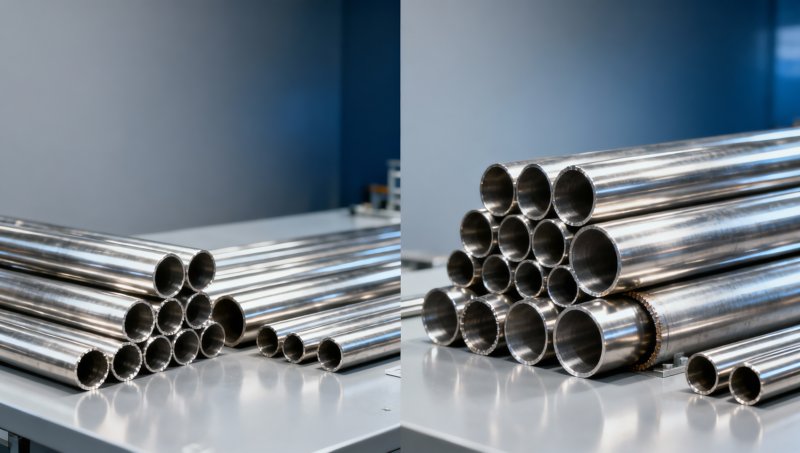
The biggest reason SS pipe prices per meter vary is that buyers are often comparing products that look similar but are not technically equivalent. A pipe made from 304 stainless steel, for example, may differ in thickness, outer diameter, manufacturing route, finish, tolerance, and test requirements. Even when two quotations both mention ss304 pipe price, the actual cost base can be significantly different.
In steel procurement, price per meter is influenced by both material value and conversion cost. Material value is affected by grade, alloy composition, and section weight. Conversion cost depends on forming, welding, annealing, pickling, polishing, cutting, inspection, and packaging. A heavier pipe with a wall thickness of 3.0 mm will naturally cost more per meter than one at 1.5 mm, even if both use the same steel grade.
Another common source of confusion is whether the quote is based on theoretical weight or actual finished length. In many export transactions, suppliers calculate by ton first and then convert to meter pricing based on nominal dimensions. This means a small dimensional change across a 6 m, 9 m, or 12 m pipe length can alter total project cost quickly, especially in medium-volume and large-volume orders.
For project managers, purchasing teams, and technical reviewers, the right question is not only “What is the lowest ss 304 pipe price per meter?” but also “What specification is included in that number?” That is the starting point for avoiding under-specification, rework, or compliance issues during installation and inspection.
Key pricing variables buyers should compare first
- Steel grade: 201, 304, 316, and other grades have different alloy content and corrosion resistance.
- Dimensions: outer diameter, wall thickness, and length directly change weight per meter.
- Manufacturing type: welded and seamless stainless steel pipe carry different processing costs.
- Standards and tests: ASTM, EN, JIS, or project-specific inspection requirements can add measurable cost.
- Surface and end treatment: pickled, polished, threaded, grooved, or beveled ends affect final quote value.
How do grade, thickness, and process change the quoted meter price?
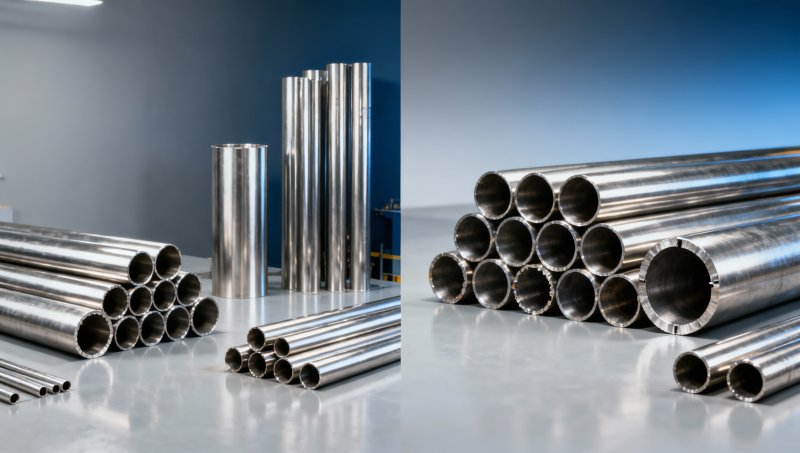
When buyers compare ASTM steel pipe or stainless tubing offers, three technical variables usually explain most price differences: grade, wall thickness, and production process. Grade changes corrosion performance and raw material cost. Thickness changes unit weight. Process changes manufacturing labor, equipment time, and finishing complexity. These three factors together often determine whether a quote is suitable for decorative use, water supply systems, or industrial service.
Take grade as an example. A 304 stainless pipe is widely used because it balances corrosion resistance, fabrication ease, and cost. However, a lower-cost stainless grade may be acceptable for dry indoor service, while 316 may be preferred in chloride-rich or coastal conditions. If the application involves ss pipe for water supply, the buyer must also consider hygiene, internal surface condition, and long-term corrosion performance rather than focusing only on headline meter price.
Wall thickness has a direct and transparent impact because steel pipe is commonly priced from weight. A pipe with 2.5 mm wall thickness contains substantially more metal than one with 1.2 mm, even at the same diameter and grade. This affects not only raw material cost but also transportation, welding behavior, support spacing, and installation labor. In budget reviews, thickness should always be checked against design load and pressure requirement.
Process also matters. Welded pipe is commonly selected for many structural and fluid applications because it offers practical cost efficiency and broad size availability. Seamless pipe may be specified for higher pressure or more demanding mechanical duty, but the price per meter is usually higher due to billet piercing, rolling, heat treatment, and additional process control. The difference is not arbitrary; it reflects actual production complexity.
Typical factors that change the quotation structure
The table below helps procurement teams compare how major technical choices affect stainless steel pipe price per meter in practical sourcing discussions. It is not a fixed price list. Instead, it shows why quotations should be evaluated by specification match, not by one-line price alone.
For technical assessment, this comparison is useful because it ties the meter price to measurable product differences. For financial reviewers, it shows why an apparently cheaper quote may become more expensive if the wrong specification leads to replacement, late delivery, or compliance correction after arrival.
Which standards, finishing requirements, and applications increase cost?
Standards and inspection requirements can materially change stainless steel pipe price per meter. A pipe supplied merely as commercial tubing is not the same as pipe produced to ASTM steel pipe requirements with traceability, dimensional tolerance control, test reports, and marking. In export and project supply, documentation is often part of the product value. Buyers in North America, Europe, the Middle East, and Southeast Asia typically review standard conformity before approving a supplier.
Surface finish is another visible but often underestimated cost driver. For industrial use, a standard finish may be enough. For food contact areas, visible architecture, or clean water systems, buyers may request pickling, passivation, polishing, or controlled surface roughness. Each added process means more handling steps, stricter quality checks, and longer lead time, often shifting production from a basic 7–15 day schedule to a 2–4 week cycle depending on quantity and customization.
Application conditions also matter. SS pipe for water supply may need better corrosion resistance, cleaner internal surfaces, and more consistent weld quality. Industrial tubing used in fabrication may prioritize dimensional consistency and machinability. Structural steel projects may care more about section stability, load transfer, galvanizing compatibility, and integration with beams, purlins, or bracket systems. Price shifts because the performance target changes.
In many project packages, stainless pipe is only one component of a broader steel solution. For example, in lightweight roof and wall systems, buyers sometimes need coordinated supply of pipe, channels, and cold-formed profiles. A mid-project decision to source related support members such as Z-beam can improve compatibility in purlin, wall beam, bracket, and light manufacturing applications, especially when materials such as Q235B, Q345B, S275, S355, A36, or A572 must match broader structural requirements.
How application and compliance requirements affect pricing
The following table gives buyers a practical view of where additional cost commonly comes from during project evaluation. It is especially useful when comparing water supply pipe, industrial pipe, and construction-related steel packages under one purchasing plan.
This is where experienced manufacturers add value. Hongteng Fengda supports global buyers with standard specifications and customized steel solutions, combining modern production, quality control, and international standard familiarity. For projects that include multiple product categories, coordinated sourcing can reduce mismatch risk, simplify communication, and make lead time planning more reliable.
How should buyers compare quotations without making a costly mistake?
A practical quotation review should follow at least 5 key checkpoints: grade, dimensions, standard, finish, and delivery terms. If one supplier gives a lower ss304 pipe price but omits wall tolerance, test requirement, or end treatment, the quote is not directly comparable. Procurement teams should request a line-by-line technical confirmation before price approval, especially when the order will be used in engineering, utility, or export-regulated environments.
Buyers should also check quantity structure. Small-batch orders may carry higher conversion cost per meter because setup, inspection, and packaging are spread across fewer pieces. For medium-volume and project-volume orders, suppliers can often optimize production runs and packaging plans. That does not guarantee the lowest nominal price, but it can improve the overall landed cost when waste, freight efficiency, and schedule stability are considered together.
Commercial terms have real pricing impact. A quote based on EXW, FOB, CFR, or CIF does not represent the same cost scope. Financial approvers and project owners should separate product cost, logistics cost, and compliance cost. In many cases, a slightly higher factory price can produce a lower total cost if it reduces transit damage, documentation delays, or on-site rework.
Quality control should never be treated as a paperwork formality. For stainless pipe and related structural steel items, buyers should verify dimensional tolerance, surface condition, marking, packaging protection, and certificate consistency. In related structural components such as a galvanized or perforated Z-beam, comparable checks may include thickness range of 6–25 mm, length from 2–12 m or customized, tolerance around ±1%, and whether CE, SGS, BV, or ISO-related documentation is required by the project file.
A 6-point quotation review checklist
- Confirm the exact grade and equivalent standard, not only the general product name.
- Verify outer diameter, wall thickness, length, and tolerance in one document.
- Check whether the quote includes testing, certificates, and traceability requirements.
- Review surface finish, end preparation, and packaging method for transport distance.
- Separate product price from freight, insurance, duty exposure, and inland logistics.
- Ask for lead time by production stage, such as 3 steps: material preparation, manufacturing, and inspection/packing.
Common buying mistakes that distort price judgment
The most common mistake is comparing only by meter price without checking weight or specification. The second is assuming all ASTM steel pipe offers include the same testing level. The third is overlooking surface treatment and cut-length services. These errors often appear small during quotation review but become expensive after production starts or when goods arrive at site.
Another mistake is failing to align the pipe with the real operating environment. A dry indoor fabrication line, a municipal water project, and a coastal industrial installation do not need identical material solutions. Matching the product to the environment can help control cost more effectively than chasing the lowest starting quotation.
FAQ: what do buyers often ask about ss pipe price per meter?
The questions below reflect what procurement staff, engineers, distributors, and project leaders typically ask before placing an order. These points also help search-oriented users understand how to evaluate stainless steel tubing offers more accurately.
Is ss304 pipe price always more stable than other stainless grades?
Not always. 304 is one of the most commonly used grades, so availability is often good, but its price still moves with alloy input cost, order volume, specification, and processing requirements. A standard welded pipe in common sizes may be easier to source than a polished, cut-to-length, or project-certified version. Stability depends on both market and specification complexity.
What is the difference between asking for price per ton and price per meter?
Price per ton is useful for raw cost comparison, while price per meter is better for installation budgeting and quantity takeoff. However, price per meter can be misleading if thickness, diameter, or tolerance are not fixed. The best approach is to review both figures together, then confirm actual unit weight and total ordered length.
For ss pipe for water supply, what should be checked beyond price?
Buyers should verify grade suitability, internal cleanliness, weld quality, corrosion resistance, pressure requirement, and the applicable standard. In many projects, these checks matter more than a small price difference. A lower-cost pipe that creates hygiene concerns or premature corrosion risk is rarely economical over the service life.
How long is the usual lead time for export stainless steel pipe orders?
Typical lead times vary with stock level, order quantity, and customization. Standard specifications may move faster, while custom sizes, special finishes, or combined project supply can take 2–4 weeks or more. Buyers should ask for a stage-based schedule covering production, inspection, and packing rather than relying on a single broad promise.
Why work with a structured steel supplier when evaluating pipe cost?
For many B2B buyers, the real challenge is not just finding a stainless steel pipe quote. It is coordinating specifications, standards, quality expectations, and delivery timing across multiple steel products in one project. Hongteng Fengda serves global construction, industrial, and manufacturing customers with structural steel products and customized solutions, helping reduce sourcing risk and improve cross-category consistency.
This matters when procurement teams must balance 4 priorities at once: technical suitability, budget control, schedule reliability, and documentation readiness. With experience in angle steel, channel steel, steel beams, cold formed steel profiles, and customized structural steel components, coordinated supply planning can simplify vendor management and reduce communication gaps across engineering and purchasing departments.
If you are comparing ss304 pipe price, reviewing ss 304 pipe price per meter, or planning an ASTM steel pipe and structural steel package together, the most efficient next step is to confirm your core project parameters first. These usually include grade, size range, standard, finish, quantity, destination market, and delivery schedule. Once those 6 items are clear, quotation accuracy improves significantly.
You can contact us to discuss parameter confirmation, product selection, delivery lead time, customized steel solutions, certification requirements, sample support, and quotation details. If your project includes stainless pipe together with structural profiles, brackets, beams, or cold formed sections, we can help organize a more practical sourcing plan that supports quality control, cost visibility, and dependable execution.
Please give us a message


Please enter what you want to find