When procuring steel rebar for seismic-resistant structures, specifying the right certifications isn’t optional—it’s critical for life safety and structural integrity. As a trusted structural steel manufacturer and exporter from China, Hongteng Fengda supplies certified steel rebar, steel bar, steel profile, steel pile, steel tube, steel rail, steel sheet, steel roof sheet, steel conduit, and carbon steel—fully compliant with ASTM, EN, JIS, and GB standards. Whether you’re a project manager, procurement officer, or quality/safety professional, this guide clarifies which certifications (e.g., ASTM A615/A706, ISO 1786, GB/T 1499.2) are non-negotiable—and why cutting corners on steel rebar compliance risks catastrophic failure in high-seismic zones.
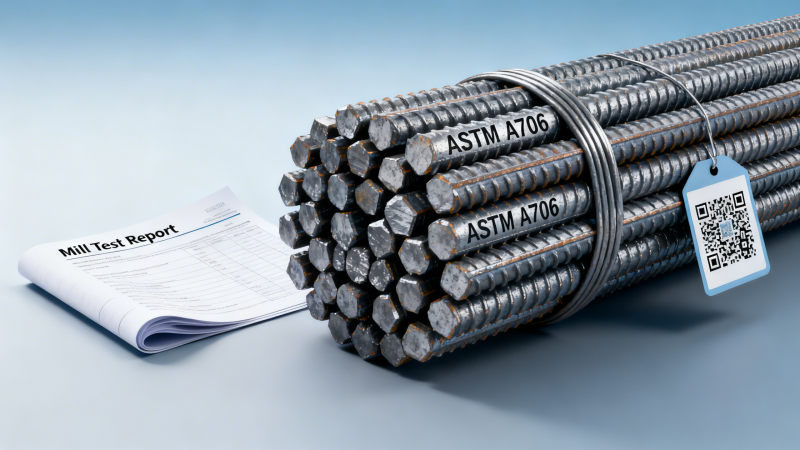
Why Seismic Certification Is Non-Negotiable
In earthquake-prone regions—from California to Tokyo, Istanbul to Santiago—steel rebar must perform beyond tensile strength. It must absorb energy, yield predictably, and maintain ductility under cyclic loading. Generic “structural steel bar” labels offer zero assurance. Only certified rebar meets the stringent ductility ratios (Agt ≥ 7.5%), uniform elongation, and strict chemical limits (e.g., max 0.04% phosphorus) required by modern seismic codes. Failure to enforce certification exposes projects to liability, insurance rejection, and, worst-case, collapse during design-basis shaking.
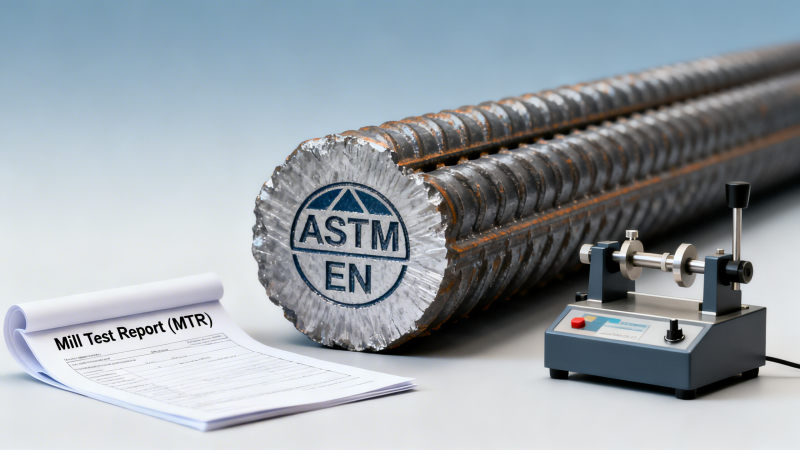
Hongteng Fengda subjects every batch of steel rebar to third-party witnessed testing per ASTM E8/E21, including tensile, bend, reverse-bend, and chemical analysis. Our mill test reports (MTRs) trace each coil to heat number, rolling date, and full mechanical/chemical compliance—ensuring auditable accountability from factory to foundation.
Global Standards Comparison: Key Requirements at a Glance
Not all certifications are equal—even when names sound similar. Below is a side-by-side comparison of the most widely accepted standards for seismic rebar, highlighting mandatory clauses that directly impact performance in dynamic loading scenarios.
Procurement Guide: What to Demand in Your PO & QA Protocol
Procurement officers and project managers often overlook contractual specificity—leading to disputes during inspection. Require these five elements in every purchase order and receiving checklist:
- Explicit reference to the applicable seismic standard (e.g., “ASTM A706 Grade 60, Seismic Grade per ACI 318-19 Ch. 20”)
- Mill Test Report (MTR) with full chemical composition, tensile results, and Agt—not just “conforms to spec”
- Third-party certification mark (e.g., SGS, TÜV, CNAS) on packaging and documentation
- Traceability to heat number and rolling batch—no generic “lot numbers”
- On-site bend/reverse-bend verification capability (Hongteng Fengda provides sample kits and test protocols upon request)
For distributors and agents sourcing for multiple clients, we offer dual-certification options—e.g., ASTM A706 + GB/T 1499.2—enabling seamless cross-border delivery without retesting delays. This reduces lead time by up to 22 days versus sequential certification paths.
Beyond Rebar: Integrated Structural Steel Solutions
Seismic resilience doesn’t stop at rebar. Columns, braces, connections, and anchorage systems must share compatible ductility and weldability. That’s why Hongteng Fengda delivers full-spectrum structural steel—including angle steel, channel steel, steel beams, cold-formed steel profiles, and Stainless Steel Welded Mesh for corrosion-critical façade and drainage applications. All products undergo harmonized QA: same raw material traceability, same metallurgical review, same third-party audit frequency.
Our carbon steel components meet ASTM A36, A572 Gr.50, and EN S355JR—with guaranteed Charpy V-notch impact values at –20°C for cold-climate projects. For marine or chemical exposure, our stainless offerings include SS 304L and 316L welded mesh with absolute micron retention from 32 μm to 350 μm—ideal for filtration, sieving, and architectural cladding where durability meets precision.
Why Global Projects Choose Hongteng Fengda
You need more than “compliant steel.” You need partnership—across time zones, regulations, and risk thresholds. Hongteng Fengda delivers:
- Zero-compromise traceability: Every steel rebar coil, steel bar, steel profile, and steel pile carries a QR-coded heat ID linking to real-time MTRs and production logs
- Multi-standard readiness: Stock and custom orders certified to ASTM, EN, JIS, GB, and ISO—no re-mill delays
- Pre-shipment validation: Optional witnessed testing at Shanghai or Tianjin labs (SGS/TÜV accredited) before container loading
- Project continuity guarantee: Fixed lead times backed by production capacity buffers—critical for multi-phase seismic retrofit programs
Whether you're managing a 50-story tower in Dubai or reinforcing schools in Nepal, your structural steel shouldn’t be a variable. It should be your most reliable constant. Contact Hongteng Fengda today for certified steel rebar, steel tube, steel rail, steel sheet, and engineered solutions—built for resilience, delivered with accountability.
Related recommendations
 Is acero galvanizado para exterior vulnerable to white rust formation during monsoon storage?Acero galvanizado para exterior *is* vulnerable to white rust in monsoons — but it’s preventable. Discover proven storage & handling strategies that protect your structural steel.
 Does ASTM A 36 plate meet impact toughness requirements for low-temperature bridge girders?Does ASTM A 36 plate meet low-temp bridge requirements? Short answer: no—unless specially tested. Discover why toughness matters more than strength in cold climates.
 Does ASTM A653 certification cover both zinc-coated and zinc-iron alloy coated steels?ASTM A653 covers both zinc-coated and zinc-iron alloy coated steels—but they’re not interchangeable. Learn key differences in testing, performance & certification.
 Does acero prepintado require surface pretreatment before welding or cutting?Does acero prepintado require pretreatment before welding or cutting? Discover when grinding is essential—and when it’s not—for safety, weld integrity & corrosion resistance.
Please give us a message


Please enter what you want to find