Using the wrong grade of deformed rebar for concrete can trigger costly structural risks, failed inspections, project delays, and long-term safety issues. For project managers and engineering leaders, understanding how misgrading affects load performance, code compliance, and procurement decisions is essential to avoiding rework and protecting project outcomes. This article explains what can go wrong and how to reduce sourcing and specification risks.
Why does the grade of deformed rebar for concrete matter so much on real projects?
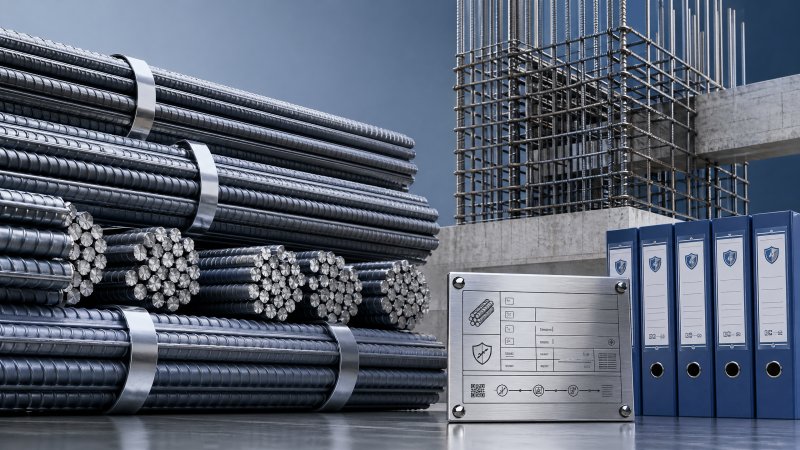
In reinforced concrete structures, grade is not just a catalog label. It directly affects yield strength, ductility, bending behavior, weldability limits, and the way a structure performs under service loads and extreme events. When deformed rebar for concrete is misgraded, the problem may remain hidden during early construction, but it can surface later in the form of cracking, deflection, failed pull tests, or non-compliance during third-party inspection.
For project managers, the risk is practical rather than theoretical. A single procurement mistake can disrupt 3 critical targets at once: schedule, budget, and safety. If the specified bar grade is ASTM, EN, JIS, or GB based, but the delivered batch does not actually match the required mechanical range, the issue can spread across foundations, columns, slabs, beams, and retaining elements before anyone notices.
Misgrading may happen in 4 common ways: wrong mill identification, substitution with lower-strength stock, confusion between nominally similar standards, or incomplete material traceability after processing and cutting. In global sourcing, especially across multiple vendors and ports, these risks increase when project teams focus only on price per ton and overlook mill test documentation, batch heat numbers, and independent verification.
For steel buyers working under tight delivery windows of 2–6 weeks, the pressure to keep materials moving is real. Yet reinforcing steel is not a category where “close enough” is acceptable. The bar grade must align with structural design assumptions, seismic detailing rules where applicable, and local code acceptance criteria. Otherwise, even installed steel may need removal, redesign, or engineering re-approval.
What grade affects beyond strength
- Load capacity under tension and bending, which influences member sizing and concrete section efficiency.
- Ductility and elongation, which matter in dynamic loading, impact zones, and seismic applications.
- Anchorage and bond behavior, because rib geometry and bar properties affect load transfer into concrete.
- Fabrication limits such as bending radius, lap strategy, and whether welding is restricted or controlled.
What can go wrong if deformed rebar for concrete is misgraded?
The most immediate problem is underperformance relative to design assumptions. If engineers design a slab or beam around a higher yield grade but the delivered deformed rebar for concrete has a lower actual yield strength, the steel reaches its limit earlier than expected. That can increase crack width, deflection, and reinforcement stress under normal service conditions, even before ultimate failure becomes a concern.
Another failure path involves ductility mismatch. A higher-strength bar is not automatically a better substitute if the project requires a particular elongation range or seismic response. In some structures, a less ductile bar may reduce warning before failure and affect confinement behavior in critical zones. This is why equivalent substitution cannot be judged by one number alone.
Misgrading also creates inspection and approval issues. During incoming QA, third-party laboratories may test tensile properties, bend performance, mass tolerance, and surface characteristics. If one tested batch fails, the project may face hold orders on multiple work fronts. A delay of 7–10 days for retesting or replacement can quickly become 3–4 weeks once demolition, procurement, transport, and reinstallation are added.
Long-term durability can be affected as well. Misgraded material is sometimes associated with broader supply chain weaknesses, such as inconsistent chemistry, poor rib geometry control, or weak traceability. Those issues may not always appear in a simple visual check. Over time, they can contribute to bond problems, unexpected corrosion sensitivity where coating or storage was poor, and reduced confidence during maintenance audits.
Typical project consequences
The table below shows how a misgraded rebar issue can escalate from procurement to site execution and commercial impact. For project managers, this chain reaction is often more damaging than the material cost difference itself.
A key takeaway is that rebar misgrading is rarely an isolated materials problem. It becomes a coordination problem involving engineering approval, QA records, site sequencing, and commercial claims. That is why experienced buyers build verification steps into the sourcing process before material reaches the rebar yard.
Three warning signs that should trigger immediate review
- The supplier offers an unapproved “equivalent grade” without full mechanical property comparison and standard reference.
- Heat numbers on bundles, tags, and mill test certificates do not match across 2 or more shipment documents.
- The site team notices unusual bending behavior, inconsistent rib appearance, or unexplained variation between bundles from the same order.
How should project teams compare grades, standards, and substitution requests?
Many procurement errors come from assuming that one national or regional standard maps directly to another. In reality, a grade comparison must consider at least 5 factors: yield strength, tensile strength, elongation, chemical composition limits, and application restrictions such as weldability or seismic use. A document that says “equivalent” without these details is not enough for responsible approval.
This is especially important in international projects supplied from multiple manufacturing bases. Hongteng Fengda serves buyers across North America, Europe, the Middle East, and Southeast Asia, where project specifications may reference ASTM, EN, JIS, or GB systems. In such environments, procurement teams benefit from a supplier that can align documentation, confirm standard-specific requirements, and maintain traceability from production to export shipment.
A practical comparison also needs to separate design intent from commercial convenience. A lower-cost offer may appear attractive if it shortens sourcing time by 5–7 days, but if engineering review later rejects the material, the total project cost rises sharply. Rebar should be purchased with approval logic first and price logic second.
In many mixed-material construction packages, project teams also coordinate enclosure, roofing, and structural accessories from the same exporter to reduce logistics complexity. For example, where corrosion-resistant sheet products are needed alongside structural steel supply, buyers may also review DX53D Galvalume Steel Coil for roofing, wall, modular building, appliance, or light industrial applications. With yield strength typically in the 270–300 MPa range, tensile strength around 350–450 MPa, and elongation not less than 24%, it serves very different functions from reinforcement steel, which is exactly why material categories and grades should never be substituted across applications.
A better way to assess substitution requests
Before approving any replacement for specified deformed rebar for concrete, use a structured check instead of a verbal assurance from the trader or fabricator. The table below can help engineering, procurement, and QA teams review substitution requests in 1 coordinated process.
Using a matrix like this reduces rushed approvals. It also gives project managers a written basis for decisions, which is valuable if disputes arise later between contractor, consultant, and supplier.
What should procurement and QA teams do to reduce misgrading risk before delivery?
The most effective control point is before shipment, not after unloading. Once deformed rebar for concrete reaches site, cutting, sorting, and partial installation can happen within 24–72 hours. That means the verification window is short. Procurement teams should therefore define documentation, marking, and testing requirements in the purchase order instead of trying to enforce them after material has already moved.
A disciplined sourcing workflow usually includes 4 stages: specification confirmation, supplier document review, pre-shipment verification, and incoming inspection. If any of these stages is skipped, the chance of grade confusion rises. On larger projects or repeat supply programs, adding batch-based sampling and third-party witness inspection is often justified.
This is where an experienced steel manufacturer and exporter adds value beyond commodity pricing. Hongteng Fengda supports global construction and industrial buyers with stable production capacity, strict quality control, and products aligned with major international standards such as ASTM, EN, JIS, and GB. For project managers, that means fewer sourcing gaps between technical specification and export execution.
The same disciplined approach applies when buyers source adjacent materials in one package. If a project combines structural members, cold formed profiles, and corrosion-resistant coated steel for external building elements, reviewing items such as DX53D Galvalume Steel Coil alongside rebar procurement can simplify supplier coordination while keeping each material assigned to its correct function and standard.
Five checks that should appear in every rebar purchase plan
- State the exact grade, standard, bar size range, and whether substitution requires written engineering approval before production.
- Require mill test certificates linked to heat numbers and shipment bundle tags, not only a general quality declaration.
- Define whether independent testing is needed for each heat, each shipment, or each lot, especially on critical structures.
- Confirm packaging, marking, and storage requirements so different grades are not mixed during loading, yard handling, or site issue.
- Lock in realistic delivery windows, such as 2–4 weeks for routine export planning, instead of forcing rushed substitutions.
Suggested incoming inspection workflow
- Check tags, diameter markings, count, and bundle condition against the shipping list within the first 1 day of receipt.
- Match heat numbers and mill certificates before sending any material to cutting or fixing zones.
- Perform visual inspection for rib consistency, rust condition, contamination, and obvious mix-up between lots.
- Release material for use only after QA sign-off or test clearance where the contract requires sampling.
FAQ: what do project managers usually ask about deformed rebar for concrete?
Below are practical questions that often come up during bidding, procurement, and execution. They reflect real site pressure: fast approvals, controlled cost, and fewer surprises during inspection.
Can a higher grade replace a lower grade automatically?
No. A higher nominal strength does not guarantee suitability. The replacement must be checked for elongation, detailing compatibility, bend behavior, code acceptance, and design intent. In some cases, a stronger bar can change crack control assumptions or reduce ductility margin. Any change should go through engineering review, not just procurement approval.
How long does grade verification usually take?
If documents are complete and traceable, a desk review may take 1–3 working days. If third-party laboratory testing is required, the process can extend to 7–10 days depending on sample logistics and test scope. If a batch is rejected and replacement is needed, total recovery time often becomes 2–4 weeks in export supply chains.
What is the most common sourcing mistake?
The most common mistake is buying only by diameter and price while assuming grade equivalence. Another frequent issue is accepting mixed documentation, such as a correct invoice but incomplete mill certificates. For deformed rebar for concrete, traceability must connect the purchase order, standard, heat number, bundle identification, and test record.
When is third-party inspection worth the cost?
It is usually worth considering on public infrastructure, high-rise work, industrial foundations, export projects with strict consultant review, or any package where rework would affect concrete pours across multiple zones. The inspection fee is often minor compared with the cost of a 1-week delay in labor, equipment, and subcontractor coordination.
Why work with a steel supplier that understands both specification control and export execution?
Project success depends on more than buying steel at a workable price. You need a supplier that understands how specifications translate into production planning, quality control, documentation, packaging, and shipment timing. That matters even more when your project combines structural steel, cold formed profiles, and other steel products across different standards and destinations.
Hongteng Fengda is a professional structural steel manufacturer and exporter from China, supplying angle steel, channel steel, steel beams, cold formed steel profiles, and customized structural steel components for global construction and industrial projects. With modern manufacturing facilities and strict quality control, the company supports buyers who need consistent quality, dependable lead times, and reduced sourcing risk across international markets.
For project managers dealing with deformed rebar for concrete and related steel procurement, the most useful support usually includes 6 practical items: specification confirmation, standard matching, material documentation review, customization feasibility, lead time planning, and export coordination. These are the areas where early communication can prevent late-stage cost and schedule damage.
If you are evaluating upcoming steel packages, contact us to discuss bar grade verification, structural steel selection, drawing-based customization, delivery schedules, certification requirements, sample support, and quotation planning. Clear technical confirmation at the start can save weeks of correction work later and help protect your project budget, inspection results, and delivery milestones.
Please give us a message


Please enter what you want to find