Reading stainless steel pipe specifications correctly is essential for avoiding costly sourcing mistakes, especially when comparing sizes, grades, schedules, and standards across suppliers. This guide explains how to understand stainless steel pipe specifications clearly, so buyers, engineers, and project planners can make informed decisions, reduce procurement risks, and choose the right pipe for structural, industrial, or manufacturing applications.
Why Specification Reading Has Become More Important in Recent Procurement Cycles
In the steel industry, the way buyers evaluate stainless steel pipe specifications has changed noticeably over the last 3 to 5 years. Global sourcing is no longer limited to comparing outer diameter and price per ton. Buyers now need to review wall thickness tolerances, grade substitutions, manufacturing methods, test requirements, and destination standards more carefully, especially when projects involve cross-border procurement or multi-standard engineering environments.
This shift is driven by several practical factors. First, more projects combine structural, industrial, and fabrication requirements in one supply package. Second, lead time pressure often pushes buyers to evaluate equivalent grades or alternative schedules. Third, many global buyers compare ASTM, EN, JIS, and GB references at the same time. In that context, misunderstanding stainless steel pipe specifications can lead to fit-up issues, welding problems, overpaying for unnecessary thickness, or under-specifying for service conditions.
For information researchers, this means one important thing: reading the specification line correctly is no longer a basic technical task, but a purchasing risk-control skill. A difference of just 1 schedule level, 1 material suffix such as L, or 1 test requirement can change corrosion performance, fabrication suitability, and delivery cost across a batch of 500 meters or more.
What buyers are paying closer attention to now
Today’s specification review process usually goes beyond nominal size. Procurement teams increasingly focus on whether the pipe is seamless or welded, whether the standard applies to pressure or decorative use, and whether mill test documentation matches project expectations. This is especially relevant when sourcing for construction, process lines, OEM fabrication, and export-oriented manufacturing.
- Grade matching between design intent and actual service environment
- Schedule selection based on pressure, load, or fabrication demand
- Dimensional tolerance consistency across multiple suppliers
- Surface finish and weld quality requirements for visible or sanitary uses
- Documentation such as heat number, MTC, and applicable standard references
In other words, stainless steel pipe specifications now influence not only engineering compliance but also supplier comparison, installation efficiency, and downstream manufacturing performance. That is why a structured reading method matters more than ever.
The Main Market Signals Behind Changing Specification Priorities
Several market signals explain why stainless steel pipe specifications are receiving more attention in project planning and sourcing decisions. One signal is standard convergence pressure. Buyers serving North America may request ASTM-based pipe, while equipment integrators working with European systems may compare EN dimensions and tolerances at the same time. This dual-standard review increases the chance of confusion unless the specification is read line by line.
Another signal is cost sensitivity. In many projects, stainless steel is selected where corrosion resistance, cleanliness, and long service life matter, but procurement still has to control total installed cost. As a result, buyers are checking whether SCH 40 is enough instead of SCH 80, whether 304L is necessary instead of 304, or whether welded pipe can meet the application instead of seamless pipe. These decisions depend on correct interpretation, not assumptions.
A third signal is broader application overlap. Stainless components are increasingly used together with structural steel systems in fabrication shops, equipment frames, screens, filtration modules, and mixed-material assemblies. That overlap means spec reading is not only for pipeline engineers. Purchasing managers, mechanical designers, and export sales teams also need to understand what the code line actually means.
The table below summarizes common changes in how buyers interpret stainless steel pipe specifications and what those changes mean in practice.
The key takeaway is simple: stainless steel pipe specifications are not becoming more complicated because the material changed, but because procurement environments became more demanding. The same pipe code must now support technical clarity, commercial comparison, and international coordination.
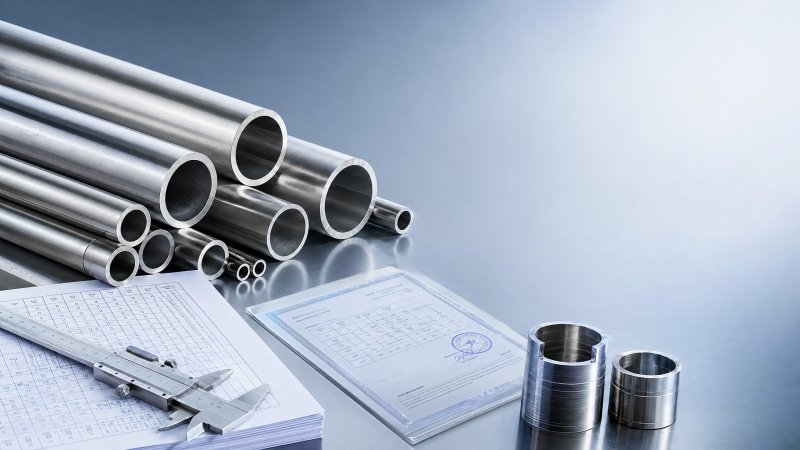
How to Decode Stainless Steel Pipe Specifications Without Missing Critical Details
When you read stainless steel pipe specifications, start by breaking the line into 6 core elements: product type, manufacturing method, size, wall thickness or schedule, material grade, and applicable standard. This sequence reduces confusion and helps you compare quotations from different mills or traders more accurately. For many buyers, 80% of mistakes happen when two of these six elements are assumed rather than confirmed.
For example, “2 in ASTM A312 TP304L SCH 40 welded pipe” tells you far more than just material and diameter. It indicates nominal size, standard family, grade, lower-carbon variation, schedule, and manufacturing route. If one supplier quotes seamless and another quotes welded, price, lead time, and fabrication response can all differ. In common export supply, the lead time gap may range from 2 to 6 weeks depending on size and production planning.
You should also separate nominal dimensions from actual dimensions. NPS or DN is not the same as exact outside diameter in all product systems. Schedule defines wall thickness, but wall values vary by nominal size. That means SCH 40 on a small pipe and SCH 40 on a larger pipe are not interchangeable thickness values. This is one of the most common interpretation errors in early-stage sourcing.
The six fields you should always verify
- Nominal size and actual outside diameter
- Wall thickness stated by schedule or millimeter value
- Grade, including variants such as 304 vs 304L or 316 vs 316L
- Manufacturing type: welded or seamless
- Applicable standard such as ASTM A312 or equivalent
- Finish, testing, and documentation requirements
A quick reading framework for common spec lines
If you are screening quotations quickly, use this order: size first, grade second, schedule third, standard fourth, process fifth, and then finish or testing notes. In most RFQ comparisons, this 5-step sequence can eliminate major mismatches in less than 10 minutes per item line, especially when the supplier offers “equivalent” materials that are not fully equivalent in application.
This reading discipline also matters when stainless components are supplied together with other corrosion-resistant products. In filtration, processing, and architectural fabrication, buyers may compare pipe with wire mesh, screens, or formed stainless parts. For example, when corrosion resistance, open area, and dimensional consistency are part of one assembly, it helps to review related product data in the same structured way. A useful example is 306 Stainless Steel Welded Mesh, which is available in grades such as SS 201, 304, 304L, 316, 316L, and 430, with diameter ranges from 0.0008″ to 0.12″, mesh counts from 2 to 635 mesh, and roll widths up to 240″. This kind of parameter discipline is exactly the mindset buyers should apply when checking stainless steel pipe specifications.
That comparison is useful because the broader market is moving toward more integrated stainless sourcing. Buyers no longer evaluate steel products only by material label. They increasingly compare service conditions, fabrication behavior, corrosion resistance, dimensional range, and production suitability across related stainless categories.
Where Most Interpretation Mistakes Happen and Why They Create Cost Risk
Most mistakes in stainless steel pipe specifications happen at the boundary between technical language and purchasing shortcuts. A buyer may see “304 stainless pipe” and assume all 304 pipe is functionally the same, even though welded and seamless forms, schedule differences, and standard-specific tolerances may create very different outcomes in use. On medium-volume orders, these differences can affect both material yield and site installation time.
Another frequent issue is grade simplification. For example, 304 and 304L are often treated as interchangeable in casual conversation, but lower carbon content may be important in welded fabrication to reduce sensitization concerns. The same logic applies to 316 and 316L. If the project involves repeated welding, corrosive media, or heat-affected zones, the suffix is not a minor detail.
Standard confusion is also common. A supplier may quote to one dimensional system while the buyer expects another. This becomes more likely in international trade, where nominally similar products may follow different specification language. A mismatch may not appear until shop drawing review, test certificate inspection, or on-site fit-up, which is often too late for a low-cost correction.
The following table highlights common mistakes, the usual cause, and the likely effect on project performance or cost.
These risks are why experienced buyers do not rely on short descriptions alone. They request full specification confirmation before production starts, especially on repeat orders where old assumptions may not match updated project drawings or end-user requirements.
What the market is rewarding now
Current sourcing behavior favors suppliers and buyers that can align technical detail early. In practical terms, this means cleaner RFQs, clearer comparison sheets, and fewer revision cycles. When the stainless steel pipe specifications are reviewed correctly in the quotation stage, many projects can reduce clarification rounds from 3 or 4 to 1 or 2, which helps protect procurement schedules.
For companies active in structural steel manufacturing and export, this trend matters because mixed-product packages are common. A project may include steel beams, channels, formed profiles, and selected stainless items in one sourcing window. The ability to read and communicate specifications accurately has become part of overall supply reliability.
How Different Buyers Should Judge Stainless Steel Pipe Specifications Going Forward
Not every buyer needs the same depth of technical review, but every buyer needs the right checklist. Project planners usually focus on compatibility with design intent, delivery timing, and standard consistency. Fabricators look more closely at weldability, tolerance, and cut length efficiency. Importers and distributors care about market acceptability, stock flexibility, and documentation readiness. The trend is toward role-specific review instead of one generic approval process.
This matters because the same stainless steel pipe specifications may be acceptable for one end use and unsuitable for another. A decorative tube application, a structural support frame, and a process-related line can all involve stainless material, but they do not use the same evaluation logic. Buyers who understand this distinction are better positioned to avoid both technical failure and unnecessary cost loading.
As procurement becomes more digital, another change is the increased use of online catalogs and spreadsheet comparisons. That makes concise but complete specification language even more important. If the quote line is ambiguous, the error can multiply across 20, 50, or 100 line items in a batch procurement review.
A practical decision checklist
- Confirm whether the pipe is intended for pressure, structural, decorative, or fabrication use
- Check whether grade selection reflects corrosion exposure, welding demand, and cost target
- Verify nominal size, exact outside diameter, and wall thickness before approving drawings
- Align the requested standard with the destination market or end-user specification
- Request MTC and testing scope confirmation before production for critical orders
- Review packaging, cut lengths, and marking requirements for export handling and site use
Signals worth watching in the next 12 to 24 months
Going forward, buyers should watch for three signals. First, more RFQs will likely request alternative grade or standard options to balance cost and availability. Second, integrated sourcing packages will continue to combine stainless items with structural steel components. Third, documentation expectations may increase, especially where international buyers want better traceability without slowing shipment cycles.
That means the best response is not to memorize every code, but to use a repeatable interpretation process. If your team can consistently read stainless steel pipe specifications, compare alternatives, and identify the few variables that truly affect performance, you will make faster and safer sourcing decisions.
Why Clear Communication With Your Steel Supplier Matters More Than Ever
In today’s market, specification clarity is part of supplier quality. A dependable steel partner should be able to explain the difference between grades, standards, and schedules in practical terms, not just repeat catalog language. This is especially important for buyers managing global construction, industrial, and manufacturing projects where stainless items may sit alongside angle steel, channel steel, steel beams, cold formed profiles, and custom fabricated parts.
Hongteng Fengda works with international buyers that need reliable steel products, customized solutions, and stable supply coordination from China. For procurement teams comparing stainless and structural materials across multiple standards, clear communication helps reduce sourcing risk, avoid avoidable revisions, and keep lead times predictable. In many export projects, a well-confirmed specification at the inquiry stage saves far more time than a late technical correction after production planning begins.
If you are reviewing stainless steel pipe specifications for an upcoming project, we can help you confirm key parameters before you place an order. That may include grade selection, dimensional checks, standard matching, delivery lead time discussion, OEM or customized processing, and document expectations for export supply.
Why choose us
We support global buyers with practical steel sourcing insight, not just product lists. Whether you need help comparing ASTM and other common standards, confirming pipe-related requirements within a broader steel package, or evaluating custom fabrication feasibility, our team can provide targeted support based on your application and procurement priorities.
Contact us if you want to discuss stainless steel pipe specifications, product selection, delivery timelines, sample support, certification-related questions, or quotation details for structural and industrial steel supply. The earlier the technical details are checked, the easier it is to control cost, reduce risk, and move your project forward with confidence.
Please give us a message


Please enter what you want to find