A stainless steel sheet for kitchen use is popular for good reason: it combines a clean modern look with practical everyday performance. From resisting stains and moisture to making wipe-down cleaning faster, this material helps homeowners keep cooking spaces hygienic with less effort. Understanding what affects maintenance can help you choose the right finish, thickness, and quality for a kitchen that stays attractive over time.
Understanding Why Kitchen Stainless Steel Is Easier to Maintain
For most households, easy maintenance means three things: fast daily cleaning, lower risk of visible damage, and a surface that stays presentable over several years of regular cooking. A stainless steel sheet for kitchen applications performs well in all three areas because it is non-porous, moisture-resistant, and less likely to trap oils, food residue, or bacteria compared with rougher or absorbent materials.
The word “stainless” does not mean “never marks” or “never needs care.” It means the steel contains enough chromium to form a passive protective layer on the surface. In common kitchen environments, that layer helps reduce rust risk when the material is properly selected, properly finished, and cleaned with suitable products. In everyday use, this often translates into wipe-down maintenance that takes a few minutes rather than deep scrubbing every week.
Homeowners also value the visual consistency of stainless steel. In a busy kitchen, counters, backsplashes, cabinet panels, and appliance trims may be cleaned 1 to 3 times per day. A material that tolerates repeated contact with water, steam, mild detergents, and food acids is easier to live with than one that stains, swells, or needs sealing at fixed intervals.
Key maintenance-friendly characteristics
- Smooth, non-porous surface that does not readily absorb spills.
- Good resistance to humidity, steam, and routine kitchen splashes.
- Compatibility with mild soap, diluted cleaners, and microfiber cloth cleaning.
- Stable appearance across temperature changes commonly found near stoves, sinks, and dishwashers.
- Long service life when thickness, finish, and grade match the environment.
These benefits explain why the stainless steel sheet for kitchen market remains relevant for both new home projects and remodeling work. The material is widely used not only in domestic kitchens but also in restaurants, bakeries, healthcare food preparation spaces, and light industrial food environments where hygiene and repeat cleaning matter every day.
What the Industry Looks at When Evaluating Kitchen Stainless Steel
In the steel industry, maintenance is not judged by appearance alone. Manufacturers and buyers typically look at grade, surface finish, thickness range, fabrication quality, and compliance with standards such as ASTM, EN, JIS, or GB. These factors influence whether a panel remains easy to clean after 6 months, 2 years, or longer under normal household use.
From a production perspective, a smoother and more consistent finish often means fewer microscopic valleys where grease and fingerprints collect. Sheet flatness also matters. If kitchen panels warp or show fabrication stress, they can create edges, joints, and uneven reflections that make dirt more visible and cleaning more time-consuming. This is one reason reliable steel processing and quality control are important even for end consumers who never see the factory side.
A structural steel manufacturer serving international markets, such as Hongteng Fengda, typically works under controlled production conditions and standard-based quality practices. Although the company is known for structural steel, the same discipline in material consistency, dimensional control, and export support helps buyers better understand steel quality across applications, including interior and utility-oriented steel products used in construction and manufacturing projects.
Main factors that affect maintenance results
The table below shows how common steel-related factors influence upkeep in a residential kitchen. This is useful when selecting a stainless steel sheet for kitchen walls, cabinet facings, counters, or protective panels.
For end users, the practical lesson is simple: “easy to maintain” starts with the right manufacturing and finishing decisions. A low-cost sheet that shows every smudge or traps grime at joints can become more labor-intensive within weeks, even if it looked acceptable at installation.
Which Finishes and Configurations Work Best in Real Kitchens
Not every stainless finish behaves the same way in a home environment. If your priority is lower maintenance, finish selection is often more important than decorative shine. A bright reflective panel may look striking on day one, but a brushed or No. 4 style finish usually performs better in day-to-day family kitchens because it softens the visibility of fingerprints, splash marks, and hairline scratches.
This is especially important in homes with frequent cooking. In kitchens used 2 to 4 times daily, surfaces near stoves and sinks are exposed to steam, salt, oil droplets, and acidic ingredients. Under these conditions, a stainless steel sheet for kitchen backsplashes or protective wall panels should be chosen not only for look but also for cleaning behavior under repetitive contact with food residues.
Thickness and support also matter. Thin decorative sheets can work well for cladding, cabinet faces, and wall coverings when bonded correctly to a stable base. Work zones that receive pressure, pot impact, or frequent utensil contact may require thicker material or structural reinforcement to prevent denting, which can make cleaning more awkward over time.
Common finish choices for home use
The following comparison helps homeowners understand how finish choice changes maintenance effort and appearance in common kitchen zones.
In most homes, brushed or matte options provide the most balanced result over a 3- to 5-year period of regular use. They usually reduce the visible maintenance burden without sacrificing the clean, contemporary character people expect from stainless steel.
A note on related stainless products in fabrication
Kitchen projects sometimes involve more than sheet material alone. During custom fabrication, support frames, trims, or matching components may use stainless bars or profiles. For example, products such as 310 Stainless Square steel rod can be relevant in manufacturing and construction-related support applications where consistent dimensions, standard compliance, and workable surface options are needed.
The preprocessed information for this type of stainless bar includes square bar ranges from 18 mm to 47 mm, length options from 1 to 6 meters, and finishes such as Bright Polished, Mattness Surface Treatment, and No. 4. It also references common standards including ASTM, AISI, JIS, GB, DIN, and EN. While a bar product is not the same as a kitchen sheet, understanding related stainless fabrication materials helps when a project includes brackets, edging, or custom structural details around kitchen installations.
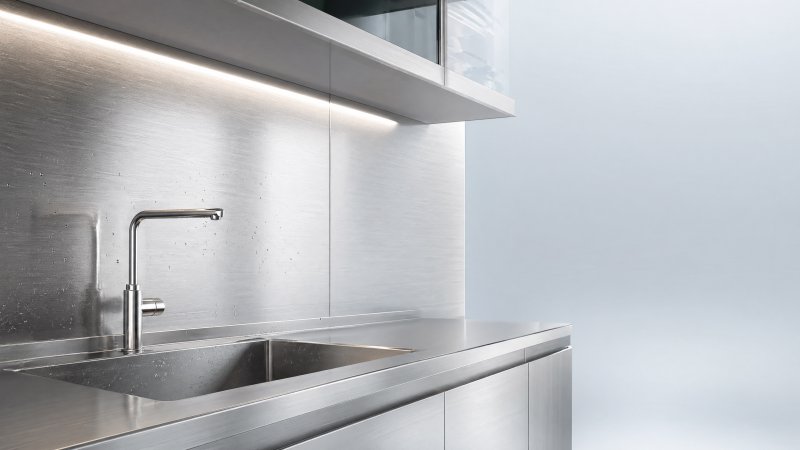
Where a Stainless Steel Sheet for Kitchen Use Adds the Most Value
The maintenance advantage of stainless steel becomes clearer when you match it to the right area. In splash-prone zones, the material can save time almost immediately. In decorative-only zones, the value depends more on finish selection and whether the homeowner is comfortable with occasional fingerprint visibility. This is why the best results come from using the material where its functional strengths matter most.
For example, behind the cooktop, grease particles and steam can accumulate several times per day. A smooth sheet backsplash usually wipes clean faster than porous tile grout lines. Around sinks, repeated wetting is common, often more than 20 to 30 splash events daily in an active household. In these areas, stainless steel reduces the concern many owners have about moisture penetration and staining.
The material also works well in utility kitchens, rental units, compact apartments, and homes that prioritize a practical look over highly delicate decorative finishes. In such settings, a stainless steel sheet for kitchen panels supports easier turnover cleaning, lower long-term upkeep, and a more durable response to repeated use.
Typical household applications
- Backsplashes behind ranges and preparation counters where oil and sauce splashes are frequent.
- Sink wall protection in high-humidity corners prone to water spotting and routine cleaning.
- Cabinet or appliance cladding for homeowners who want a coordinated metallic surface.
- Utility worktops and side panels where practical durability is more important than decorative softness.
- Small renovation projects requiring easy-to-clean surfaces without complex maintenance schedules.
How different users benefit
End consumers are not all looking for the same outcome. Some want a family-friendly kitchen that can be cleaned in under 10 minutes after dinner. Others want a premium minimalist design with fewer visual interruptions. The table below shows how usage patterns influence the value of stainless steel in kitchen environments.
This classification shows that the easiest-maintenance solution is not always the most expensive or the most polished. It is usually the one that matches real use frequency, cleaning habits, and the surface conditions of the kitchen.
Practical Advice for Choosing and Caring for Kitchen Stainless Steel
If you are comparing options, start with the environment rather than the appearance. A kitchen with heavy frying, frequent steam, and daily family use should prioritize a forgiving finish and reliable corrosion resistance. A lightly used display kitchen can place more weight on visual effect. This practical distinction helps narrow the best stainless steel sheet for kitchen selection faster than looking at finish samples alone.
Ask about standards, finish consistency, fabrication tolerance, and whether edges will be exposed or covered. Even small details matter. For example, poor edge finishing can create cleaning discomfort from day one. Likewise, poor installation around corners or outlets can leave gaps where grease accumulates. Maintenance is not just about the material; it is about the completed system.
Routine care is usually simple. In most homes, wiping with a soft cloth and mild cleaner after cooking is enough. Deeper cleaning may be needed once every 1 to 2 weeks in heavy-use areas. Avoid harsh abrasive pads or chlorine-heavy products unless the manufacturer confirms compatibility, because they can damage the surface or weaken the clean visual finish over time.
A simple selection checklist
- Define the use area: backsplash, sink surround, cabinet cladding, or worktop support zone.
- Choose a finish based on cleaning visibility, not only showroom appearance.
- Confirm the sheet thickness or support method required for the intended load and contact level.
- Check whether the material aligns with recognized standards such as ASTM, EN, JIS, or GB.
- Review joint design, edge treatment, and installation details before final approval.
- Ask about lead time, sample availability, and custom sizing if the kitchen layout is non-standard.
Why material sourcing still matters to consumers
Even if a homeowner buys through a contractor or distributor, the supply side affects final satisfaction. Consistent steel processing, stable production capacity, and standard-based export experience can reduce issues related to finish mismatch, replacement delays, or inconsistent dimensions. These factors are familiar to steel manufacturers serving construction and industrial markets, where reliability is often measured not only by price but also by repeatable quality and delivery discipline.
That is one reason experienced Chinese steel exporters remain important in global supply chains. Companies with modern manufacturing facilities and broad standard familiarity can support buyers who need practical steel solutions, whether for structural components, fabricated parts, or related stainless applications that require controlled specifications and dependable communication.
Why Choose Us for Steel Support and Project Consultation
Hongteng Fengda is a professional structural steel manufacturer and exporter from China, supplying reliable steel products and customized solutions for global construction, industrial, and manufacturing projects. Our experience with angle steel, channel steel, steel beams, cold formed steel profiles, and custom structural components gives buyers a strong manufacturing foundation when evaluating steel quality, specifications, and project coordination.
We understand that even end consumers benefit from clear material guidance. If your kitchen or interior project involves stainless sheet selection, fabricated supports, or coordination with broader steel components, we can help you communicate more effectively with contractors, distributors, or project teams. Our production discipline, international standard awareness, and export support can improve clarity on specifications, lead times, and quality expectations.
Contact us if you need support with parameter confirmation, product selection, finish and specification discussion, delivery cycle planning, custom solution evaluation, certification standard references, sample support, or quotation communication. Whether you are comparing a stainless steel sheet for kitchen use or aligning related steel products for a wider project, we are ready to help you move forward with practical and reliable information.
Please give us a message


Please enter what you want to find