When checking the weight of i beam per meter, many buyers find that handbook tables do not always match actual delivered steel. The gap often comes from tolerances, steel grades, rolling standards, and production methods. For engineers, purchasers, and project managers, understanding these differences is essential for cost control, structural steel selection, and supplier evaluation—especially when comparing H-beam steel price, structural steel components, and global manufacturing specifications.
Why does the weight of I beam per meter differ from handbook tables?
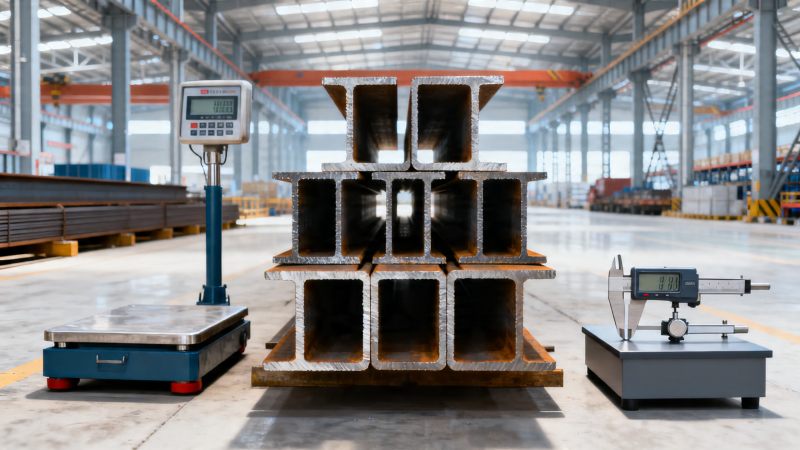
In steel procurement, the theoretical weight of an I beam per meter is a calculation value based on nominal section dimensions and standard density. It is useful for estimation, budgeting, and drawing review. However, the actual weight of rolled steel often moves within an allowable range because flange thickness, web thickness, corner radius, and rolling profile can vary within the tolerance permitted by the applicable standard.
This difference matters in at least 3 practical situations: freight settlement, material takeoff, and structural verification. A small deviation of even 2%–5% becomes visible when a project includes 50 tons, 200 tons, or more. For procurement teams, that affects landed cost. For site teams, it affects lifting plans and stock records. For technical reviewers, it affects whether the delivered beam really matches the intended specification.
The first reason is dimensional tolerance. Standards such as ASTM, EN, JIS, and GB define nominal dimensions, but they also allow controlled variation. If the flange is slightly thicker, or the web is slightly heavier within tolerance, the actual mass per meter will increase. If the section is closer to the lower limit, the delivered weight may be lower than a handbook table suggests.
The second reason is the difference between section families. In everyday conversation, many buyers mix I beam, H beam, universal beam, and wide flange beam. Yet their cross-sectional geometry is not identical. When people compare one table with another without confirming the exact standard series, they can wrongly assume a supplier has delivered a weight error when the real issue is that they are comparing two different beam systems.
What usually changes the actual delivered weight?
For project teams trying to evaluate a discrepancy, it helps to separate the causes into measurable categories. In most structural steel sourcing cases, 4 factors explain the difference clearly enough to support a technical or commercial decision.
- Section tolerance: flange width, web height, web thickness, flange thickness, and root radius can vary within standard limits.
- Standard series mismatch: ASTM, EN, JIS, and GB beam tables are not always interchangeable, even when depth looks similar.
- Steel chemistry and production route: density differences are small, but rolling and finishing conditions can still affect final measurable mass.
- Length and weighing method: bundle weight, scale accuracy, moisture, rust scale, and cut-length tolerance can influence received figures.
For users, operators, and quality teams, this means a handbook is a reference, not the final inspection result. The correct comparison should be made against the relevant production standard, mill test documentation, and measured dimensional tolerances. That is the safer way to judge whether a beam is compliant or whether a commercial claim should be raised.
How should buyers compare theoretical weight, actual weight, and pricing?
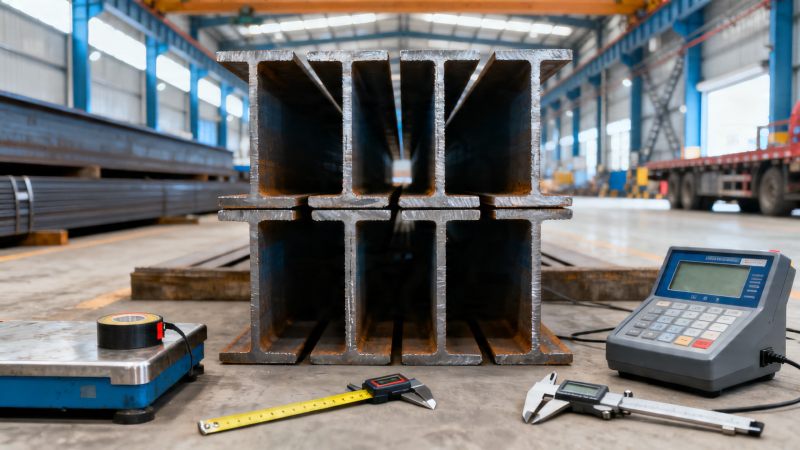
The weight of I beam per meter is closely tied to pricing, but not in a simplistic way. In export business, quotations may be based on theoretical weight, actual weight, or a contract-specific settlement method. That is why two offers with similar unit prices can still produce a different total invoice amount after packing, weighing, and shipment. Buyers should confirm the pricing basis before comparing H-beam steel price or beam procurement cost.
A common mistake is to compare only price per ton without asking 5 essential questions: which standard, which beam series, what weight basis, what length tolerance, and what inspection method. If those points are not aligned, a lower unit price can become a higher total cost after freight, cut loss, or on-site adjustment. For financial approvers and project managers, that creates hidden budget pressure late in the schedule.
The table below shows how procurement teams can evaluate weight differences more accurately when reviewing structural steel components from multiple suppliers. It is especially useful for cross-border sourcing, where standards and terminology may differ between regions.
The key takeaway is simple: do not judge a beam offer by one number alone. Review the whole chain from section table to inspection method. For many overseas projects, a difference of 1–3 kg/m on a large section can materially affect tonnage, sea freight, and crane planning. A supplier that explains the weight basis clearly often reduces commercial disputes later.
A mid-project example of cross-product decision making
In industrial projects, procurement teams often compare different metal products at the same time. Structural members, screens, filters, and process-related components may all need to meet separate standards. That is why disciplined specification control matters beyond steel beams alone. For example, when corrosion resistance and filtration performance are also needed in the same project package, buyers may source items such as 304 Stainless Steel Welded Mesh together with structural sections.
This inserted example is relevant because it shows how technical comparison works in practice. The mesh is available in grades such as SS 201, 304, 304L, 316, 316L, and 430, with diameter ranges from 0.0008″ to 0.12″, mesh counts from 2 to 635 mesh, and roll width up to 240″. In filters, sieves, chemical plants, mining, architecture, and residences, buyers focus on corrosion resistance, open area, and micron retention, just as beam buyers focus on section tolerance, weight basis, and compliance.
The broader lesson for purchasing and engineering teams is that every metal product should be checked against its own application logic. A beam table alone cannot solve load-bearing decisions, just as a mesh specification alone cannot guarantee filtration suitability. Good sourcing combines dimensional data, use conditions, standard references, and supplier communication before approval is issued.
What should engineers and procurement teams verify before placing an order?
If the goal is to control risk, the best time to clarify the weight of I beam per meter is before order confirmation, not after goods arrive. For construction firms, fabricators, distributors, and industrial buyers, a practical checking routine usually involves 6 core points. This reduces disputes about weight, dimensions, substitution, and standards during the 2–4 week production and shipment coordination window common in export transactions.
6 checkpoints before approval
- Confirm the exact beam type and standard series. Do not assume I beam, H beam, and wide flange beam are identical.
- Ask whether quotation and invoice use theoretical weight or actual weight as the settlement basis.
- Request nominal dimensions, tolerance range, steel grade, and cut length in one consistent technical sheet.
- Check whether the project requires ASTM, EN, JIS, or GB compliance and whether substitution is permitted.
- Clarify inspection documents, such as mill test certificate, dimensional inspection, and packing list weight.
- Confirm delivery format: full lengths, cut lengths, bundled packing, container loading plan, and destination handling constraints.
These 6 checkpoints are valuable for more than technical teams. Business evaluators and decision makers benefit because each point links directly to cost, delay risk, or claim probability. Quality and safety managers also benefit because proper dimensional verification supports safer lifting, correct storage, and more predictable fit-up during fabrication or erection.
The table below can be used as a practical supplier evaluation tool when comparing structural steel manufacturers. It helps separate a technically sound offer from a quote that looks attractive but leaves too many assumptions unresolved.
A disciplined procurement process usually saves more than price-only negotiation. In many cases, a supplier with stable production capacity, clear documentation, and standard-aware communication creates lower total risk than a supplier offering a slightly cheaper ton price with unclear settlement terms.
How this applies to global sourcing from China
For importers and distributors working with Chinese structural steel suppliers, the strongest results usually come from early alignment. Hongteng Fengda manufactures and exports angle steel, channel steel, steel beams, cold formed steel profiles, and customized structural steel components for global construction and industrial use. This matters because projects often need mixed product categories under one sourcing plan, not a single item in isolation.
With compliance experience across ASTM, EN, JIS, and GB-related supply requirements, and with support for standard specifications as well as OEM solutions, a manufacturer can help buyers reduce mismatch risk between drawings, contract wording, and delivered goods. For regions such as North America, Europe, the Middle East, and Southeast Asia, that consistency is especially important when shipment windows and acceptance schedules are tight.
Common misconceptions, risk warnings, and practical FAQ
Even experienced buyers can misread beam weight data when comparing multiple offers in a short time. The most common issue is not a bad supplier but an incomplete technical review. The following questions reflect what engineers, purchasers, distributors, and project owners often ask when the weight of I beam per meter seems inconsistent with a catalog or design table.
Is a difference between table weight and delivered weight always a quality problem?
No. A difference can be normal if it remains within the permitted tolerance of the applicable standard and if the section dimensions are compliant. The correct approach is to compare nominal size, measured dimensions, length tolerance, and the agreed settlement method. Only after that should quality teams consider whether nonconformity exists.
Should contracts use theoretical weight or actual weight?
Either can work, but the contract should state the method clearly. Theoretical weight is often easier for budgeting and design alignment. Actual weight may be more realistic for final shipment settlement. In export practice, clarity matters more than preference. A one-line omission in the contract can create a large invoice debate when quantities reach dozens or hundreds of tons.
What if two suppliers offer the same beam size but different kg/m values?
First, verify whether they are quoting the same standard family. Second, check whether one supplier is using a local beam table and the other is using another international series. Third, ask for the full dimensional drawing of the section. If the dimensions are not identical, the kg/m should not be expected to match. This is one of the fastest ways to avoid a wrong award decision.
How long does review and supply coordination usually take?
For standard structural steel items, technical confirmation and quotation alignment may take 2–5 working days when drawings and standards are clear. Production and delivery timing depends on section size, quantity, and destination, but many buyers plan in stages: specification confirmation, production scheduling, then packing and shipment. For custom structural steel components, additional drawing review time is often necessary.
What is the safest way to reduce sourcing risk?
Use a 4-part control method: confirm standard, confirm dimensions, confirm weight basis, and confirm inspection documents. That method works well for technical reviewers, financial approvers, and procurement managers because it connects engineering accuracy with commercial control. It also makes supplier comparison more transparent and easier to defend internally.
Why choose a structurally focused supplier for beam weight and specification control?
When beam weight differences affect bidding, fabrication, or shipment planning, buyers need more than a price sheet. They need a supplier that understands section standards, export communication, and project documentation. Hongteng Fengda focuses on structural steel manufacturing and export from China, supplying angle steel, channel steel, steel beams, cold formed profiles, and customized structural steel components for global projects.
For buyers comparing H-beam steel price, I beam weight tables, and international standards, the practical value lies in coordinated support. That includes parameter confirmation, standard matching, OEM discussion where needed, and communication around batch consistency, lead time, and inspection requirements. This is especially useful for procurement teams managing 3 parallel pressures at once: budget, schedule, and compliance.
If you are reviewing beam kg/m discrepancies, planning a new structural steel purchase, or comparing standard and custom sections, you can contact us for targeted support. We can discuss section parameters, suitable steel product options, quotation basis, delivery timing, sampling possibilities, and document expectations for ASTM, EN, JIS, or GB-related supply needs.
A productive inquiry usually includes 4 items: required standard, section size list, quantity range, and destination market. With that information, it is easier to evaluate theoretical versus actual weight, recommend suitable structural steel solutions, and prepare a quotation that reduces ambiguity before production starts.
Please give us a message


Please enter what you want to find