Structural steel connection failures can quietly drive up rework, delay schedules, and increase project costs. From poor fit-up and structural steel welding defects to mismatched structural steel components and overlooked structural steel grades, these issues affect quality, safety, and procurement decisions. This article explains the most common connection problems, why they happen, and how manufacturers, engineers, and buyers can reduce risk before structural steel erection begins.
Why do structural steel connection problems create so much rework?
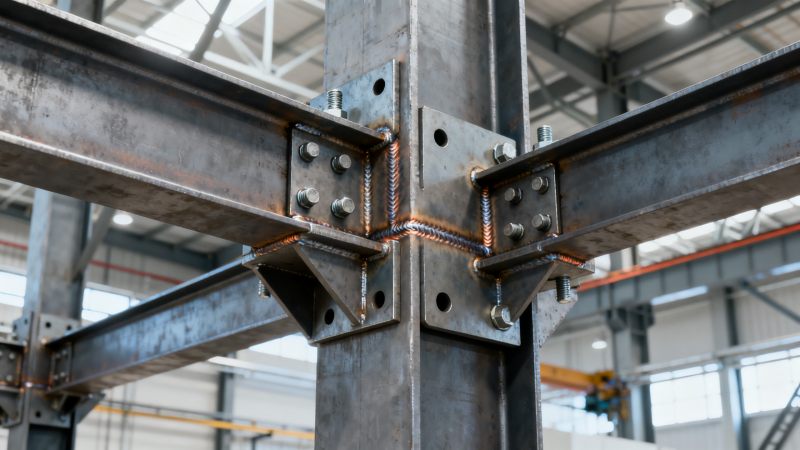
In steel projects, most visible delays do not start with a major collapse or a dramatic design error. They usually begin with small connection mismatches: bolt holes off by 2–3 mm, flange surfaces out of alignment, weld preparation that does not match the approved drawing, or structural steel components arriving with inconsistent tolerances. These issues seem minor in fabrication, but they become expensive when they are discovered during erection, crane time, or final inspection.
For project managers and procurement teams, rework is more than a workshop problem. It affects labor planning, site sequencing, equipment rental periods, and cash flow approval. A connection that needs cutting, re-drilling, weld repair, or replacement can push one activity back by 1–3 days, and that delay often impacts follow-up trades. In larger industrial or commercial steel packages, a repeated connection issue can extend handover milestones by 2–4 weeks.
For technical evaluators and quality control teams, connection reliability depends on a chain of decisions rather than one isolated factor. Material grade selection, dimensional control, shop drawing review, weld procedure suitability, surface treatment, and packaging all affect whether parts fit as intended. When any link is weak, the rework rate rises. That is why structural steel connection problems must be managed from design review to export loading, not only at the jobsite.
A capable manufacturer reduces these risks by controlling both production consistency and communication clarity. Hongteng Fengda, as a structural steel manufacturer and exporter from China, supports global buyers with standard and customized structural steel components under ASTM, EN, JIS, and GB related requirements. For buyers comparing suppliers, the real value is not only unit price; it is whether the steel package arrives ready for predictable installation with fewer corrections and lower sourcing risk.
Typical reasons rework rates increase before and during erection
- Dimensional deviation exceeds the accepted range, such as hole location drift, web distortion, or member length inconsistency.
- Structural steel welding defects, including undercut, porosity, incomplete fusion, or poor edge preparation, create repair cycles.
- Material grade mismatch between design documents and fabricated parts causes approval delays or rejection.
- Connection details are manufacturable on paper but difficult to assemble in field conditions, especially in tight access zones.
- Packaging, marking, and shipment sequence do not match erection priority, increasing handling time and site confusion.
The key lesson is simple: if connection quality is checked only at final assembly, rework becomes a site problem. If connection quality is built into design review, fabrication control, and pre-shipment verification, rework becomes manageable.
Which connection defects appear most often in steel fabrication and field installation?
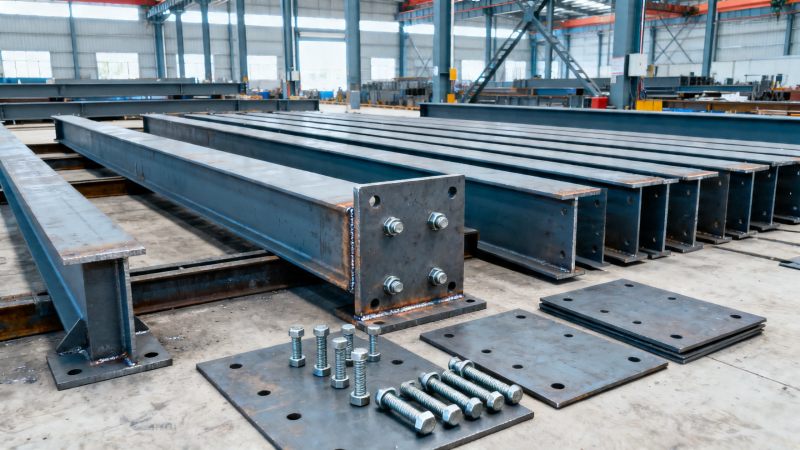
The most frequent structural steel connection problems fall into four groups: geometric mismatch, welding defects, fastener interface issues, and specification inconsistency. Each group affects a different stakeholder. Operators focus on assembly difficulty, inspectors focus on conformance, procurement teams focus on replacement cost, and decision-makers focus on schedule certainty. Understanding the defect type helps teams choose the right corrective action before rework expands.
Geometric mismatch usually shows up first. Examples include beam-to-column end plates that do not sit flat, channel members with twisted profiles, base plates with anchor bolt pattern deviation, and cold formed members whose actual shape differs from the shop drawing. Even within acceptable mill tolerances, accumulated deviation across several components can make a connection difficult to assemble. In practice, a small error repeated over 10–20 members can trigger a large installation delay.
Weld-related problems are the second major source of rework. Structural steel welding defects often result from poor fit-up, incorrect heat input, contaminated surfaces, or unsuitable joint preparation. For galvanized or coated parts, extra attention is needed because coatings can affect weld cleanliness and post-weld repair requirements. Repair welding also adds inspection time, especially where visual inspection, dimensional review, and additional NDT are specified by the project.
Specification inconsistency is less visible but equally costly. A project may require one steel grade, one coating type, or one hole tolerance standard, while the supplied batch follows another equivalent-looking but non-approved option. This is especially critical in export projects involving ASTM, EN, JIS, and GB references. The result may not be physical failure, but it can still stop installation until documents, MTCs, and approvals are reconciled.
Common defect patterns and their practical impact
The table below summarizes common connection problems seen in structural steel projects, along with their likely causes and the operational consequences that increase rework rates.
For buyers and engineering teams, this comparison shows why a lower quoted price can become more expensive after delivery. The cost of one correction may include workshop repair, freight adjustment, idle installation crews, and extended inspection cycles. In many projects, avoiding 3–5 repeat defects is more valuable than saving a small amount per ton at purchase stage.
Where inserted steel sections can reduce connection risk
In secondary framing, wall beams, purlin support, brackets, lightweight roof structures, and mechanical support members, profile consistency directly affects connection quality. A standardized channel section can reduce fit-up variation when dimensions, grade, and coating are clearly controlled. For projects needing such members, Metal Channel can be integrated into the steel package for applications including construction, automobile manufacture, steel structure construction purlin, wall beam, bracket, and mechanical column support.
Available options may include carbon structural steel and galvanized channel products in grades such as Q195, Q235, Q235B, Q345B, Duplex, and 201/202/304/316, with thickness from 1.5 mm to 25 mm, height from 80 mm to 160 mm, and common lengths of 6–12 m. For buyers comparing standard versus OEM fabrication, the practical checks are tolerance control, weldability, corrosion resistance, and whether the supplied section aligns with ASTM, DIN, JIS, BS, or GB/T referenced project requirements.
This type of profile is especially useful where repeated connections must be installed quickly and consistently. When the profile geometry is stable, crews spend less time correcting local fit-up, and inspectors can verify the package faster. That is one reason many distributors, project contractors, and industrial fabricators prefer channel-based solutions for repetitive structural details.
How can buyers and engineers prevent connection problems before production starts?
The most effective way to reduce structural steel rework is to move problem detection upstream. Instead of waiting for trial assembly or site delivery, teams should review connection risk during the pre-production stage. In most steel supply projects, 4 checkpoints are essential: drawing confirmation, grade verification, dimensional tolerance review, and welding method review. If these are aligned before cutting and drilling begin, many common connection failures can be avoided.
For procurement personnel, the review should go beyond the commercial quotation. Ask whether the supplier can trace material grades to each batch, confirm hole patterns against approved drawings, and provide inspection records for critical dimensions. For project timelines under pressure, also confirm lead time by stage: raw material preparation, fabrication, surface treatment, inspection, and loading. A realistic export timeline often works in phases rather than one undifferentiated promise.
For engineering and QA teams, the review should focus on connection buildability. Can the weld access be achieved after assembly? Are there enough tolerances for field adjustment without weakening the detail? Does galvanizing or coating affect bolt seating or weld repair? A detail that looks efficient on paper may still be difficult to install at height or in confined zones. Early discussion between designer, fabricator, and buyer reduces that risk.
Manufacturers with export experience bring practical value here. Hongteng Fengda supports standard specification supply and OEM structural steel solutions, which is important when buyers need component customization without losing dimensional consistency. For global projects, this matters because the supplier must not only fabricate steel, but also understand document coordination, standard matching, and shipment planning for multi-country compliance expectations.
A practical pre-production checklist for structural steel connections
- Confirm drawing revision status and mark all connection-critical dimensions, including hole spacing, edge distance, and plate thickness.
- Verify steel grade and standard equivalency before material release, especially when project documents reference ASTM, EN, JIS, or GB.
- Review weld joint type, weldability of base material, and coating impact on welding or repair sequence.
- Set dimensional inspection points at fabrication stage, not only at final packing stage.
- Check packing marks and loading sequence so members reach site in erection order rather than random batch order.
These 5 checks are simple, but they address the majority of preventable connection issues. For finance approvers and commercial managers, they also reduce avoidable costs such as emergency air freight, replacement fabrication, and idle subcontractor charges.
What should be evaluated during supplier comparison?
When comparing structural steel suppliers, use a decision table rather than relying only on ex-works price. The matrix below is useful for technical evaluators, purchasers, distributors, and project owners who need to balance cost, compliance, and execution reliability.
This approach helps teams make a better total-cost decision. A supplier that supports stable production capacity, consistent quality control, and dependable lead times often produces lower overall project cost than a lower-price option with uncertain fabrication discipline.
What standards, tolerances, and material choices matter most in connection quality?
Connection reliability depends heavily on whether the selected steel, fabrication method, and inspection criteria match the project standard. In international supply, this usually means cross-checking the design basis against ASTM, EN, JIS, or GB referenced documents. The issue is not simply naming a standard. The issue is whether the fabricated member, connection hole pattern, weld detail, and coating system all support the intended structural and installation requirements.
Tolerance control deserves special attention because connection defects often arise within borderline ranges. A channel profile used in repeated supports, for example, may be accepted with thickness tolerance around +/-0.02 mm and height tolerance around +/-2 mm according to the product control plan, but project assembly performance still depends on how those tolerances stack across brackets, bolts, plates, and connected members. This is why dimensional review should consider the whole connection, not just one part.
Material choice also affects fabrication and field performance. Carbon structural steel may offer cost efficiency and good weldability for many building applications. Hot-dip galvanized or hot-blown galvanized channel products can improve anti-corrosion performance in exposed environments, but coating treatment must be coordinated with hole accuracy, bolt seating, and any future weld repair. Stainless grades such as 304 or 316 may be considered in corrosive service, though cost and fabrication method must be evaluated carefully.
For procurement and safety teams, compliance should be documented in a practical way. That includes standard references, material grade confirmation, inspection records, coating information, and packing identification. Certifications such as ISO, CE, SGS, BV, BIS, UL, or NEMA may be relevant depending on product type, market expectation, or project scope, but the key question is always whether the supplied steel package matches the actual contractual and technical requirement rather than a generic certificate list.
Material and application fit should be judged by scenario
A good material choice for one connection may be inefficient for another. For example, repeated light manufacturing beams or wall beam supports may prioritize shape consistency and fast installation, while heavily loaded industrial frames may prioritize section capacity and connection access. In procurement reviews, it is helpful to separate applications into at least 3 groups: standard building framing, corrosive or outdoor use, and customized OEM component supply. Each group requires a different balance of cost, durability, and fabrication detail.
Quick decision points for specification review
- Check whether the design standard and supplied material grade are directly aligned or require formal equivalency review.
- Review if the coating system changes hole fit, weld preparation, or post-installation maintenance planning.
- For repetitive support members, compare tolerance stability and stock availability, not only nominal dimensions.
- If custom fabrication is needed, confirm sample drawing approval and inspection checkpoints before bulk production.
These review points reduce disagreement between the engineering intent and the supplied steel package. They also support clearer budgeting because they expose hidden cost drivers early, such as coating repair, extra inspections, or non-standard fabrication steps.
FAQ: what do buyers, engineers, and project teams ask most about connection-related rework?
Structural steel buyers and users often ask similar questions when a project faces connection uncertainty. The answers below focus on practical procurement, fabrication, and installation decisions rather than generic theory.
How do I identify a high-risk structural steel connection before fabrication?
Look for 4 warning signs: tight dimensional tolerance with little field adjustment, difficult weld access, mixed standards or grade references, and repeated connections that depend on identical geometry. These details should be reviewed during drawing approval, not after production. If possible, request dimensional checkpoints or sample confirmation for the first batch.
What procurement documents help reduce rework rates?
At minimum, confirm approved drawings, material grade documents, inspection records, packing list with clear marks, and a stage-based delivery plan. For export orders, document alignment is especially important because a part that is physically usable may still be blocked if the paperwork does not match the project requirement.
How long does it usually take to correct connection defects after delivery?
The correction period depends on defect type and site conditions. Minor fit-up adjustment may take several hours to 1 day. Weld repair with reinspection can take 1–3 days. If replacement fabrication and international shipment are needed, the impact can easily extend to 2–4 weeks. That is why pre-shipment control is far less expensive than post-delivery repair.
When is a channel section a better option for repeated supports and secondary framing?
A channel section is often suitable when the project needs consistent geometry, efficient welding or bolting, and predictable stock-based supply for brackets, wall beams, purlins, or light structural supports. If the application needs thickness from 1.5–25 mm, heights around 80–160 mm, and common lengths of 6–12 m, a standardized Metal Channel solution may help simplify repeated connection work while keeping procurement flexible.
What is the biggest mistake buyers make when comparing structural steel suppliers?
The biggest mistake is comparing only price per ton. A better comparison includes 5 points: fabrication accuracy, standard familiarity, quality documentation, delivery reliability, and customization support. In B2B steel sourcing, a small price difference can be outweighed very quickly by one batch of field rework or one delayed milestone.
Why choose a manufacturer that understands both fabrication quality and export execution?
Reducing structural steel connection problems is not only about making parts. It is about aligning drawings, grades, tolerances, welding, inspection, packing, and shipping into one controlled process. Hongteng Fengda supports global construction, industrial, and manufacturing projects with angle steel, channel steel, steel beams, cold formed steel profiles, and customized structural steel components. This combination is valuable when projects need both standard supply and OEM flexibility.
For buyers in North America, Europe, the Middle East, and Southeast Asia, supplier choice often comes down to execution certainty. Stable production capacity helps protect lead times. Strict quality control helps reduce mismatch and repair. Familiarity with ASTM, EN, JIS, and GB related requirements helps avoid specification confusion. For distributors and contractors, these strengths support smoother resale, installation, and project coordination.
If you are evaluating a structural steel package, the most useful discussion usually starts with concrete project details. These include member type, required grades, connection drawings, corrosion environment, quantity range, inspection expectations, and target shipment window. With that information, it becomes easier to judge whether standard stock, custom fabrication, or a mixed supply strategy is the right choice.
Contact us to discuss parameter confirmation, product selection, connection-related fabrication risks, delivery schedule planning, OEM customization, certification expectations, sample support, and quotation comparison. If your goal is to lower structural steel rework rates before erection begins, a detailed early review can save far more time and cost than a late correction at the jobsite.
Please give us a message


Please enter what you want to find