Ordering the wrong structural steel grades can lead to costly delays, safety risks, and compliance issues. For buyers, engineers, and project managers comparing a structural steel channel, reviewing H-beam steel price, or confirming the weight of i beam per meter, understanding commonly confused grades is essential. This guide explains the key differences, selection points, and ordering checks to help you source structural steel components with greater accuracy and confidence.
Why are structural steel grades so often mixed up in real orders?
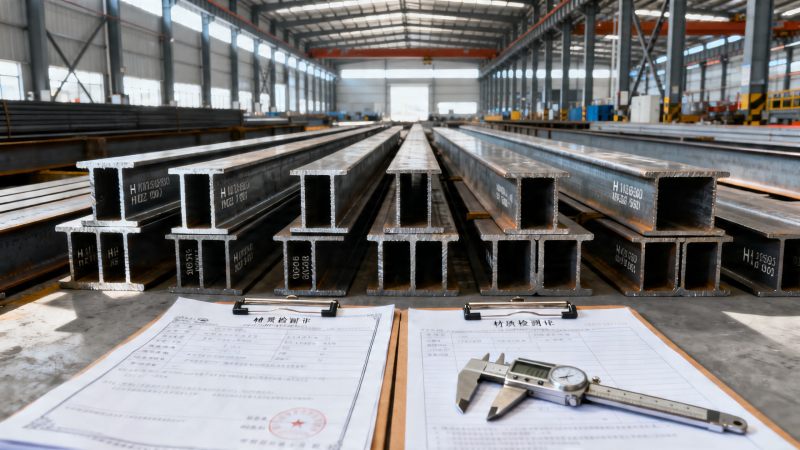
In structural steel procurement, confusion rarely comes from one issue alone. It usually appears when similar names, overlapping mechanical properties, and different regional standards enter the same quotation process. A buyer may request S275, while a fabricator evaluates ASTM A36, and the project consultant checks against JIS or GB equivalents. On paper, these materials can look close enough to substitute, but in actual use they may differ in yield strength, impact performance, weldability, thickness range, or certification route.
This problem is especially common in projects with 2–4 sourcing stages: inquiry, technical review, commercial approval, and final production release. If grade alignment is not confirmed at each stage, the risk moves downstream. That can affect structural steel channel orders, steel beam fabrication, cold formed profiles, and customized components where load path, connection design, and inspection records all matter.
For project managers and procurement teams, the cost of a grade mistake is not limited to raw material replacement. It can trigger re-drawing, re-testing, re-approval, and shipment delays of 7–15 days or longer, depending on stock availability and processing progress. In export business, the issue becomes more serious when the destination market requires ASTM, EN, JIS, or GB compliance to be stated consistently across MTCs, packing lists, and inspection documents.
Hongteng Fengda supports global buyers by reducing this type of sourcing uncertainty at the front end. As a structural steel manufacturer and exporter from China, the company supplies angle steel, channel steel, steel beams, cold formed steel profiles, and customized structural steel components under major international standards. That matters because many grade mix-ups happen before production starts, not after the material reaches site.
The 4 most common reasons behind grade confusion
- Equivalent-looking grades are treated as identical without checking thickness-dependent mechanical values or impact requirements.
- Commercial teams use local naming habits, while technical teams use standard-specific designations.
- Orders focus on section size, such as H-beam or channel dimensions, but omit full material grade and standard revision.
- Replacement proposals are made for price reasons without reviewing welding procedure, inspection level, and end-use environment.
The practical lesson is simple: material names that sound close are not enough. Structural steel grades should always be tied to standard, section type, size range, and required documents. That approach makes technical evaluation faster and purchasing safer.
Which structural steel grades are most commonly confused?
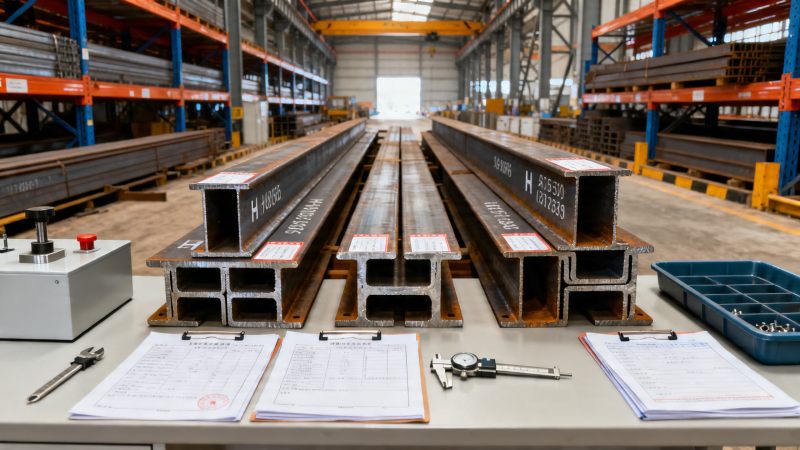
Several grade pairs repeatedly create confusion in global steel sourcing. The most common examples include ASTM A36 versus S275JR, ASTM A572 Grade 50 versus S355, Q235 versus A36, and Q355 versus S355 or A572 Grade 50. These are not perfect one-to-one equivalents. They may overlap in some applications, but they should not be substituted automatically for steel beams, structural steel channel sections, or welded assemblies without checking the full requirement set.
The challenge becomes greater when buyers compare only one parameter, such as nominal yield strength. Structural steel selection should review at least 5 points: applicable standard, chemical composition limits, tensile and yield range, impact test requirement, and traceability documents. For fabricated structures, 2 additional checks are often necessary: weldability in the real section thickness and compatibility with the customer’s approval drawings.
The table below summarizes several frequently mixed-up grades and shows why a quick visual comparison can be misleading during inquiry or order placement.
The key point is that “similar use” does not mean “same order item.” For technical evaluators, the first screen should be code compatibility. For purchasers, the first screen should be document compliance. For finance and business reviewers, the first screen should be the total replacement cost if a mismatch is discovered after cutting, drilling, welding, or galvanizing.
How confusion affects beams, channels, and fabricated parts
When the ordered product is a stock steel section, such as an H-beam or channel, grade confusion may still be corrected before shipment if the material remains unprocessed. But once the order includes sawing, punching, slotting, welding, or OEM fabrication, the risk increases sharply. A structural steel channel with the correct dimensions but the wrong grade may still fail project approval. The same problem appears when a buyer checks H-beam steel price first and treats the lower-cost quote as equivalent without confirming mechanical and document requirements.
Weight calculations can also be misunderstood. The weight of i beam per meter reflects section geometry, not material grade. Two beams with identical theoretical mass per meter can still differ in yield class, certification route, and approved application range. That is why the grade field in the PO must not be replaced by general terms like “mild steel beam” or “standard structural steel.”
A useful mid-project reminder for mixed material sourcing
Although this article focuses on structural steel grades, many global buyers also source corrosion-resistant or process-industry materials within the same procurement cycle. In that case, keeping specifications separated by application is critical. For example, stainless sheet requirements for chemical, food, medical, transport, or packaging applications should not be mixed with structural carbon steel documentation. If your sourcing list includes 304 Stainless Steel Plate, review its thickness range of 0.3mm–200mm, common finishes such as BA, 2B, NO.1, and 8K, and standards like ASTM, JIS, GB, DIN, EN, and ISO independently from structural beam or channel specifications.
This distinction matters because stainless materials such as 304 or 201 are evaluated by different performance criteria, including corrosion resistance, tensile strength, hardness, density, and finish condition. For reference, typical data for this product family may include tensile strength of at least 520MPa, yield strength of at least 275MPa, elongation around 55–60%, and hardness up to 183HB. Those values serve very different design goals from standard structural steel ordering, even when both items are purchased by the same team.
How should buyers compare grades before placing a structural steel order?
A reliable purchasing method starts with use condition, not with price. The right question is not only “Which grade is cheaper?” but “Which grade is accepted by the design, available in the required section, and deliverable within the project schedule?” For most B2B steel orders, procurement should compare at least 3 layers: design requirement, material availability, and compliance documentation. This prevents short-term savings from turning into a 2-week or 4-week disruption later.
The comparison should also be role-specific. Engineers check load-bearing and weldability. Quality and safety teams verify standard compliance and traceability. Purchasing teams review section availability, MOQ, and shipping schedule. Decision-makers and finance teams look at total procurement cost, including rework risk, inspection cost, and possible site delay. A structured checklist keeps all of these departments aligned.
The table below provides a practical evaluation matrix for structural steel grades often used in channel steel, steel beams, and customized structural components.
This type of matrix reduces back-and-forth during procurement. It also helps buyers compare quotations that are not truly aligned. A lower unit price may be based on another grade, another standard route, or another document scope. Without a structured review, that difference is easy to miss.
A 6-point ordering checklist for structural steel buyers
- State the exact grade and standard, such as ASTM, EN, JIS, or GB, instead of using approximate equivalent terms.
- Confirm section type and dimensions, including beam, channel, angle, cold formed profile, or fabricated part.
- Check whether thickness or section size affects the required mechanical properties or testing scope.
- Define document requirements, such as MTC, heat traceability, and pre-shipment inspection records.
- Review lead time for stock supply versus customized processing, often ranging from several days to several weeks depending on workload and finishing scope.
- Align commercial, technical, and quality teams before PO release so the accepted substitution rule is clear.
For international projects, this checklist is particularly useful because one missed line in the PO can create a mismatch between the purchase contract and the actual site expectation. Early clarification saves much more than late correction.
What standards, compliance points, and quality checks should not be skipped?
Structural steel compliance is not only about selecting a known grade. It also depends on whether the material arrives with the right documentation and whether the ordered standard matches the project code. Buyers importing into North America, Europe, the Middle East, or Southeast Asia often need to verify standard family, mill traceability, and acceptance language before shipment. This is especially important for public projects, industrial plants, and audited fabrication contracts.
A practical review covers 4 checkpoints: standard conformity, mechanical property confirmation, dimensions and tolerance verification, and material identification. For customized structural steel components, 2 more checkpoints are common: drawing consistency and weld/fabrication record availability. If galvanizing, coating, or machining is included, those processing steps should also be linked to the base material grade in the production file.
Hongteng Fengda works with international standards including ASTM, EN, JIS, and GB, which helps global buyers compare structural steel requirements more systematically. For importers and distributors, this matters because standard familiarity reduces communication errors during quotation and document preparation. For project teams, it supports faster technical review across multiple parties.
Common compliance checks before shipment
- Verify the grade name on the MTC matches the PO, drawing, and packing documentation exactly.
- Check that the section dimensions correspond to approved beam, channel, or angle specifications, including tolerances where relevant.
- Confirm whether impact testing, supplementary testing, or project-specific inspection was required and completed.
- Ensure heat number traceability remains legible from mill stage to packed shipment, especially for mixed-section orders.
Why document consistency matters as much as steel chemistry
A project can reject perfectly usable steel if the paperwork does not align with the approved specification. This is common when distributors consolidate multiple lots, when equivalent grades are relabeled too loosely, or when teams assume that one standard can replace another without written approval. In many cases, the cost of document correction, port delay, or third-party re-verification can exceed the original price difference between the two grade options.
That is why quality control should begin before shipment, not after arrival. For most structural steel orders, a pre-dispatch review of 30–60 minutes can prevent several days of downstream clarification, especially when the order includes multiple section sizes or a mix of stock and customized items.
How can project teams reduce cost, delay, and substitution risk?
The best way to reduce structural steel grade mistakes is to control substitution before purchase, not after delivery. In practice, teams should define which substitutions are acceptable, who approves them, and what documents are needed. This is particularly important in projects where price pressure encourages near-equivalent offers. A lower offer may still be workable, but only if engineering, quality, and commercial teams review the impact together.
Risk control is easier when the supplier understands both product manufacturing and export documentation. Hongteng Fengda supports buyers with standard structural steel products and OEM solutions, covering angle steel, channel steel, steel beams, cold formed profiles, and customized structural steel components. This combination helps buyers who need more than a simple stock quotation. It also supports distributors and contractors managing mixed demand volumes, from small trial orders to larger project releases.
A practical sourcing plan often follows 3 steps: first, lock the technical grade and section requirement; second, compare availability and delivery window; third, verify documents before production or shipment. If the order includes fabrication, add one more step for drawing approval. This 3-step or 4-step process is simple, but it reduces the most common causes of misordered structural steel grades.
FAQ: practical questions buyers ask before ordering
Can two structural steel grades with similar strength always replace each other?
No. Similar yield level is only one part of the decision. You should also review standard system, impact requirements, chemistry limits, weldability, available section form, and document acceptance. In many projects, 2 grades may both be structurally usable, but only 1 matches the approved design code and certification language.
What should I include in the RFQ to avoid confusion?
Include at least 6 items: product type, section size, grade, applicable standard, quantity, and document requirement. If processing is needed, also include drawing version, cutting or drilling details, coating requirement, and delivery schedule. This makes quotation comparison far more accurate.
Why is H-beam steel price not enough for decision-making?
Because H-beam steel price may vary with grade, section series, stock status, processing scope, coating, and export packing. A lower price can reflect a different grade or a different document package. Always compare technical basis first, then commercial terms.
Does the weight of i beam per meter help confirm the grade?
No. Weight per meter confirms section geometry and theoretical mass, not grade identity. Two beams can have the same weight per meter and still belong to different standards or strength classes. Use it for section calculation, not grade verification.
Why choose a supplier that can support both grade accuracy and delivery execution?
When structural steel grades are commonly mixed up in orders, the right supplier does more than quote a price. The supplier should help clarify specifications, compare standard options, confirm section availability, and align documents before shipment. That reduces sourcing risk for information researchers, engineers, purchasers, project managers, distributors, and decision-makers who must balance budget, compliance, and lead time.
Hongteng Fengda provides structural steel manufacturing and export support from China for global construction, industrial, and manufacturing projects. The company supplies standard sections and customized structural steel components with attention to quality control, stable production capacity, and dependable delivery coordination. This is valuable when your order includes structural steel channel sections, steel beams, angle steel, cold formed profiles, or OEM parts requiring standard alignment from the start.
If you are comparing material grades, checking substitution feasibility, or reviewing a project with mixed standards, you can ask for support on key points before placing the order. Typical consultation topics include parameter confirmation, product selection, standard equivalence review, section availability, delivery cycle, sample support, certification requirements, and quotation communication for stock or customized supply.
For faster decision-making, prepare 4 core items when reaching out: your target grade and standard, section dimensions, estimated quantity, and required delivery timeline. With those details, it becomes much easier to screen the right material, avoid commonly mixed-up grades, and move your structural steel project forward with fewer revisions and better purchasing confidence.
Please give us a message


Please enter what you want to find