When comparing tube stainless steel and SS tube, buyers, engineers, and project teams often face confusion over terminology, grades, and actual applications. This article explains the difference clearly while connecting these products to broader steel sourcing needs such as steel coil, smls pipe, galvanised steel sheet, and ASTM A36 materials, helping global purchasers make more accurate technical and commercial decisions.
What do tube stainless steel and SS tube actually mean in steel procurement?
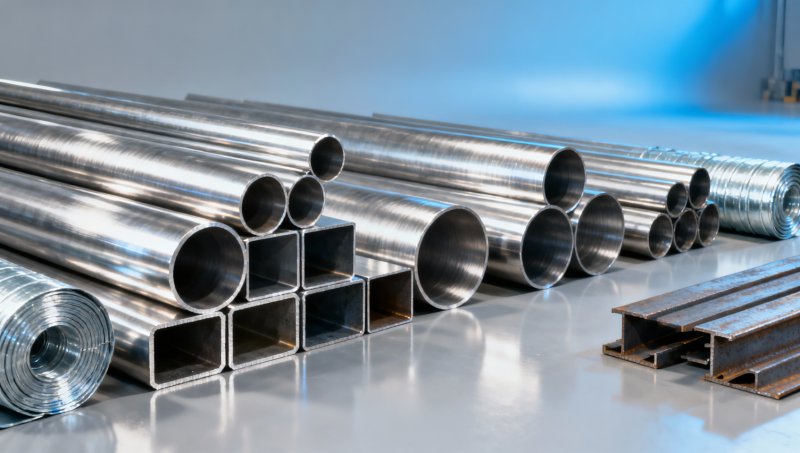
In most global steel markets, “SS tube” is simply a shortened trade term for stainless steel tube. “Tube stainless steel” is less standard in technical writing, but many buyers use it informally when searching online, especially during early-stage sourcing. In practice, the two expressions often point to the same product family, yet the real difference appears when dimensions, standards, tolerances, and end-use requirements are discussed.
This distinction matters because stainless steel tube is not a single universal item. It can refer to welded tube, seamless tube, ornamental tube, mechanical tube, pressure tube, or sanitary tube. A purchaser looking for handrail material and a technical evaluator sourcing process piping may both type “SS tube,” but they do not need the same wall thickness, finish, or compliance route.
For steel buyers managing 2–4 product categories in one project, terminology confusion often creates hidden risk. A request for quotation may lack grade details, dimensional tolerances, or inspection requirements. That can lead to mismatched offers, longer comparison cycles, and preventable rework during approval. In international trade, the safer approach is to define product type, grade, size range, finish, and standard together.
Hongteng Fengda works with global customers across construction, manufacturing, and industrial supply chains, so this issue appears frequently in mixed-material procurement. Many projects combine stainless steel tube with structural steel, carbon steel bars, steel beams, channels, cold formed profiles, or galvanized sheet products. A supplier that understands these related categories can help purchasing teams reduce communication gaps and keep technical evaluation aligned with budget and delivery targets.
Why terminology causes confusion across teams
Different departments often use different language. Operators may focus on “round tube” or “square tube.” Engineers may specify ASTM, EN, or JIS grades. Procurement may use trading shorthand such as SS tube, while finance only sees unit price and lead time. If these terms are not unified at the beginning, the same inquiry can produce 3 very different quotations.
- Search term level: “SS tube” is broad and useful for initial market research, but it is not precise enough for final purchase approval.
- Technical level: stainless steel tube must be linked to grade, outside diameter or section size, wall thickness, and service conditions.
- Commercial level: packaging, quantity split, test documentation, and shipment schedule can affect actual landed cost more than headline unit price.
For this reason, professionals usually treat “tube stainless steel” and “SS tube” as language variants, not as a meaningful engineering distinction. The real work starts after that first term is clarified.
How are stainless steel tube, pipe, and other steel products different in application?
Many sourcing errors happen because tube and pipe are treated as interchangeable. In common industry usage, tube is more often defined by exact outside dimensions and tighter tolerances, while pipe is usually selected by nominal pipe size and fluid service requirements. This matters in stainless steel applications, but it also matters when stainless products are evaluated alongside smls pipe, galvanised steel sheet, or carbon steel structural items in one package purchase.
If a project involves architecture, decoration, railing, light fabrication, or visible finished surfaces, stainless steel tube is often chosen for its appearance and corrosion resistance. If the same project also includes base frames, brackets, or embedded members, carbon steel may offer a more economical solution. In many real procurement lists, the choice is not stainless versus carbon steel across the whole project, but stainless only where it adds functional value.
This is one reason broader steel sourcing experience matters. A structural steel manufacturer and exporter that also understands channels, beams, profiles, and related steel components can support mixed purchasing strategies. Instead of overspecifying stainless steel for every part, buyers can divide the bill of materials into corrosion-critical parts, visible parts, load-bearing parts, and standard fabricated parts.
The table below helps distinguish common product choices by application logic rather than by search term alone. It is especially useful for project managers handling 3-stage approvals: technical review, commercial review, and final finance confirmation.
The comparison shows that the product name alone rarely determines suitability. Buyers need to match material family to environment, fabrication method, and budget. In projects with 5–7 line items across different steel products, combining technical review with sourcing strategy often shortens the procurement cycle and avoids duplicated vendor communication.
Where stainless steel tube makes sense—and where it may not
Stainless steel tube is a practical choice when corrosion resistance, clean appearance, and low maintenance are important over the service life. It is commonly preferred for visible architectural elements, public access railings, humid environments, and selected process applications. However, it may be unnecessary for hidden structural supports or secondary parts that can be protected through painting, galvanizing, or other surface treatments.
A balanced design often combines materials by function. For example, stainless steel may be used on exposed handrails or trim, while carbon steel supports carry the load behind the assembly. This approach can reduce material cost without compromising performance, especially on medium to large projects with repeated assemblies.
What should technical evaluators and buyers check before selecting SS tube?
For technical evaluators, the first step is to convert a general term into a measurable specification set. At minimum, 5 key checks are needed: material grade, shape, size, wall thickness, and standard. If the application is more demanding, add surface finish, mechanical property expectations, welding condition, and inspection document requirements. This process is useful whether the item is stainless steel tube or a supporting carbon steel component.
Procurement teams should also verify commercial factors early. These usually include minimum order quantity, split sizes per shipment, lead time by production route, export packing method, and document support. A technically correct product can still become a sourcing problem if the supplier cannot deliver mixed sizes within the required 2–6 week project window.
When a project includes both stainless and carbon steel items, rational specification planning can create cost advantages. A clear example is the use of A36 Carbon Steel Round Bar for general construction, manufacturing, engineering industries, shipment fixtures, handrail supports, railings, stairs, doors, windows, balconies, fences, benches, and furniture structures where ASTM A36 or equivalent carbon steel performance is suitable.
This inserted product option is available in round bars with diameter ranges from 5–2500 mm and common lengths such as 2 m, 5 m, 6 m, and 12 m. With tensile strength listed at ≥520 MPa and surface treatment options including passivation, oiling, lacquer sealing, phosphating, galvanized condition, PVC, black or color painting, transparent oil, and anti-rust oil, it can support projects that need practical strength and flexible finishing instead of full stainless substitution.
A practical 4-step selection method
- Define the service environment: indoor dry area, humid outdoor exposure, contact with chemicals, or decorative visible use.
- Confirm fabrication method: cutting, welding, bending, polishing, machining, or direct assembly from stock lengths.
- Set the compliance route: ASTM, EN, JIS, or GB, and determine whether mill test documents are needed at order stage or shipment stage.
- Evaluate cost by system, not item only: include finishing, maintenance expectations, packing, freight efficiency, and risk of replacement.
Specification checkpoints that reduce rework
In many RFQs, size and grade are listed, but finish and tolerance are omitted. For stainless steel tube, that omission can affect both usability and appearance. For carbon steel support items, buyers may forget to specify whether untreated, oiled, painted, or galvanized surface is needed. These details should be locked before quote comparison, not after supplier nomination.
- Check if the application needs round, square, or rectangular sections.
- Check whether exact cut length or standard mill length is acceptable.
- Check if welding, polishing, or coating will be done before or after installation.
- Check if inspection documents must match contract, packing list, and shipment marks.
When these 4 checks are completed early, engineering, QA, and purchasing can usually compare offers more efficiently and avoid repeated revision cycles.
How do standards, compliance, and cost affect the final decision?
Standards are often where technical intent becomes contractual requirement. Stainless steel tube and SS tube may be the same search term in conversation, but once the inquiry moves into review, buyers should align standard system, material grade, dimensional tolerance, and test expectations. For international projects, ASTM, EN, JIS, and GB references are common. The chosen route should match the end market and inspection needs.
Cost should also be considered in layers. Material price is only the first layer. The second layer is processing cost, including cutting, welding, polishing, machining, or protective treatment. The third layer is lifecycle or replacement cost. In some applications, stainless steel lowers maintenance frequency over 3–5 years. In others, coated carbon steel is sufficient and more economical from the start.
For procurement managers and finance approvers, the right question is not “Which is cheaper per ton?” but “Which specification meets service needs with acceptable total project risk?” This is especially important when imported materials are packed in mixed containers or phased deliveries over 2 or 3 shipments.
The table below gives a decision-oriented view that helps compare stainless steel tube with carbon steel alternatives in procurement discussions.
A comparison like this helps business evaluators and project leaders justify a mixed-material strategy. Instead of arguing for a single material across all components, teams can allocate stainless steel where it solves corrosion or appearance challenges, and use carbon steel where structural economy and production speed are more important.
Common compliance and quality checks
Quality control personnel should verify at least 6 routine points: heat or batch identification, dimensional consistency, surface condition, material documentation, packing protection, and quantity reconciliation. If the project includes export delivery, labeling and shipment marks should also match the purchase order and commercial invoice references.
For cross-border orders, compliance is not only about the steel itself. It also involves whether the supplier can communicate standards clearly, prepare documents on time, and manage production scheduling. Hongteng Fengda supports buyers needing standard specifications and OEM-oriented solutions across structural steel categories, which is useful when procurement lists combine mainstream sections with custom-fabricated items.
What are the most common misconceptions and buying mistakes?
A frequent misconception is that “SS tube” automatically means premium quality. In reality, quality depends on grade accuracy, dimensional control, surface condition, manufacturing route, and inspection discipline. Another mistake is assuming all stainless steel tube performs the same in every environment. The correct grade and finish still depend on use conditions, contact media, and fabrication requirements.
Another common error is overbuying stainless where carbon steel plus surface protection would work. This often happens when teams rush approval and want to avoid corrosion complaints without reviewing the actual exposure level. On the other hand, under-specification is also risky. Choosing a lower-cost carbon steel item in a visibly exposed or wet environment may create early rust issues and replacement cost.
Buyers also sometimes compare quotes with different bases. One offer may include test documents, export packing, and cut length service, while another covers raw material only. That is not a true price comparison. To compare fairly, RFQs should define quantity, tolerance, finish, packing, and documentation expectations in the same format.
For distributors and agents, the same principle applies. Search terms help generate leads, but sales conversion depends on translating those terms into exact supply options. The more clearly the requirement is framed in the first 24–48 hours of communication, the easier it is to move toward workable quotations and realistic shipment planning.
FAQ for engineers, purchasers, and project teams
Is there a real technical difference between tube stainless steel and SS tube?
Usually no. In most commercial and search contexts, both refer to stainless steel tube. The meaningful technical differences come from grade, shape, wall thickness, finish, and applicable standard, not from the wording itself.
How many details should be included in an RFQ for stainless steel tube?
A practical RFQ should include at least 6 items: grade, section or outside diameter, wall thickness, length, finish, and standard. If the project is sensitive, also include document requirements, quantity by size, and whether fabrication services are needed.
When is carbon steel a better alternative than SS tube?
Carbon steel is often better for hidden supports, indoor dry applications, general frames, base parts, or machined components where corrosion resistance is not the primary driver. It is especially useful when cost control and fabrication flexibility matter more than decorative appearance.
What lead time should buyers expect?
Lead time depends on size range, quantity, production route, and whether the order includes standard stock, new rolling, or customized processing. In practical export sourcing, buyers often plan around a 2–6 week range for common items, but exact scheduling should be confirmed against the actual order mix and shipment method.
Why work with a supplier that understands both stainless and structural steel sourcing?
Many global projects do not purchase stainless steel tube in isolation. They combine visible tube components, carbon steel supports, channels, beams, cold formed profiles, and customized fabricated parts in one sourcing cycle. Working with a supplier that understands this broader structure helps teams reduce vendor overlap, simplify technical communication, and keep cost analysis grounded in project reality.
Hongteng Fengda supports buyers across North America, Europe, the Middle East, and Southeast Asia with structural steel manufacturing and export experience. The practical advantage is not just product supply, but coordination: standard specifications, OEM solutions, quality control aligned with common international standards, and production planning that supports dependable lead times for mixed orders.
For project managers, this means fewer gaps between design intent and supply execution. For purchasing and finance teams, it means more consistent quotation logic across product categories. For QA and safety personnel, it means clearer documentation and more manageable inspection follow-up. In steel sourcing, these process gains often matter as much as headline material price.
If you are comparing tube stainless steel and SS tube, or reviewing whether stainless, smls pipe, galvanized sheet, or ASTM A36 components should be combined in one procurement package, the next step is to clarify the specification and commercial scope together. You can contact us for parameter confirmation, product selection, standard matching, delivery cycle discussion, sample support, OEM customization, and quotation review based on your actual project list.
- Confirm exact dimensions, grades, and applicable standards before quotation comparison.
- Review whether stainless steel tube is necessary for all parts or only for corrosion-critical and visible components.
- Ask for support on mixed sourcing plans involving structural steel, carbon steel bars, profiles, and fabricated components.
- Discuss lead time, packing, documentation, and sample arrangements early to avoid approval delays.
If your team needs a practical supply plan rather than a generic material recommendation, send the drawing set, usage environment, quantity split, and target standard. We can help evaluate which items should remain stainless, which can shift to cost-effective structural steel solutions, and how to organize delivery for smoother project execution.
Please give us a message


Please enter what you want to find