Steel mesh used outdoors can fail faster than expected when corrosion, load stress, poor coating quality, or improper installation are overlooked. For buyers and engineers comparing steel mesh with galvanised steel sheet, tube stainless steel, ss tube, or even ASTM A36 structural options, understanding the real causes of failure is essential to improve safety, control maintenance costs, and select the right material for long-term performance.
In outdoor construction, industrial fencing, safety barriers, drainage covers, screens, and reinforcement applications, steel mesh is often expected to last for 10, 15, or even 20 years. In practice, service life depends less on appearance and more on environment, material grade, coating integrity, weld quality, and load design. A mesh panel that performs well in a dry inland warehouse may fail much earlier in a coastal plant, chemical yard, or high-traffic project site.
For project managers, procurement teams, quality inspectors, and maintenance personnel, the key question is not only whether steel mesh will fail, but when, why, and how to reduce that risk. This article explains the main failure mechanisms, practical warning signs, selection criteria, and maintenance strategies that matter in real B2B purchasing and engineering decisions.
Common Outdoor Failure Modes of Steel Mesh
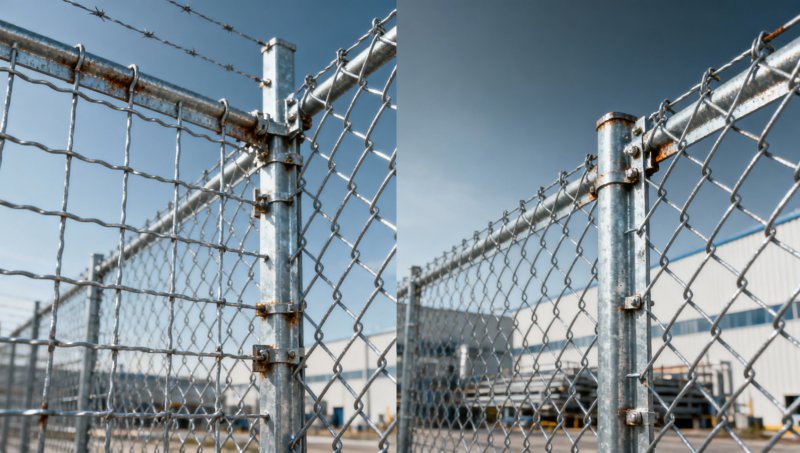
Outdoor steel mesh usually fails through a combination of mechanical and environmental stress rather than a single event. The most common failure modes include red rust, coating breakdown, wire thinning, weld point cracking, deformation under repeated loads, and local fracture at cut edges or fixing points. In aggressive environments, visible damage can appear within 12 to 36 months if the wrong material or finish is selected.
Corrosion is the leading cause. Rainwater, humidity above 70%, chloride exposure in coastal regions, industrial fumes, and standing moisture can gradually attack carbon steel mesh. Once the protective zinc layer or paint film is damaged, corrosion often starts at joints, welds, bends, and cut ends. These are the weakest zones because thickness consistency and coating continuity are harder to maintain there.
Load-related failure is another major issue. Mesh used as guarding, walk-on support, animal enclosure, storage partition, or machine protection may be exposed to point loads, vibration, impact, or wind pressure. If wire diameter is too small, panel spacing too wide, or frame support insufficient, permanent deflection can develop long before complete breakage. In many cases, operators first notice sagging by 5 to 15 mm before cracks appear.
Improper installation accelerates both corrosion and structural weakness. When installers cut panels on site without edge treatment, use incompatible fasteners, leave dissimilar metals in contact, or create water traps at the base, the service life can drop sharply. A mesh designed for 8 to 12 years may fail in less than 3 years if drainage and fixing details are poor.
Where failure usually starts
- Weld intersections exposed to repeated vibration or weak fusion
- Cut edges without zinc repair or passivation treatment
- Bottom rails and buried zones where water and dirt accumulate
- Fastener holes and clamp points with concentrated stress
- Panels installed near chemicals, fertilizer, seawater spray, or exhaust outlets
The table below shows how different outdoor factors typically affect failure speed and inspection priority.
For technical evaluators and safety teams, the practical takeaway is clear: outdoor mesh rarely fails without visible precursors. Regular inspection every 6 to 12 months can identify coating damage, weld weakness, and local corrosion before the panel loses functional integrity.
What Determines How Fast Steel Mesh Fails Outdoors
The timing of failure depends on four variables: base material, protective finish, environment severity, and actual service load. A low-carbon welded mesh with light electro-galvanizing may be acceptable for temporary barriers or dry compounds, but not for marine platforms, wastewater plants, or chemical processing areas. Buyers who compare only unit price often underestimate how quickly replacement cost can exceed initial savings.
Material grade is the first decision point. Carbon steel mesh can be cost-efficient, but it needs the right protection system. Hot-dip galvanised mesh generally performs better outdoors than lightly coated alternatives because zinc thickness is higher and barrier protection is more durable. Stainless options are preferred when corrosion risk is continuous, cleaning chemicals are frequent, or hygiene matters.
Design conditions are equally important. Wire diameter in the range of 2 mm to 6 mm may suit light fencing, while heavier-duty guarding, storage cages, or machine barriers may require larger diameters, closer pitch, and reinforced framing. Panel span, support interval, and fixing method should be checked against static load, impact risk, and maintenance access rather than selected by appearance alone.
Environmental classification should be practical, not theoretical. Inland dry sites, urban industrial zones, coastal logistics yards, and high-chemical plants create very different corrosion rates. If moisture retention exceeds 48 hours after rainfall, or if chloride deposition is routine, standard zinc protection may no longer be enough for long service cycles.
Key selection checkpoints for buyers and engineers
- Confirm whether the mesh is decorative, protective, load-bearing, filtering, or process-related.
- Define expected service life, such as 3 years, 5 years, or 10+ years.
- Review environmental exposure, including humidity, salt, acid, alkali, and temperature variation.
- Check weld consistency, coating method, and edge treatment before shipment.
- Match fasteners and support frames to avoid galvanic corrosion and stress concentration.
The following comparison helps procurement and project teams understand where failure risk changes by material choice.
In many projects, the lowest purchase price is not the lowest lifecycle cost. If replacement requires shutdown, labor, permits, or safety reinspection, one premature failure event can offset the price gap between standard carbon steel and a better corrosion-resistant option.
How to Prevent Premature Failure Through Better Material and Product Choice
Prevention starts before production and continues through specification, fabrication, installation, and maintenance planning. For outdoor use, the right selection often depends on whether the mesh acts as a barrier, filter, façade element, machine screen, or corrosive-process component. In structural steel supply chains, this is where technical review and procurement coordination should happen together rather than separately.
When corrosion resistance matters more than the lowest upfront cost, stainless mesh becomes an effective option. For example, 304 Stainless Steel Welded Mesh is widely used in filters, sieves, architecture, residences, and industrial environments where resistance to rust, corrosion, acid, alkali, heat, and chemical exposure is required. Depending on the application, available grades may include SS 201, 304, 304L, 316, 316L, and 430.
From a specification perspective, stainless steel wire mesh can cover a broad range: wire diameter from 0.0008″ to 0.12″, mesh count from 2 to 635 mesh, open area from 25% to 84.6%, roll width up to 240″, and roll length up to 2000′. These ranges matter because outdoor performance is not only about corrosion; airflow, filtration precision, rigidity, weight, and cleaning behavior also influence service life.
For buyers comparing galvanised steel sheet, structural sections, and mesh-based solutions, the key is application fit. Mesh used for filtering or screening should be assessed by micron retention, cloth thickness, and chemical compatibility. Mesh used for enclosure or protective barriers should be assessed by weld strength, aperture size, wire diameter, frame design, and impact resistance.
When stainless mesh is a stronger outdoor choice
- When regular washdown, chemical exposure, or moisture makes zinc deterioration likely within 1 to 3 years.
- When appearance matters in architecture, façades, or residential installations exposed to rain and pollution.
- When filtration or screening performance requires stable aperture accuracy and dimensional consistency.
- When maintenance access is limited and replacement intervals should be extended beyond standard coated carbon steel.
Specification points worth checking before order confirmation
Ask for base material grade, wire diameter tolerance, weave or weld type, roll size, open area, and intended environment. If the mesh is part of a larger steel assembly, also verify contact materials, frame support, and whether ASTM, EN, JIS, or GB-related requirements apply to the overall project package.
For global projects, experienced suppliers can reduce sourcing risk by aligning standard specifications with OEM processing needs. Hongteng Fengda supports construction, industrial, and manufacturing buyers with structural steel products and customized solutions, helping teams coordinate material consistency, production quality, and dependable lead times across international markets.
Inspection, Maintenance, and Replacement Planning
Even well-selected steel mesh will not achieve its expected outdoor life without an inspection plan. For most exterior installations, a 6-month visual inspection cycle is a practical starting point. In coastal, chemical, or heavy industrial zones, a 3-month cycle may be more appropriate. The goal is not excessive paperwork but early intervention before corrosion spreads or weld points weaken.
Maintenance should focus on water retention points, damaged coating, loose fixings, bent panels, and contamination buildup. Dirt, salts, cement residue, and chemical splash can hold moisture against the surface and accelerate local attack. Cleaning intervals vary by exposure, but many outdoor mesh applications benefit from periodic washing every 3 to 12 months depending on environmental severity.
Replacement planning is especially important in B2B operations where mesh supports safety compliance or production continuity. If a barrier panel protects machinery, controls access, or shields process equipment, waiting for full failure is risky. Once section loss, cracking, or severe deformation is visible, replacement should be scheduled quickly to avoid operational and safety consequences.
Procurement and maintenance teams should also track failure patterns. If multiple panels fail at the same location within 18 to 24 months, the issue may be design-related rather than isolated damage. In that case, changing coating type, mesh grade, support spacing, or drainage details usually delivers better results than repeated like-for-like replacement.
A practical outdoor inspection checklist
- Check for red rust, white corrosion products, or staining at welds and edges.
- Measure visible deformation and compare it with original alignment; even 10 mm of new sag can indicate overload.
- Inspect clamps, bolts, and brackets for looseness, galvanic mismatch, or local cracking.
- Look for pooled water, blocked drainage, or soil contact that keeps the mesh wet for long periods.
- Record damage by zone so replacement priorities can be budgeted over 1 to 2 maintenance cycles.
The table below can help maintenance managers decide when monitoring is enough and when replacement becomes the safer choice.
A structured maintenance routine extends service life and makes budgeting easier. More importantly, it reduces the chance that a low-cost mesh component becomes a high-cost failure point in a larger steel project.
Buying Guidance for Projects That Need Long-Term Outdoor Reliability
For purchasers, distributors, and project decision-makers, selecting steel mesh should be treated as a lifecycle decision rather than a catalogue-only purchase. The right question is not simply “What is the price per panel or roll?” but “What level of corrosion resistance, dimensional stability, and maintenance demand fits the project for the next 5 to 10 years?”
A reliable supplier should be able to discuss standards, material options, tolerances, manufacturing consistency, and export coordination in practical terms. That includes matching mesh or structural steel components to project drawings, usage conditions, and delivery schedules. Stable production capacity and quality control become especially important when orders involve multiple steel categories such as beams, channels, cold formed sections, and customized fabricated parts together.
Buyers should also consider total project risk. Low-cost mesh can create hidden expenses in maintenance labor, downtime, replacement freight, and safety remediation. By contrast, a better-specified product may cost more initially but reduce sourcing risk and improve schedule certainty. This matters to finance approvers and business evaluators as much as to engineers.
Hongteng Fengda serves global construction, industrial, and manufacturing projects with structural steel products and customized support. For customers across North America, Europe, the Middle East, and Southeast Asia, dependable lead time, consistent quality, and alignment with ASTM, EN, JIS, and GB-related requirements can simplify procurement and improve execution.
Questions to ask before placing an outdoor mesh order
- What is the expected outdoor service environment: inland, coastal, industrial, or chemical?
- Is the mesh for protection, filtration, architectural use, enclosure, or load-related duty?
- What inspection and maintenance interval can the site realistically support: 3 months, 6 months, or 12 months?
- Do cut edges, fasteners, and support frames use compatible materials and finishing methods?
- Will OEM dimensions, custom fabrication, or bundled structural steel supply reduce installation and sourcing complexity?
FAQ: practical concerns from buyers and end users
How long can outdoor steel mesh last? In mild inland conditions, properly specified mesh may last many years, while in coastal or chemical exposure it can deteriorate much faster. The difference may be 2 to 3 times depending on grade, coating, and maintenance.
Is galvanised mesh always enough for outdoor use? No. It is often suitable for general outdoor applications, but chloride-rich, wet, or chemically exposed environments may require stainless steel or upgraded protection systems.
What is the most common buying mistake? Selecting mesh by price and aperture only, without checking environment, weld quality, coating thickness, support design, and replacement access.
When should stainless steel be considered? When the project requires better resistance to rust, chemical exposure, washdown, or long maintenance intervals, especially where appearance or hygiene is important.
Outdoor steel mesh fails when material choice, coating quality, design load, and installation details are not aligned with the real environment. Corrosion, weld weakness, cut-edge exposure, and repeated mechanical stress are the most common reasons service life falls short of expectation. A better decision process includes environmental classification, load review, inspection planning, and product selection based on lifecycle performance rather than initial price alone.
If you are evaluating steel mesh, stainless alternatives, or broader structural steel requirements for a project, Hongteng Fengda can support specification review, customized supply, and export coordination. Contact us now to discuss your application, request product details, or get a tailored steel solution for long-term outdoor performance.
Please give us a message


Please enter what you want to find