Before investing in steel rebar for precast concrete projects, it’s essential to evaluate a few critical specifications that determine long-term performance and safety. Selecting the right material not only ensures structural integrity but also affects cost efficiency and compliance with project standards. As a professional structural steel manufacturer and exporter, Hongteng Fengda provides reliable solutions such as steel pile for offshore platforms, steel bar for power plants, and cold rolled steel sheet—all designed to meet demanding engineering requirements worldwide. For project engineers or procurement specialists evaluating multiple structural components, verifying rebar specifications becomes a strategic decision that influences durability and return on investment. In recent years, the market for steel bar for agricultural machinery and steel profile for greenhouse construction has shown diverse technical demands, requiring deeper understanding of metallurgical consistency, tensile strength, and corrosion protection. Hongteng Fengda helps customers bridge design goals with practical production feasibility by offering both standard materials and customized options like Steel Channel for mezzanine floors and steel pile for retaining walls. Each requirement is carefully tailored to ensure compliance with ASTM and EN quality directives through rigorous inspection and test documentation.
1. Definition and Overview of Steel Rebar for Precast Concrete
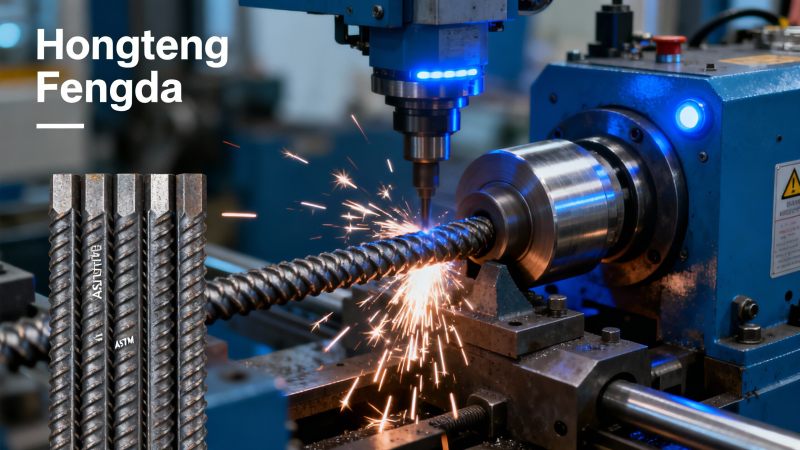
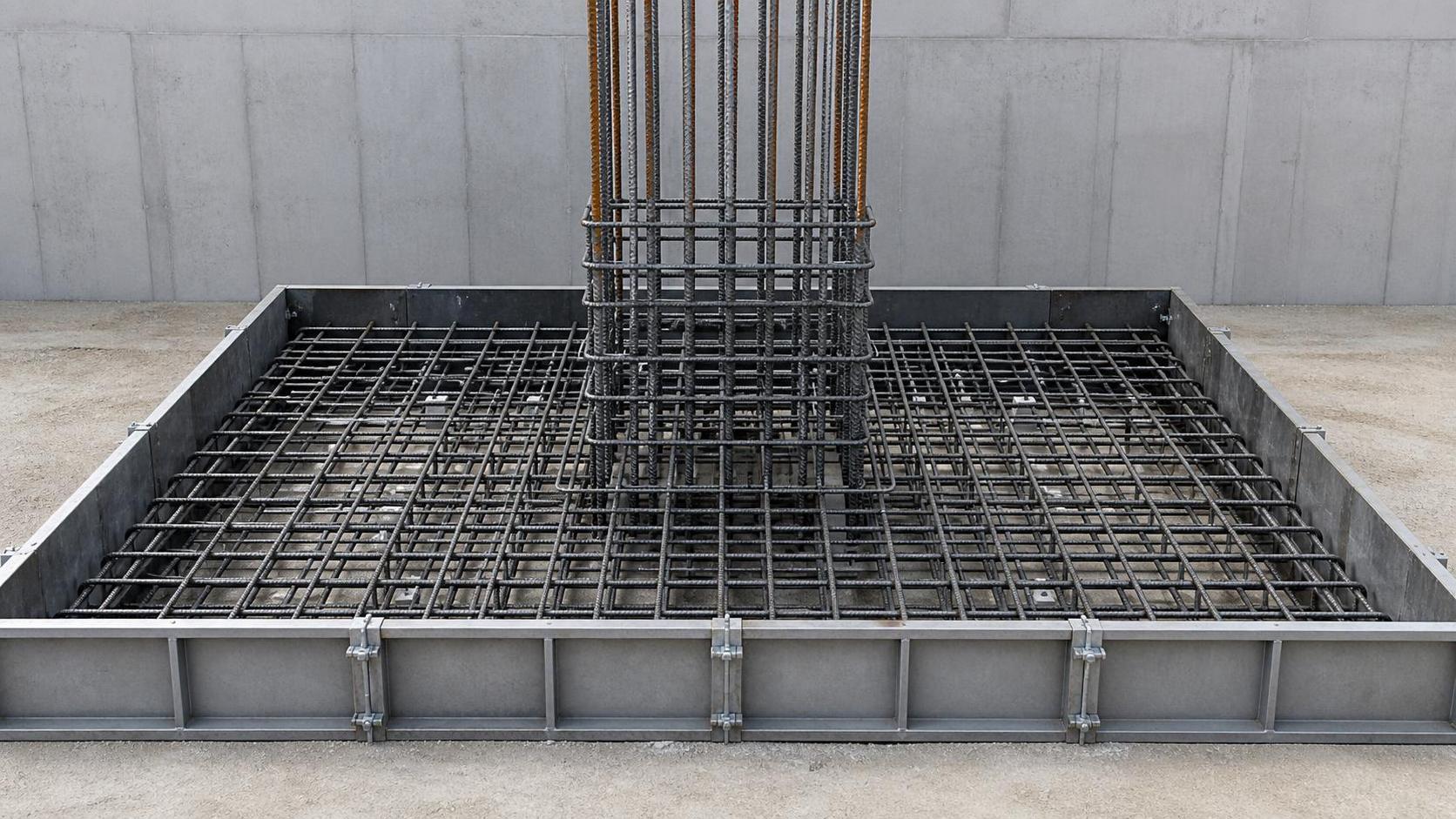
Steel rebar, or reinforcement bar, forms the internal skeleton of precast concrete components, ensuring tensile strength and reducing the risk of cracking under load. In structural design, the synergy between concrete’s compressive strength and steel’s tensile capacity enables high-performance construction outcomes. Typical grades such as HRB400 and HRB500 are widely used across industrial installations, highways, and power stations. To guarantee reliability, the composition of steel rebar should balance carbon content, ductility, and fatigue resistance. This combination is especially vital when producing precast beams subjected to cyclic stress or environmental exposure. For modular and infrastructure projects, engineers often compare carbon steel for aerospace with reinforcement-grade alloys to understand the metallurgical trade-offs between lightweight design and ultimate tensile performance. Rebar manufactured under consistent heat treatment ensures stable yield points and elongation behavior, critical to precast segments’ bonding interface during curing and installation. Suppliers like Hongteng Fengda incorporate quality-controlled rolling and straightening technologies to provide rebar that meets global demand standards. Their manufacturing processes, supported by international certifications (ASTM, JIS, GB), maintain consistency even in large-volume export batches. Understanding these technical baselines allows buyers, contractors, and quality managers to make data-driven rebar procurement decisions that minimize late-stage structural risks.
2. Technical Performance and Key Specifications to Verify
Before purchasing steel rebar, five core specifications require careful verification: tensile strength, yield strength, elongation, bendability, and corrosion resistance. Tensile strength defines the bar’s ability to withstand pulling forces, directly tied to fatigue life and service duration. Yield strength is equally crucial because it determines how much permanent deformation the rebar will accept before structural compromise. Elongation rates above standard codes ensure adequate ductility—an essential factor during seismic loads or thermal expansion. Engineers also assess bendability, particularly in precast molds with tight curvature requirements. Improper bend ratios can lead to microcracks or surface fractures, weakening bond strength to concrete. Equally, corrosion protection plays a decisive role; an untreated steel bar for power plants operating in humid environments may deteriorate rapidly, compromising structural safety. Advanced coatings, such as epoxy layers or aluzinc finish, significantly extend the product lifecycle. Hongteng Fengda integrates modern rolling control and surface treatment technology that ensures uniform oxide film coverage, creating long-lasting corrosion resistance. For example, their related products like DX51D Galvalume Steel Coil exhibit similar anti-fingerprint and heat-resistant features, aligning with the same durability principles. These verification points empower project decision-makers, especially in safety-sensitive sectors, to specify materials confidently for long-term, low-maintenance results.
3. Market Overview and Industry Background
Global demand for steel rebar for precast concrete is projected to expand steadily as urbanization drives infrastructure growth. Markets across North America, Europe, and Southeast Asia continue to favor precast construction for faster installation and quality control benefits. Steel Channel for modular construction and cold rolled steel sheet have become integral components of prefabricated technology supply chains. In this evolving landscape, purchasing power increasingly shifts toward suppliers providing technical transparency and sustainability documentation. Hongteng Fengda, as a prominent Structural Steel Manufacturer & Exporter from China, serves as a trusted link between production efficiency and international compliance, ensuring every shipment aligns with ASTM and EN standards. Market analysts note that innovation in metallurgical science—and the introduction of hybrid reinforcement technologies—promotes the development of high-strength, low-alloy steels, particularly suited for high-rise, bridge, and marine projects. Offshore platform construction also relies heavily on corrosion-resistant steel pile for offshore platforms to combat saltwater exposure. In parallel, increasing cost-consciousness among developers pushes manufacturers to optimize rolling precision and logistics pipelines. As a result, the consistency of rebar supplied for power and energy industries becomes a competitive differentiator, with immediate implications on project timelines and overall feasibility. This fundamental shift reinforces why technical expertise and global supply capability, such as what Hongteng Fengda offers, remain irreplaceable to buyers worldwide.
4. Comparison Analysis: Factors Differentiating Rebar Quality
Conducting a comparison analysis between rebar grades, finishes, and production methods reveals significant quality variation. Hot-rolled versus cold-worked rebars, for instance, differ in mechanical response under stress and bonding strength with concrete. Epoxy-coated reinforcement offers reliable corrosion prevention for marine and underground installations, while bare carbon steel for aerospace applications is designed mainly for controlled environments. The integrity of rib pattern geometry also determines frictional bonding, a parameter often under-documented by low-tier suppliers. Experienced manufacturers like Hongteng Fengda implement three-dimensional rib form monitoring and precision cooling systems to maintain symmetrical deformation resistance. Another differentiating aspect includes dimensional tolerance certification: consistent diameter calibration ensures seamless layout adjustments and cost reduction at construction sites. By contrast, non-conforming rebar introduces fitment errors, resulting in excessive grout use and structural misalignment. Procurement managers can further use comparative analysis to match rebar with complementary materials, including steel profile for greenhouse construction or Steel Channel for mezzanine floors. Comparing galvanic reactions, heat reflectivity, and surface finish uniformity across such materials offers engineers data to optimize full structural assemblies. As such, validating mechanical, chemical, and surface metrics before placing bulk orders remains a non-negotiable procurement discipline that directly connects laboratory precision with on-site durability.
5. Procurement Guide and Quality Verification Process
When procuring steel rebar for precast concrete, professionals must integrate technical screening into commercial evaluation. Requesting mill test certificates (MTC), third-party validation reports, and batch traceability ensures transparency. Structural design engineers should review these documents alongside tensile and bend test data before approving suppliers. Precise specification alignment underpins compliance with project design codes. Procurement specialists often favor long-term suppliers who also offer diversified materials, as this reduces logistical fragmentation. Hongteng Fengda exemplifies this integrated supply model, offering products ranging from carbon structural steels to customized cold formed profiles. When high corrosion resistance is required, the manufacturer recommends considering coatings similar to those used in DX51D Galvalume Steel Coil , known for its AZ40–AZ150 coating range and exceptional heat tolerance up to 315°C. Quality managers must also monitor onsite storage conditions, because even compliant rebar may rust under adverse humidity without proper cover. To achieve optimal end-product quality, buyers should synchronize shipment scheduling with construction timelines, reducing unnecessary yard exposure. Inspection upon arrival should include dimensional verification, surface integrity reviews, and color-code validation for easy segregation. Following this systematic procurement pathway mitigates risks, improves safety assurances, and supports cost-containment strategies throughout the project lifecycle.
6. Standards, Certification, and Compliance
Reinforcing bar production adheres to numerous international standards like ASTM A615, A706, BS 4449, JIS G3112, and China’s GB1499. These documents stipulate requirements for mechanical properties, tolerance levels, and surface conditions. Compliance not only guarantees product performance but also underpins legal accountability in cross-border construction. Certified suppliers use continuous casting and controlled cooling systems to ensure uniform grain structure and carbon dispersion across each billet. Hongteng Fengda’s internal laboratory auditing process cross-references global standards to confirm equivalency and interoperability across projects designed under different codes. Clients from the Middle East and Europe appreciate the manufacturer’s ability to supply rebar matching local regulatory benchmarks while providing detailed product data sheets. Additional certifications, such as ISO 9001:2015, also contribute to supplier reliability evaluation. For engineers managing complex construction projects—whether hydroelectric plants, modular industrial halls, or offshore facilities—ensuring full standard compliance of steel bar for power plants avoids costly rework and insurance conflicts. Therefore, a detailed review of standards alignment remains a key checklist item prior to any procurement contract signing. Through rigorous certification and traceability systems, Hongteng Fengda enables global partners to track compliance across every shipment, reinforcing transparency at every production stage.
7. Case Studies and Best Practices
In a recent infrastructure initiative in Southeast Asia, Hongteng Fengda supplied high-durability steel rebar for precast bridge segments requiring tight dimensional tolerances and chloride resistance. The project’s local humidity index prompted the engineering team to specify advanced anti-corrosion coatings inspired by Galvalume principles. By integrating the same anti-oxidation methods found in premium aluzinc coils, the team achieved 40% longer service life under marine exposure conditions. Another case in Europe involved modular healthcare facilities where precast wall systems required immediate installation stability. Here, consistent rebar bendability and clean rib geometry prevented microcracking, ensuring compliance with EN 1992 durability criteria. Similar best practices apply to agricultural and power station projects that utilize steel bar for agricultural machinery; precision-cut and straight bars help streamline automated assembly. Hongteng Fengda’s logistics strength, with coordinated port handling and customs documentation, reduces delivery delays that often compromise large-scale construction sequencing. Furthermore, coordination between supplier technical teams and local contractors allows for adaptable rebar length customization and packaging suited for crane loading efficiency. Such case studies demonstrate how supplier competence, quality control, and customer collaboration directly translate into measurable safety improvements and lifecycle cost benefits for end clients.
8. Trend and Insights: Innovation in Reinforcement Material Technology
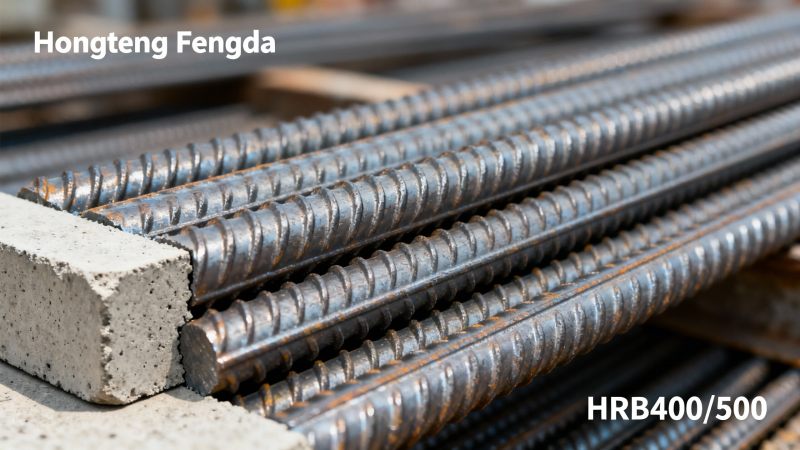
Future advancements in steel reinforcement are likely to revolve around low-carbon metallurgy, digital manufacturing, and smart traceability technologies. Sustainability mandates are encouraging the use of recycled scrap with certified purity, reducing emissions without compromising strength properties. The introduction of sensor-embedded rebar for structural health monitoring could soon enable real-time stress data collection within precast concrete units. Hongteng Fengda’s R&D division is actively exploring alloy optimization and coating innovation, aligning with green construction standards. Hybrid materials such as fiber-reinforced steel composites and corrosion-free stainless rebar are expected to gain momentum, particularly for coastal and underground applications. Simultaneously, automation within rebar bending and welding plants is improving precision while cutting labor costs—a trend that appeals to modular construction developers worldwide. Global buyers should also track the performance correlation between galvanic-protected steel products, like cold rolled and Galvalume steel, and traditional reinforcement bars to optimize lifecycle design. As innovation accelerates, collaboration between suppliers, design firms, and certification bodies becomes increasingly vital to harmonize testing criteria and achieve industry-wide sustainability compliance. Hongteng Fengda’s continuous investment in production technology reinforces this forward-looking approach, ensuring partners remain equipped for evolving performance, safety, and environmental benchmarks.
9. Why Choose Hongteng Fengda
Hongteng Fengda stands out as a comprehensive Structural Steel Manufacturer & Exporter from China, dedicated to precision engineering and customer-oriented service. The company’s ability to deliver steel pile for offshore platforms, steel bar for agricultural machinery, and custom-made steel rebar for precast concrete stems from professional production facilities equipped with automatic rolling, ultrasonic defect detection, and computerized tension monitoring systems. Buyers worldwide benefit from stable production capacity, streamlined logistics, and a global service network covering North America, Europe, the Middle East, and Southeast Asia. Every product adheres to recognized international codes such as ASTM, EN, and JIS, ensuring compatibility across projects of varying complexity. Hongteng Fengda does more than supply metal—it delivers trust, performance, and partnership continuity. Decision-makers seeking reliable materials for modular, industrial, or infrastructure applications are encouraged to consult our specialists for tailored recommendations and technical documentation. Collaborating with our expert team means gaining a proactive ally in sourcing optimization, risk management, and performance assurance. For inquiries or custom-project discussions, contact Hongteng Fengda today to secure superior-grade rebar and structural steel solutions that will strengthen your projects for decades to come.
- cs pipe
- cold rolled steel
- DX51D
- steel coil
- structural steel
- Structural Steel
- Corrosion-resistant steel
- Profile
- Rebar
- Steel Channel
- carbon steel
- steel sheet
- steel rebar
- steel profile
- steel pile
- steel bar
- Steel Channel for mezzanine floors
- steel bar for agricultural machinery
- steel pile for retaining walls
- steel profile for greenhouse construction
- steel rebar for precast concrete
- cold rolled steel sheet
- carbon steel for aerospace
- Steel Channel for modular construction
- steel bar for power plants
- steel pile for offshore platforms
Related recommendations
 Common Leak Risks When Using Galvanized Pipe for Plumbing SystemsGalvanized pipe for plumbing can hide corrosion, joint wear, and pressure-related leak risks. Learn the key warning signs, causes, and smart maintenance actions to prevent costly failures.
 Oil Tempered Carbon Steel Wire for Valve Spring: What Standards and Tests Matter?Oil tempered carbon steel wire for valve spring: learn which JIS, EN, and ASTM standards, decarburization checks, surface inspections, and fatigue-related tests truly protect spring life.
 Rebar for Foundation: Grade, Cover, and Spacing Mistakes to AvoidRebar for foundation guide: avoid costly grade, cover, and spacing mistakes that weaken durability, bonding, and concrete flow. Learn practical checks before the pour.
 Steel Tubing Dimensions: OD, Wall Thickness, and Gauge DifferencesSteel tubing dimensions explained clearly: compare OD, wall thickness, and gauge differences to avoid sizing mistakes, improve fit, and choose the right steel tube with confidence.
Please give us a message


Please enter what you want to find