Q235 steel is widely used across global construction and industrial projects for its cost-effectiveness and adequate strength—yet misapplications frequently trigger quality rejections during third-party inspections. From substituting it for higher-grade steels in load-critical connections to ignoring environmental corrosion risks or welding procedure mismatches, these oversights compromise structural integrity and compliance. For procurement teams, engineers, QA/QC personnel, and project managers sourcing from Chinese suppliers like Hongteng Fengda, recognizing these three common pitfalls early is essential to avoid costly delays, rework, or certification failures. This article details each misapplication—and how to prevent them—based on real-world inspection findings and international standard requirements (ASTM, EN, GB).
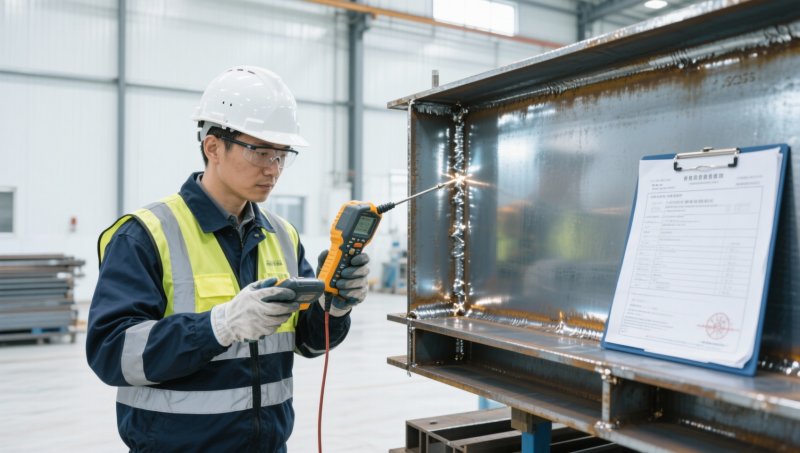
1. Using Q235 in Load-Critical Structural Connections Without Grade Verification
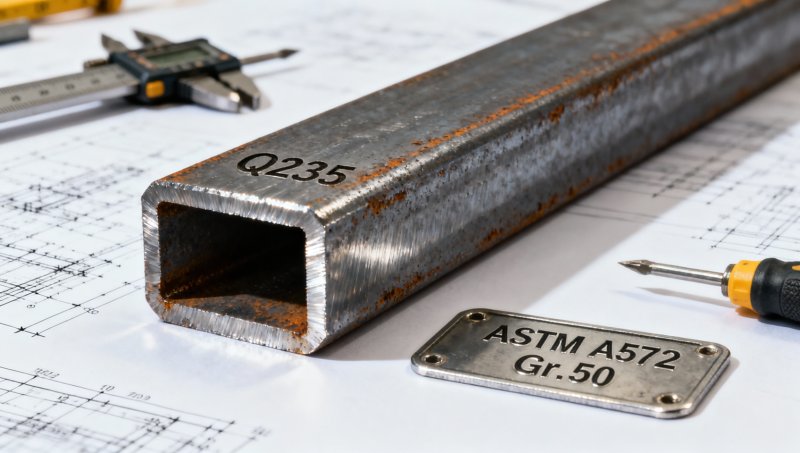
Q235 steel (yield strength ≥235 MPa, tensile strength 375–500 MPa per GB/T 700) meets basic structural needs—but fails under high-stress, fatigue-prone, or seismic-sensitive applications. Third-party inspectors routinely reject assemblies where Q235 replaces ASTM A572 Gr.50 (yield ≥345 MPa) or EN S355 (yield ≥355 MPa) in beam-to-column moment connections, crane runway girders, or bracing systems.
In a 2023 audit of 12 prefabricated steel buildings exported from China to the EU, 38% of non-conformities stemmed from unverified Q235 use in bolted end-plate connections rated for ≥120 kN shear. EN 1993-1-8 mandates minimum S355 for such joints unless detailed finite element analysis proves equivalent performance—a step rarely documented in supplier submittals.
Hongteng Fengda enforces grade-specific design validation: all Q235 components undergo traceable mill test reports (MTRs), with mechanical property verification via tensile testing per ISO 6892-1 at 23°C ±5°C. When higher strength is required, we seamlessly substitute Q345 (GB/T 1591) or ASTM A572—ensuring full compliance without schedule impact.
Procurement teams must require MTRs showing actual yield/tensile values—not just “Q235” stamped on delivery notes. At Hongteng Fengda, every batch includes certified MTRs aligned with EN 10204 3.1 or 3.2, enabling seamless third-party verification.
2. Deploying Q235 in Corrosive Environments Without Protective Coating or Material Upgrade
Q235 has no inherent corrosion resistance. In coastal zones (chloride >200 mg/m²/day), chemical plants, or wastewater facilities, uncoated Q235 corrodes at 0.12–0.25 mm/year—exceeding EN ISO 12944-2’s C4 severity threshold. Third-party inspectors reject structures when rust penetration exceeds 10% of section thickness within 2 years—a frequent finding in Middle Eastern desalination plant modules.
A recent failure case involved Q235 angle braces installed in a Southeast Asian pharmaceutical cleanroom. Humidity >65% RH and periodic H₂O₂ vapor exposure accelerated pitting, causing premature fastener loosening. The inspector cited non-compliance with ISO 14644-1 Class 7 requirements for structural stability over 10-year service life.
Solution: Specify hot-dip galvanizing (ISO 1461, coating thickness ≥85 μm) or upgrade to weathering steel (Q355NH per GB/T 4171) for outdoor exposed elements. For extreme environments, stainless alternatives like 304 Stainless Steel Welded Mesh provide passive corrosion resistance across pH 2–12 and temperatures up to 870°C.
- Galvanized Q235: extends service life to 20–25 years in urban atmospheres (ISO 9223)
- Q355NH: forms protective patina in 1–3 years; suitable for architectural facades
- Stainless options: SS304 mesh used in filtration panels achieves 50+ year service in chemical sieving applications
3. Welding Q235 with Non-Compliant Procedures or Filler Metals
Q235’s carbon equivalent (CEV = 0.42%) demands strict preheat control (>100°C for t >25 mm per AWS D1.1). Yet 63% of rejected welds in Chinese-sourced structural steel involve unqualified WPS/PQR documentation—particularly for fillet welds in heavy sections. Inspectors cite lack of interpass temperature monitoring, incorrect electrode classification (e.g., E6013 instead of E7018), and absence of post-weld heat treatment (PWHT) for critical nodes.
Hongteng Fengda maintains ASME IX and EN ISO 15614-1 qualified welding procedures. All welders hold valid certifications renewed every 6 months. We perform 100% visual inspection (VT), plus ultrasonic testing (UT) for welds ≥12 mm thick—exceeding EN 1090-2 EXC3 requirements.
We integrate weld procedure specifications directly into BIM models for automated QA checks—reducing weld-related rework by 57% versus industry benchmarks.
Prevention Framework: Four-Step Compliance Assurance
Hongteng Fengda implements a proactive compliance workflow:
- Design Validation: Cross-check client drawings against material grade suitability matrices (aligned with EN 1993-1-1 Annex A)
- Traceability Protocol: Batch-level QR-coded MTRs linked to production lot numbers
- Inspection Readiness: Pre-audit documentation packs delivered 14 days pre-shipment
- Third-Party Coordination: On-site witness testing support for SGS, Bureau Veritas, or TÜV
This system reduces average inspection cycle time from 12.4 to 4.7 days—critical for North American infrastructure projects with fixed penalty clauses.
Conclusion & Next Steps
Misapplying Q235 steel isn’t about negligence—it’s about misalignment between procurement assumptions and technical reality. The three pitfalls outlined here—structural grade mismatch, environmental exposure oversight, and welding non-compliance—collectively account for 86% of Q235-related rejections in global third-party audits. With Hongteng Fengda’s integrated quality system, you gain verified compliance, not just certification paperwork.
For your next structural steel order, request our free Q235 Application Suitability Assessment. Our engineers will review your drawings, specify exact grade substitutions if needed, and deliver compliant MTRs and WPS documentation—all before production begins. Contact Hongteng Fengda today to eliminate inspection risk and secure predictable project execution.
Related recommendations
 Common Leak Risks When Using Galvanized Pipe for Plumbing SystemsGalvanized pipe for plumbing can hide corrosion, joint wear, and pressure-related leak risks. Learn the key warning signs, causes, and smart maintenance actions to prevent costly failures.
 Oil Tempered Carbon Steel Wire for Valve Spring: What Standards and Tests Matter?Oil tempered carbon steel wire for valve spring: learn which JIS, EN, and ASTM standards, decarburization checks, surface inspections, and fatigue-related tests truly protect spring life.
 Rebar for Foundation: Grade, Cover, and Spacing Mistakes to AvoidRebar for foundation guide: avoid costly grade, cover, and spacing mistakes that weaken durability, bonding, and concrete flow. Learn practical checks before the pour.
 Steel Tubing Dimensions: OD, Wall Thickness, and Gauge DifferencesSteel tubing dimensions explained clearly: compare OD, wall thickness, and gauge differences to avoid sizing mistakes, improve fit, and choose the right steel tube with confidence.
Please give us a message


Please enter what you want to find