Proper storage is essential to keep thick steel wire free from rust, deformation, and surface damage during after-sales handling and maintenance.
For structural steel work, poor storage often creates hidden losses before installation even begins.
A practical thick steel wire storage plan helps preserve strength, appearance, and handling safety.
It also reduces replacement costs, avoids downtime, and supports stable performance in construction and industrial environments.
Basic Understanding of Thick Steel Wire Storage
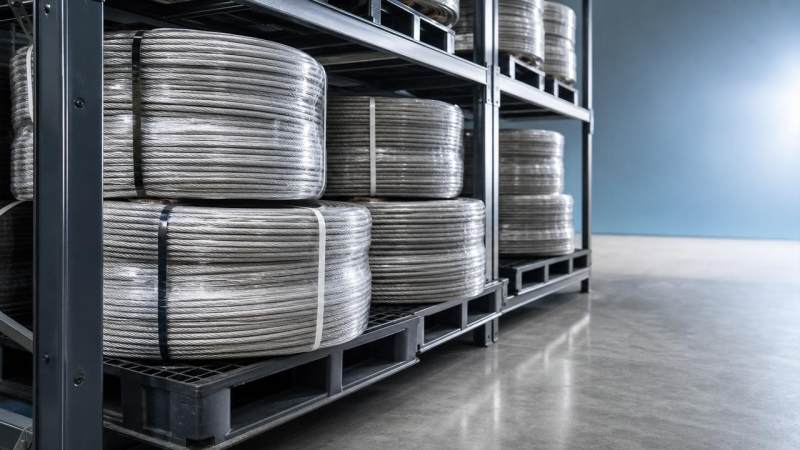
Thick steel wire usually has high load-bearing value, but it is still vulnerable during storage.
Moisture, dust, salt, impact, and poor stacking can damage the surface and change shape.
Even minor corrosion can spread quickly when thick steel wire stays in humid or poorly ventilated spaces.
Storage damage often appears as rust spots, flattened coils, bent ends, coating wear, or contamination from oil and debris.
These issues may reduce usability for tying, reinforcement, lifting support, fabrication, or maintenance work.
A good storage method protects mechanical properties and keeps thick steel wire ready for immediate use.
Industry Concerns Affecting Wire Condition
In the steel industry, storage quality matters as much as production quality.
Structural steel materials often move through warehouses, ports, job sites, and maintenance zones.
Each transfer increases the risk of handling marks and environmental exposure.
Current attention in steel logistics focuses on traceability, corrosion prevention, and stable warehouse conditions.
These priorities are especially important when thick steel wire supports long project schedules.
Storage Value for Structural Steel Operations
Correct thick steel wire storage directly supports safer operations and more predictable maintenance planning.
When wire stays clean and dimensionally stable, cutting, fastening, and assembly become easier.
This lowers rework and reduces the chance of failure caused by unnoticed damage.
For projects using multiple steel products, consistent storage rules also improve inventory control.
In some environments, stainless materials are selected for their corrosion resistance and fabrication flexibility.
A useful example is 304L Stainless Steel Plate, often applied in chemical, food, medical, transportation, and equipment construction.
Its excellent corrosion resistance, weldability, and formability make it suitable where moisture control and material longevity matter.
With tensile strength of at least 520 and yield strength of at least 275, it supports reliable performance across demanding service conditions.
Comparing storage needs across steel products helps create better handling standards for thick steel wire and related materials.
Common Storage Scenarios and Protection Priorities
Different storage locations create different risks for thick steel wire.
Protection methods should match the storage duration, climate, and handling frequency.
Indoor Warehouse Storage
- Keep thick steel wire on raised racks or pallets.
- Maintain airflow to limit trapped moisture.
- Separate carbon steel wire from corrosive chemicals.
- Use clear labels for size, batch, and arrival date.
Outdoor Temporary Storage
- Use waterproof covers without sealing in condensation.
- Slope the cover to drain rainwater quickly.
- Place blocks under coils to avoid ground contact.
- Inspect more often in coastal or rainy areas.
High-Movement Job Site Storage
- Create dedicated storage zones away from traffic paths.
- Prevent forklifts from pushing or dragging thick steel wire.
- Use edge guards where contact damage is likely.
- Rotate old stock first to avoid over-aging.
Practical Thick Steel Wire Storage Tips
A reliable routine should cover environment, stacking, handling, inspection, and recordkeeping.
1. Control Moisture and Airflow
Store thick steel wire in a dry area with stable ventilation.
Avoid direct exposure to leaking roofs, wet floors, or enclosed plastic wraps.
2. Keep Material Off the Ground
Use timber, rubber pads, or steel racks to create clearance from the floor.
This reduces moisture pickup and makes cleaning easier.
3. Prevent Overstacking
Do not stack coils or bundles beyond safe load limits.
Excess weight can flatten lower layers and deform thick steel wire.
4. Use Proper Lifting Methods
Choose slings, hooks, or lifting frames that distribute weight evenly.
Never drag thick steel wire across rough surfaces.
5. Separate by Grade and Condition
Store clean, coated, and weather-exposed materials separately.
This prevents cross-contamination and makes inspection faster.
6. Inspect on a Fixed Schedule
Check for rust, broken ties, loose wraps, bent sections, and standing water.
Early correction prevents minor storage issues from becoming material loss.
Operational Notes for Long-Term Performance
Long-term storage requires more than basic covering and stacking.
Temperature changes can produce condensation even in enclosed spaces.
That is why regular ventilation and seasonal checks are important.
If thick steel wire must remain unused for extended periods, refresh protective wrapping when worn.
Apply suitable rust-prevention oil when specifications allow and surface cleanliness must be maintained.
Documentation also matters.
Record storage dates, inspection results, and relocation history.
This makes it easier to identify recurring issues and improve warehouse practice.
For global steel supply, reliable storage supports product quality after delivery.
Hongteng Fengda, a structural steel manufacturer and exporter from China, emphasizes consistent quality, international standards compliance, and dependable supply for construction and industrial use.
Strong storage discipline complements that quality by protecting steel products throughout handling and maintenance.
Next-Step Actions for Better Storage Control
Start by reviewing the current storage area for moisture, traffic exposure, and stacking risks.
Then create a simple checklist for thick steel wire receiving, placement, inspection, and issue reporting.
Use clear storage zones, standard lifting procedures, and periodic condition reviews.
When thick steel wire is stored correctly, service life improves and avoidable damage drops significantly.
A controlled storage process is one of the most practical ways to protect steel value from warehouse to job site.
Please give us a message


Please enter what you want to find