Steel H sections are central to modern steel frames, bridge systems, workshops, and industrial platforms. Yet many supply problems start with small specification errors. A wrong grade, tolerance, or standard can trigger delays, claims, rework, and cost loss.
In global trade, steel h sections are no longer selected only by size. Buyers now compare compliance, fabrication fit, welding behavior, and delivery consistency. That shift makes specification accuracy more valuable than ever.
This article explains the most common mistakes, why they are increasing, how they affect projects, and what to verify before placing an order for steel h sections.
Specification errors in steel h sections are becoming more visible across global projects
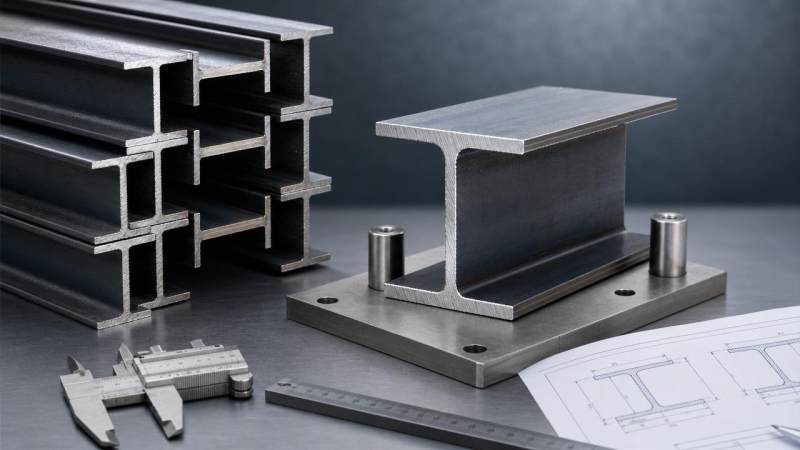
Project teams now work across different regions, standards, and fabrication systems. That creates more chances for mismatch between design intent and delivered steel h sections.
The risk is higher when drawings use mixed standards. It also rises when quotations simplify details to save time. A short description may hide critical differences in flange width, web thickness, or steel grade.
Another change is tighter performance expectations. End users want easier welding, predictable strength, and cleaner dimensional control. Basic compliance is no longer enough for many structural applications.
Why these mistakes are increasing
The most common steel h sections mistakes usually start with size definitions
Many orders describe steel h sections by approximate height only. That is not enough. Section height alone cannot define load performance, flange area, or connection behavior.
A complete section callout should include section designation, height, flange width, web thickness, flange thickness, length, and applicable standard. Missing one item can create a non-matching product.
Frequent size-related errors
- Confusing H-beam and I-beam profiles.
- Using local market names without standard designation.
- Ignoring actual flange and web thickness values.
- Ordering nominal size without checking sectional properties.
- Missing cut length tolerance requirements.
For steel h sections, a near size is not always a usable substitute. Even small profile differences may affect hole alignment, end plate fit, or weld volume.
Tolerance errors are often underestimated
Tolerance is one of the least discussed but most expensive issues in steel h sections. Camber, sweep, twist, flange squareness, and straightness all influence fabrication efficiency.
If the order only says “standard tolerance,” disputes may follow. Different standards define acceptable variation differently. The same section may be compliant under one code and rejected under another.
Grade and standard selection now have a larger impact than many expect
A second common mistake is assuming similar grades are automatically interchangeable. Steel h sections may look identical but behave differently in welding, toughness, and load performance.
For example, replacing one grade with another without checking yield strength, chemical composition, and impact requirements can affect approval and fabrication methods.
Key grade and standard risks
- Assuming ASTM, EN, JIS, and GB grades are direct equivalents.
- Ignoring low-temperature or seismic performance needs.
- Missing weldability requirements in thicker sections.
- Ordering by strength only, without checking chemistry limits.
- Failing to request mill test documents clearly.
Reliable suppliers usually clarify standard editions, inspection rules, and document requirements before production. That step reduces confusion for steel h sections in export projects.
In some projects, buyers also source auxiliary materials together with structural steel. For corrosion-sensitive or industrial environments, products like 202 Stainless Steel Coil may be used in related fabrication scopes.
That material offers high ductility, good corrosion resistance, and stable toughness. Available thickness is 2.5mm to 10.0mm, with ISO, SGS, and BV certifications supporting broader industrial use.
Documentation gaps are reshaping risk in steel h sections supply
The physical product is only one part of supply quality. Missing or unclear documentation now causes as many problems as dimensional defects in steel h sections.
Typical issues include incomplete test certificates, absent heat numbers, unclear coating specifications, or no agreement on third-party inspection. These gaps slow customs, approval, and site acceptance.
Documents that should be aligned early
- Material grade and standard version.
- Section designation and sectional dimensions.
- Length range and tolerance limits.
- Mechanical properties and testing basis.
- Surface condition, coating, or blasting needs.
- Marking, packing, and traceability rules.
- Inspection witness or third-party verification scope.
When those details are settled before production, steel h sections move through manufacturing and export with fewer interruptions.
These mistakes affect cost, schedule, and downstream fabrication more than price alone
A low quoted price can lose value quickly if steel h sections arrive with wrong dimensions or incomplete certificates. Rework, replacement freight, and idle installation time often exceed the original savings.
Specification mistakes also create indirect losses. Fabrication teams may need extra cutting, shim plates, weld adjustments, or redesign checks. These hidden costs are common in fast-track projects.
Where the impact appears first
The best response is a tighter review framework before ordering steel h sections
The market direction is clear. Steel h sections are being evaluated with more technical precision. Better review habits now provide stronger cost control and more predictable delivery outcomes.
Priority checks before confirming an order
- Confirm exact section designation, not only nominal size.
- Match the project standard with the supplier production standard.
- Verify grade, chemistry, and mechanical property requirements.
- Define dimensional and straightness tolerances clearly.
- Check processing needs such as drilling, cutting, or coating.
- Request documentation format before shipment.
- Align marking and traceability with site acceptance rules.
A practical decision path
- Review drawings and extract every section parameter.
- Map local design references to export production standards.
- List non-negotiable tolerances and testing requirements.
- Confirm processing scope and shipment format.
- Approve a final technical sheet before mass production.
For global construction and industrial supply, this discipline improves confidence in steel h sections and lowers avoidable risk across the entire chain.
Hongteng Fengda supports international projects with structural steel manufacturing, export coordination, customized specifications, and quality control aligned with ASTM, EN, JIS, and GB requirements.
If the next project involves steel h sections with strict grade, tolerance, or documentation demands, prepare a full specification checklist first. That simple step often saves the most time, cost, and dispute later.
Please give us a message


Please enter what you want to find