Understanding the steel wire rope price list and the key cost factors is essential for optimizing your procurement budget, whether you’re sourcing steel wire rope for lifting, mining, or construction applications. As a leading steel wire rope manufacturer in China, Hongteng Fengda provides high strength and corrosion resistant steel wire ropes that meet international standards and OEM requirements. From detailed steel wire rope specifications to reliable supply in Europe and beyond, we help you balance performance, quality, and price for efficient project procurement. When stakeholders across construction, mining, and industrial projects evaluate their options, they must navigate technical specifications, coating grades, and diameter options responsibly to avoid cost overruns and ensure long-term durability. For quality-oriented project teams and distributors, understanding how to interpret supplier data sheets also means gaining better control over supplier evaluation, risk management, and final tender pricing decisions.
Definition and General Overview of Steel Wire Rope
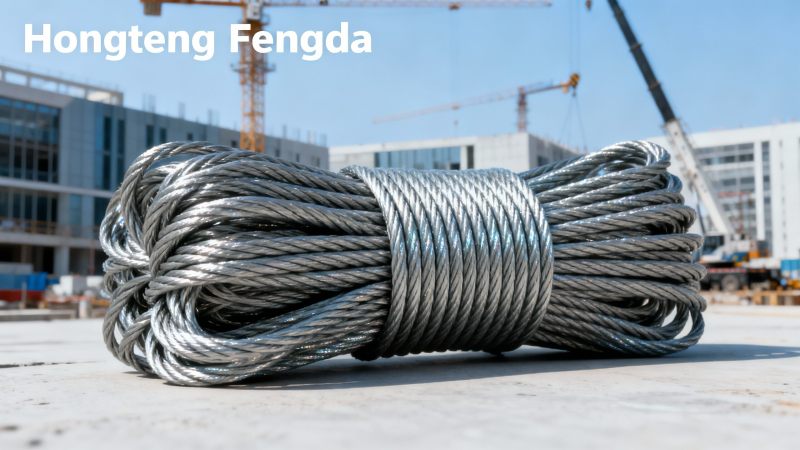
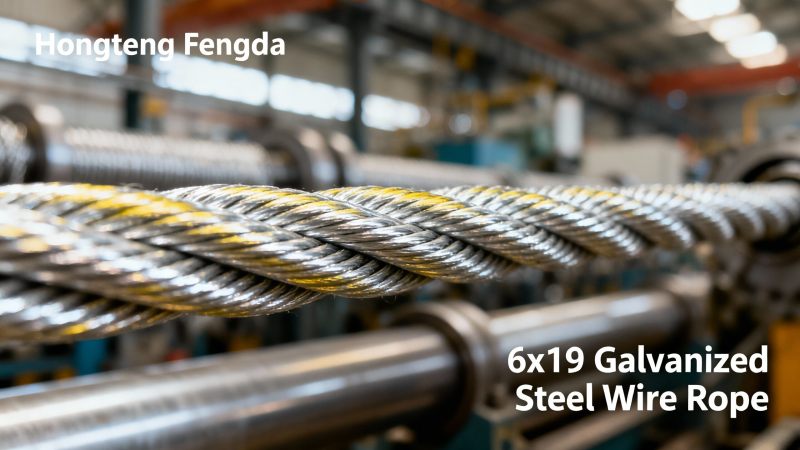
Steel wire rope is composed of multiple strands of steel wires twisted together to form a strong and flexible structure. These ropes are primarily utilized for lifting, pulling, anchoring, and mechanical transmission. Each rope consists of three key elements — wires, strands, and the core. Wire is the basic component and determines strength, corrosion resistance, and fatigue life. Strands are helically wound groups of wires, and they collectively surround a core made of fiber or steel to provide stability. In industrial production, steel wire rope OEM manufacturers in China adopt processes such as drawing, twisting, and heat treatment to achieve desired tensile strength. The final structure is generally categorized according to the number of wires per strand and the strand count per rope—common examples include 6×19, 6×36, and 7×19. These classification codes imply different levels of flexibility and fatigue endurance. In applications like mining or deep-sea lifting, a high-strength variant is often combined with galvanization or zinc-aluminum coatings to protect against rust. Hongteng Fengda applies international manufacturing methodologies that align with ASTM and EN standards, ensuring the wire rope complies with global construction safety requirements. As a reliable provider, the company supports customization for OEMs seeking special wire rope specifications that integrate efficiency, corrosion resistance, and tensile stability for demanding use cases in Europe and other regions worldwide.
Market Overview and Cost Influencing Factors
The steel wire rope market reflects the overall dynamics of the global steel industry. In recent years, fluctuations in raw material prices, logistics costs, and environmental constraints have significantly affected wire rope pricing. For sourcing teams comparing steel wire rope price lists from Asian and European suppliers, raw material composition—especially the price of carbon steel and alloying elements—remains the central determinant. Factors such as diameter tolerances, strand configuration, surface treatment (galvanized, stainless, or plastic-coated), and testing standards also shape cost variation. Moreover, freight and customs duties influence landed costs for overseas buyers, particularly in Europe, the Middle East, and Southeast Asia. Reputable suppliers like Hongteng Fengda differentiate their wire ropes by combining steady supply capacity with international certification. By controlling internal quality costs, they provide consistent pricing even during volatile steel cycles. For safe planning, procurement officers often request a comprehensive price list organized by diameter and finish. A simplified structure may resemble the following table, allowing buyers to evaluate both baseline cost and added value attributes:
This table helps procurement managers align technical needs to budget constraints. While the indicative numbers fluctuate with steel indices, they also reveal that well-optimized sourcing can balance performance and price. For instance, the cost of a corrosion resistant steel wire rope for saltwater or humid mining environments can be higher upfront, yet it saves substantial future maintenance and downtime costs. As an additional low-cost galvanic option, Steel Wire Galvanized provides bright finish, strong flexibility, and effective anti-rust capability, fulfilling everyday construction and industrial requirements with wire diameters ranging from 0.25 mm to 5.0 mm and tensile strength between 350–550 Mpa.
Technical Performance and Specification Considerations
Assessing steel wire rope specifications before procurement helps determine compatibility with specific load requirements and environments. Critical parameters include tensile strength, diameter accuracy, strand construction type, surface coating thickness, breaking load, and elongation ratio. For example, wire rope used for construction cranes demands higher tensile grades (1770–2160 MPa) and compliance with EN 12385 or ISO 2408 standards. The tensile strength range of 350–550 MPa, as in the Q195 and Q235 low-carbon models of galvanized wires, is ideal for general usage but not suitable for ultra-heavy lifting. These technical limits ensure safe working load factors with adequate margins. Engineers and safety officers also examine torque balance properties to ensure ropes won’t untwist under heavy rotation. Adjusting strand directions (right-hand or left-hand lay) optimizes stability. A proper understanding of coating technology can extend wire rope lifecycle by over 25%. The zinc coating thickness, typically 8–25 g/m², plays a direct role in corrosion rate reduction. High precision in drawing operations guarantees uniform coatings, resulting in smooth and silvery-white surfaces with slight yellow hues—indicative of quality. The Steel Wire Galvanized mentioned offers such surface integrity with pure and strong coatings that maintain adhesion even during bending or cold-stamping operations. Technical auditors evaluating supplier plants should seek documentation for mechanical tests, ductility, torsion resistance, salt spray testing results, and fatigue analysis to validate product reliability across diverse environmental conditions often encountered on offshore platforms or underground sites.
Application Scenarios Across Industries
Steel wire rope applications extend across multiple industries including construction, infrastructure lifting, mining hoists, marine exploration, and industrial conveyors. In construction projects, high strength steel wire rope is commonly used in tower cranes, elevators, and concrete formwork systems. For mining, ropes face abrasive exposure and dynamic tension cycles; thus, reinforced core designs and advanced lubricants are used to minimize metal fatigue. In the oil and gas sector, corrosion resistant steel wire ropes are preferred due to humid and saline conditions. Industrial production lines employ wire ropes in tensioning units and transmission drives, highlighting the importance of consistent elasticity and fatigue resistance. In the European market, steel wire rope suppliers frequently provide OEM customization, integrating project-specific requirements such as specialized end fittings, custom drum windings, or hybrid coatings. For distributors catering to construction or lifting equipment, stable quality with competitive lead time ensures consistent supply chain performance. Hongteng Fengda’s model focuses on delivering international-grade ropes designed to meet both functional demands and budgetary goals, ensuring safety with compliant design under ASTM, JIS, GB, and EN certifications. This is vital for engineering managers and procurement staff responsible for quality assurance, ensuring every lift, anchor, or suspension adheres to structural reliability and long-service expectations.
Procurement Guide: Optimizing Cost and Quality
For procurement specialists and decision-makers evaluating steel wire rope suppliers, a systematic sourcing plan must integrate technical, commercial, and logistical dimensions. Begin by defining operational parameters such as working load, corrosion environment, and lifespan expectations. Next, request detailed steel wire rope specifications matching those criteria, including tolerance data and coating consistency. Compare multiple steel wire rope price lists to distinguish between base material differences and processing quality. Evaluate supplier history—especially their role as OEM manufacturers and exporters. In overseas procurement, cost optimization also hinges on consolidating shipment volumes, selecting the right packaging format (e.g., 50–1000 kg coils with plastic film and woven bag), and negotiating Incoterms aligned to your logistics network. Technical evaluation teams can reduce total ownership cost by choosing rope types that require fewer replacements due to higher fatigue resistance or superior coating quality. Procurement strategies prioritizing lifecycle cost rather than upfront price ultimately yield higher ROI. Hongteng Fengda’s manufacturing process—supported by strict QC and compliance to ASTM and GB grades—empowers procurement engineers to build performance-driven sourcing portfolios that align with safety standards and cost control objectives.
Cost Drivers and Alternative Solutions
The main cost drivers of steel wire rope production include steel billet prices, galvanizing agents, energy consumption, and labor intensity. Technological upgrades, such as efficient dry drawing systems or automatic twisting lines, mitigate manufacturing costs. For buyers, exploring alternative models like electro-galvanized versus hot-dip galvanized variants can adjust pricing margins without compromising application results. Electro-galvanized ropes feature a bright surface and lower zinc consumption—ideal for indoor or dry environments—while hot-dip versions offer thicker coatings suitable for marine or outdoor use. Effective cost optimization combines technical alignment and volume forecasting. If the overall project involves mixed rope diameters, selecting a unified supplier simplifies certification management and ensures consistent mechanical properties. Distributors commonly adopt dynamic pricing systems indexed to international steel prices, allowing flexibility during contract renewals. By coordinating closely with reliable steel wire rope manufacturers in China, overseas partners secure predictable production schedules, maintain corrosion protection standards, and stabilize procurement budgets. Therefore, even while market indices fluctuate, smart buyers maintain stable expenditure through technical rationalization and partnership-based negotiation rather than reactive price chasing.
Standards, Certification, and Compliance
For compliance officers and safety engineers, adherence to recognized international standards remains essential. Certification frameworks such as ISO 9001 (Quality Management), ISO 14001 (Environmental Management), and OHSAS 18001 (Occupational Safety) demonstrate supplier capability to control process variation. Technically, steel wire ropes must comply with ISO 2408, EN 12385, DIN 3055, or related national standards depending on target markets. Testing requirements include visual inspection, dimensional verification, breaking load assessment, and zinc coating continuity evaluation. Manufacturers such as Hongteng Fengda operate in alignment with these frameworks to deliver traceable production control and mechanical consistency. Besides, OEM documentation for tensile test reports and mill certificates provides transparent assurance to end-users. European importers particularly value CE marking for certain rope-related products, ensuring compliance with Machinery Directive provisions. As engineering documentation becomes digitalized, buyers increasingly request data solutions such as QR-coded labeling for production traceability. Supplier adherence to those norms validates long-term reliability and allows project managers to certify structures in accordance with international safety codes. Consequently, choosing partners that respect compliance principles directly reduces failure incidents and liability risks at construction sites or industrial facilities.
Trend and Insights: Future Outlook of the Wire Rope Industry
Global steel wire rope manufacturing is evolving towards higher efficiency, smart quality control, and eco-friendly coating technologies. Material science advancements introduce micro-alloyed low-carbon steels with improved fatigue strength and reduced weight, stimulating sustainable project design. In Europe and Asia, distributors focus on digitalized procurement systems that integrate steel wire rope price list databases into ERP platforms, allowing real-time inventory optimization. From a sustainability viewpoint, galvanizing chemistry is shifting toward low-emission zinc-coating processes with minimal waste generation. Additionally, IoT-based maintenance monitoring for lifting and mining systems reduces downtime and assists predictive replacement strategies. For distributors and project engineers, adopting these technological innovations leads to lower lifecycle costs and enhanced workplace safety. Future OEM collaborations will revolve around customization, such as pre-lubricated, polymer-coated or compounded ropes tailored for heavy-duty construction and renewable energy applications. As supply chains strengthen post-pandemic, companies that maintain trusted relationships with capable steel wire rope manufacturers in China will gain strategic advantages—steady production capacity, reliable shipping schedules, and globally compliant documentation that clients in America, Europe, or the Middle East can confidently depend on.
Why Choose Hongteng Fengda
Hongteng Fengda stands as a trusted structural steel manufacturer and exporter from China with deep expertise in producing high-quality steel wires, beams, channels, and customized structural products. Our commitment to international standards such as ASTM, EN, JIS, and GB ensures every steel wire rope and structural component aligns with global expectations for safety and durability. With modern facilities, strict quality controls, and an experienced engineering team, we provide consistent output for large-scale projects across North America, Europe, the Middle East, and Southeast Asia. Clients benefit from stable production, dependable lead times, and responsive OEM services covering steel wire rope for construction, lifting, and mining applications. Whether you represent a procurement department, technical design team, or distribution business, partnering with Hongteng Fengda allows you to streamline sourcing, control budget, and improve performance outcomes. Contact us today to discuss your steel wire rope requirements and explore tailored solutions designed to maximize quality and economic efficiency.
- steel i
- steel wire galvanized
- galvanized wire
- hot-dip galvanized
- structural steel
- Structural Steel
- Corrosion Resistant Steel
- wire mesh
- Galvanized
- Steel Wire
- High Strength Steel Wire
- carbon steel
- steel wire rope
- steel wire rope for construction
- high strength steel wire rope
- steel wire rope manufacturer in China
- steel wire rope price list
- corrosion resistant steel wire rope
- steel wire rope specifications
- steel wire rope for lifting
- steel wire rope OEM manufacturer
Related recommendations
 Why Does Galvanized Pipe Corrode Over Time and When Should It Be Replaced?Galvanized pipe corrodes as its zinc coating wears away from moisture, chemicals, and age. Learn the warning signs, repair limits, and the right time to replace it.
 Common SS Pipe Welding Problems and How to Prevent ThemSS pipe welding problems can lead to leaks, corrosion, and costly repairs. Learn the main defects, warning signs, and practical prevention tips to improve weld quality and service life.
 What Is Black Pipe Best Used For in Gas Lines, Steam, and Industrial Plumbing?Black pipe is ideal for gas lines, steam, and industrial plumbing where strength and heat resistance matter. Learn when it fits best, where it fails, and how to choose wisely.
 Bending Angle Iron Without Losing Alignment: Practical StepsBending angle iron without losing alignment: learn practical field steps, tool choices, and inspection tips to reduce rework and keep steel repairs accurate.
Please give us a message


Please enter what you want to find