Early rust spots on Stainless Steel Welded Mesh can create immediate concern in steel-related projects because they may suggest coating failure, material mismatch, contamination, or uncontrolled site conditions. In reality, Stainless Steel Welded Mesh is highly valued for corrosion resistance, hygiene, strength, and long service life, but it is not completely immune to staining or localized corrosion. In construction, industrial processing, infrastructure, and fabrication environments, understanding why early rust appears is essential for maintaining quality, preventing rejection, and protecting long-term structural performance.
Understanding Stainless Steel Welded Mesh and the nature of rust staining
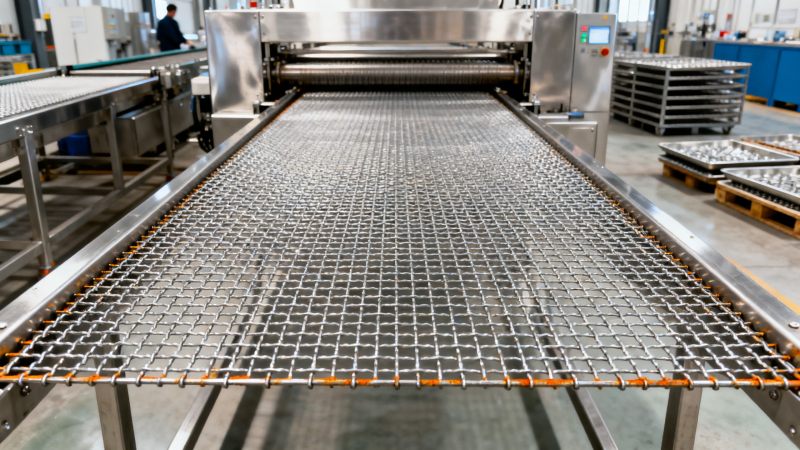
Stainless Steel Welded Mesh is made by electrically welding intersecting stainless steel wires into a rigid grid. It is widely used in guarding, filtration, infill panels, reinforcement support, food-related processing areas, agricultural enclosures, and architectural applications. Its corrosion resistance comes from a thin passive chromium oxide film on the surface. When that passive layer remains intact and clean, the mesh performs well in many outdoor and indoor conditions.
However, “rust spots” on Stainless Steel Welded Mesh do not always mean the base metal is poor quality. In many cases, brown or orange staining comes from free iron contamination, embedded carbon steel particles, welding discoloration, trapped moisture, chloride attack, or improper cleaning after fabrication. Distinguishing superficial contamination from active corrosion is the first step in deciding whether the issue is cosmetic, process-related, or structurally important.
This distinction matters in the steel industry because different stainless grades behave differently. A mesh made from 201 stainless in a coastal or chemical environment may show tea staining much earlier than 304 or 316. Likewise, a well-selected alloy can still fail prematurely if workshop handling, welding practice, or post-fabrication treatment is poorly controlled.
Key industry signals behind early rust on Stainless Steel Welded Mesh
In current steel supply and fabrication practice, early rust on Stainless Steel Welded Mesh is usually linked to a combination of material selection, processing quality, and service environment rather than a single cause. The following signals are the most common when evaluating complaints or field performance:
These patterns are especially important in export steel supply, where Stainless Steel Welded Mesh may travel through multiple climate zones before installation. Improper storage during transport, wet packaging, or contact with ferrous strapping can create staining even before the product reaches the project site.
Main causes of premature rust spots in practical steel processing
1. Incorrect stainless steel grade for the service environment
One of the most common reasons Stainless Steel Welded Mesh develops early rust spots is grade mismatch. Stainless materials are not interchangeable in all environments. Mild inland exposure may be suitable for standard grades, while marine, chemical, or high-humidity areas often require stronger corrosion resistance. If the selected alloy contains lower nickel or molybdenum content than the application demands, visible staining may appear quickly.
2. Free iron contamination during fabrication or handling
Stainless steel surfaces can become contaminated when they touch carbon steel tables, slings, brushes, blades, or grinding tools. Tiny iron particles embed into the surface and later oxidize, creating rust-colored spots. In this case, the corrosion may not originate from the stainless substrate itself. This is why dedicated stainless processing zones, clean handling systems, and proper separation from ordinary steel are critical.
3. Welding heat tint and poor post-weld treatment
Welding changes the local surface chemistry. If oxide scale, heat tint, or weld residue remains on Stainless Steel Welded Mesh, the passive layer around the weld may be less protective than the surrounding base metal. Pickling, passivation, or suitable mechanical and chemical cleaning may be needed depending on the grade and finish requirements. Without post-weld treatment, rust spots often start around the welded intersections.
In broader steel structure projects, corrosion control is also connected to surrounding support members. For example, secondary framing products such as C-beam are widely used in purlins and wall beams of steel structure buildings, lightweight roof trusses, brackets, and mechanical light industry components. Available in materials such as Q195, Q235, Q345, A36, SS400, and s235jr, with galvanized coated surfaces, thickness from 1mm to 12.mm, and standards including AiSi, ASTM, bs, DIN, GB, and JIS, such members show how surface treatment and environment matching are central across all steel categories, not only mesh products.
4. Surface scratches, trapped debris, and moisture retention
Even good-quality Stainless Steel Welded Mesh can stain if the surface is scratched during cutting, bundling, transport, or installation. Rough areas retain chlorides, dust, and water more easily. If mesh panels are tightly stacked while damp, crevice-like conditions may form between wires or sheets, allowing localized corrosion to begin. The finer the wire and the rougher the storage conditions, the more visible these early defects become.
5. Aggressive exposure conditions after installation
Chlorides from coastal air, de-icing salts, process chemicals, cleaning agents, cement splashes, and industrial pollutants can all attack the passive film. Poor maintenance makes the problem worse. Stainless Steel Welded Mesh installed near road spray, marine structures, wastewater facilities, or chemical handling zones should be cleaned periodically so contaminants do not remain on the surface long enough to initiate corrosion.
Why this issue matters in construction and industrial applications
Early rust on Stainless Steel Welded Mesh is not only a visual issue. In steel-related applications, it can affect compliance reviews, site acceptance, owner confidence, and long-term maintenance cost. If rust spots are caused by contamination only, corrective cleaning may solve the problem. If they indicate pitting or grade failure, the mesh may lose durability much earlier than expected.
This is especially relevant where mesh supports safety separation, machine guarding, façade elements, animal enclosures, screening systems, or corrosive-process partitions. In these conditions, the cost of replacing failed mesh usually exceeds the cost of selecting the correct stainless grade and applying better fabrication controls from the start.
- Appearance quality can affect project acceptance and brand reputation.
- Localized corrosion can spread if the source is not identified early.
- Unplanned replacement adds labor, downtime, and logistics cost.
- Incorrect diagnosis may lead to unnecessary disputes over material quality.
Typical situations where rust spots appear first
The location and pattern of staining often help identify the real cause. Common high-risk situations include:
Practical measures to prevent early rust on Stainless Steel Welded Mesh
Preventing premature rust requires control from procurement through installation. The most effective actions are practical and measurable:
- Match the stainless grade to the real exposure environment, especially where chlorides or chemicals are present.
- Verify material certificates and relevant standards before production and shipment.
- Use dedicated stainless tools, worktables, brushes, and storage racks to avoid ferrous contamination.
- Control welding parameters and clean weld discoloration using suitable post-weld treatment.
- Protect the surface during transport with dry packaging and separated stacking methods.
- Keep installed mesh clean in coastal, industrial, or splash-prone locations through routine washing.
When rust appears, inspection should determine whether it is removable contamination or actual substrate corrosion. Visual examination, localized cleaning trials, magnet checks for contamination sources, and review of fabrication records often reveal the cause quickly. For critical use, laboratory analysis or corrosion testing may also be justified.
Moving toward more reliable steel product performance
Stainless Steel Welded Mesh remains a dependable solution when grade selection, welding quality, surface protection, and storage control are handled correctly. Early rust spots are usually warning signs of a break in that control chain rather than proof that stainless steel has no corrosion resistance. A disciplined approach to material choice, contamination prevention, post-weld cleaning, and environmental maintenance can significantly reduce risk and improve service life.
For steel projects that require consistent quality across structural and fabricated components, it is worth reviewing both mesh specifications and adjacent steel products as part of the same corrosion-control strategy. Hongteng Fengda, a professional structural steel manufacturer and exporter from China, supports global projects with stable production capacity, customized steel solutions, and products aligned with international standards such as ASTM, EN, JIS, and GB. A careful technical review before ordering is often the most effective next step for reducing rust-related claims and ensuring reliable project performance.
Please give us a message


Please enter what you want to find