Even with confirmed orders, steel deliveries can still slip due to mill scheduling changes, raw material shortages, specification revisions, and export coordination issues. For procurement teams, effective steel procurement lead time planning is not just about booking early—it requires understanding every stage that can disrupt supply. This article explains why lead time planning often fails and how buyers can reduce delays, control risk, and keep projects on schedule.
Why confirmed steel orders still miss delivery windows
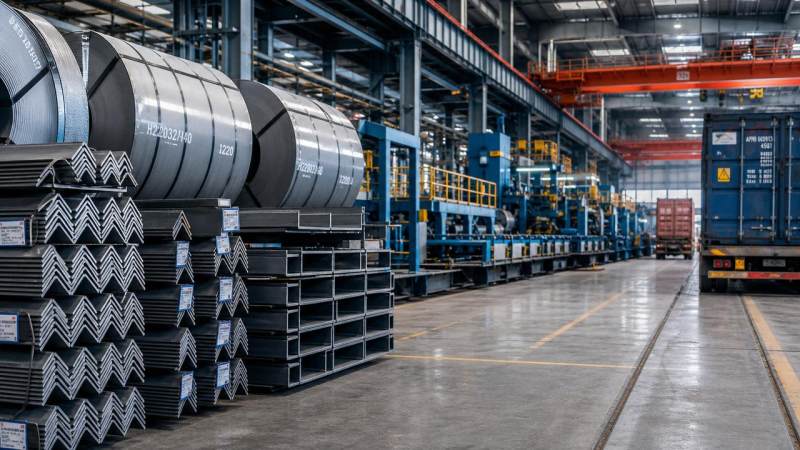
A confirmed purchase order often creates a false sense of certainty. In reality, steel procurement lead time planning can fail after order confirmation because the order only secures one part of the supply chain. Actual delivery still depends on billet or coil availability, rolling schedules, finishing capacity, quality inspection timing, packaging, inland transport, customs documents, vessel space, and destination clearance. If any one of these steps changes, the promised lead time can move.
This is especially true in structural steel, where dimensions, grades, tolerances, coatings, and testing requirements are often project-specific. A mill may confirm production based on its current schedule, but a change in raw material flow or urgent domestic allocation can push export orders backward. That is why steel procurement lead time planning should be built around milestone verification rather than relying only on the original order date.
Another common problem is that buyers track the promised ship date, but not the internal path leading to it. Without visibility into production sequencing, inspection hold points, and export booking dependencies, delays appear suddenly instead of being identified early. Good planning turns lead time from a single date into a controlled process with checkpoints.
Why a structured review matters in steel procurement lead time planning
Steel orders are vulnerable because they involve multiple linked parties: raw material suppliers, mills, processors, testing agencies, logistics providers, ports, and customs. A delay from one party often creates a chain reaction across the others. Steel procurement lead time planning works best when each critical point is reviewed in sequence before and after order placement.
A structured review also improves decision quality. Instead of asking only “When will the cargo ship?”, it forces more useful questions: Has the rolling slot been locked? Are material substitutions possible? Has final drawing approval been frozen? Are export documents aligned with destination rules? These details determine whether a lead time is dependable or just optimistic.
Essential checkpoints that prevent planning failure
- Confirm whether the mill has allocated an actual production slot, not just accepted the order in principle or quoted a standard manufacturing cycle.
- Verify raw material readiness, including billet, slab, coil, or parent section availability, especially for non-standard grades or heavy sections.
- Freeze technical specifications early so changes in dimensions, tolerances, hole patterns, coatings, or testing do not restart production preparation.
- Check whether the order requires secondary processing such as cutting, punching, drilling, galvanizing, blasting, or special surface treatment.
- Review inspection timing, including third-party testing, mill test certificates, and hold points that may delay release after production completion.
- Confirm packing method, bundle weights, labeling rules, and container loading plans because export handling often adds unplanned days.
- Validate inland transport capacity from factory to port during peak seasons, holidays, weather disruptions, or domestic traffic controls.
- Secure vessel space or container booking early, particularly for routes with unstable schedules or recurring port congestion.
- Check documentation readiness, including certificates of origin, inspection records, HS codes, and destination-specific compliance paperwork.
- Create milestone-based follow-up dates so steel procurement lead time planning is monitored through production, dispatch, shipment, and arrival.
For many structural applications, profile selection also influences scheduling stability. For example, Q195 angle steel used in building structures, engineering structures, bridges, transmission towers, warehouse shelves, and cable trench supports may appear straightforward, but equal and unequal sections, thickness from 3-24mm, widths from 20mm-200mm, and different surface finishes such as black, pickled, bright, polishing, or blasting can affect production flow and finishing time. When material standards such as ASTM, EN, JIS, DIN, AISI, or GB are involved, lead time planning should account for both production and compliance review.
This matters even more when steel components act as both load-bearing stress members and connectors between components. In such cases, specification accuracy is not just a quality issue; it is a schedule issue. A minor revision to section size, length, or required material grade such as A36, A53, Q235, or Q345 can move the entire delivery sequence.
How lead time risks change across common steel sourcing scenarios
Standard stock-size structural sections
Standard sections usually seem lower risk, but delays still happen when stock is assumed rather than verified. Available inventory may not match the required standard, heat number traceability, or export packaging format. Steel procurement lead time planning for standard items should include a stock reservation confirmation and a clear release date for dispatch.
It is also important to check whether the supplier plans to fulfill the order from warehouse inventory or new rolling. These are very different lead time paths, and confusion between them often causes avoidable schedule gaps.
Customized fabricated steel components
Fabricated components carry higher scheduling risk because every drawing approval, processing step, weld requirement, and dimensional check adds another timing dependency. Production may be blocked if one connection detail remains unconfirmed. In this scenario, steel procurement lead time planning should break the order into design freeze, material preparation, fabrication, inspection, and packing milestones.
If the project includes multiple assemblies, partial shipment options should be reviewed early. Waiting for complete lot readiness may create larger delays than shipping critical items first.
Export orders with strict destination compliance
For international shipments, the product can be finished on time while the cargo still misses departure due to missing documents or booking issues. Some markets require specific declarations, testing references, or packing marks. Here, steel procurement lead time planning must include export administration as a formal stage, not a last-minute activity.
Transit time variability should also be built into the plan. A vessel schedule can change after cargo handover, so contingency days are necessary for projects with fixed site installation dates.
Frequently overlooked causes of steel delivery delays
Specification drift after order confirmation
Small revisions are often treated as harmless, but changes to grade, thickness, length range, coating, or tolerance may trigger a new review, material reassignment, or revised testing. The order remains “confirmed,” yet the original timeline is no longer valid.
Assuming inspection is automatic and immediate
Inspection capacity can become a bottleneck, especially when third-party agencies are involved. If inspection booking starts after production is finished, several days may already be lost. Inspection readiness should be part of steel procurement lead time planning from the start.
Ignoring export packaging and load optimization
Improper bundle design, overweight units, weak labeling control, or unsuitable container plans can delay loading or force repacking. These are operational details, but they directly affect departure timing and destination handling efficiency.
Treating supplier capacity as fixed year-round
Capacity changes with seasonal demand, energy restrictions, maintenance shutdowns, policy shifts, and domestic priority orders. Reliable steel procurement lead time planning should be updated against current factory conditions instead of historical averages alone.
Practical actions that improve lead time control
- Ask for milestone dates in writing: material ready, rolling date, finishing date, inspection date, packing date, port arrival, and ETD.
- Set an internal rule that technical changes after approval automatically trigger lead time revalidation before acceptance.
- Use a risk buffer for galvanizing, third-party testing, and ocean freight because these steps commonly fluctuate more than production.
- Separate critical-path items from non-critical items so urgent sections can be produced, inspected, and shipped first if required.
- Track supply using weekly status checks tied to evidence such as photos, mill schedules, packing lists, or booking confirmations.
- Align Incoterms, loading responsibility, and customs document ownership early to prevent disputes at dispatch or shipment release stage.
Supplier selection also affects planning reliability. A structural steel manufacturer with stable production capacity, international standard compliance, and export coordination experience can reduce uncertainty across the entire process. This is particularly important for orders serving construction, industrial, and manufacturing projects where installation timing is tightly linked to downstream activities.
Hongteng Fengda, as a structural steel manufacturer and exporter from China, supports global projects with angle steel, channel steel, steel beams, cold formed steel profiles, and customized structural steel components. With manufacturing capabilities aligned to ASTM, EN, JIS, and GB standards, plus experience serving North America, Europe, the Middle East, and Southeast Asia, dependable execution can support stronger steel procurement lead time planning and lower sourcing risk.
Final steps to strengthen steel procurement lead time planning
Confirmed orders do not guarantee confirmed delivery. The real discipline of steel procurement lead time planning is to test every assumption between order entry and final arrival. That means validating production allocation, locking specifications, monitoring processing stages, planning inspections early, and controlling export coordination with the same care given to price and quality.
A practical next step is to turn each new steel order into a milestone checklist with accountable dates and supporting evidence. When lead time is managed as a sequence of verified events rather than a single promised date, delays become easier to predict, discuss, and reduce. That is how steel supply planning becomes more stable, project schedules become easier to protect, and sourcing decisions become more resilient over time.
Please give us a message


Please enter what you want to find