Machining a stainless steel square bar can be more challenging than many buyers and operators expect. From work hardening and tool wear to poor chip control and dimensional inconsistency, several factors affect efficiency, surface quality, and cost. For manufacturers comparing angle stainless steel, Corrosion Resistant Steel, and other steel standards, understanding these machining problems is essential for better material selection and project performance.
Why does stainless steel square bar create machining problems in real production?
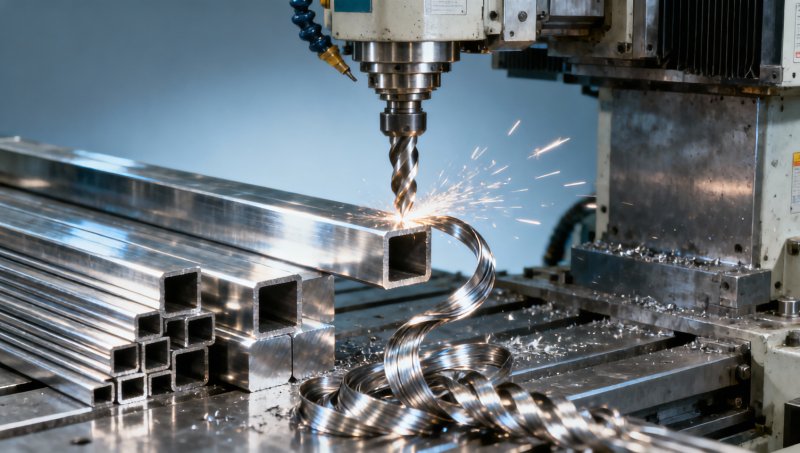
In the steel industry, stainless steel square bar is widely used for frames, machined supports, connectors, shafts, and fabricated components. However, many workshops discover that the same machine settings used for carbon steel do not perform well here. Feed instability, rapid tool wear, and rough surfaces often appear within the first 20–60 minutes of cutting if parameters are not adjusted for stainless grades and bar geometry.
The first reason is work hardening. Austenitic stainless steels, in particular, harden quickly when the cutting edge rubs instead of shearing cleanly. Once the surface hardens, the next pass requires more force, generates more heat, and reduces tool life. This creates a chain reaction: slower output, higher tooling cost, and more frequent dimensional correction.
The second reason is low thermal conductivity compared with many standard structural steels. Heat concentrates at the cutting zone rather than dissipating through the chip and workpiece. In practical terms, this means higher cutting temperatures, greater risk of edge chipping, and a narrower process window. A small deviation in speed or coolant supply can lead to visible burn marks or loss of tolerance.
The third factor is chip behavior. Stainless steel square bar often produces long, stringy chips that wrap around tools and fixtures. For operators, this is both a productivity issue and a safety concern. For quality teams, poor chip evacuation can scratch the bar surface and interfere with inspection. For procurement teams, these issues translate into a higher true machining cost than the raw material price alone suggests.
The most common shop-floor causes
Most machining problems come from a combination of material condition, machine rigidity, tooling selection, and setup control rather than a single defect. Square bars also present corner loading during clamping and interrupted contact in some operations, which increases vibration risk. If stock straightness, surface scale, or tolerance variation are inconsistent, the process becomes even less stable.
- Improper cutting speed that is too high for the grade and tool substrate, causing heat buildup within 1–3 passes.
- Feed rate that is too low, leading to rubbing instead of shearing and accelerating work hardening.
- Insufficient coolant flow or poor coolant direction, reducing heat removal and chip evacuation.
- Bar stock with inconsistent dimensional tolerance, affecting fixture pressure and final machining allowance.
How material supply quality changes the machining result
For technical evaluators and project managers, machining performance begins before the bar reaches the machine. The steelmaking route, heat treatment condition, straightness, residual stress, and surface finish all influence how the bar behaves. Even when two bars share the same nominal grade, actual shop performance can differ if one batch has more stable chemistry and tighter process control.
This is why global buyers often assess not only grade certificates but also production consistency. A reliable steel manufacturer can support this by providing stable supply, common standards such as ASTM, EN, JIS, or GB where applicable, and clearer communication on tolerance and processing condition. That reduces trial-and-error time during commissioning and lowers the risk of scrap in the first 2–4 weeks of production.
What specific factors should buyers and engineers check first?
When stainless steel square bar machining becomes difficult, the best approach is to separate the issue into measurable variables. Buyers, operators, and quality personnel should review at least 5 key checks: steel grade, hardness range, dimensional tolerance, surface condition, and required finish after machining. These indicators help determine whether the problem comes mainly from the material, the process, or the matching of both.
Grade selection is often underestimated. Some projects specify corrosion resistance first and machinability second, which is sometimes necessary, but the trade-off must be understood early. If the component does not require the higher corrosion performance of a difficult-to-machine grade, an alternative stainless specification or a different product form may lower total cost across material, tooling, and cycle time.
Hardness and microstructure should also be checked before blaming the machine. A bar that arrives with higher-than-expected hardness or residual stress can distort after rough machining. In square bars, corner areas may also respond differently during cutting, especially when stock removal is uneven. That matters for components needing flatness, parallelism, or repeatable dimensions within common shop tolerances such as ±0.1 mm to ±0.5 mm, depending on the operation.
Finally, buyers should ask whether the supplied bar is intended for direct machining, fabrication first, or mixed use. A bar optimized for structural fabrication may not behave the same way in high-precision CNC work. This distinction is commercially important because a lower purchase price can become a higher production cost if machining time rises by 10%–30% or tool consumption increases sharply.
Quick evaluation table for machining risk
The table below helps purchasing teams, engineers, and QC staff screen common machining risk points before placing an order for stainless steel square bar or similar corrosion resistant steel products.
For procurement and finance teams, this type of review improves cost visibility. Instead of comparing only price per ton, it connects material choice with tooling spend, rework rate, machine hours, and delivery risk. In many B2B projects, that broader view leads to a more accurate total landed cost calculation.
A practical 4-step screening method
- Define the end use: structural, decorative, load-bearing, or precision-machined.
- Match the corrosion requirement to the least over-specified grade that still meets service needs.
- Confirm tolerance, surface, and delivery condition with the supplier before production scheduling.
- Run a small machining trial on the first batch, especially for repeat orders above medium volume.
How do stainless steel square bar and alternative steel solutions compare?
Not every project that starts with stainless steel square bar must end with the same material choice. In construction, enclosure systems, and industrial fabrication, buyers often compare machined stainless sections with coated sheet, angle stainless steel, or other corrosion resistant steel forms. The correct selection depends on whether the part must be machined heavily, formed, welded, or exposed continuously to moisture, chemicals, or outdoor weather.
For example, if the project requires corrosion resistance and exterior appearance but not deep machining, a coated flat product may be more economical and easier to process. In roof, wall, agricultural, and public building applications, a pre-coated solution can reduce downstream finishing steps and shorten installation schedules by several days to several weeks, depending on project scale.
A relevant option in such scenarios is Color Coated Galvanized Steel Sheet PPGI. Based on aluminum-zinc steel and available in thicknesses from 0.2 mm to 1.2 mm, widths from 600 mm to 1250 mm, and lengths from 750 mm to 1100 mm, it fits agricultural buildings, residential structures, factories, warehouses, schools, hospitals, and other public facilities where corrosion resistance, appearance, and maintenance efficiency matter.
This does not replace stainless steel square bar in precision-machined support parts, but it can be a smarter system-level choice when the design goal is durable enclosure performance rather than machining-intensive component production. For decision-makers balancing capex and lifecycle cost, understanding this distinction can prevent over-specification and reduce unnecessary processing expense.
Comparison by processing and project objective
The following comparison helps project teams decide whether to stay with stainless steel square bar or consider another steel product form based on fabrication route, environment, and budget expectations.
For broader building applications, the same coated solution can offer top coating thickness around 11–35 μm and back coating around 5–14 μm, with options such as PE, HDP, SMP, and PVDF systems. That matters when buyers compare corrosion resistance, weatherability, and maintenance cycles over 10–25 years of service exposure, depending on the environment and design use.
When an alternative is worth considering
- If the part needs appearance and weather resistance more than heavy machining, coated sheet may be more efficient.
- If the structure is mainly welded and cut rather than milled, angle or formed sections can reduce machining hours.
- If the budget is tight, evaluate lifecycle cost, not only initial material price.
What procurement, QC, and project teams should ask before ordering
In B2B steel sourcing, machining problems are often discovered too late because purchasing focuses on grade and price while engineering focuses on process, and the two are not aligned early enough. A stronger sourcing method is to use a shared checklist before RFQ approval. This is especially important for exporters, distributors, EPC buyers, and OEM projects working across different standards and delivery schedules.
A practical pre-order review should cover 6 areas: applicable standard, dimensional range, processing route, required documents, packing method, and lead time. For many global projects, normal production and export planning may involve 2–6 weeks depending on size, customization, destination, and inspection scope. Missing one of these items can delay customs clearance or shop-floor release.
Quality control teams should also define acceptance points in advance. Examples include size verification on arrival, surface check before machining, review of mill documentation, and first-piece inspection after trial cutting. This approach reduces disagreement between supplier, buyer, and workshop because each stage has a measurable checkpoint rather than a general quality claim.
For international buyers, supplier capability is more than production volume. It includes whether the manufacturer understands ASTM, EN, JIS, and GB references, can support OEM or customized structural steel components, and can keep delivery stable across repeat orders. This is where a professional structural steel manufacturer and exporter can reduce sourcing risk for North America, Europe, the Middle East, and Southeast Asia through more consistent specification control.
Pre-order checklist for stainless steel square bar projects
Use the checklist below to align technical, commercial, and operational expectations before placing a stainless steel square bar order.
This checklist is also valuable for distributors and resellers. It helps them quote with fewer assumptions and manage downstream customer expectations more accurately. In competitive tenders, a clear technical-commercial alignment often matters as much as unit price.
Common mistakes that increase total cost
- Buying a higher-grade stainless material than the actual service environment requires.
- Ignoring machinability during RFQ and discussing only corrosion resistance and price.
- Skipping first-batch machining validation when moving to a new supplier or standard.
- Treating all steel forms as interchangeable even when processing routes differ significantly.
FAQ and practical next steps for decision-makers
The final decision on stainless steel square bar should balance corrosion performance, machining difficulty, fabrication route, and delivery reliability. For engineering teams, the technical answer is rarely based on one property alone. For purchasing and finance teams, the best value often comes from a supply plan that reduces scrap, rework, and uncertainty over the full project cycle.
Hongteng Fengda supports global buyers with structural steel products, customized solutions, and production coordination for construction, industrial, and manufacturing projects. With experience in angle steel, channel steel, steel beams, cold formed profiles, and OEM structural components, the company helps customers compare specifications, reduce sourcing risk, and keep lead time planning more predictable.
If your project includes stainless steel square bar together with other structural or coated steel products, early technical discussion can save both time and budget. A review at the RFQ stage is far more efficient than correcting a mismatch after tooling has been set or material has already been shipped internationally.
Below are several frequently asked questions that buyers, engineers, and project teams commonly raise before final material approval.
How do I know whether machining problems come from the material or the process?
Start with 3 checks: compare batch documents, verify actual size and surface condition, and test one controlled cutting setup with known tooling. If the same problem appears across different machines and operators, material condition becomes more likely. If the issue changes with speed, feed, or coolant direction, process setup is usually the main factor.
When should I consider another steel product instead of stainless steel square bar?
Consider an alternative when the part needs weather resistance, coating appearance, or fast installation more than heavy machining. For enclosure systems, roofs, wall panels, and agricultural or commercial buildings, sheet-based coated products may deliver better value. For fabricated frames with limited machining, angle or formed sections may also be more efficient.
What should be included in a serious supplier discussion?
Ask for grade and standard alignment, size range, tolerance expectations, processing condition, estimated lead time, packing method, and available support for OEM or customized components. If relevant, also discuss sample availability, first-batch inspection, and whether mixed-product supply can simplify your purchasing workflow.
Why choose us for structural steel and related project sourcing?
Because practical sourcing is not only about material supply. It is about matching product form, standards, manufacturing consistency, and project timing. Hongteng Fengda can support discussions on parameter confirmation, product selection, machining-related suitability, delivery cycle planning, customized structural solutions, applicable standards, sample support, and quotation communication for global projects.
If you are evaluating stainless steel square bar, angle steel, channel steel, steel beams, cold formed sections, or coated steel options for a new order, contact us with your drawings, target standards, quantity range, destination market, and processing requirements. This allows a faster review of feasible specifications, commercial options, and supply arrangements before you commit budget or production capacity.
Please give us a message


Please enter what you want to find