When specifying electrical conduit galvanized or plain steel, the difference onsite goes far beyond appearance. From corrosion resistance and installation life to cost control, compliance, and maintenance, the right choice affects project performance from day one. For buyers, engineers, and contractors comparing steel standards, industrial pipes, and galv steel tube options, understanding these practical changes helps reduce risk and make more reliable decisions.
What really changes onsite when electrical conduit is galvanized or not?
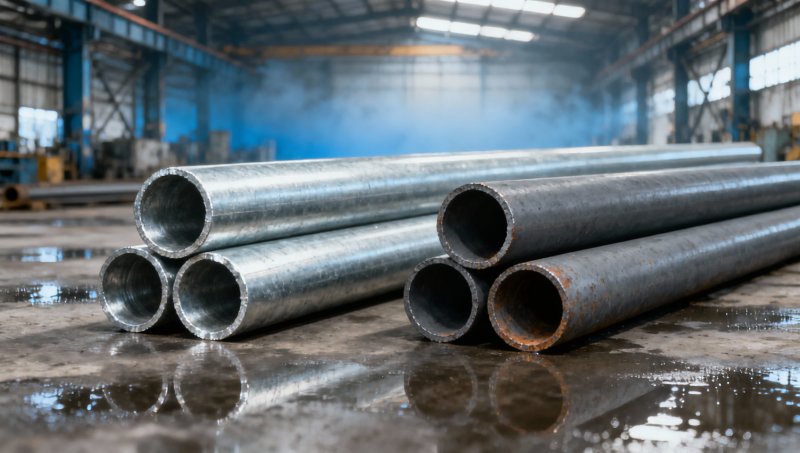
Onsite, the difference between galvanized electrical conduit and plain steel conduit shows up in four practical areas: corrosion behavior, installation handling, inspection outcomes, and maintenance frequency. In indoor dry spaces, both may perform acceptably if the specification matches the environment. In outdoor, humid, coastal, chemical, or washdown areas, galvanized conduit usually provides a more durable surface barrier and reduces early rust formation during storage, installation, and service.
For project managers and procurement teams, this is not only a material issue. It affects the full jobsite sequence across 3 stages: receiving, installation, and operation. A plain steel conduit can arrive in good condition but develop flash rust after exposure to rain or site humidity within a short period if protection is insufficient. A galvanized option often tolerates site handling better, especially on projects with 2–4 week installation windows and variable weather.
For technical evaluators and quality teams, the question is also about system reliability. Galvanized conduit can support longer service intervals in many routine industrial and building applications because the zinc layer helps delay steel substrate attack. That does not mean galvanized conduit is suitable for every aggressive environment, but in many general construction conditions it gives a safer margin than untreated carbon steel.
For financial approvers, the onsite change is easy to underestimate. The purchase price difference may look visible at quotation stage, yet the installed cost impact can move the other way if repainting, replacement, rust treatment, or inspection rework becomes necessary. In steel-related supply decisions, the lower initial unit price is not always the lower lifecycle cost.
A quick field view of the differences
The table below helps compare what site teams usually notice first when choosing galvanized versus non-galvanized electrical conduit in construction and industrial projects.
This comparison shows why the choice should be tied to actual service conditions rather than appearance alone. A galvanized finish often buys time, durability, and fewer onsite surprises. Plain steel can still work, but only when the environment, coating plan, and maintenance expectation are clearly controlled.
How do corrosion, handling, and service life affect steel conduit decisions?
Corrosion is the first technical reason galvanized electrical conduit is often preferred. Zinc coating acts as a protective layer, helping reduce direct exposure of the steel beneath. In practical terms, this means less visible rust during transportation, less concern during temporary site storage, and better tolerance when installation is delayed by 7–15 days because of civil works, weather, or permit changes.
Handling also changes. Installers frequently move conduit bundles across uneven ground, scaffolding, and fabrication areas. A galvanized surface is not immune to scratches, but it generally offers more forgiving field performance than plain steel left without suitable protection. In busy projects, where multiple trades operate in parallel, this matters because material damage often happens before energization, not after commissioning.
Service life is where buyers should focus beyond the invoice line. If the conduit system is exposed to rain, condensation, roof leaks, wash areas, or semi-open industrial zones, the difference in deterioration rate becomes a budget issue. For asset owners and maintenance teams, fewer corrosion-related interventions over 1–3 maintenance cycles can justify the higher starting price of galvanized conduit.
In the wider steel industry, the same logic applies to structural supports, framing members, and accessories. Protective surface treatment changes how the product behaves in transit, storage, assembly, and long-term service. That is why a reliable supplier should discuss not only steel grade and dimensions, but also finish type, standard, tolerance, and intended exposure level.
What site teams should check before installation
- Confirm whether the environment is dry indoor, sheltered outdoor, or aggressive industrial exposure. This single step affects whether plain steel is acceptable or risky.
- Inspect surface condition on arrival, especially at cut ends, threaded areas, and bundle contact points where coating damage often appears first.
- Review installation timing. If materials may sit onsite for 2–6 weeks, moisture exposure should be considered part of the selection decision.
- Check if the project specification references ASTM, EN, JIS, GB, UL, or NEMA-related requirements for conduit or steel accessories.
These checks help quality control staff, project engineers, and procurement teams avoid a common mistake: choosing by price first and environment second. In practice, the reverse approach is safer.
A related steel support consideration in conduit systems
Conduit performance is often linked to the supporting steel members around it. In cable routing, wall framing, bracket fabrication, and light structural support, channel sections are frequently used together with conduit systems. For buyers comparing anti-corrosion options, Channel In Steel can be integrated into support designs where strength, weldability, and corrosion resistance are required across construction, bracket, wall beam, lightweight roof, and mechanical support applications.
Typical channel specifications in such projects may include thickness from 1.5mm to 25mm, height from 80mm to 160mm, and length from 6m to 12m, with material grades such as Q195, Q235, Q235B, Q345B, Duplex, or stainless options including 201, 202, 304, and 316 depending on environment and budget. Hot-dip galvanized and hot-blown galvanized finishes are commonly selected where anti-corrosion performance is a priority.
Which environments justify galvanized conduit, and when can plain steel still make sense?
Galvanized electrical conduit is usually the safer choice in outdoor installations, high-humidity buildings, transport terminals, utility spaces, industrial workshops, agricultural buildings, and coastal regions. In these environments, exposure is rarely constant and predictable. Moisture may come from rain, cleaning cycles, air condensation, or process vapor. Even moderate exposure repeated every week can shorten the useful life of plain steel quickly.
Plain steel conduit may still be a reasonable option in dry indoor spaces such as fully enclosed electrical rooms, controlled commercial interiors, or temporary low-risk installations where additional protective coating is planned. But the decision should be documented carefully. If the site later changes use or ventilation conditions, the original cost saving may disappear through rework or replacement.
For distributors and project buyers, the real challenge is mixed environments. A facility may include offices, process halls, loading zones, rooftop service areas, and wet utility rooms all in one project. In that case, a single conduit specification may not be economical or technically correct. Segmenting by zone can reduce total cost without weakening long-term reliability.
This is where an experienced structural steel manufacturer and exporter adds value. Hongteng Fengda supports global buyers with standard and OEM steel solutions, stable production planning, and quality control aligned with major international standards such as ASTM, EN, JIS, and GB. For projects involving conduit supports, channels, beams, and fabricated steel components, coordinated sourcing can reduce mismatch risk and shorten communication loops.
Environment-based selection guide
The table below organizes common application scenarios to help technical and commercial teams decide where galvanized conduit is usually preferred and where plain steel may still be acceptable with controls.
A zone-based approach often works best. Instead of applying one rule across the whole project, classify spaces into 3 categories: protected, semi-exposed, and exposed. This creates a clearer basis for cost approval and technical compliance.
What should buyers, engineers, and QC teams evaluate before placing an order?
A good steel conduit purchase decision should balance at least 5 factors: environment, standard compliance, steel grade or base material, coating method, and delivery condition. Many sourcing problems happen because only nominal size and unit price are reviewed. That approach misses critical issues such as tolerance, finish consistency, package protection, and compatibility with related steel supports or fittings.
Technical assessment should start with specification clarity. Ask whether the project needs hot-dip galvanized material, pre-galvanized finish, plain steel for secondary coating, or another corrosion strategy. Then review dimensional tolerance, required lengths, threading or fabrication needs, and whether the conduit will connect to brackets, channels, or custom structural steel components. These details influence both installation speed and field adaptation cost.
From a procurement viewpoint, lead time and shipment reliability matter just as much as the material itself. Typical international steel supply planning may involve 2–4 weeks for standard rolling or stock allocation and longer for custom fabrication, coating coordination, or mixed-container orders. Stable suppliers help buyers reduce risk by confirming production schedule, quality checkpoints, and packing method before dispatch.
Quality control and safety teams should also define acceptance points before delivery. A practical inspection routine can include 6 items: dimensions, coating appearance, bundle labeling, standard reference, packing integrity, and visible damage at ends or handling points. This prevents arguments after arrival and helps distributors or contractors process goods faster.
A practical procurement checklist
- Define the service environment and expected maintenance interval before asking for quotations.
- Match the required standard system, such as ASTM, EN, JIS, or GB, to the target market and project documents.
- Confirm whether related steel accessories need the same corrosion protection level to avoid weak points in the assembly.
- Review tolerance and cut length requirements, especially if conduit must fit prefabricated supports or modular installation plans.
- Ask about stock, production capacity, and shipment arrangement for small batch, medium batch, and project-volume orders.
Why supplier capability matters in B2B steel sourcing
In international projects, the conduit choice is rarely isolated. It sits inside a broader steel package that may include angle steel, channel steel, beams, cold formed profiles, and customized structural parts. A supplier such as Hongteng Fengda can support this broader scope with standard specifications and OEM solutions, helping buyers reduce sourcing fragmentation. That is especially useful when the project needs matching finishes, coordinated documentation, and dependable lead times across several steel categories.
For distributors, agents, and contractors, this reduces administrative cost. For decision-makers and finance teams, it improves predictability. For engineers and end users, it lowers the chance of receiving components that meet the drawing individually but do not work well together onsite.
Common misconceptions, FAQ, and the right next step
Many buyers assume galvanized conduit is always necessary or that plain steel is always a false economy. Neither statement is fully correct. The right answer depends on exposure, lifecycle expectations, maintenance access, and budget structure. A small price increase at purchase stage may save repeated service work later, while over-specifying every area can also waste budget. Good selection is situational, not automatic.
Another common misconception is that all galvanized finishes perform the same. In reality, coating process, handling damage, base steel quality, and installation conditions all affect outcome. That is why buyers should review both the steel specification and the fabrication or protection method, especially when conduit and support members are sourced separately.
For companies managing cost, compliance, and delivery at the same time, the most effective approach is to compare 3 things together: the environment map, the total installed cost, and the maintenance scenario over the first operating cycle. This gives a more reliable decision than judging by material appearance or unit price alone.
Below are several practical questions that often come up during sourcing and technical review.
Does galvanized conduit always last longer?
In many outdoor or humid applications, yes, galvanized conduit generally offers longer useful service before serious corrosion appears. However, performance still depends on exposure severity, coating condition, and installation quality. In highly aggressive chemical areas, additional protection or different material strategies may be required.
Can plain steel conduit be used if the budget is tight?
It can be used in controlled dry indoor environments, especially for temporary or low-risk installations, but the decision should be documented with clear assumptions. If the site may face condensation, roof leakage, or cleaning moisture later, the upfront saving may not hold.
What should be checked at goods receipt?
At minimum, inspect 5 points: quantity, length or size, visible coating condition, bundle protection, and standard marking or documentation. If goods are for project-critical use, add dimensional sampling and end-condition checks before release to installation.
How long is a typical steel order cycle?
For standard items, buyers often work within a 2–4 week supply window depending on stock availability, finish requirement, and export schedule. Custom structural steel, mixed specifications, or special packaging may extend planning time, so early confirmation is recommended.
Why choose us for steel conduit support and structural steel coordination?
Hongteng Fengda focuses on structural steel manufacturing and export for global construction, industrial, and manufacturing projects. That matters when your conduit decision is linked to channels, beams, cold formed profiles, or custom steel supports. We can help you review material grades, compare galvanized and non-galvanized options, confirm standards such as ASTM, EN, JIS, and GB, and align the steel package with your delivery plan.
If you are evaluating a current project, you can contact us to discuss 6 specific topics: conduit-related support selection, channel and bracket matching, galvanized finish options, dimensional tolerance requirements, sample support, and shipment schedule. We can also assist with quotation comparison, OEM customization, and certification-related document review for international orders.
For buyers, engineers, distributors, and project leaders who need a clearer recommendation, send your application environment, required standard, section size, quantity range, and target delivery timeline. Based on that information, we can help you determine whether galvanized electrical conduit, plain steel, or a mixed-zone steel solution is the more practical onsite choice.
Please give us a message


Please enter what you want to find