If you are comparing ASTM A106 Gr B and ASTM A106 Gr.B for industrial pipes, the short answer is that there is no material difference in the steel standards designation. However, this small punctuation variation often causes confusion in procurement, technical evaluation, and project documentation. In this article, we clarify the naming, application, and sourcing implications for buyers and engineers.
Why does ASTM A106 Gr B vs ASTM A106 Gr.B create confusion in steel procurement?
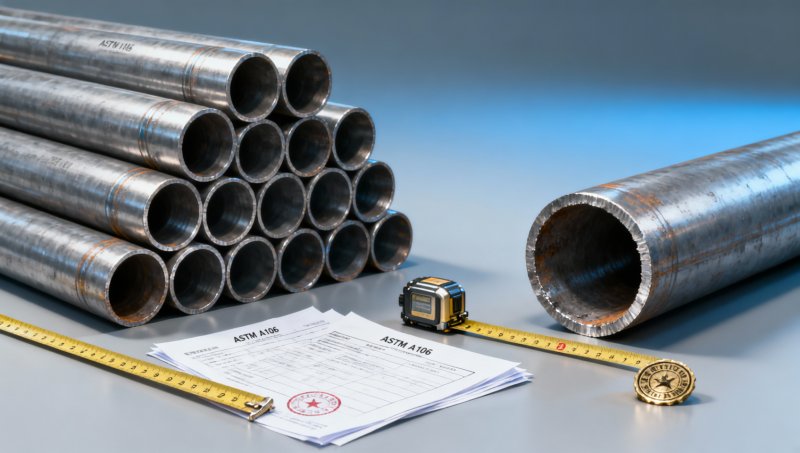
In practical use, ASTM A106 Gr B and ASTM A106 Gr.B refer to the same grade in ASTM A106 seamless carbon steel pipe specifications. The difference is only typographic. Some mills, traders, ERP systems, and project documents insert a period after “Gr”, while others omit it. For engineers and buyers, that punctuation can still trigger unnecessary questions during 3 stages of purchasing: specification review, supplier comparison, and incoming inspection.
This issue matters because industrial steel procurement depends on exact wording. A small formatting difference may cause delays of 1–3 business days when teams ask for reconfirmation, revise technical sheets, or reissue purchase orders. In large projects involving boilers, pressure piping, fabrication, or steel structure integration, document consistency is not a minor issue. It affects traceability, approval flow, and communication between procurement, QC, finance, and site management.
ASTM A106 itself is a widely recognized standard covering seamless carbon steel pipe for high-temperature service. The common grades are Grade A, Grade B, and Grade C, with Grade B being one of the most frequently requested options in industrial applications. Whether the notation appears as Gr B or Gr.B, buyers should focus on the actual standard edition, pipe dimensions, chemical composition, mechanical properties, heat treatment condition, and test requirements.
For companies sourcing from international suppliers, especially across North America, Europe, the Middle East, and Asia, format differences are common. Hongteng Fengda supports global steel buyers by helping align technical documents with ASTM, EN, JIS, and GB expectations. That reduces sourcing risk when multiple teams review the same order under different naming habits.
What buyers should verify first
- Confirm the full standard reference, such as ASTM A106, instead of judging by punctuation alone.
- Check the grade, size range, schedule, end condition, and testing clauses in the purchase specification.
- Verify whether the project also requires supplementary NDT, hydrostatic testing, MTC documentation, or third-party inspection.
- Make sure all departments use one unified designation in quotations, contracts, packing lists, and inspection records.
ASTM A106 Gr B and ASTM A106 Gr.B: what is actually the same and what should be checked?
The best way to answer this question is to separate notation from specification. The notation is different only in punctuation. The specification remains the same if the referenced standard, grade, and technical requirements match. This is especially important for technical evaluators and QC teams, because rejecting a supplier only due to “Gr.B” versus “Gr B” may lead to incorrect judgment and lost time.
What should be checked instead? Focus on measurable items. In most purchasing reviews, there are 5 key checkpoints: standard designation, chemical requirements, tensile properties, manufacturing process, and testing/documentation. If those items align, the material designation difference is not substantive. This approach is more reliable than relying on formatting style across mills, distributors, and software-generated certificates.
The table below helps distinguish what belongs to the naming format and what belongs to the actual steel pipe requirement. This type of comparison is useful for procurement teams preparing RFQs, engineering teams reviewing vendor offers, and finance approvers who need to understand whether a discrepancy is technical or administrative.
The key takeaway is simple: punctuation does not change the pipe grade. But poor document control can create practical trouble. For projects with 2–4 approval layers, one unresolved naming inconsistency can hold up purchase release, receiving inspection, or customs declaration. A disciplined review process prevents that.
Which technical points matter more than punctuation?
Material and process details
For ASTM A106 pipe, users should confirm whether the product is seamless, intended for high-temperature service, and supplied within the required diameter and wall thickness range. Pipe end type, length, marking, and coating may also affect installation and storage. These are real project variables, unlike the presence or absence of a dot after “Gr”.
Testing and quality documentation
QC teams normally review heat number traceability, mechanical test records, hydrostatic or NDT evidence where applicable, and the mill test certificate. On many industrial orders, these 4 document groups are more important than naming style. If you are buying for pressure service or regulated facilities, consistency between PO, MTC, and marking should be checked line by line.
How does this affect application, project coordination, and related steel sourcing?
Although ASTM A106 concerns seamless carbon steel pipe, many real projects combine pipe systems with structural steel supply. A fabrication yard, plant expansion, warehouse utility line, or industrial platform may require both pressure-service piping and supporting beams, channels, or custom steel components. That means naming clarity is not just a pipe issue. It is part of a larger material coordination process involving 2 or more product categories and several suppliers.
In those cases, buyers often prefer a steel partner that understands cross-category standards. Hongteng Fengda manufactures and exports structural steel products for global construction and industrial projects, including angle steel, channel steel, steel beams, cold formed sections, and customized steel components. This experience helps procurement teams align structural packages with project specifications while reducing communication gaps between piping, fabrication, and site erection teams.
For example, an industrial plant may use ASTM A106 Grade B pipe in utility or process service while relying on beam products for platforms, supports, and frames. In such integrated applications, structural members need to match the project’s mechanical, welding, and dimensional requirements. A suitable option for many steel structure and manufacturing scenarios is Hot Rolled H Beam, which is available in common grades such as Q235, Q345B, SS400, S275JR, S355JR, A572, and A992.
Typical dimensional ranges for this beam category include flange thickness of 8–64 mm, web thickness of 5–36.5 mm, flange width of 50–400 mm, web width of 100–900 mm, and length of 1–12 m or as required. These ranges are relevant when project managers compare fabrication feasibility, transport planning, and cutting or welding operations across steel packages.
Where naming discipline helps the most
- Multi-supplier projects where pipe, beam, and fabricated supports are purchased separately.
- Export orders that require aligned descriptions across quotation, packing list, invoice, and customs paperwork.
- Projects with 4–6 document checkpoints, including engineering approval, purchasing approval, QC release, shipping review, site receiving, and final handover.
- Jobs where structural components require standards such as JIS G3101, EN10025, ASTM A36, ASTM A572, or ASTM A992 in parallel with piping standards.
When structural steel and pipe items are reviewed together, the goal is not to force identical wording across all standards. The goal is to ensure that every product description is technically correct, commercially consistent, and easy to verify. That reduces the chance of mismatch during fabrication, shipment, or installation.
What should procurement, QC, and engineering teams check before placing an order?
A smart procurement decision starts with a checklist. For ASTM A106 Grade B pipe, the first review should cover 6 items: standard and edition, grade, size and wall thickness, manufacturing method, required tests, and certificate format. If your project also includes structural steel, add material grade, dimensional tolerance, fabrication scope, and surface condition to the same review package. This saves time during approval and avoids fragmented communication later.
Many buying problems come from incomplete RFQs rather than from actual steel quality. If one supplier quotes ASTM A106 Gr B and another quotes ASTM A106 Gr.B, but neither quotation clearly states testing or delivery condition, the comparison is still weak. Procurement teams should request apples-to-apples offers with the same technical basis, quantity split, Incoterm, and lead time window, usually within a 2–6 week planning cycle depending on order size and processing scope.
The table below provides a practical evaluation framework for buyers, engineers, and project managers. It can be used during supplier screening, internal approval, or technical clarification. It also helps finance teams understand which factors affect total purchase value beyond the quoted unit price.
A structured evaluation reduces avoidable cost. For example, a lower unit price may become less attractive if the supplier cannot maintain stable lead times, provide complete documentation, or support mixed steel packages. In steel procurement, total value often depends on coordination efficiency as much as on raw material price.
A practical 4-step review process
- Standard confirmation: lock the ASTM A106 grade, dimensions, and test requirements in one approved specification sheet.
- Quote normalization: request all suppliers to use the same description format and commercial basis.
- Document alignment: check PO, drawing, MTC, and shipping documents before dispatch.
- Receiving inspection: verify marking, quantity, dimension, and certificate consistency on arrival.
Common misconceptions, FAQ, and how to avoid sourcing risk
Because ASTM A106 Grade B is a familiar designation, many people assume no explanation is needed. In reality, global procurement often involves mixed terminology, old templates, and different document habits. That is why confusion around ASTM A106 Gr B vs ASTM A106 Gr.B keeps appearing in RFQs and technical reviews. The safest approach is to treat punctuation as a formatting issue and verify the actual standard details instead.
This matters even more when orders are urgent. If a shutdown project, maintenance job, or export shipment runs on a 7–15 day delivery target, small documentation disputes can affect release timing. For that reason, many experienced buyers create one master material description and require all internal teams and suppliers to use it from quotation to shipment.
Below are several frequently asked questions that reflect real search intent from engineers, sourcing teams, distributors, and project decision-makers.
Is ASTM A106 Gr B the same as ASTM A106 Gr.B on mill test certificates?
Yes, in normal industry use they indicate the same Grade B designation under ASTM A106. The key is that the MTC should also match the ordered size, quantity, heat number, and required tests. If the punctuation differs but the technical data is consistent, it is not usually a material issue. Still, for internal compliance, some buyers ask suppliers to mirror the PO wording exactly.
Can the punctuation difference affect customs, inspection, or project approval?
It can, but usually as an administrative issue rather than a technical one. If customs documents, invoices, packing lists, and inspection papers use inconsistent descriptions, reviewers may request clarification. This can add 1–2 rounds of correspondence. The solution is simple: align wording across all documents before shipment and keep the technical standard reference complete.
What is more important than the Gr B vs Gr.B wording when buying steel pipe?
Focus on 5 practical factors: compliance with ASTM A106, correct dimensions and wall thickness, manufacturing route, inspection/test requirements, and reliable documentation. For project use, you should also confirm delivery condition, packaging, and lead time. These points directly affect installation, inspection, and total procurement risk.
How can buyers reduce sourcing risk for mixed pipe and structural steel orders?
Use one coordinated review process for all steel items. That includes standard matching, drawing review, document control, and shipment planning. Suppliers with experience in multiple standards and product categories can help simplify this process. This is especially useful when you need both piping-related materials and structural members for industrial, construction, or manufacturing projects.
Why work with a structural steel supplier that understands international standards?
For many buyers, the real issue behind ASTM A106 Gr B vs ASTM A106 Gr.B is not punctuation. It is confidence. You need confidence that the supplier understands standards, communicates clearly, and supports documentation that can pass internal review and project control. That is where an experienced steel manufacturer and exporter becomes valuable, especially when your project includes multiple material categories and strict delivery expectations.
Hongteng Fengda supports global customers with structural steel manufacturing, export coordination, and customized solutions for construction, industrial, and manufacturing projects. Our product scope covers angle steel, channel steel, steel beams, cold formed steel profiles, and customized structural steel components. With modern production facilities and strict quality control, we help buyers manage specification clarity, stable production, and dependable lead times.
If you are reviewing an order that involves ASTM, EN, JIS, or GB requirements, we can help you check product parameters, material grades, dimensional ranges, and document consistency before production or shipment. We can also discuss standard specifications versus OEM requirements, whether you are purchasing for a small batch, recurring distribution, or a large project package over several delivery stages.
Contact us for practical support on parameter confirmation, steel product selection, lead time planning, customized structural steel solutions, certification-related document preparation, sample discussion, and quotation alignment. If your team needs to compare international steel grades, organize mixed steel sourcing, or reduce communication risk in export orders, we can work with you step by step.
Please give us a message


Please enter what you want to find