Stainless steel welded mesh is not supposed to turn into deep, destructive red rust under normal conditions, but surface discoloration, tea staining, and localized corrosion do happen. For buyers, engineers, and end users, the key question is not simply “does it rust,” but why it appears to rust, whether the corrosion is superficial or structural, and how to judge product quality before purchase. In many cases, visible staining comes from contamination, unsuitable grade selection, harsh environments, or poor welding and passivation rather than from stainless steel “failing” by default. If you are comparing suppliers globally and wondering whether low-cost sourcing can still be reliable, the answer depends on grade authenticity, weld integrity, finishing quality, and how well the mesh matches the service environment.
Why does stainless steel welded mesh show rust at all?
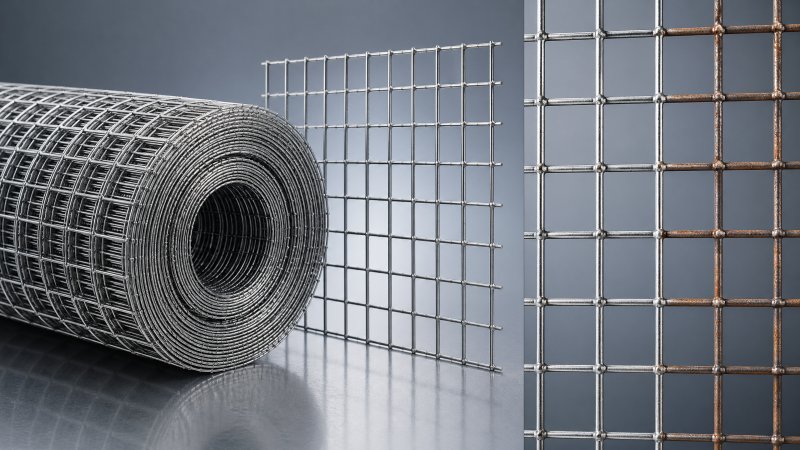
The first thing to understand is that stainless steel is corrosion resistant, not corrosion proof. Its protection comes from a thin chromium-rich passive film on the surface. When that film is damaged, contaminated, or exposed to conditions beyond the steel grade’s capability, rust-like staining or actual corrosion can develop.
Common reasons include:
- Iron contamination during manufacturing or handling: If carbon steel particles from tools, rollers, cutting tables, or storage areas transfer onto stainless mesh, those particles can rust and create the impression that the mesh itself is rusting.
- Inadequate post-weld treatment: Weld zones are more vulnerable if heat tint, scale, or residues are not properly cleaned and passivated.
- Wrong stainless grade for the environment: 201 or lower-performance stainless may discolor faster in humid, coastal, chemical, or polluted environments than 304 or 316.
- Chloride exposure: Seawater, de-icing salts, and some cleaning chemicals can attack stainless steel, especially lower grades.
- Poor surface finish: Rougher surfaces trap contaminants and moisture more easily, increasing the risk of staining.
- Crevice and trapped-moisture conditions: In poorly ventilated or dirt-retaining installations, even good stainless can corrode locally over time.
So when buyers see “rust” on stainless welded mesh, the right response is not panic, but diagnosis.
Is it real rust, tea staining, or just surface contamination?
This is one of the most important distinctions for technical evaluators and quality teams.
1. Surface contamination
This is often caused by embedded iron dust or contact with carbon steel. It usually appears as scattered rust spots. In many cases, the stainless substrate is still sound, and proper cleaning can solve the issue.
2. Tea staining
Tea staining is a brown discoloration that often appears in coastal or high-humidity environments. It affects appearance first and may not immediately reduce structural performance, but it is a warning sign that grade selection, finish, or maintenance may be insufficient for the environment.
3. Genuine corrosion at weld points
If corrosion is concentrated at wire intersections or heat-affected zones, that may indicate poor welding control, excessive heat input, inadequate cleaning, or weak passivation after welding.
4. Pitting corrosion
Small holes or localized attack are more serious, especially in chloride-rich environments. This points to a mismatch between material grade and service conditions or to significant quality problems.
For procurement and project teams, this distinction matters because cosmetic staining, quality defects, and long-term durability risk are not the same issue.
Which stainless steel grades are most likely to cause rust concerns?
Not all stainless welded mesh performs the same. The grade is one of the biggest factors behind corrosion complaints.
- 201 stainless steel: Lower cost, but generally less resistant to corrosion, especially in wet, outdoor, or salt-exposed conditions. It may be acceptable for dry indoor applications with limited exposure.
- 304 stainless steel: The most common general-purpose choice. Good corrosion resistance for many industrial, architectural, and commercial environments.
- 316 stainless steel: Better suited to marine, coastal, chemical, and high-chloride environments due to added molybdenum.
Many rust complaints happen because the buyer expected 304-level or 316-level performance but received a lower-grade substitute or selected a grade based on price rather than environment. That is why grade verification is essential when sourcing internationally.
Do welded joints make stainless mesh more vulnerable?
Yes, they can. Welded mesh has intersecting wires joined by resistance welding or similar processes, and those weld points are critical to both strength and corrosion resistance.
Potential weld-related issues include:
- Excessive heat input that alters the protective surface layer
- Heat tint left on the weld area without proper cleaning
- Inconsistent weld penetration affecting both durability and appearance
- Surface cracking or defects that hold moisture and contaminants
- Insufficient passivation after welding
For users and inspectors, visible warning signs include irregular weld color, heavy burn marks, rough intersections, and corrosion starting specifically at wire joints. A reliable supplier should have process controls for welding current, wire chemistry consistency, surface cleaning, and inspection.
How can buyers judge whether stainless welded mesh quality is reliable?
If your concern is “is cheap steel from China reliable,” the answer depends less on geography alone and more on supplier discipline. Low price can come from efficiency, scale, and direct export structure, but it can also come from grade substitution, weak inspection, and poor process control. Buyers should focus on evidence.
Here is what to check:
- Material test certificates: Confirm the declared grade and chemical composition.
- Relevant standards compliance: Ask whether production aligns with ASTM, EN, JIS, or GB requirements depending on your market.
- Welding consistency: Review close-up photos, samples, or third-party inspection reports.
- Surface treatment process: Ask whether the mesh is cleaned, pickled, or passivated after welding.
- Corrosion application references: Request previous project examples in similar climates or industries.
- PMI or grade verification: Positive Material Identification can reduce substitution risk for critical orders.
- Salt spray or corrosion-related test data: Not always mandatory, but useful for comparative assessment.
- Packaging and logistics protection: Even good stainless can arrive contaminated or stained if packed carelessly.
For construction and industrial procurement teams, the best suppliers do not just offer low unit prices. They reduce total risk by delivering stable quality, consistent dimensions, traceability, and dependable lead times.
What environmental conditions create the highest rust risk?
Some applications are much more demanding than others. Stainless steel welded mesh used indoors in dry spaces has very different exposure conditions from mesh used outdoors near salt, chemicals, or industrial pollution.
Higher-risk environments include:
- Coastal and marine areas
- Swimming pool surroundings
- Chemical plants and wastewater facilities
- Livestock and agricultural buildings with corrosive residues
- Roadside infrastructure exposed to de-icing salts
- Hot, humid industrial zones with airborne contaminants
In these settings, the right response is usually to upgrade grade, improve finishing requirements, and define maintenance expectations early. This same principle applies across other building envelope products as well. For example, in corrosive or high-heat roofing applications, specifiers often look for coated systems with strong service life and environmental resistance, such as Colored Corrugated Roof Sheet. Products made from color-coated steel plate or aluminum-zinc steel, with options like PE, SMP, HDP, or PVDF coatings, are often selected for garages, warehouses, workshops, agricultural buildings, schools, hospitals, and factories because they combine anti-corrosion performance, heat resistance above 300 degrees, and service life exceeding 25 years. For project teams, this highlights an important sourcing principle: corrosion performance always depends on matching material system to real exposure conditions, not on price alone.
What should users do if rust appears after installation?
If staining appears, act early. Small issues are easier to diagnose and correct than advanced corrosion.
- Inspect the pattern: Is the issue random, concentrated at welds, or concentrated in drainage or crevice areas?
- Check surrounding contamination sources: Carbon steel grinding, nearby fabrication, or dirty storage can transfer rusting particles.
- Clean the surface correctly: Use stainless-safe cleaning methods and avoid carbon steel brushes or chloride-heavy cleaners.
- Evaluate environment suitability: If installed near saltwater or chemicals, the grade may be underspecified.
- Request supplier documentation: Confirm grade, batch traceability, and post-weld treatment records.
- Use third-party inspection if needed: For disputed quality cases, independent analysis is often the fastest route to a clear conclusion.
Do not assume every stain means product failure, but do not ignore repeated or localized corrosion at welds either.
How can procurement teams reduce rust complaints before ordering?
The most practical way to avoid disputes is to define the purchase requirement more clearly before production starts.
A stronger inquiry or purchase specification should include:
- Required stainless grade: 201, 304, or 316
- Wire diameter and mesh opening tolerance
- Surface finish requirement
- Welding quality requirement
- Passivation or post-weld cleaning requirement
- Target application environment
- Packing method for export shipment
- Inspection method and acceptance criteria
- Need for MTCs, third-party tests, or PMI checks
This is especially important when sourcing from overseas manufacturers. A capable structural steel and steel products exporter should be able to support not only production, but also specification alignment, quality control, and export packaging suited to your market and application.
Bottom line: should rust concerns stop you from choosing stainless steel welded mesh?
No, but they should make you more precise. Stainless steel welded mesh remains a strong, practical, and corrosion-resistant solution for many industrial, construction, agricultural, and architectural uses. The real issue is not whether stainless can ever show rust-related signs; it is whether the grade, weld quality, surface treatment, and service environment were correctly matched.
For buyers and decision-makers, the most useful mindset is this: visible staining is a symptom, not a diagnosis. Check whether it is contamination, cosmetic tea staining, weld-zone weakness, or genuine corrosive attack. Then verify material authenticity, manufacturing control, and environmental suitability. That approach leads to better purchasing decisions, lower lifecycle cost, and fewer project disputes.
Please give us a message


Please enter what you want to find