Wrong orders often happen when buyers treat every sus pipe grade as interchangeable. For distributors, agents, and steel sourcing professionals, understanding the real differences in corrosion resistance, strength, processing, and application is essential to avoid claims, delays, and cost overruns. This guide explains how to compare sus pipe grades correctly and make more reliable purchasing decisions.
Why do sus pipe grade differences cause so many order mistakes?
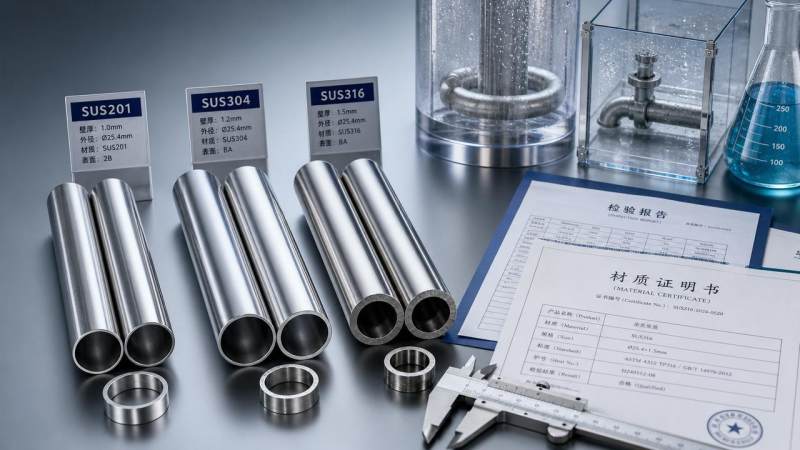
In steel trading, the term sus pipe is often used too broadly. Many buyers assume that SUS304, SUS316, SUS201, and other common grades can be substituted with little risk. In reality, each grade has different alloy content, corrosion behavior, fabrication response, and final-use suitability.
For distributors and agents, the consequences are practical. A wrong grade can trigger rust complaints in coastal projects, welding failures in fabrication shops, or rejection when end users require compliance with ASTM, EN, JIS, or GB specifications. Margin losses usually come from replacement, late delivery, and damaged customer trust rather than from the raw material cost alone.
This issue becomes more serious in export supply chains. Customers may send incomplete inquiries, internal teams may rely on old purchase descriptions, and some projects specify only “stainless steel pipe” without defining chloride exposure, pressure, finish, or testing requirements. A professional supplier must therefore help buyers convert vague requests into a correct sus pipe order.
- Grade names look similar, but nickel, chromium, and molybdenum content can change real service life.
- The same outside diameter and wall thickness do not guarantee equal corrosion resistance or fabrication performance.
- A lower-priced grade may increase total project cost if replacement, inspection failure, or warranty claims follow.
How to compare common sus pipe grades before placing an order
The most common sourcing confusion appears between austenitic stainless grades used for general industrial and construction applications. The table below gives a practical comparison for trade and purchasing discussions. It is not a replacement for formal material certification, but it helps buyers screen the right sus pipe grade faster.
For most resellers, the key lesson is simple: do not compare sus pipe grades only by appearance or unit price. Compare them by service environment, fabrication method, and customer expectation. A lower initial quote can become the most expensive option after field failure.
The most misunderstood substitution: SUS304 vs SUS316
This substitution causes many disputes. SUS304 is widely used because it offers good all-around performance and stable market availability. However, if the final application involves salt air, chlorides, chemical washdown, or aggressive humidity, SUS316 is often the safer choice because its molybdenum improves resistance to localized corrosion.
On the other hand, not every project needs SUS316. For indoor architectural use, furniture frames, light industrial piping, and many general fabrication jobs, SUS304 may be fully acceptable. Distributors who understand this distinction can protect both margin and end-user satisfaction.
Which technical factors matter most when evaluating sus pipe?
A correct sus pipe order should be based on more than grade name. Buyers should check the full technical profile, especially when reselling to construction contractors, fabricators, OEM users, or industrial maintenance teams.
Critical evaluation points
- Corrosion exposure: indoor dry, outdoor urban, coastal, chemical, food-grade, or washdown service.
- Mechanical and fabrication needs: bending, welding, polishing, threading, or pressure service.
- Dimension tolerance: outside diameter, wall thickness, length tolerance, straightness, and ovality.
- Surface finish: mill finish, pickled, polished, or decorative finish based on end-use expectations.
- Traceability documents: mill test certificate, heat number, inspection reports, and standard compliance.
Distributors often focus on chemistry and price first, but downstream users usually complain about dimensions, finish consistency, weldability, or missing paperwork. That is why supply reliability matters as much as the sus pipe grade itself.
The following table helps buyers link technical checks with typical order risks during sourcing, inspection, and resale.
A disciplined review process reduces uncertainty before shipment. It also makes it easier to align quotations, packing lists, test documents, and customer contracts with the actual sus pipe being supplied.
What should distributors ask before quoting a sus pipe order?
When inquiries are incomplete, experienced sellers ask targeted questions instead of guessing. This is especially important when customers compare prices from several sources and may not understand the technical consequences of a grade change.
- Where will the sus pipe be used? Indoor, outdoor, coastal, food processing, chemical plant, or decorative installation?
- Is the pipe structural, fluid-carrying, mechanical, or purely cosmetic? This affects grade, tolerance, and inspection scope.
- What standard is required? JIS SUS designation may need conversion to ASTM or EN equivalents in export deals.
- What fabrication steps follow? Welding, bending, threading, laser cutting, and polishing can change the best grade choice.
- What documents are mandatory? Buyers may require material certificates, chemical analysis, or third-party inspection coordination.
This questioning process protects traders from informal substitutions. It also helps them build credibility with customers who need more than a low headline price. In many cases, the right consultation avoids urgent replacement orders later.
Why supply chain support matters
A reliable Chinese steel manufacturer and exporter can support this process with clearer technical communication, stable production planning, and document control. Hongteng Fengda serves global construction, industrial, and manufacturing projects with structural steel and customized solutions, supported by modern facilities and quality control aligned with major international standards such as ASTM, EN, JIS, and GB.
For buyers who handle multiple steel categories, this matters because procurement risk rarely comes from one product alone. Consistent quality, dependable lead times, and the ability to confirm specifications across different steel items help distributors reduce sourcing complexity and improve project execution.
How do standards, certification, and documentation affect sus pipe orders?
Even when the correct sus pipe grade is selected, documentation mistakes can still create delivery and acceptance problems. Some buyers use JIS SUS terms, while project files may be written under ASTM, EN, or local tender language. The grade mapping should be checked carefully, especially for public works, industrial plants, and cross-border shipments.
- Verify whether the order requires a JIS grade name only or a full equivalent under another standard system.
- Confirm if mill test certificates must show chemical composition, mechanical properties, and heat traceability.
- Check whether third-party inspection, marking, packing, or corrosion-protection requirements are written into the contract.
For resellers, good paperwork is not a clerical detail. It supports customs clearance, project handover, and after-sales dispute handling. Buyers who work with experienced exporters usually gain faster access to specification confirmation and more predictable shipping coordination.
Common misconceptions that lead to wrong sus pipe purchases
“Stainless means it will not rust”
This is one of the most costly assumptions. Stainless steel resists corrosion, but performance depends on grade, surface condition, fabrication quality, and environment. Chlorides, iron contamination, and poor finishing can still lead to staining or pitting.
“If dimensions match, the grade can be changed”
Matching diameter and thickness does not make two grades interchangeable. Material substitution affects corrosion life, forming behavior, weld response, and customer warranty exposure. Grade changes must be reviewed technically, not only commercially.
“The cheapest sus pipe helps win the customer”
Winning an order with the lowest number can damage long-term business if claims follow. Smart distributors sell confidence: correct grade, correct standard, clear traceability, and realistic delivery commitments.
FAQ: practical questions buyers ask about sus pipe
How do I choose between SUS201 and SUS304?
Start with the service environment. If the application is indoor and dry, and corrosion risk is limited, SUS201 may be considered in cost-sensitive cases. If the product will face humidity, cleaning agents, public contact, or longer service expectations, SUS304 is usually the safer commercial choice.
When is SUS316 necessary?
SUS316 is commonly selected for coastal conditions, chloride exposure, some chemical applications, and environments where pitting resistance matters more. It is not mandatory for every project, but it should be evaluated carefully whenever SUS304 has a known corrosion risk.
What should I confirm before importing sus pipe from a supplier?
Confirm the exact grade, standard, dimensions, finish, certificate format, marking method, and inspection scope. Also check packing details, quantity tolerance, and lead time. These points are especially important for agents and importers working with multiple downstream customers.
Can one supplier support both sus pipe discussions and structural steel projects?
Yes, and that can simplify procurement. Buyers who source across structural and fabricated steel categories often benefit from suppliers that understand international standards, OEM requests, packaging control, and export communication across different product lines.
Why choose a supplier with broader steel manufacturing experience?
Distributors rarely manage one isolated material item. They often need coordinated purchasing across structural sections, fabricated components, and project-specific steel items. A manufacturer with export experience can help reduce risk through specification review, stable production scheduling, and clearer communication on standards and tolerances.
Hongteng Fengda focuses on structural steel manufacturing and export from China, supplying angle steel, channel steel, steel beams, cold formed steel profiles, and customized structural steel components for global projects. For buyers balancing stock supply and project orders, this wider capability can support more efficient sourcing decisions.
If your current project also involves purlins, wall beams, lightweight roof framing, brackets, or mechanical support members, you can also review Z-beam options. This product is available as a Z-shaped steel profile for applications such as large-scale steel structure workshops, wall beams, brackets, and light manufacturing beams, with material options including Q235B, Q345B, Q420C, Q460C, SS400, S235, S275, S355, A36, A572, G50, and G61.
Available specifications include perforated and galvanized coated versions, thickness from 6-25mm, lengths from 2~12m or customized, mill edge or slit edge, and tolerance of ±1%, supported by CE, SGS, BV, and ISO related documentation. If you need support on sus pipe grade confirmation, structural steel selection, custom lengths, delivery schedule, certification requirements, sample coordination, or quotation comparison, contact our team with your application details and target market requirements.
Please give us a message


Please enter what you want to find