Why I beam weight per foot matters early
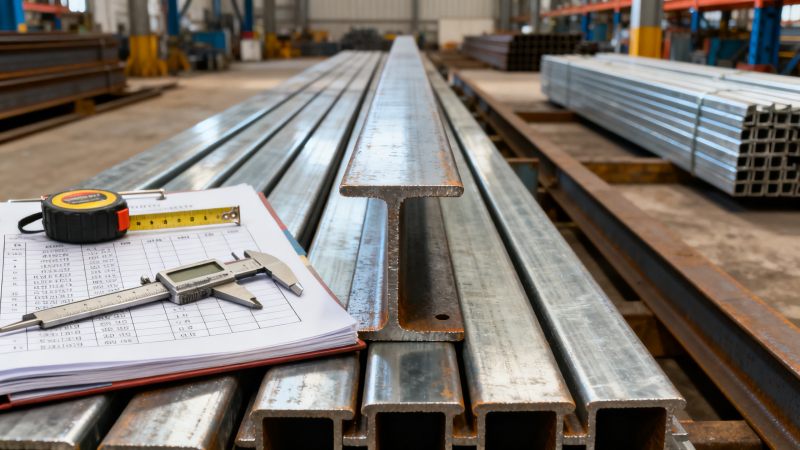
When planning structural steel procurement, knowing the I beam weight per foot helps project managers estimate loads, control budgets, and avoid sourcing mistakes early.
This quick guide explains how to make fast, practical calculations for planning purposes, while helping you compare beam sizes, improve material decisions, and keep construction schedules moving with greater confidence.
In steel projects, weight affects freight, lifting plans, fabrication time, and total purchase value. A fast estimate is not a final engineering result, but it is a useful planning tool.
Using I beam weight per foot correctly also improves communication with suppliers, because beam size, length, grade, and quantity become easier to align from the start.
Why a simple checking method works better
Many planning mistakes happen before drawings are fully finalized. Early estimates often rely on assumptions, and unclear assumptions can distort freight budgets and tonnage expectations.
A checklist approach keeps the estimate practical. It helps verify dimensions, unit systems, section families, and realistic tolerances before comparing quotations.
For most early-stage decisions, the goal is speed with reasonable accuracy. That is exactly where I beam weight per foot becomes valuable.
Core points to check before estimating
- Confirm whether the section is a standard I beam, wide flange beam, or custom profile, because section family directly changes the expected I beam weight per foot.
- Check the unit system first, especially inches, millimeters, feet, and meters, because mixed units create the most common planning errors.
- Use the section depth, flange width, web thickness, and flange thickness together, since estimating from depth alone is often misleading.
- Verify material grade and standard, such as ASTM, EN, JIS, or GB, because reference tables differ by region and product designation.
- Separate net beam weight from total order weight, because connection plates, cutting allowance, and packaging can increase shipping tonnage.
- Estimate by total linear footage first, then convert to tons, because this sequence makes budgeting and freight planning much easier.
- Compare estimated values with published beam tables whenever possible, because table checks quickly reveal unrealistic assumptions.
Fast ways to estimate I beam weight per foot
The fastest method is using standard beam tables. In many cases, beam designations already include nominal weight per foot.
For example, some North American beam names include a number that represents approximate pounds per foot. Always verify, because naming systems vary by standard.
Method 1: use a section table
This is the best planning option. Locate the beam size, read the published weight, then multiply by total length.
Formula: total beam weight = weight per foot × total feet.
Method 2: estimate from sectional area
If a section table is unavailable, estimate cross-sectional area and multiply by steel density. Carbon steel is commonly estimated at 490 lb per cubic foot.
A simplified approach is: sectional area in square inches × 3.4 gives an approximate I beam weight per foot in pounds.
This shortcut is helpful for planning, not for final design approval. Rounded dimensions can shift results.
Method 3: compare similar beam families
If one beam size is unknown, compare it with a nearby standard section. A slightly deeper beam with wider flanges usually weighs more per foot.
This method supports quick sourcing decisions when several acceptable alternatives are under review.
Useful planning example
Assume a project needs 40 pieces, each 25 feet long. The selected beam has an I beam weight per foot of 31 lb.
First, calculate total length: 40 × 25 = 1,000 feet.
Then calculate total weight: 1,000 × 31 = 31,000 lb.
Finally, convert to tons if needed. In US short tons, divide by 2,000. The estimate is 15.5 tons before extras.
Add a reasonable allowance for attachments, cutting loss, or bundled delivery requirements if the quotation scope includes them.
Related material checks during steel planning
Beam estimation often happens alongside other reinforcement and structural items. A balanced material review avoids fragmented purchasing decisions.
For projects also requiring reinforcing steel, Rebar may be considered with standards such as GB1499.2 HRB400, HRB500, ASTM A615 Grade 60, and BS4449 460B.
Typical specifications include carbon steel, round shape, lengths from 1–12 meters, and compliance with ASTM, GB, EN, DIN, and JIS standards.
This type of steel bar is valued for formability and weldability, supporting broad use in building material, shipbuilding, petrochemical plants, and machinery applications.
When beam and reinforcing products are reviewed together, weight planning, shipment consolidation, and standard matching become more efficient.
Application notes for different situations
Building frames
In frame construction, I beam weight per foot influences crane selection, floor loading during staging, and the number of deliveries required.
Check whether fireproofing, connection details, or composite floor systems add hidden weight outside the beam table value.
Industrial structures
For plants and workshops, beam estimates should reflect long spans, heavy equipment zones, and possible corrosion protection requirements.
In these cases, a slightly heavier section may reduce deflection concerns, but it also raises freight and erection costs.
Export procurement
For international orders, I beam weight per foot is closely tied to container loading, port handling, and customs documentation.
Always convert final estimated weights into the shipping unit requested by the supplier, carrier, or destination market.
Common oversights that affect accuracy
One frequent issue is confusing nominal beam size with actual geometry. Similar labels do not guarantee identical I beam weight per foot across standards.
Another issue is ignoring cut lengths. Ordering standard stock lengths may increase purchased tonnage compared with theoretical design lengths.
Protective coatings can also be overlooked. Galvanizing or special paint systems may not change beam weight dramatically, but they affect total cost and logistics.
Some estimates also miss accessories. Stiffeners, end plates, splice plates, and bolts are separate items that influence the real shipment mass.
Finally, using outdated tables creates risk. Confirm the latest standard and supplier catalog before issuing a purchasing comparison.
Practical execution steps
- List each beam designation, length, quantity, and standard in one sheet.
- Enter the published or estimated I beam weight per foot beside each line item.
- Multiply weight by total linear footage for each beam type.
- Add allowances for waste, attachments, and delivery configuration if needed.
- Convert totals into pounds, kilograms, and tons to support pricing and freight review.
- Cross-check unusual values with a supplier or structural reference table.
Final takeaway
A reliable I beam weight per foot estimate helps turn early steel planning into a clearer, faster, and less risky process.
Use beam tables first, apply simple formulas when needed, and always review units, standards, and accessories before comparing offers.
For global structural steel supply, Hongteng Fengda supports standard and customized steel solutions with stable production, quality control, and international standard compliance.
The next step is simple: prepare your beam list, calculate total linear footage, assign the correct I beam weight per foot, and verify the result against supplier data.
Please give us a message


Please enter what you want to find