Understanding SS pipe specifications is essential for operators and buyers who need to select the right stainless steel pipe for performance, safety, and cost control. From size and schedule to grade, each marking affects pressure capacity, corrosion resistance, and application suitability. This guide explains how to read SS pipe specifications correctly so you can avoid sourcing mistakes and make more confident decisions in industrial and construction projects.
Why SS pipe specifications are getting more attention now
In recent years, reading SS pipe specifications has become more important than ever. The reason is not only technical accuracy, but also market change. Global buyers are under greater pressure to reduce sourcing risk, improve equipment reliability, and match materials more precisely to operating conditions. At the same time, projects in construction, process industry, water systems, energy facilities, and fabrication are demanding clearer compliance with ASTM, EN, JIS, and GB standards.
For operators and site users, this shift means that stainless steel pipe can no longer be selected by diameter alone. A pipe marked 2 inch may still vary significantly in wall thickness, pressure capacity, and corrosion performance depending on schedule and grade. This is why SS pipe specifications now matter at every stage, from inquiry and warehouse receiving to installation and maintenance.
Another trend is that cross-border sourcing has expanded. Buyers often compare offers from several countries, but inconsistent description formats can create confusion. One supplier may prioritize nominal pipe size, another may emphasize outside diameter, and a third may only mention grade and wall thickness. Learning how to read SS pipe specifications correctly helps teams compare quotations on an equal basis and avoid hidden mismatches.
What changes are influencing pipe selection decisions
The biggest change is that pipe selection is becoming more application-specific. End users are paying closer attention to media type, temperature range, chloride exposure, welding method, and service life. In the past, some projects accepted broad material substitutions. Today, tighter quality control and stronger accountability make exact specification reading more important.
There is also a stronger cost-performance focus. Stainless steel is valued for corrosion resistance, but over-specifying grade or schedule raises procurement cost. Under-specifying creates downtime, leakage, or early replacement. Correct interpretation of SS pipe specifications helps users balance safety and budget rather than choosing only the cheapest or heaviest option.
How to read size in SS pipe specifications without confusion
When reading SS pipe specifications, the first item most people see is size. However, “size” can refer to different things. In pipe systems, the common starting point is NPS, or Nominal Pipe Size. This is a naming system, not always the exact measured diameter. For smaller sizes especially, the stated pipe size and actual outside diameter are not the same thing.
Operators should check three dimensions together: nominal size, outside diameter, and wall thickness. A correct reading prevents installation issues with fittings, clamps, flanges, and supports. If a purchase order only lists “50 mm SS pipe” without standard or schedule, there is still room for error. That is one of the most common sourcing mistakes.
In practical terms, the diameter affects flow, connection compatibility, and space planning. But it does not tell you pressure strength by itself. That is why size must always be read together with schedule.
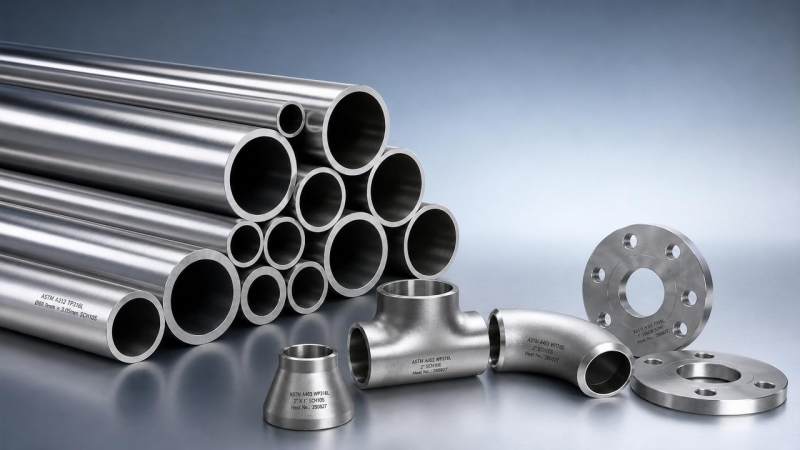
Why schedule has become a more critical decision factor
Schedule refers to wall thickness classification. In SS pipe specifications, common examples include Sch 10, Sch 40, and Sch 80. As schedule increases, wall thickness generally increases too, though the exact thickness depends on pipe size. This matters because wall thickness influences pressure handling, durability, threading suitability, and weight.
The market trend is clear: users now want schedule selection based on actual service conditions, not habit. In low-pressure systems, lighter schedules may reduce cost and ease installation. In higher-pressure or more demanding mechanical conditions, a heavier schedule may be necessary. The key is that schedule should match engineering need, not supplier convenience.
Incorrect schedule reading can create two opposite problems. First, using a schedule that is too thin may lead to premature failure, especially where vibration, pressure fluctuation, or corrosion allowance matters. Second, using a schedule that is too heavy can increase material, transport, and labor cost with little performance benefit. For this reason, accurate interpretation of SS pipe specifications has direct cost implications.
Grade selection is where performance trends are most visible
Among all SS pipe specifications, grade is often the most decisive factor for long-term performance. The common grades discussed in many projects are 304 and 316, but the correct choice depends on operating environment. Grade 304 is widely used for general corrosion resistance and good fabrication performance. Grade 316 is often preferred in chloride-rich, marine, or more chemically aggressive conditions because of its improved corrosion resistance.
The current trend is that buyers are less willing to accept vague wording such as “stainless pipe, standard grade.” They want clear material traceability because downtime and replacement costs are rising. In other words, grade is no longer treated as a secondary note. It is a front-end purchasing decision that affects inspection, life cycle cost, and maintenance planning.
This trend also affects related steel products across projects. For example, structural reinforcement buyers increasingly evaluate specification details, standards, and performance levels before ordering complementary materials such as HRB400 Rebar for construction projects. That product is known as a mainstream variety of hot-rolled ribbed bars, commonly used as primary load-bearing rebar, with standard yield strength of no less than 400 MPa. Available sizes include 6mm to 50mm and common lengths such as 5m-14m and 12m, with support for ASTM, JIS, AISI, DIN, BS, EN, and GB related requirements. The broader market message is the same: accurate specification reading is becoming a standard expectation across steel procurement, not only in stainless pipe.
Who is most affected by these specification changes
The rising importance of SS pipe specifications affects more than procurement managers. Operators, warehouse staff, maintenance teams, and project engineers all face practical consequences when size, schedule, or grade is misread. Because stainless steel pipe often serves in visible and critical systems, mistakes tend to be discovered late and corrected at higher cost.
How to judge SS pipe specifications more effectively in the next buying cycle
A practical response to this market shift is to build a clearer internal checking method. Instead of reading a pipe description as a simple product name, treat it as a technical decision chain. Start with application, then verify size, schedule, grade, standard, end finish, length, testing, and documentation. This reduces the chance of hidden mismatch between design intent and delivered material.
It is also useful to standardize how your team compares supplier offers. If one quote lists NPS and another uses metric outside diameter, convert them into the same format before judging price. If one offer says 304 and another says 304L, clarify the welding and corrosion implications before approval. Better comparison discipline is one of the strongest ways to improve SS pipe specifications decisions.
A simple judgment checklist
Before confirming an order, users should ask:
1. Is the pipe size listed as nominal size only, or are actual dimensions also confirmed?
2. Does the schedule match pressure, welding, and mechanical handling needs?
3. Is the stainless grade appropriate for humidity, chemicals, chloride exposure, or temperature?
4. Which manufacturing and testing standards apply?
5. Are markings, mill certificates, and inspection documents available?
Signals worth watching as the market continues to evolve
Looking ahead, several signals will likely shape how SS pipe specifications are evaluated. First, standard compliance will continue to influence supplier selection, especially in export-oriented and infrastructure-related projects. Second, application environments are becoming more demanding, which means grade selection will stay under closer review. Third, buyers will increasingly expect suppliers to provide clearer technical communication, not just product availability.
For steel manufacturers and exporters, this creates an opportunity. Companies that can explain dimensions clearly, align products with international standards, and support customized requirements will stand out. Hongteng Fengda, as a structural steel manufacturer and exporter from China, operates in a market where global buyers increasingly value stable production capacity, consistent quality, and dependable lead times. That same expectation now applies to stainless-related procurement decisions: buyers want reliability in both product and specification understanding.
Practical conclusion for operators and buyers
The main industry change is simple but important: SS pipe specifications are no longer treated as basic labels. They are now central to risk control, cost balance, and performance judgment. Size affects fit and flow, schedule affects wall strength and economics, and grade affects corrosion resistance and service life. Reading them together is the only reliable way to make sound decisions.
If your team wants to improve future purchasing or operating decisions, focus on three questions: what has changed in the service requirement, which specification point carries the highest risk if misunderstood, and how can supplier communication be made more precise. These are the practical issues that turn SS pipe specifications from a technical detail into a strategic buying advantage.
Please give us a message


Please enter what you want to find