When evaluating long-term outdoor steel solutions, galvanized steel price is only part of the equation. For financial decision-makers, the real value lies in lifecycle cost, corrosion resistance, maintenance savings, and supply reliability. Understanding whether galvanized steel truly delivers better long-term returns can help reduce project risk and support smarter procurement decisions.
What Galvanized Steel Price Really Represents
In the steel industry, galvanized steel refers to carbon steel coated with zinc to improve resistance to rust and atmospheric corrosion. On paper, the initial galvanized steel price is usually higher than that of plain carbon steel. However, for outdoor applications such as structural frames, support systems, walkways, fencing, utility components, and exposed industrial equipment, the purchase price alone rarely gives a complete financial picture.
For approval teams focused on budget control and asset performance, galvanized steel price should be read as a bundled value indicator. It includes not only the base steel cost, but also the protective zinc layer, reduced repainting frequency, lower maintenance labor, less operational interruption, and more predictable service life. In long-term outdoor use, these factors often outweigh a lower upfront quotation from alternative materials.
This is why engineers, buyers, and finance managers continue to evaluate galvanized solutions for projects where durability and exposure conditions matter. The core question is not whether galvanized steel is cheaper on day one, but whether the total cost of ownership remains favorable over five, ten, or twenty years.
Why the Market Still Pays Attention to This Cost Topic
The discussion around galvanized steel price remains active because outdoor projects are under pressure from multiple directions at once: raw material volatility, labor inflation, tighter project schedules, and higher expectations for asset longevity. A small difference in material selection can create a large difference in maintenance budgets later.
In construction, infrastructure, manufacturing, and industrial support systems, unplanned corrosion costs are difficult to absorb. Recoating, repair shutdowns, replacement of fasteners, and structural inspections all add indirect expenses. For a financial approver, the more relevant metric is often cost stability rather than headline unit price. A stable supply partner with consistent standards can reduce hidden costs just as effectively as negotiating a lower quote.
As a structural steel manufacturer and exporter from China, Hongteng Fengda supports global buyers with angle steel, channel steel, steel beams, cold formed steel profiles, and customized structural steel components produced under strict quality control. For projects serving North America, Europe, the Middle East, and Southeast Asia, consistency in specifications and lead times can protect the business case behind every approved steel package.
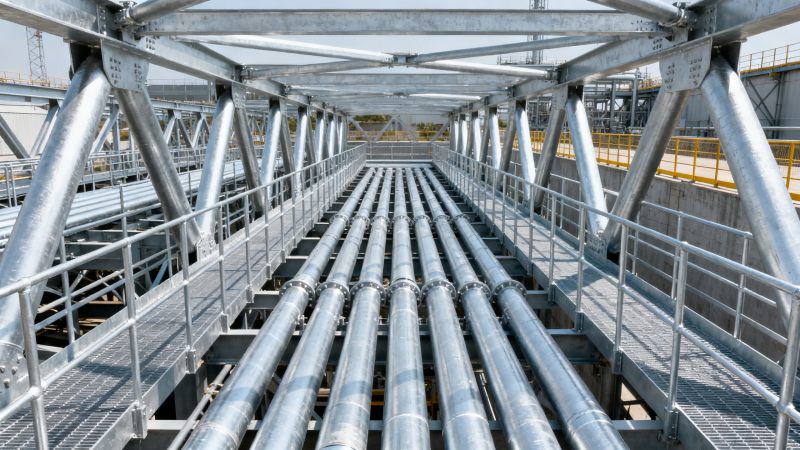
Industry Overview: How Financial Buyers Should Assess Outdoor Steel Options
A practical review of galvanized steel price should compare upfront spending with long-range operating and replacement costs. The table below shows how financial stakeholders typically assess common outdoor material paths.
This framework helps explain why galvanized steel price remains competitive. It occupies the middle ground where capital spending is controlled while long-term service performance remains reliable for many outdoor steel applications.
Long-Term Outdoor Value Beyond the Purchase Order
For exposed structures, the zinc coating acts as a sacrificial barrier. This means that even if the surface experiences minor damage, the coating still helps protect the underlying steel. Financially, that reduces the urgency and frequency of corrective maintenance. Over time, fewer interventions mean lower labor expenses, fewer access equipment costs, less downtime, and more predictable maintenance planning.
Another advantage is durability in varied climates. Outdoor steel can face rain, humidity, temperature changes, industrial pollution, and occasional physical wear. If the installation is located in remote facilities, ports, utility corridors, agricultural environments, or large industrial sites, maintenance access itself can be expensive. In those cases, a slightly higher galvanized steel price may generate a stronger return simply because the asset stays in service longer with fewer disruptions.
This cost logic is especially useful for budget approvers reviewing multi-site programs. If one material choice can lower future maintenance frequency across dozens of installations, the compound savings become meaningful. The decision then shifts from line-item cost minimization to portfolio-level cost control.
Where Galvanized Steel Offers the Strongest Business Case
Not every project has the same exposure level or cost sensitivity. The strongest case for galvanized steel price usually appears in outdoor applications where service continuity matters and repainting is inconvenient or costly.
In these categories, galvanized steel price often proves worthwhile because it protects both the physical asset and the maintenance budget assigned to it.
A Useful Mid-Project Comparison With Stainless Options
There are cases where buyers evaluating galvanized steel price also compare stainless steel, especially for visible surfaces, hygiene-sensitive equipment, or applications with specific forming requirements. For example, 430 Stainless Steel Coil is often used in tabletops, countertops, kitchenware, outdoor decoration engineering, medical instruments, automotive parts, conveyor belts, bolts, nuts, springs, and screens. It is available in finishes such as BA, 2B, NO.1, NO.4, 4K, HL, and 8K, with common dimensions including thickness from 2.5mm to 10.0mm and width from 610mm to 2000mm.
From a technical perspective, this stainless material offers tensile strength of at least 520MPa, yield strength of at least 275MPa, elongation of about 55% to 60%, hardness up to 183HB or 100HRB, and compliance with standards such as ASTM, AISI, JIS, GB, DIN, EN, ISO, SGS, and BV. It is known for higher formability than some 300 series grades and can be hardened through cold working. For finance teams, the lesson is clear: galvanized steel and stainless steel serve overlapping but different value cases. Stainless may justify its premium where appearance, hygiene, flexibility, or specialized environments matter, while galvanized solutions remain highly attractive for broader structural outdoor use where cost efficiency is a priority.
What Can Change the Real Return on Galvanized Steel Price
Even when galvanized steel is a sound choice, the return depends on execution. Several variables influence whether the initial spending translates into long-term value.
First, coating quality and process consistency are critical. If zinc coverage is uneven or below specification, expected service life may drop. Second, the operating environment matters. Coastal exposure, industrial emissions, standing moisture, and abrasive contact can all change corrosion rates. Third, product design affects drainage, trapped moisture, and mechanical damage risk. Finally, supplier capability is often underestimated. Delays, inconsistent dimensions, and uncertain compliance can create installation inefficiency that offsets any apparent unit-cost savings.
This is why qualified sourcing matters. A manufacturer with stable production, export experience, and familiarity with ASTM, EN, JIS, and GB requirements can reduce procurement risk. For financial reviewers, supply reliability is not separate from material cost; it is part of the total economic outcome.
Practical Evaluation Criteria for Financial Approvers
A sound approval process for galvanized steel price should include more than a simple price comparison sheet. It should connect material selection to expected service life and cost exposure across the asset lifecycle.
- Estimate maintenance intervals versus painted or untreated steel.
- Review the environment: inland, coastal, industrial, agricultural, or mixed exposure.
- Check compliance with required standards and project specifications.
- Assess the cost of downtime or access for future repairs.
- Validate supplier production capacity, quality control, and delivery stability.
- Compare lifecycle cost, not only landed cost per ton.
When these criteria are applied, the conversation becomes more strategic. In many outdoor projects, galvanized steel price remains justified because it lowers volatility after installation, which is exactly the type of outcome financial managers seek.
Is It Still Worth It for Long-Term Outdoor Use?
In most standard outdoor structural and industrial applications, the answer is yes. The reason is not that galvanized steel always has the lowest upfront cost, but that it often delivers one of the best balances between initial investment, corrosion protection, maintenance savings, and procurement dependability. For assets expected to remain outdoors for years, that balance is financially meaningful.
If your organization is approving steel for construction, infrastructure, industrial fabrication, or export-oriented manufacturing, it is wise to evaluate galvanized steel price within a broader lifecycle model. Projects that prioritize durability, predictable maintenance, and stable supply often benefit from galvanized solutions, especially when sourced from a partner with proven manufacturing and international delivery capability.
For buyers seeking dependable structural steel products, customized solutions, and export support, working with an experienced Chinese manufacturer can help align material choice with long-term budget performance. The smartest decision is rarely the cheapest quote on day one; it is the material strategy that protects the project for years after installation.
Please give us a message


Please enter what you want to find