Pre-galvanized sheet is widely used in construction and fabrication, yet early edge rust can quickly raise concerns about coating quality, storage, and application methods. For buyers comparing hot dip galvanized steel price, galvanized pipe specifications, or searching for a reliable galvanized steel sheet supplier, understanding the real causes of edge corrosion helps reduce project risks, control steel bar cost, and improve long-term performance.
In practice, early edge rust does not always mean the whole sheet is defective. Edge areas are naturally more vulnerable because they are cut surfaces, handling points, and moisture traps. For operators, QA teams, procurement staff, and project managers, the key issue is to distinguish between normal edge exposure, poor storage, unsuitable processing, and real coating problems before making a costly rejection or replacement decision.
For global steel buyers, this matters across multiple stages: factory acceptance, warehouse storage, site fabrication, and final installation. A few millimeters of rust stain on a sheet edge can trigger claims, delivery disputes, or extra repainting costs if the cause is misunderstood. This article explains why early edge rust appears, how to inspect it correctly, and what preventive actions can improve service life in construction and industrial applications.
Why Pre-Galvanized Sheet Edges Rust Earlier Than Flat Surfaces
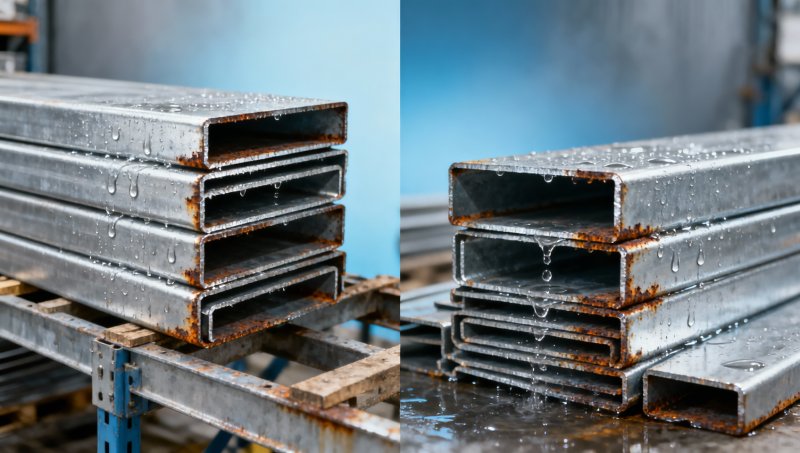
Pre-galvanized sheet is produced from galvanized coil and then cut, slit, roll-formed, or fabricated into parts. The flat surface keeps the original zinc coating, but the cut edge may expose base steel. That exposed line is often only a fraction of a millimeter wide, yet it becomes the first place where moisture, oxygen, and contaminants attack. In mild indoor conditions, this may remain cosmetic for months. In humid or coastal environments, visible rust can develop within 7–30 days.
This does not mean pre-galvanized material is unsuitable. It means buyers need to understand how zinc protects steel. Zinc works through both barrier protection and sacrificial action. However, sacrificial protection is not unlimited. When edges are repeatedly wet, contaminated by chlorides, or tightly stacked without airflow, the zinc near the cut can be consumed faster than expected. The result is early brown or red rust at edges while the face remains bright.
Another factor is geometry. Edges, corners, punched holes, and sheared zones experience higher stress during processing. Burrs, rough shearing, and tight bends can create micro-cracks or disrupt local coating continuity. Even if the average zinc mass meets common standards, local damage at the edge can still become a corrosion initiation point, especially in applications such as roofing trims, cable trays, ducting, or light structural members.
For technical evaluation, it is useful to separate three situations: normal edge oxidation, storage-related corrosion, and process-induced coating failure. The first is common and manageable. The second usually points to moisture exposure during logistics or warehousing. The third may require a deeper review of slitting, coil quality, coating mass, or fabrication method. Making that distinction can prevent unnecessary disputes between suppliers, fabricators, and end users.
Typical edge rust triggers in steel projects
- Cut edges created during slitting, shearing, laser cutting, or punching expose base steel directly.
- Condensation during transport or warehouse storage can remain trapped between stacked sheets for 24–72 hours.
- High-humidity environments above 75% RH increase the chance of white rust and later red rust development.
- Salt, alkaline dust, cement splash, or acidic residues from fabrication accelerate corrosion at vulnerable points.
The table below helps buyers and QC teams identify whether the observed rust is likely related to material characteristics, storage conditions, or fabrication damage.
The main takeaway is that early edge rust is usually a localized corrosion issue, not immediate proof that the full sheet coating is below specification. Correct diagnosis saves time, avoids overreaction, and supports a more accurate procurement decision.
Storage, Transport, and Site Conditions That Accelerate Edge Corrosion
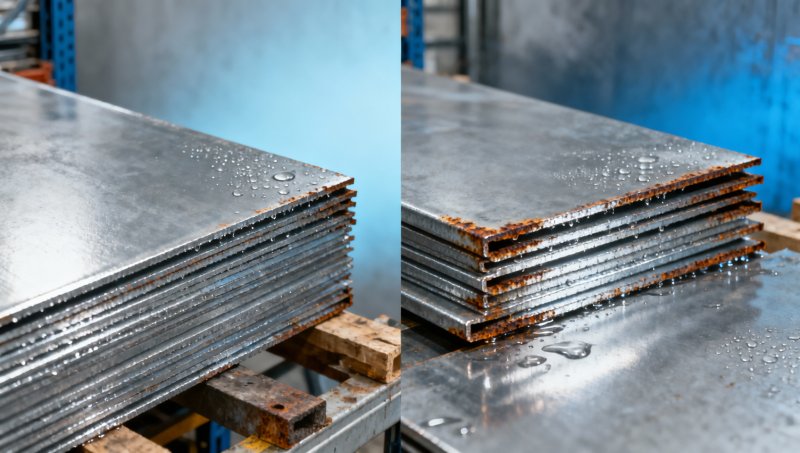
Many early rust complaints originate after shipment rather than at the galvanizing line. Pre-galvanized sheet can leave the mill in good condition but develop corrosion if bundles are exposed to rain, rapid temperature swings, or poorly ventilated storage. When warm air meets cool steel, condensation forms quickly. If the material remains tightly packed, moisture stays trapped and oxygen concentration changes across the stack, creating ideal conditions for localized corrosion.
Transit from China to North America, Europe, the Middle East, or Southeast Asia often takes 2–6 weeks depending on route, port handling, and customs timing. During this period, day-night temperature fluctuations inside containers can be significant. If protective packaging is damaged or desiccant is insufficient, the first visible signs may appear on edges and corners. This is why receiving inspection should cover not only coating appearance but also pallet condition, wrapping integrity, and moisture evidence.
At project sites, steel is often stored near cement, chemical drums, wash areas, or unsealed ground. These conditions increase contamination risk. Water mixed with chlorides, concrete dust, or acidic residues can attack zinc faster than clean rainwater. Edges and cut zones are especially vulnerable because liquid tends to accumulate there. Even a short exposure window of 48 hours can cause staining if humidity remains high and airflow is poor.
For procurement and project management teams, the practical question is not only “What coating was supplied?” but also “What happened from factory to installation?” A strong supplier will help define packing details, loading method, and storage guidance. This reduces disputes and supports more consistent corrosion performance on site.
Minimum handling controls for galvanized sheet
- Keep bundles off the ground by at least 100 mm using dry supports or steel racks.
- Maintain warehouse ventilation and aim for relative humidity below 60% where possible.
- Open and inspect wet packages within 24 hours after arrival if condensation is suspected.
- Use sloped storage to prevent standing water on sheet surfaces and at cut ends.
- Avoid direct contact with mortar, seawater spray, pickling chemicals, or acidic cleaning agents.
The following table shows how common logistics and storage variables affect edge rust risk in galvanized steel projects.
For most projects, the biggest preventable cause is trapped moisture. Better packaging, faster unpacking, and cleaner storage frequently do more to prevent edge rust than changing the sheet grade itself.
Processing Methods, Coating Mass, and Inspection Points Buyers Should Check
When comparing galvanized steel offers, buyers often focus on price per ton but overlook process details that strongly affect edge performance. Pre-galvanized sheet is not the same as post-fabrication hot dip galvanized steel. Because the material is coated before cutting and forming, the edge condition after fabrication depends on coating mass, steel chemistry, slitting quality, bend radius, and whether any touch-up treatment is applied after processing.
In many applications, standard pre-galvanized sheet performs well if the environment is moderate and cut edges are not directly exposed to standing water. But for outdoor framing, aggressive industrial atmospheres, or marine-adjacent sites, buyers should consider whether heavier zinc coating, post-treatment, paint systems, or alternative galvanized processes are more suitable. The lowest initial steel price can become expensive if rework, coating repair, or warranty disputes appear later.
A practical inspection routine should include at least 6 points: surface appearance, coating uniformity, edge burr condition, packing dryness, dimensional tolerance, and test certificate alignment with the order. If the material will be slit or punched again at the fabricator’s plant, the fabrication plan should also be reviewed. Rough tool wear or excessive edge deformation can create corrosion sites even when incoming material is acceptable.
In related steel purchasing, many distributors also evaluate other carbon steel products for downstream manufacturing and reinforcement planning. For example, Wire Rod is widely used in auto manufacturing, shipbuilding, petrochemical plants, metallurgical machinery, precision tools, and building material supply chains. Typical grades include GB1499.2 HRB400, HRB500, ASTM A615 Grade 60, BS4449 460B, 500B, 500C, and AS/NZS 4671 500N, with round shape options in 1–12 m lengths and compliance with ASTM, GB, EN, DIN, and JIS standards.
For buyers managing both sheet steel and reinforcing or forming materials, cross-category consistency matters. Carbon steel bar products with carbon content around 0.06–0.22% are often selected for excellent formability and weldability, while galvanized sheet decisions are driven more by coating mass, edge exposure, and service environment. Reviewing these factors together can improve total project cost control rather than evaluating each line item in isolation.
Key selection criteria before placing a galvanized sheet order
- Define whether the product will be used indoors, outdoors, or in a chloride-heavy industrial zone.
- Confirm if cut edges will be concealed, sealed, painted, or directly exposed after installation.
- Check required standards, such as ASTM, EN, JIS, or GB, and verify test documents before shipment.
- Assess fabrication steps including slitting, punching, bending, welding, and touch-up requirements.
- Compare full landed cost, not only mill price, including packaging, lead time, and corrosion risk management.
Inspection priorities at receiving stage
A good receiving inspection should be completed within the first 24–48 hours after unloading. Focus on edge staining pattern, bundle ventilation marks, presence of white rust, coating scratches, and any signs of water entry. If issues are found, record photos by bundle number and isolate affected material before it is mixed into production. This helps clarify whether the issue came from transit, storage, or fabrication.
The table below gives a practical comparison for decision-makers choosing between pre-galvanized sheet and more corrosion-resistant alternatives in different project conditions.
The correct choice depends on environment, expected life, fabrication method, and maintenance plan. For procurement teams, early clarity on these points prevents mismatched specifications and unnecessary claim cycles.
How to Prevent Early Edge Rust in Real Construction and Manufacturing Use
Prevention starts before the order is placed. If the project environment includes frequent wet-dry cycles, coastal air, or chemical exposure, specify the service condition clearly to the supplier. A sheet suitable for dry indoor ductwork may not be the right choice for exposed external components. Matching material to environment is the first and most cost-effective control measure.
During fabrication, edge quality is critical. Sharp tooling, controlled punching clearance, reduced burr height, and proper bend radius help minimize coating damage. If the steel will be cut into narrow strips or profiles, edge sealing or zinc-rich touch-up may be justified in critical applications. This is especially useful where exposed edges face drainage paths, fastener zones, or persistent condensation.
During installation, good design details matter. Avoid horizontal traps where water sits against cut ends. Create drainage, keep separation from dissimilar metals where practical, and prevent contact with wet concrete or aggressive debris. In many cases, simple design corrections can extend edge life significantly without major material changes.
Maintenance should also be realistic. Inspect exposed galvanized edges after the first 3 months of service and then at 6–12 month intervals for outdoor installations. If staining remains superficial, cleaning and localized repair may be enough. If pitting or underfilm spread appears, the environment or detailing needs review. Early intervention is cheaper than replacing fabricated assemblies after corrosion becomes visible to the client.
Four practical prevention steps
- Specify the actual exposure category and ask the supplier to recommend suitable coating weight and packing method.
- Store material dry, elevated, and ventilated, especially during the first 2 weeks after delivery.
- Control fabrication quality by deburring edges, maintaining tooling, and protecting exposed cut zones.
- Inspect installed parts regularly and repair localized damage before corrosion spreads into functional areas.
Common mistakes to avoid
One common mistake is assuming that all galvanized products behave the same. Pre-galvanized sheet, galvanized pipe, structural profiles, and post-galvanized assemblies have different edge and surface conditions. Another mistake is leaving bundled steel unopened after visible water exposure. A third is using aggressive cleaners on zinc-coated surfaces, which can strip protective films and accelerate staining.
For distributors and contractors, prevention is also a documentation issue. Packing photos, humidity notes, receiving inspection records, and fabrication checklists make claim handling more objective. They also support better sourcing decisions on future orders by identifying where corrosion risk truly begins.
FAQ and Procurement Guidance for Buyers, QA Teams, and Project Managers
Because early edge rust can involve material, logistics, fabrication, and site handling, many buyers ask the same practical questions during supplier evaluation. The answers below are useful for technical review, commercial comparison, and project risk control.
Does early edge rust always mean poor galvanized sheet quality?
No. If rust is limited to cut edges while the main coating remains continuous, the cause may be normal edge exposure combined with humidity or contamination. Quality concerns become stronger when rust appears together with uneven coating, widespread white rust, peeling, or obvious transport moisture damage. Inspection should consider the full pattern, not one isolated stain.
When should buyers choose post-fabrication hot dip galvanizing instead?
If components have many exposed cuts, welds, holes, and outdoor service requirements, post-fabrication hot dip galvanizing is often a better fit. This is common in structural brackets, supports, guard systems, and heavy industrial steelwork. The higher processing cost may be justified when long-term maintenance access is difficult or when expected service life is above 10–20 years in a severe atmosphere.
What documents should procurement teams request from a supplier?
At minimum, request the material grade, applicable standard, coating-related specification if ordered, mill test documentation, packing details, and agreed inspection method. For export supply, it is also useful to confirm bundle marking, moisture protection approach, and claim response procedure. These documents help finance, quality, and project teams evaluate risk before shipment arrives.
How can a structural steel supplier reduce sourcing risk?
A reliable supplier should offer stable production, consistent dimensional control, export packing experience, and clear communication on standards such as ASTM, EN, JIS, and GB. For global buyers, this matters as much as price. Hongteng Fengda supports construction, industrial, and manufacturing projects with angle steel, channel steel, steel beams, cold formed profiles, and customized structural steel components, helping customers balance cost, quality, lead time, and application suitability.
Early edge rust on pre-galvanized sheet is usually a manageable issue when the true cause is identified correctly. In most cases, the drivers are exposed cut edges, trapped moisture, fabrication damage, or unsuitable service conditions rather than a simple coating failure claim. Better storage, clearer specifications, and smarter inspection can reduce delays, rework, and total project cost.
If you are evaluating galvanized steel sheet, structural steel sections, or related carbon steel supply for international projects, a supplier with stable manufacturing, strict quality control, and export experience can make the decision process more reliable. Contact Hongteng Fengda to discuss your application, request technical details, or get a customized steel sourcing solution for your project.
Please give us a message


Please enter what you want to find