Before any carbon seamless pipe leaves the factory, the right tests determine whether it will perform safely, meet project specifications, and control long-term cost. For buyers comparing high carbon steel pipe, reviewing steel tube specifications, or checking galvanized pipe specifications across suppliers, understanding pre-shipment inspection is essential. This guide explains which tests matter most and how they help reduce quality risks in global steel sourcing.
In steel procurement, pre-shipment inspection is not a formality. It is the point where a supplier proves that the delivered pipe matches the order, the standard, and the intended application. For project managers, QC teams, buyers, and technical evaluators, a missed test can lead to welding issues, pressure failure, dimensional mismatch, or delayed site installation.
For carbon seamless pipe used in construction, industrial fabrication, fluid transport, mechanical parts, and structural systems, test selection should reflect material grade, wall thickness, end use, and destination standard. Reliable exporters with controlled production and documented inspection processes help reduce sourcing risk, especially when shipments move across North America, Europe, the Middle East, and Southeast Asia.
Why Pre-Shipment Testing Matters for Carbon Seamless Pipe
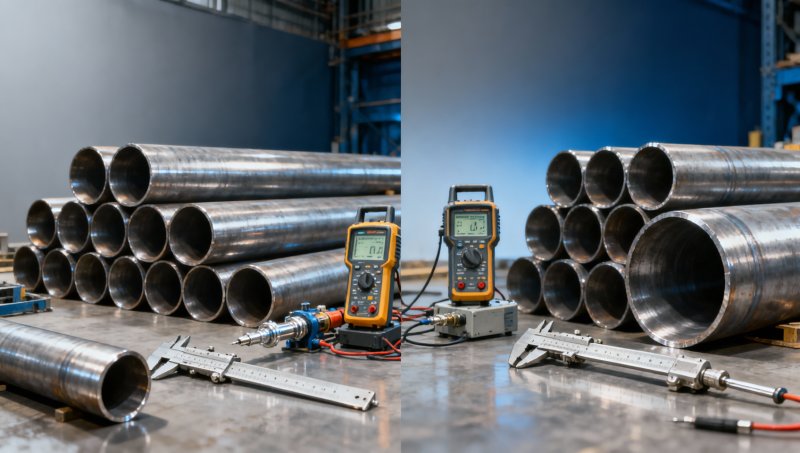
A carbon seamless pipe may look acceptable on the surface and still fail in service. Internal defects, chemical deviation, wall thickness inconsistency, or poor end finishing can create costly problems after delivery. In many projects, replacement after arrival adds 2 to 6 weeks to the schedule, not including freight claims, site disruption, and labor rescheduling.
Pre-shipment testing matters because it verifies three things at once: conformity to the purchase order, conformity to the required standard, and suitability for the final application. A pipe for structural support, a pipe for pressure service, and a pipe for machining may all be carbon seamless products, but their critical inspection priorities are not exactly the same.
From a commercial perspective, test records also affect negotiation and approval flow. Procurement teams often need MTC review before payment release. Technical teams need dimensional and mechanical data before acceptance. Financial approvers want fewer claim risks. A complete inspection package supports all 3 groups with the same evidence set.
For exporters such as Hongteng Fengda, strict quality control is part of practical supply reliability. When steel products are supplied under ASTM, EN, JIS, or GB requirements, inspection must be traceable, repeatable, and matched to the standard. This is especially important when order quantities range from small trial lots to full-container or multi-batch project shipments.
The main risks of inadequate testing
- Dimensional deviation beyond tolerance, such as wall thickness or outer diameter variation above the agreed limit.
- Mechanical performance below target, including tensile strength, yield strength, or elongation outside the required range.
- Surface and internal defects that are not visible during simple visual inspection.
- Mixed heat numbers or poor traceability, which can affect certification review and downstream compliance.
The table below shows how common quality issues affect different business roles before and after shipment.
The key point is simple: pre-shipment inspection protects not only product performance, but also project timing, document compliance, and transaction confidence. That is why test scope should be agreed before production begins, not after goods are packed.
Which Tests Matter Most Before Shipment
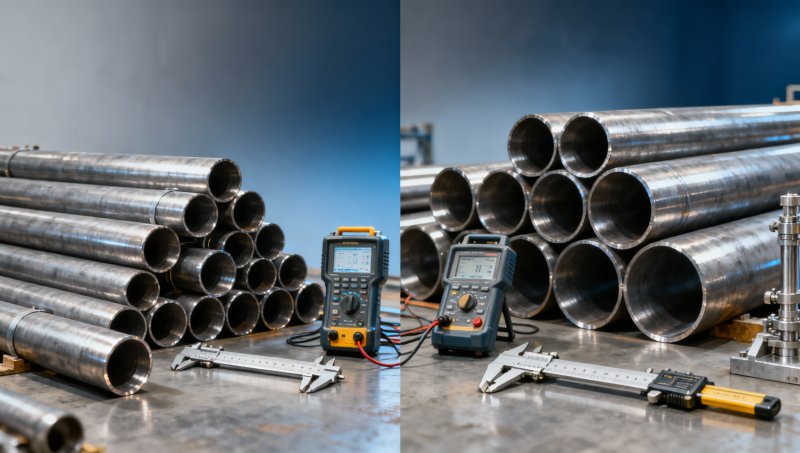
Not every order needs the same inspection intensity, but several tests are widely considered essential for carbon seamless pipe. A sound pre-shipment plan usually combines 5 layers of control: chemical composition, dimensional inspection, mechanical property testing, non-destructive testing, and visual plus marking verification. Together, these checks create a practical quality baseline.
Chemical composition testing confirms whether carbon, manganese, sulfur, phosphorus, and other elements stay within the specified range. Even small deviations can affect weldability, hardness, machinability, and low-temperature behavior. For buyers comparing high carbon steel pipe across suppliers, chemistry review is especially important because higher carbon content may increase strength while reducing formability.
Dimensional inspection checks outer diameter, wall thickness, length, straightness, ovality, and end condition. Typical commercial tolerances vary by standard and size, but many buyers target wall thickness control within a narrow range and length tolerance aligned with site cutting plans. A variation of even 1 to 2 mm can affect sleeve fit, threading, welding, or support spacing.
Mechanical testing generally includes tensile test, yield strength verification, elongation, and sometimes flattening, flaring, bending, or hardness tests. These results help technical teams confirm whether the seamless pipe can handle the expected load and service condition. For structural and industrial use, tensile and yield values are often among the first data points reviewed during material approval.
Core pre-shipment tests
1. Chemical analysis
Used to confirm heat composition against ASTM, EN, JIS, or GB requirements. This test is critical when substitution risk exists between similar grades.
2. Dimensional and appearance inspection
Covers OD, thickness, length, end bevel, straightness, surface defects, rust condition, and coating condition if applicable.
3. Mechanical property testing
Commonly includes tensile strength, yield strength, elongation, and impact or hardness depending on application and standard.
4. Non-destructive testing
Ultrasonic testing and eddy current testing help identify internal or longitudinal defects without damaging the pipe.
5. Hydrostatic or pressure-related testing
Required for many pressure-service applications to verify integrity under controlled test pressure.
The following comparison helps buyers prioritize inspection points by order type and use condition.
In practice, the most reliable shipments are those where test scope, acceptance criteria, and document format are all confirmed before production. This reduces disputes over whether a result was optional or mandatory.
How Standards, End Use, and Specifications Change the Test Plan
A common mistake in steel sourcing is assuming that one inspection checklist fits all pipe orders. In reality, the correct test plan depends on 4 variables: applicable standard, service condition, product size range, and downstream fabrication method. Pipe supplied under ASTM rules may be evaluated differently from pipe ordered to EN, JIS, or GB specifications, even when dimensions appear similar.
End use changes inspection priorities. For example, a seamless tube intended for machining may place greater emphasis on dimensional consistency and surface quality. A pipe intended for pressure service may require stronger focus on hydrostatic testing and non-destructive examination. Structural use may prioritize yield strength, straightness, and length control. That is why technical review should begin with application, not just with grade name.
Buyers who also source structural steel products often benefit from aligning inspection logic across categories. For example, when a project combines carbon seamless pipe with cold-formed or fabricated steel members, consistent tolerance control helps site assembly. In such mixed steel packages, products like Z-beam are often selected for steel structure construction purlins, wall beams, lightweight roofs, brackets, and mechanical support members.
That product category typically uses materials such as Q235B, Q345B, Q420C, Q460C, SS400, S275, S355, A36, and A572, with thickness from 6 to 25 mm, length from 2 to 12 m or customized, and tolerance around ±1%. Buyers familiar with these structural parameters often apply the same discipline when checking pipe dimensions, certification, coating condition, and traceability before shipment.
Specification details that influence testing
- Wall thickness category: heavier walls often justify stricter UT coverage and more careful end inspection.
- Surface condition: black, pickled, or galvanized surface may change appearance criteria and coating checks.
- Length and cut type: fixed-length orders usually require tighter dimensional verification than random-length supply.
- Destination market: projects under CE, SGS, BV, ISO-related documentation expectations may require clearer records and packing traceability.
The table below shows how application changes the practical focus of pre-shipment inspection.
The main lesson is that inspection should follow the real use case. A lower-cost pipe with incomplete testing can become the more expensive option once rework, replacement, and delay costs are included.
A Practical Pre-Shipment Inspection Checklist for Buyers and QC Teams
A useful inspection checklist should be short enough to execute and detailed enough to prevent disputes. For most export orders, buyers can organize pre-shipment review into 6 checkpoints: document review, identity verification, dimensional inspection, performance testing, appearance and packing check, and final release confirmation. This structure works well for distributors, project buyers, and third-party inspectors.
Document review comes first. Confirm the purchase order, grade, standard, size range, quantity, and special requirements such as bevel ends, painting, or galvanized pipe specifications. Then match these details against the mill test certificate, packing list, and heat number records. If traceability breaks at this stage, later tests lose value because the batch identity is uncertain.
On the product side, inspectors should sample enough pieces to verify consistency across the lot. A project shipment may include different lengths, bundles, or heats, so checking only the top layer is not enough. Buyers should also confirm whether the order requires third-party witnessing, especially for higher-value industrial or infrastructure projects.
Packing and marking are often underestimated. Incorrect stenciling, missing heat numbers, or weak export bundling can create problems even when the pipe itself passes testing. For sea shipment, practical details such as end caps, anti-rust protection, bundle tags, and container loading method can influence product condition after 20 to 40 days in transit.
6-step inspection workflow
- Review order data, standard requirements, and acceptance criteria before inspection begins.
- Verify heat number, quantity, size mix, and traceability markings on the physical goods.
- Measure OD, wall thickness, length, straightness, and end preparation on selected samples.
- Check test reports for chemistry, tensile properties, NDT, and hydrostatic performance when required.
- Inspect surface condition, coating, bundle packing, label clarity, and corrosion protection.
- Approve release only after documents and physical goods match the shipment plan.
Common buyer mistakes
- Accepting a generic MTC without confirming heat number linkage to the actual bundles.
- Focusing only on price per ton and overlooking tolerance control or testing cost.
- Comparing different suppliers without aligning the same inspection scope.
- Checking galvanized appearance but not the underlying steel tube specifications.
A disciplined checklist does more than catch defects. It creates a common language between supplier, buyer, inspector, and end user. This shortens approval time, reduces claim ambiguity, and helps new sourcing relationships move toward repeat business with lower transaction risk.
How to Evaluate a Supplier’s Testing Capability Before You Buy
The best pre-shipment inspection result starts long before packing. Buyers should evaluate a supplier’s testing capability during quotation and technical clarification, not only after production finishes. A supplier that answers clearly on standards, testing methods, sampling approach, and document delivery is usually easier to work with than one that only offers a low unit price.
Ask how the manufacturer controls production consistency across batches. Important questions include whether dimensional checks are done in-process, whether NDT is done online or offline, how many samples are retained, and how quickly MTC and inspection reports can be issued. For export projects, a reporting delay of even 3 to 5 days can affect vessel booking and payment scheduling.
Hongteng Fengda serves global buyers with structural steel products and customized supply support, which is especially valuable when a project involves both standard materials and OEM or fabricated components. In such cases, inspection coordination matters as much as production capacity. Consistent communication across standard compliance, tolerances, and lead times helps buyers reduce sourcing complexity.
For serious projects, buyers should request sample documents before placing a bulk order. A sample MTC, dimensional inspection sheet, and packing format can reveal whether the supplier understands export documentation. This simple step often prevents later confusion over units, grade notation, tolerances, and test terminology.
Questions to ask before confirming the order
- Which tests are included in the quoted price, and which are optional?
- Can the supplier support ASTM, EN, JIS, or GB documentation as required by the project?
- What is the normal lead time for production, inspection, and export packing: 2 weeks, 4 weeks, or longer?
- Can third-party inspection be arranged before container loading?
- How are mixed sizes, mixed heats, and customized lengths identified and packed?
What a reliable answer looks like
Reliable suppliers usually define the test list, acceptance basis, and document timeline in writing. They can explain whether the order will include tensile test, chemical analysis, UT, hydrostatic test, and dimensional inspection, and they can clarify the report format before production begins.
If you are comparing multiple quotations, normalize the test scope first. A cheaper offer that excludes NDT, hydrostatic testing, or strict dimensional verification may not be cheaper once quality risk is priced in.
Final Recommendations for Lower-Risk Global Steel Sourcing
The most important pre-shipment tests for carbon seamless pipe are those that confirm grade, dimensions, mechanical performance, internal soundness, and shipment identity. In practical terms, that usually means a combination of chemical analysis, dimensional inspection, tensile-related testing, non-destructive examination, visual inspection, and document traceability review. The exact mix should follow the project requirement, not guesswork.
For procurement teams, the safest approach is to define the inspection scope at the RFQ stage, confirm standards before production, and require matching documents before shipment release. For QC and technical teams, focus on the data points that directly affect service performance: thickness, OD, yield, tensile, elongation, NDT status, and marking traceability. For decision-makers, remember that a controlled inspection process can reduce claim exposure and improve delivery predictability.
When working with an experienced Chinese structural steel manufacturer and exporter, buyers gain more than product supply. They gain support on specification alignment, quality control, documentation, and customized steel solutions for construction and industrial projects. That is especially useful when a project requires multiple steel categories under one sourcing plan.
If you are reviewing carbon seamless pipe options, comparing steel tube specifications, or planning a broader structural steel purchase, now is the right time to clarify test requirements before shipment. Contact Hongteng Fengda to discuss your material grade, inspection expectations, and delivery schedule, and get a practical sourcing solution tailored to your project.
Please give us a message


Please enter what you want to find