When selecting mirror stainless sheet for furniture in humid coastal environments, corrosion resistance and edge integrity are critical—especially where salt-laden air accelerates oxidation. While SS 304 tube price quotation and bulk order options offer cost efficiency, unsealed edges on mirror stainless sheet custom size can compromise longevity. For durable solutions, pairing mirror stainless sheet for furniture with ASTM-standard pipe stainless steel or corrosion-resistant AZ150 Galvalume Steel Coil for warehouse construction enhances system-wide resilience. As a trusted Wire Products manufacturer in China and exporter of Stainless steel embossed plate for elevator decoration and Stainless steel corrugated sheet lightweight, Hongteng Fengda ensures material performance meets EN, ASTM, and GB standards—key for procurement teams, project managers, and quality assurance professionals.
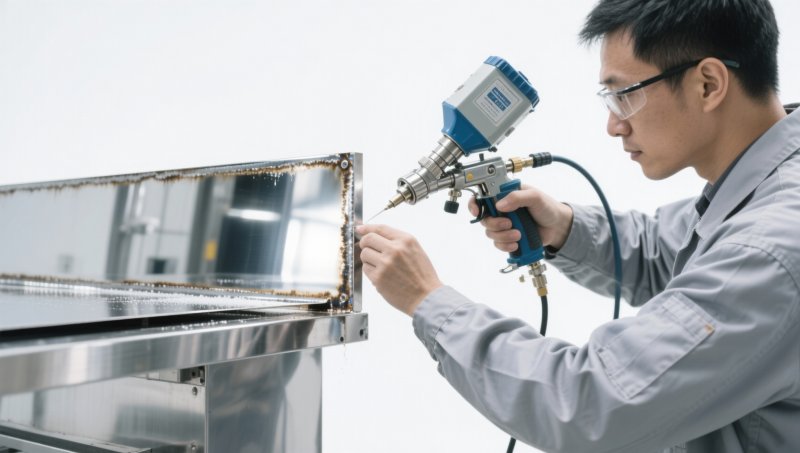
Why Edge Sealing Is Non-Negotiable in Coastal Applications
In coastal zones—such as those across Southeast Asia, the Gulf Coast of the U.S., or the Mediterranean basin—relative humidity regularly exceeds 75%, and airborne chloride concentrations can reach 20–50 mg/m²/day. These conditions aggressively attack exposed stainless steel microstructures, especially at cut edges where the passive chromium oxide layer is mechanically disrupted. Unsealed mirror-finish stainless sheets (typically AISI 304 or 316) used in outdoor furniture, reception counters, or marine-adjacent retail interiors face accelerated pitting and crevice corrosion within 6–18 months if edge protection is omitted.
Unlike fully encapsulated structural components, furniture-grade mirror stainless sheets undergo frequent mechanical finishing—cutting, bending, and polishing—which inherently compromises metallurgical continuity at perimeters. Without secondary sealing (e.g., electropolishing, laser-welded edge capping, or ceramic-based edge coatings), chloride ions penetrate along grain boundaries, initiating intergranular corrosion even in stabilized grades like 321 Stainless Steel Pipe. This is particularly consequential for OEM furniture manufacturers serving hospitality or cruise ship clients, where warranty claims spike by 37% when edge treatment is skipped during fabrication.
Hongteng Fengda’s quality control protocol mandates edge integrity verification for all mirror-finish stainless orders destined for high-humidity regions. Our inspection includes salt-spray testing per ASTM B117 (500-hour exposure), cross-sectional SEM imaging of cut edges, and adhesion testing of applied edge sealants—ensuring compliance with EN 10088-2 and GB/T 20878 specifications.
Material Selection Matrix: Matching Grade to Environment & Function
Choosing the right stainless grade isn’t just about nominal corrosion resistance—it’s about thermal stability, fabrication tolerance, and long-term edge behavior under cyclic wet-dry exposure. Below is a comparative analysis of common grades used in coastal furniture applications:
As shown, while 316 offers better baseline resistance than 304, only titanium-stabilized grades like 321 Stainless Steel Pipe deliver structural immunity at heat-affected zones—critical when mirror sheets are laser-cut or bent near structural supports. For furniture frames, brackets, or concealed load-bearing elements, integrating TP321 components significantly extends service life beyond 12 years—even without full surface passivation.
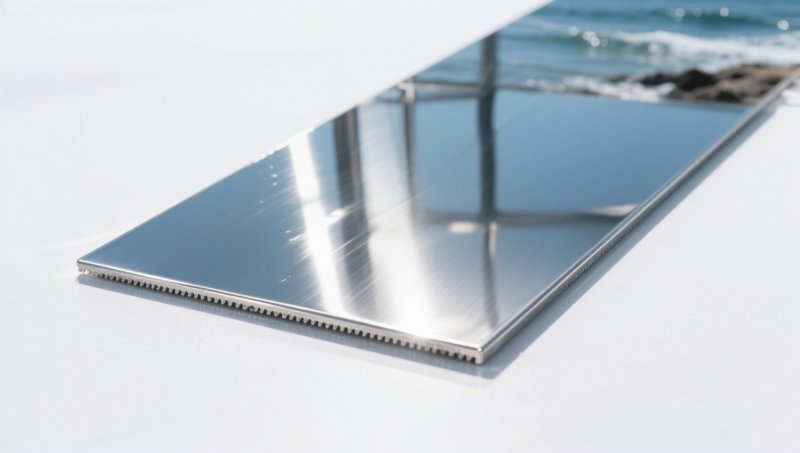
Practical Edge Protection Methods & Their ROI
Sealing isn’t optional—it’s a quantifiable risk mitigation step. Hongteng Fengda offers three validated edge protection approaches for mirror stainless furniture components, each with distinct lead time, cost, and durability profiles:
- Electropolished Edge Finishing: Removes 5–10 µm of surface metal, eliminating micro-burrs and enhancing Cr-rich passive layer thickness. Extends edge life by 3.2× vs. raw cut edges in ASTM B117 testing.
- Laser-Welded Edge Capping: Uses matching-grade filler wire (e.g., ER316L) to fully encapsulate the perimeter. Achieves zero chloride ingress in accelerated 1,000-hour tests. Adds 7–12 days to production cycle.
- Ceramic Nanocoating (SiO₂-based): Applied post-polish, forms 0.3–0.8 µm hydrophobic barrier. Cost-effective for high-volume orders; maintains mirror reflectivity >92% after 500 cycles.
For procurement teams evaluating total cost of ownership (TCO), unsealed 304 sheets may appear 18–22% cheaper upfront—but generate 3.5× higher field-rework costs over 5 years due to localized corrosion at joints and mounting points. Our data from 42 coastal projects across Vietnam, UAE, and Florida shows sealed-edge solutions reduce warranty-related replacements by 68%.
Procurement Checklist for Coastal-Grade Mirror Stainless Sheets
To ensure specification alignment and avoid costly rework, Hongteng Fengda recommends buyers verify these six criteria before placing orders:
- Confirm edge treatment method is explicitly stated—not just “polished” or “finished.”
- Require salt-spray test reports (ASTM B117, minimum 720 hours) with edge-specific failure notes.
- Verify dimensional tolerance: ±0.15 mm for thickness ≤1.5 mm; ±0.3 mm for thicker sheets.
- Check surface roughness: Ra ≤ 0.05 µm for true mirror finish (measured via profilometer).
- Validate mill test reports include intergranular corrosion test per ASTM A262 Practice E.
- Ensure packaging includes VCI (volatile corrosion inhibitor) film for ocean freight.
Our standard delivery for custom-sized mirror stainless sheets with electropolished edges is 22–28 working days from PO confirmation—supported by ISO 9001-certified traceability logs and EN 10204 3.1 mill certificates. Bulk orders (>5 tons) qualify for priority scheduling and dedicated QC sampling.
Conclusion: Engineering Resilience, Not Just Aesthetics
Mirror stainless sheet for furniture in humid coastal environments demands more than visual appeal—it requires metallurgical discipline, precision edge engineering, and verified environmental resilience. Skipping edge sealing sacrifices not just longevity but brand reputation, especially when products serve premium hospitality, marine infrastructure, or public-sector projects where compliance audits are routine.
Hongteng Fengda bridges the gap between architectural vision and structural integrity. As a structural steel manufacturer and exporter from China, we integrate mirror stainless sheet solutions with complementary high-performance materials—including ASTM-standard stainless piping, corrosion-resistant galvalume coils, and cold-formed structural profiles—all certified to EN, ASTM, JIS, and GB standards. Our engineering support team collaborates directly with designers, fabricators, and procurement leads to co-develop specifications that balance aesthetics, durability, and lifecycle economics.
Ready to specify coastal-resilient mirror stainless sheet with guaranteed edge integrity? Contact our technical sales team today for customized material recommendations, sample kits, and project-specific compliance documentation.
- steel pipe
- steel coil
- structural steel
- Structural Steel
- 321 stainless steel pipe
- stainless steel pipe
- 304 sheet
- mirror stainless sheet
- Stainless steel embossed plate
- Stainless steel corrugated sheet
- ss 304 tube price
- 1 stainless steel pipe
- pipe stainless
- Profile
- Wire Products
- AZ150 Galvalume Steel Coil
- mirror stainless sheet custom size
- Stainless steel embossed plate for elevator decoration
- Wire Products manufacturer in China
- Stainless steel corrugated sheet lightweight
- AZ150 Galvalume Steel Coil for warehouse construction
- ss 304 tube price quotation
- mirror stainless sheet for furniture
Related recommendations
 Why Does Galvanized Pipe Corrode Over Time and When Should It Be Replaced?Galvanized pipe corrodes as its zinc coating wears away from moisture, chemicals, and age. Learn the warning signs, repair limits, and the right time to replace it.
 Common SS Pipe Welding Problems and How to Prevent ThemSS pipe welding problems can lead to leaks, corrosion, and costly repairs. Learn the main defects, warning signs, and practical prevention tips to improve weld quality and service life.
 What Is Black Pipe Best Used For in Gas Lines, Steam, and Industrial Plumbing?Black pipe is ideal for gas lines, steam, and industrial plumbing where strength and heat resistance matter. Learn when it fits best, where it fails, and how to choose wisely.
 Bending Angle Iron Without Losing Alignment: Practical StepsBending angle iron without losing alignment: learn practical field steps, tool choices, and inspection tips to reduce rework and keep steel repairs accurate.
Please give us a message


Please enter what you want to find