Choosing the right base support component can affect strength, stability, and long-term performance in structural applications. If you are evaluating whether a stainless square plate is the best option, it is important to consider load requirements, corrosion resistance, installation conditions, and cost. This guide explores the key factors to help buyers and project planners make a practical and informed decision.
Understanding the role of a stainless square plate
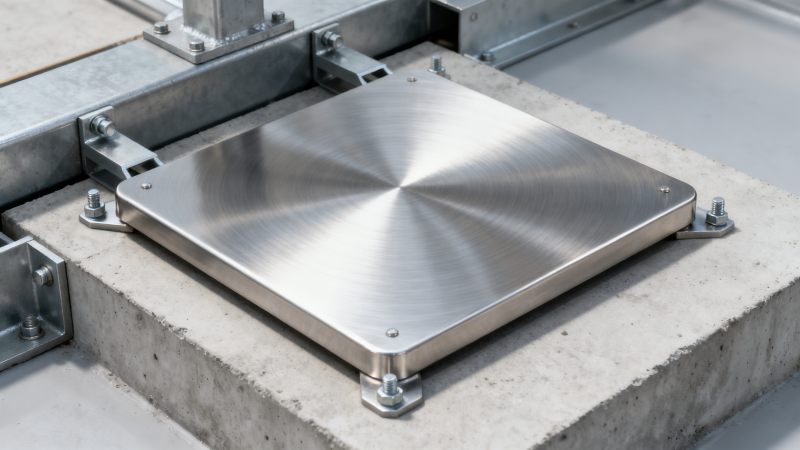
A stainless square plate is a flat steel component, usually cut into equal-length sides, used at the base of columns, supports, brackets, machinery frames, railings, and fabricated structural assemblies. In many steel projects, it works as a load transfer element between an upper member and a lower surface such as concrete, steel framing, equipment pads, or embedded anchoring systems. Although it looks simple, the choice of plate material, thickness, grade, and finish can influence safety, service life, maintenance needs, and fabrication efficiency.
For information researchers in the steel industry, the real question is not only whether a stainless square plate can be used, but whether it is the right match for the operating environment and structural purpose. In some cases, stainless steel offers clear value because of corrosion resistance and appearance. In other cases, carbon steel, galvanized steel, or coated plate may be more practical. That is why a balanced evaluation matters.
Why this component receives attention in structural steel projects
Base support components often receive less attention than beams, channels, or columns during early planning, yet they are critical in transferring force and maintaining alignment. A stainless square plate becomes especially relevant when the project involves moisture, outdoor exposure, washdown conditions, chemical contact, or architectural visibility. Buyers and engineers also consider it when they need a cleaner finish, reduced maintenance, and better long-term durability compared with unprotected mild steel.
For structural steel manufacturers and exporters serving international markets, demand is also shaped by compliance expectations. Projects in North America, Europe, the Middle East, and Southeast Asia may specify performance under ASTM, EN, JIS, or GB-related requirements. A professional supplier must therefore understand not just the product shape, but the fabrication tolerances, weldability, compatibility with anchor systems, and site conditions that influence actual use.
Core advantages of a stainless square plate
The strongest argument for using a stainless square plate is durability in corrosive or visually exposed environments. Stainless steel performs well in rain, humidity, cleaning cycles, and many industrial settings where uncoated carbon steel would rust quickly. This makes it attractive for coastal construction, food-related equipment frames, public infrastructure details, utility supports, and architectural steelwork where long-term appearance matters.
Another important advantage is maintenance reduction. A stainless square plate generally does not require the same painting, recoating, or periodic surface treatment often associated with standard carbon steel. Over time, that can reduce operational interruption and improve reliability, especially where access for maintenance is difficult or expensive.
There is also fabrication value. When properly selected, stainless materials can be cut, drilled, and welded into custom base support configurations for machinery mounts, post bases, connection nodes, and fabricated structural accessories. This flexibility is useful for OEM projects and custom export orders, where dimensions, hole patterns, and finish requirements vary from one application to another.
Where a stainless square plate fits best
A stainless square plate is not automatically the best choice for every base support. It tends to make the most sense where service conditions justify its material value. Typical examples include supports near water, exposed exterior installations, hygienic processing areas, transport facilities, petrochemical or light chemical zones, and visible building elements where staining or corrosion would be unacceptable.
In structural steel fabrication, it may be used under light to medium columns, handrail posts, platform supports, façade brackets, equipment feet, and custom frames. In heavier structural work, the decision depends more strongly on engineering loads and plate design details. A thicker carbon steel plate with protective treatment may sometimes outperform a thinner stainless option if the main requirement is pure load capacity at lower material cost.
When another steel option may be more practical
A stainless square plate may not be the most economical answer for indoor dry environments, temporary structures, or hidden support areas with low corrosion risk. In these cases, galvanized or coated steel can offer a better cost-performance balance. This is especially true for buyers managing large-volume projects where base support plates are numerous and aesthetic requirements are limited.
For example, some applications that do not require full stainless construction may benefit from corrosion-resistant sheet or fabricated accessories made from Galvanized Steel Sheet. Common grades such as DX51D, SGCC, S250GD, and S350GD are widely used across construction, transportation, energy, communications, agriculture, and light industry. With thickness options from 0.12mm to 6.00mm, widths from 600mm to 1500mm, lengths from 1m to 12m, and support for customization, this material provides resistance to atmospheric corrosion, good forming and welding characteristics, and compliance with standards such as ASTM, DIN, JIS, GB, AISI, and EN. For support covers, secondary brackets, enclosures, and non-critical base-related fabricated parts, this can be a sensible alternative when the full benefits of a stainless square plate are not required.
Key technical points before making a choice
Before deciding on a stainless square plate, project teams should review several technical points. First is load transfer. The plate must provide enough area to distribute compressive forces without overstressing the supporting surface. Plate thickness should also prevent excessive bending under service conditions. If there are anchor holes, slots, or edge reductions, these details can affect effective strength.
Second is the environment. Not all stainless grades perform equally in chloride-rich, acidic, or highly contaminated settings. A stainless square plate near the coast or in chemical exposure may require a more suitable grade than one used indoors. Surface finish matters too, because smoother finishes are often easier to clean and may perform better in appearance-sensitive installations.
Third is fabrication compatibility. If the plate will be welded to structural members such as angle steel, channels, steel beams, or cold formed steel profiles, the fabrication plan should consider heat input, distortion control, finishing, and any dissimilar metal issues. Precision cutting and hole positioning are especially important when the plate must align with anchor bolts or embedded base systems on site.
Fourth is total cost, not only material price. A stainless square plate may appear expensive at purchase stage, but the life-cycle value can be favorable where repainting, rust repair, downtime, or replacement would cost more later. Conversely, if the environment is mild and the service life target is limited, lower-cost alternatives may deliver better project economics.
Practical evaluation steps for buyers and planners
A practical evaluation should begin with the function of the support. Is the stainless square plate carrying structural load, holding equipment in position, protecting a visible base area, or serving a mixed purpose? Once the function is clear, the team can compare environment, design life, maintenance expectations, and fabrication complexity.
- Define load type: static, dynamic, vibration-related, or impact-related.
- Check exposure: dry interior, outdoor weather, washdown, coastal, or chemical.
- Confirm dimensions: side length, thickness, hole pattern, edge distance, and flatness tolerance.
- Review fabrication: cutting, drilling, welding, surface finish, and assembly sequence.
- Compare life-cycle costs: initial purchase, maintenance, downtime risk, and replacement interval.
For international buyers, supplier capability is equally important. A qualified structural steel manufacturer should be able to provide material traceability, dimensional consistency, custom fabrication support, and quality control aligned with export standards. This helps reduce sourcing risk and avoids mismatches between design intent and delivered product.
Common mistakes to avoid
One common mistake is choosing a stainless square plate based only on the word “stainless,” without verifying the actual service environment. Another is focusing on corrosion resistance while overlooking stiffness, anchor layout, or support surface conditions. Some buyers also over-specify stainless steel where galvanized or coated steel would perform adequately, increasing costs without adding real project value.
It is also risky to treat all base plates as generic cut pieces. In reality, edge quality, hole accuracy, plate flatness, and weld preparation can directly affect installation success. For fabricated structural components, early coordination between designer, manufacturer, and installer is often the best way to avoid delays and rework.
A balanced conclusion for decision makers
A stainless square plate is the right choice for base support when corrosion resistance, appearance, service life, and low maintenance are important enough to justify the material cost. It is especially valuable in outdoor, wet, hygienic, or visibly exposed applications. However, it is not automatically the best answer for every project. Load conditions, plate design, fabrication details, and environmental severity should guide the final decision.
For project planners, fabricators, and global buyers, the most reliable approach is to evaluate the stainless square plate as part of the whole support system rather than as an isolated item. When material choice, structural need, and manufacturing capability are aligned, the result is a safer, more efficient, and more durable base support solution. If you are reviewing options for structural steel components, customized supports, or export-grade steel products, working with an experienced manufacturer can help turn technical requirements into a practical specification.
Please give us a message


Please enter what you want to find