In coastal environments, stainless steel metal plates can fail much sooner than expected when salt, humidity, poor grade selection, or improper maintenance accelerate corrosion. For after-sales maintenance teams, understanding these early warning signs is essential to preventing repeat issues, reducing downtime, and protecting structural performance. This article explains the main causes of premature failure and how to manage them effectively.
For maintenance personnel working on steel structures, marine-adjacent plants, storage yards, building envelopes, and industrial platforms, early failure rarely comes from one factor alone. In most cases, stainless steel metal plates are exposed to a combination of chloride deposition, trapped moisture, crevice formation, and unsuitable cleaning routines. Once these conditions remain unchecked for 3 to 12 months, visible staining can develop into localized attack, thickness loss, fastener damage, and eventually service disruption.
This matters not only for equipment reliability, but also for warranty handling, replacement planning, and supplier communication. For companies managing cross-border steel sourcing, the problem often starts before installation: grade mismatch, surface finish mismatch, poor edge treatment, and design details that trap saltwater. A maintenance team that can identify root causes early will reduce repeat claims, lower emergency repair costs, and extend structural service life by years rather than months.
Why Coastal Conditions Accelerate Failure in Stainless Steel Metal Plates
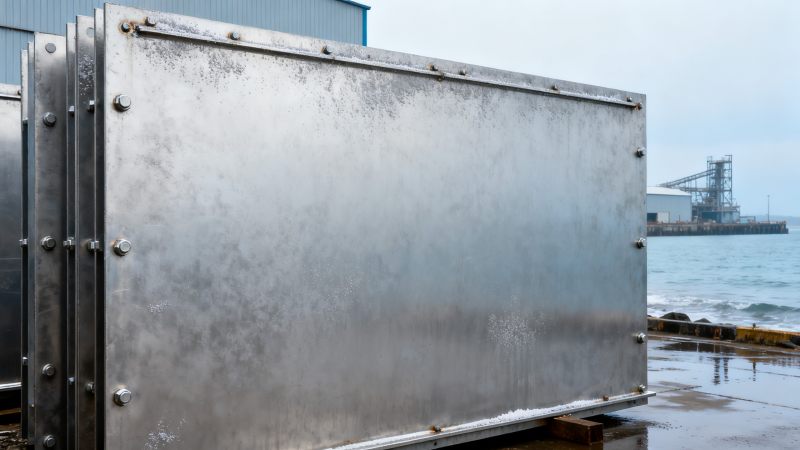
Coastal service is more aggressive than many project teams assume. Salt in the air can settle on exposed surfaces even 1 to 5 km inland, depending on wind direction, humidity, and seasonal storms. When relative humidity stays above about 60%, deposited chlorides dissolve into a thin electrolyte film. That film breaks down the passive layer that protects stainless steel metal plates, especially in corners, weld zones, and bolted joints.
Salt Deposition Is Small, but Its Effect Is Continuous
Maintenance teams often expect visible seawater splash to be the main risk. In reality, airborne salt is enough to trigger corrosion if cleaning intervals are too long. Even a light, repeated deposit can remain active for weeks. Once chlorides are retained under dust, packaging residue, or surface contamination, pitting can start at microscopic sites and spread downward before broad discoloration becomes obvious.
Typical high-risk retention points
- Plate edges and cut ends with incomplete finishing
- Lap joints, gasket lines, and folded sections
- Undersides of brackets and connection zones
- Weld heat-affected areas with rough or tinted surfaces
- Locations shaded from rain washing but exposed to humid air
Wrong Grade Selection Is a Frequent Hidden Cause
Not all stainless steels perform equally near the coast. In mild inland exposure, standard grades may remain stable for many years. In chloride-rich environments, however, selecting a lower alloy grade to save initial cost often shifts the burden to maintenance and replacement. Many early complaints about stainless steel metal plates are actually specification problems, not manufacturing defects.
For example, 304 and 304L are widely used because of their balance of cost, corrosion resistance, machinability, and availability. But if the installation is within direct marine influence, exposed to splash, or difficult to wash regularly, 316 or 316L may provide a more appropriate margin. Grade selection should be based on at least 4 factors: chloride level, cleaning frequency, surface finish, and crevice severity.
The table below shows how common coastal stressors interact with stainless steel metal plates and what maintenance teams should inspect first during field diagnosis.
The key conclusion is simple: coastal failure is usually localized before it becomes widespread. That is why inspection should focus on interfaces, edges, welds, and sheltered surfaces rather than only the most visible face. Catching pitting in the first stage can prevent thickness loss that later requires section replacement.
The Most Common Reasons Stainless Steel Metal Plates Fail Early
When after-sales teams review a failed component, they should avoid treating all rust marks as the same problem. Early failure mechanisms differ in appearance, speed, and corrective action. A practical diagnosis usually involves 5 steps: identify the corrosion pattern, confirm the grade, inspect fabrication details, review cleaning history, and check contact with other metals or contaminants.
1. Pitting Corrosion from Chlorides
Pitting is one of the most damaging forms of localized attack in coastal service. It often begins as tiny dark points less than 1 mm in diameter, but the cavity can grow deeper than it appears on the surface. Stainless steel metal plates exposed to salt mist, stagnant moisture, or dirty runoff are especially vulnerable if regular rinsing is missed for several maintenance cycles.
2. Crevice Corrosion at Joints and Assemblies
Crevice corrosion develops where oxygen access is restricted, such as under gaskets, washers, overlap joints, or deposited debris. The danger is that the outer surface may still look acceptable while attack continues underneath. If plates are installed with poor drainage or tightly packed details, chloride concentration inside the crevice can become far more aggressive than on open surfaces.
3. Heat Tint and Inadequate Post-Weld Cleaning
Welding can reduce corrosion resistance if oxide scale, heat tint, or embedded iron is not removed properly. In coastal applications, these weld-adjacent areas often become the first visible failure points. Pickling, passivation, and clean finishing are not cosmetic steps; they directly affect whether the passive film reforms evenly after fabrication.
4. Surface Contamination from Carbon Steel Tools or Dust
Cross-contamination is a common workshop issue. Grinding dust, shared brushes, carbon steel pallets, or mixed storage can transfer free iron to stainless surfaces. The result may look like stainless corrosion, but the root cause is foreign contamination. For maintenance teams, this distinction matters because the remedy may be cleaning and contamination control rather than full material replacement.
5. Poor Maintenance Planning After Installation
Many installations fail early because cleaning frequency does not match exposure severity. In open inland conditions, washing every 6 to 12 months may be enough. In marine or industrial coastal zones, a 1 to 3 month interval may be more realistic, especially for sheltered surfaces. Once deposits remain in place through wet-dry cycles, corrosion risk rises sharply.
Field signs that require immediate follow-up
- Brown staining returning within 2 to 4 weeks after cleaning
- Pinpoint pits near welds, fasteners, or lower edges
- Rough surface texture where finish was previously smooth
- Corrosion concentrated only in shaded or enclosed zones
- Discoloration around mixed-metal contact points
How After-Sales Maintenance Teams Should Diagnose the Problem
A good diagnosis reduces unnecessary replacement and strengthens communication with procurement and engineering teams. Instead of replacing every affected plate immediately, maintenance staff should document the corrosion type, affected area percentage, structural criticality, and whether the damage is cosmetic, local, or load-related. This creates a repeatable basis for warranty review and future material upgrades.
Use a 4-Point Inspection Framework
The following framework helps maintenance teams assess stainless steel metal plates consistently across coastal sites. It combines visual inspection with basic verification of grade, fabrication, and environmental severity.
This table shows that diagnosis should move from symptom to source. If staining appears only on exposed surfaces, cleaning may solve the issue. If attack is concentrated in welds, crevices, or under attachments, maintenance must address fabrication and design details rather than surface appearance alone.
Document Before You Replace
A replacement decision should be supported by photos, location maps, service duration, cleaning records, and material traceability. At minimum, record 6 items: installation date, plate grade, finish type, corrosion location, nearby dissimilar metals, and environmental conditions. This documentation helps determine whether the problem came from exposure severity, maintenance gaps, or original specification errors.
Material and Product Choices That Reduce Repeat Failures
For many projects, the best corrective action is not simply switching to a more expensive alloy everywhere. A better approach is to match material type, thickness, finish, and fabrication method to the actual exposure zone. In mixed systems, maintenance teams should coordinate with suppliers that understand structural steel applications, international standards, and OEM requirements across multiple product categories.
In assemblies where stainless plates connect to piping, supports, or fabricated frames, selecting low-carbon stainless components can help reduce sensitivity around welding and heat-affected zones. A useful example is 304L Stainless Steel Pipe, which is designed with carbon content of ≤0.03% to address susceptibility to intergranular corrosion while retaining corrosion resistance, toughness, and machinability. Available in wall thicknesses from 0.5 mm to 50 mm, seamless outer diameters from Φ 3 mm to Φ1020 mm, welded outer diameters from Φ 6 mm to Φ630 mm, and lengths from 1000 mm to 12000 mm, it can support coordinated stainless system design in coastal and industrial projects.
For maintenance teams, the point is not to replace plates with pipe products, but to think in system terms. If one section of a stainless assembly uses ultra-low-carbon material with ASTM, EN, JIS, GB, AISI, or DIN-aligned production, while adjacent plate or support sections are underspecified, the weaker element will still determine service life. Consistent material planning across plates, pipes, and fabricated components is often the difference between a 2-year problem cycle and a stable long-term installation.
What to Ask Suppliers Before Reordering
- Which grade was supplied, and was it selected for marine atmosphere, splash, or sheltered exposure?
- What surface finish was delivered: pickling, sandblast, bright polished, or mirror polishing?
- Were welded areas pickled and passivated after fabrication?
- Can the supplier provide dimensional tolerance and standard compliance details?
- Were storage, packaging, and transport designed to avoid chloride or iron contamination?
Practical Maintenance Measures to Extend Service Life
Even when the installed grade is not ideal, service life can often be extended with disciplined maintenance. The most effective actions are usually simple: more frequent rinsing, contamination control, removal of trapped deposits, and targeted treatment of high-risk details. For stainless steel metal plates in coastal facilities, a preventive program is usually less costly than recurring unplanned replacement.
Set Cleaning Intervals by Exposure Zone
A uniform maintenance schedule across all locations is rarely effective. Open surfaces washed by rain may need only quarterly inspection. Sheltered soffits, enclosed corners, and equipment housings may need monthly checks and cleaning every 4 to 8 weeks. If salt deposition is visible or the site is within direct sea wind, inspection frequency should increase during storm seasons.
Use the Right Cleaning Method
Fresh water rinsing is the first line of defense. Neutral detergent may be used for heavier deposits, followed by thorough rinsing and drying where practical. Abrasive carbon steel tools should never be used on stainless surfaces. If contamination is suspected, dedicated stainless brushes, non-chloride cleaners, and approved passivation methods should be considered based on the severity of the attack.
Correct Design Traps During Service Work
Maintenance teams can often prevent repeat failures by making small design corrections during repair. Adding drainage gaps, reducing overlap length, changing fastener isolation, or opening hidden crevices can significantly lower corrosion risk. These changes are especially valuable when full material replacement is not immediately possible due to shutdown limits or budget controls.
Three practical priorities for site teams
- Clean and inspect before the corrosion becomes deep and localized.
- Verify grade and fabrication quality before blaming the environment alone.
- Coordinate with a steel supplier that can support both standard and customized structural components.
For global buyers and service teams, working with an experienced structural steel manufacturer matters because corrosion performance is influenced by more than raw material chemistry. Hongteng Fengda supports construction, industrial, and manufacturing projects with angle steel, channel steel, steel beams, cold formed steel profiles, and customized structural steel components produced under strict quality control and major international standards such as ASTM, EN, JIS, and GB. This kind of supply capability helps reduce sourcing risk, improve consistency, and support better maintenance outcomes over the full project cycle.
Early failure in stainless steel metal plates used near the coast is usually a combined result of chloride exposure, moisture retention, grade mismatch, fabrication detail, and inadequate upkeep. After-sales maintenance teams can reduce repeat incidents by inspecting the right locations, documenting corrosion patterns, adjusting cleaning intervals, and aligning replacement decisions with actual service conditions. If you need support with structural steel selection, customized components, or corrosion-aware material planning for coastal projects, contact us now to discuss your application, request product details, or get a tailored solution.
Please give us a message


Please enter what you want to find