Is ss pipe for water supply the right choice for modern projects? From corrosion resistance and hygiene to pressure performance and compliance, stainless steel pipe specifications play a key role in safe plumbing decisions. For buyers, engineers, and contractors comparing galvanized pipe for plumbing or evaluating long-term value from a carbon steel manufacturer, understanding material suitability is essential before selecting the best solution.
Why water supply scenarios require different material decisions
The safety of SS pipe in water supply systems cannot be judged with a simple yes or no. In practice, the right answer depends on the application scenario, water quality, pressure range, installation environment, project life cycle, and maintenance expectations. A residential apartment riser, a food processing line, and an outdoor industrial utility network may all carry water, but they do not place the same demands on piping materials.
For project teams, the first question is usually not whether stainless steel is good, but whether it is appropriate for a specific duty over 10, 20, or even 30 years of service. Water chemistry may vary from soft municipal water to chloride-rich groundwater. Operating pressure can range from low-pressure indoor plumbing to higher-load pumping systems. Temperature may stay near ambient or fluctuate in hot water loops between 50°C and 80°C.
That is why material selection should be made by scenario. Stainless steel pipe is widely considered safe for water supply when the grade, wall thickness, joining method, and installation quality match the actual service conditions. Problems usually come from mismatch: the wrong grade for chlorides, poor welding practice, contamination during handling, or cost-driven substitutions without technical review.
Key factors that change the answer
- Water type: potable water, softened water, groundwater, industrial process water, or reclaimed water.
- Chemical exposure: chloride level, cleaning chemicals, and disinfection methods.
- Pressure and temperature: typical building systems may differ greatly from plant utility lines.
- Installation environment: indoor concealed piping, exposed rooftop runs, buried sections, or coastal sites.
- Ownership goals: lowest initial cost versus lower maintenance cost over a 15–25 year period.
For procurement and technical evaluation teams, this scenario-based approach also helps avoid false comparisons. Comparing SS pipe only against galvanized pipe for plumbing on purchase price is incomplete. The more useful comparison includes replacement frequency, leak risk, scaling behavior, labor method, and compatibility with code or customer requirements.
Typical water supply applications and where SS pipe fits best
In many projects, stainless steel pipe is selected because it offers a practical balance of corrosion resistance, hygiene, mechanical reliability, and service life. However, its suitability varies by end use. The table below outlines common water supply scenarios and what decision-makers should review before approving SS pipe for the system.
The most suitable scenarios are usually those where long-term cleanliness, corrosion resistance, and reduced maintenance justify a higher initial material cost. In facilities with strict shutdown costs, even one avoided leak event over 5–10 years can change the total ownership calculation. This is why SS pipe is common in healthcare, hospitality, premium building systems, and selected industrial water lines.
Scenario 1: Residential and commercial buildings
For apartments, hotels, offices, and mixed-use buildings, SS pipe is generally safe for potable water when designed and installed correctly. It performs well in risers, equipment rooms, and visible service zones where owners want durability and a neat finish. In these projects, pressure ranges are often moderate, but service expectations are long, commonly 15–30 years before major renovation.
The key value here is not only corrosion resistance but system stability. Compared with galvanized pipe for plumbing, stainless steel can reduce internal rust formation and lower the risk of water discoloration over time. This matters for commercial properties where complaints, shutdowns, and maintenance access can become expensive faster than the pipe purchase cost suggests.
However, buyers should still verify grade selection, local code acceptance, and installer capability. A quality material can underperform if cut with contaminated tools, welded without proper cleaning, or connected incorrectly to dissimilar metals. For multi-story projects, basic details such as support spacing and expansion planning also affect safe long-term use.
Scenario 2: Hygiene-sensitive facilities
In hospitals, laboratories, food plants, beverage facilities, and clean production areas, SS pipe is often favored because the internal surface is easier to keep clean and is less prone to corrosion products entering the water stream. Even when the system is not a high-purity line, management teams often prefer materials that support more controlled sanitation outcomes.
In this scenario, safety means more than mechanical safety. It also includes water quality protection, lower contamination risk, and easier verification during inspections. For example, where cleaning cycles occur weekly or monthly, the pipe surface condition and weld quality may influence the practicality of sanitation far more than the nominal pipe schedule alone.
This is also where fabrication discipline becomes critical. Surface damage, iron contamination from carbon steel tools, and poor passivation can compromise expected performance. So, yes, SS pipe can be very safe here, but only when supply chain control and installation quality match the hygiene requirement of the facility.
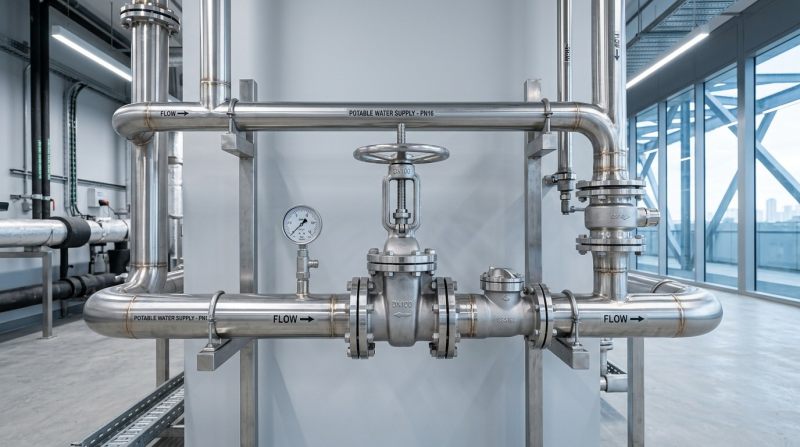
Scenario 3: Industrial and outdoor utility systems
Industrial water systems often involve a more complex decision. Outdoor exposure, variable pressure, chemical cleaning agents, and intermittent operation can all influence whether stainless steel is the best option. In some plants, SS pipe is excellent for treated water, washdown systems, and process support lines. In others, water chemistry may require extra caution, especially if chloride content is elevated.
The cost question is sharper in industrial projects because line lengths can be large and there may be multiple utility categories. Here, technical teams often compare stainless steel with coated carbon steel, galvanized pipe, or plastic systems depending on temperature, support conditions, and maintenance philosophy. A 200-meter utility run has different economics from a 20-meter equipment connection.
When industrial projects also involve steel support framing, buyers sometimes streamline sourcing by coordinating pipe infrastructure with structural components from one supply network. For example, support racks, machinery frames, and utility corridors may also use C-Shaped Steel because its high load-bearing capacity, accurate dimensional control, and corrosion-resistant finish support organized installation in manufacturing and warehouse environments.
How SS pipe compares with other common water supply materials
Many sourcing decisions come down to trade-offs rather than absolute superiority. Stainless steel is often safe and durable, but project teams still need a practical comparison with alternatives. The next table focuses on common decision points used by engineers, purchasers, and project managers during early material evaluation.
This comparison shows why stainless steel is often chosen where water quality appearance, reliability, and service continuity matter. It also explains why not every project automatically uses SS pipe. On short-life systems or highly price-sensitive infrastructure, other materials may still be selected. The correct choice depends on the cost of failure, the expected operating period, and the environment around the line.
Where stainless steel usually delivers the best value
- Buildings where owners want lower maintenance over a 10–20 year operating horizon.
- Projects where water cleanliness and visual quality at outlets are important.
- Facilities where downtime from leaks would disrupt operations or compliance.
- Installations exposed to humid indoor environments where corrosion risk is persistent.
By contrast, if the system is temporary, non-critical, or easy to replace, the business case for stainless steel may be weaker. This is why procurement and finance teams should ask for a life-cycle view instead of a unit-price view only. A low-cost pipe that needs earlier replacement can become the more expensive option once labor, shutdown, and inspection costs are included.
A note on structural integration
Water supply systems are rarely standalone decisions. In industrial or prefabricated projects, support channels, skids, and modular frames also influence installation speed and durability. Products such as C-Shaped Steel are often used in construction frameworks, renewable energy infrastructure, storage racks, and equipment housings because they combine lightweight handling with robust structural support and compatibility with galvanized, painted, or hot-dip finishes.
What technical teams should verify before approving SS pipe
Even when stainless steel is suitable in principle, safety still depends on disciplined review. Technical evaluators, quality teams, and project managers should confirm several checkpoints before procurement approval. These checks are especially important for large-volume orders, OEM systems, or export projects requiring compliance with ASTM, EN, JIS, or GB related specifications.
One common mistake is focusing only on nominal size and price. In reality, SS pipe safety for water supply is influenced by grade, schedule or wall thickness, joining process, surface cleanliness, pressure rating, and compatibility with valves and fittings. A mismatch in any one of these areas can undermine the expected benefit of a premium material.
The review process below is useful for both new construction and retrofit work. It helps teams align technical suitability with commercial practicality and delivery planning, especially where the lead time target may be 3–6 weeks for standard items and longer for custom fabrication.
Practical approval checklist
- Confirm water chemistry, including chloride level, pH range, and treatment method if known.
- Match the pipe grade and wall thickness to operating pressure, temperature, and service life target.
- Review joining method: welded, threaded, grooved, or press-fit, depending on the project standard.
- Check compatibility with fittings, supports, insulation, and dissimilar metal interfaces.
- Verify fabrication cleanliness, handling, packaging, and surface protection requirements.
- Ask for applicable standard references, dimensional tolerance, and inspection documents before shipment.
For quality and safety personnel, it is also wise to define acceptance criteria before installation starts. That may include visual weld inspection, hydrostatic testing, flushing procedure, and records of installation materials used on site. These controls are often more valuable than debating material choice after the order is already placed.
Common misjudgments when deciding if SS pipe is safe
Most failures linked to stainless steel water systems are not caused by the idea of using stainless steel itself. They usually result from assumptions made too early in the project. Teams may assume all stainless grades behave the same, all water is mild, or all installers can handle stainless steel without process controls. Those assumptions can lead to avoidable performance issues within the first 12–24 months.
Another common misjudgment is treating stainless steel as maintenance-free. While it is often lower maintenance than galvanized or unprotected carbon steel in many water supply applications, it still needs correct installation, sensible environment matching, and periodic system review. Outdoor splash zones, concealed wet areas, and chemical washdown locations should not be evaluated casually.
A third mistake is using only initial budget as the approval basis. For finance approvers, the better question is how pipe selection affects leak risk, service calls, refurbishment timing, and operational disruption. A material decision made for short-term savings can create long-term costs through shutdowns, tenant complaints, or water damage repairs.
Warning signs that require closer review
- The project uses groundwater or coastal water sources with uncertain chloride content.
- Pipe will be exposed to aggressive cleaning chemicals or dissimilar metal contact points.
- The installer has limited experience with stainless steel welding or clean handling procedures.
- The specification lacks detail on standards, tolerances, test requirements, or surface condition.
When these warning signs appear, the right response is not necessarily to reject SS pipe. Instead, the project team should slow down the decision and request clearer technical confirmation. In many cases, a better grade choice, revised detail, or improved installation control is enough to keep stainless steel as a safe and cost-effective option.
How to make the right choice for your project
So, is SS pipe safe for water supply systems? In most well-defined building, commercial, hygiene-sensitive, and selected industrial scenarios, the answer is yes. It is widely used because it supports water quality, corrosion resistance, and reliable long-term operation. But it is safest when the decision is based on the real application rather than on assumptions or simple price comparison.
For owners, contractors, distributors, and procurement teams, the best path is to review the service environment, operating range, standard requirements, and installation method together. A good material choice should satisfy both technical and commercial goals: appropriate performance, manageable lead time, acceptable fabrication complexity, and predictable life-cycle cost over the years the system will actually be used.
Hongteng Fengda is a professional structural steel manufacturer and exporter from China, supplying reliable steel products and customized solutions for global construction, industrial, and manufacturing projects. With modern manufacturing facilities and strict quality control aligned with major international standards such as ASTM, EN, JIS, and GB, we support buyers who need consistent quality, stable production capacity, and dependable delivery planning.
Why choose us
If you are comparing material options for water-related infrastructure, equipment support systems, or broader steel supply packages, we can help you review specification details, structural integration needs, and sourcing efficiency. Our team supports global buyers with standard steel products and customized solutions for construction frameworks, industrial assemblies, and manufacturing projects.
Contact us to discuss parameter confirmation, product selection, delivery cycle planning, custom fabrication options, applicable standard requirements, sample support, or quotation communication. Whether your project is at the concept stage, technical evaluation stage, or commercial approval stage, a clearer specification review now can reduce sourcing risk and improve project execution later.
Please give us a message


Please enter what you want to find