Choosing galvanized steel wire for fencing may seem straightforward, but coating mistakes can quickly lead to rust, weak performance, and higher replacement costs. For installers and operators, understanding these common coating issues is essential to ensuring fence durability, safety, and long-term value in demanding outdoor environments.
Why Coating Problems Matter in Different Fencing Scenarios
Not every fence works in the same environment. A livestock fence in a humid field, a perimeter barrier around a warehouse, and a roadside protective fence all place different demands on galvanized steel wire for fencing. Operators often focus on wire diameter, tensile strength, or installation speed, yet coating quality is what decides how long the wire can resist corrosion once it faces rain, mud, chemicals, fertilizer residue, salt, or repeated abrasion.
This is why coating mistakes are rarely just a material issue. They become an application issue. In one scenario, a thin zinc layer may lead to early rust spots. In another, poor adhesion may cause flaking when the wire is bent during installation. In high-contact environments, a damaged coating can expose bare steel and shorten fence life far earlier than expected. Understanding these differences helps users choose more suitable galvanized steel wire for fencing instead of relying on general assumptions.
Where Galvanized Steel Wire for Fencing Is Commonly Used
Before discussing mistakes, it is useful to break the topic into real operating environments. Each setting changes how you should judge coating quality, coating thickness, and handling requirements.
For users and field operators, the lesson is clear: galvanized steel wire for fencing should be selected according to service environment, not just price or standard diameter.
Common Coating Mistakes That Reduce Fence Life
1. Choosing the wrong galvanizing level for the site
One of the most common mistakes is using a light zinc coating in a harsh outdoor environment. In dry inland conditions, standard galvanized steel wire for fencing may perform acceptably. But in wet agricultural zones, near coastal air, or where fertilizers and chemicals are present, a light coating can fail much faster than expected. Operators should ask for zinc coating mass, not only product name or visual description.
2. Confusing bright surface with good corrosion resistance
A smooth or shiny surface does not automatically mean the coating is thicker or more durable. Some buyers judge wire quality by appearance alone, especially when receiving mixed batches. However, corrosion resistance depends on coating weight, uniformity, and adhesion. A fence wire that looks clean at delivery can still rust early if the zinc layer is thin or uneven.
3. Ignoring coating damage during transport and installation
Even high-quality galvanized steel wire for fencing can lose performance if dragged across rough ground, sharply bent with poor tools, or tied too tightly during installation. Scratches and impact marks often become the first corrosion points. This issue is especially serious for long field runs where crews work quickly and handling discipline is inconsistent.
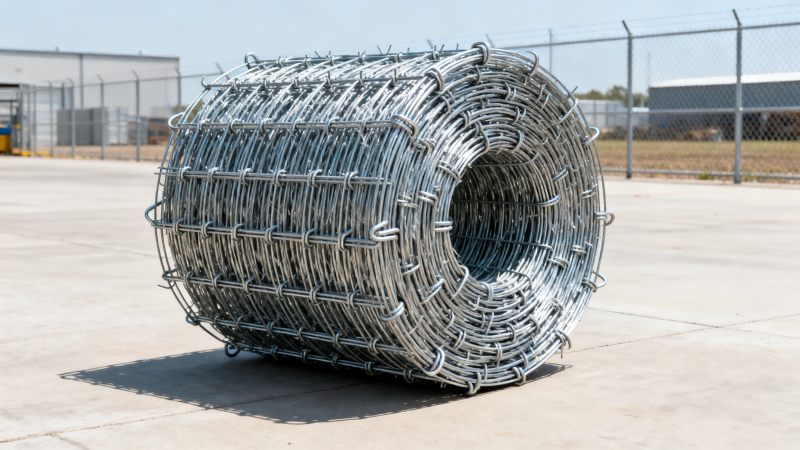
4. Overlooking adhesion problems on bent or tensioned wire
Fence wire is rarely left untouched after production. It is stretched, woven, knotted, stapled, and sometimes re-bent in the field. If the galvanizing layer does not bond well to the base steel, cracking or peeling may appear around bends. This is why ductility and coating adhesion matter just as much as thickness in practical fencing applications.
5. Neglecting cut ends, joints, and fastener contact points
In many installations, the main wire remains protected while corrosion begins at cut ends, twisted joints, staples, clips, or welded points. These local weak areas are often ignored during planning. For operators, this means inspection should not stop at the coil surface. The full system must be checked wherever the coating may be disturbed during assembly.
How Coating Priorities Change by Use Case
The right choice of galvanized steel wire for fencing depends on what the fence is expected to do every day. Different settings create different risk patterns.
Agricultural fencing
For farms, abrasion from animals and prolonged moisture are key concerns. A coating that looks acceptable in storage may wear down quickly where cattle or sheep regularly push against the wire. Here, users should prioritize enough zinc coating, stable tensile behavior, and resistance to coating loss at knots and staples.
Industrial and warehouse perimeter fencing
In industrial compounds, the fence may face infrequent maintenance, vehicle contact, airborne pollutants, and security-related repairs. Coating uniformity becomes important because weak spots may not be noticed until corrosion spreads. Buyers in these environments should also check whether adjacent steel components, posts, and brackets provide compatible corrosion protection.
Public infrastructure and transport projects
Road, bridge, and transport fencing often sees vibration, repeated temperature changes, and long exposure cycles without replacement. In such cases, galvanized steel wire for fencing should not only resist rust but also keep its coating intact after installation tension and seasonal movement. Uniform production quality and traceable standards are more important than the lowest unit cost.
What Operators Should Check Before Accepting Wire on Site
To avoid coating-related failure, site teams should follow a simple practical checklist instead of relying on supplier claims alone.
- Confirm zinc coating specification or coating mass in the order documents.
- Inspect several coil sections for uniform color and visible bare spots.
- Check whether the wire flakes or cracks when bent within normal installation limits.
- Review packaging condition to identify transport damage before unloading.
- Make sure handling tools do not gouge the coating during stretching or tying.
- Protect cut ends and disturbed areas where the zinc layer may be broken.
These steps are simple, but they can greatly improve the service life of galvanized steel wire for fencing in daily operation.
A Related Material Perspective for Broader Steel Projects
Many fencing projects are part of larger structural or industrial works, where corrosion performance must be considered across multiple steel products rather than wire alone. For buyers who also source plate materials for frames, brackets, bearing parts, supports, or equipment bases, it is useful to work with a supplier that understands both structural application and material consistency. In such cases, Carbon Steel Plate Manufacturer solutions can support related needs in building frames, mechanical parts, vehicle chassis, pipe supports, bridges, storage tanks, agricultural equipment, and other fabrication scenarios.
For example, carbon steel plate grades such as A36, Q235, and S235JR are widely used where balanced mechanical properties, weldability, easy formability, and surface treatability are required. With carbon content of up to 0.22%, yield strength around 235MPa, tensile strength of 375 to 500MPa, and elongation of at least 26%, these plates fit many industrial fabrication tasks. When projects combine fencing, posts, brackets, and steel support components, consistency in standards such as ASTM, EN, JIS, and ISO helps reduce compatibility risk during procurement and assembly.
Frequent Misjudgments in Real Purchase and Use Decisions
Assuming all galvanized wire is suitable for outdoor fencing
Some wire products are galvanized, but not optimized for demanding fence service. The word “galvanized” alone does not define thickness, process quality, or field durability. Always connect the product to the actual environment.
Comparing only by initial price
Low-cost wire can become expensive when repairs, downtime, and replacement labor are included. In large fencing runs, a small improvement in coating performance often creates major savings over time.
Ignoring the full fence system
Galvanized steel wire for fencing performs best when matched with properly protected posts, clips, staples, mesh components, and connection hardware. A durable wire cannot compensate for corroding accessories that fail first.
FAQ: Practical Questions from Users and Operators
How can I tell if coating quality is poor before installation?
Look for uneven surface appearance, exposed dark steel areas, powdery residue, peeling at bends, or obvious transport scratches. Also request coating data from the supplier instead of relying only on visual checks.
Is thicker wire always better than better coating?
Not always. A thicker wire with weak galvanizing can still fail early in corrosive conditions. The right balance depends on fence load, expected life, and environmental exposure.
When should I be more cautious with galvanized steel wire for fencing?
Be especially careful in coastal areas, wet farms, industrial zones with pollutants, and projects where maintenance is difficult. In these scenarios, coating quality has a stronger effect on total service life.
Choosing More Reliably for Your Own Project Scenario
The best galvanized steel wire for fencing is not simply the one with the lowest price or the brightest finish. It is the one whose coating performance matches the real service conditions of your site. For operators, that means paying attention to humidity, salt exposure, abrasion, bending demands, joint handling, and maintenance frequency before final selection.
As a structural steel manufacturer and exporter from China, Hongteng Fengda supports global construction, industrial, and manufacturing projects with reliable steel products, customized solutions, modern production capability, and strict quality control aligned with ASTM, EN, JIS, and GB standards. If your fencing project is part of a broader steel sourcing plan, evaluating wire performance together with related structural components can help reduce risk, control long-term cost, and improve project efficiency. The most effective next step is to define your application scenario clearly, confirm coating requirements in advance, and compare suppliers based on durability evidence rather than description alone.
Please give us a message


Please enter what you want to find