When comparing I beam vs H beam strength, the key question is how each section performs under bending, load distribution, and structural demand. For engineers, buyers, and project managers, understanding differences in shape, weight, and application can improve material selection, cost control, and safety. This guide explains which beam handles bending better and how to choose the right steel beam for construction and industrial projects.
What really changes bending strength in I beam vs H beam selection?
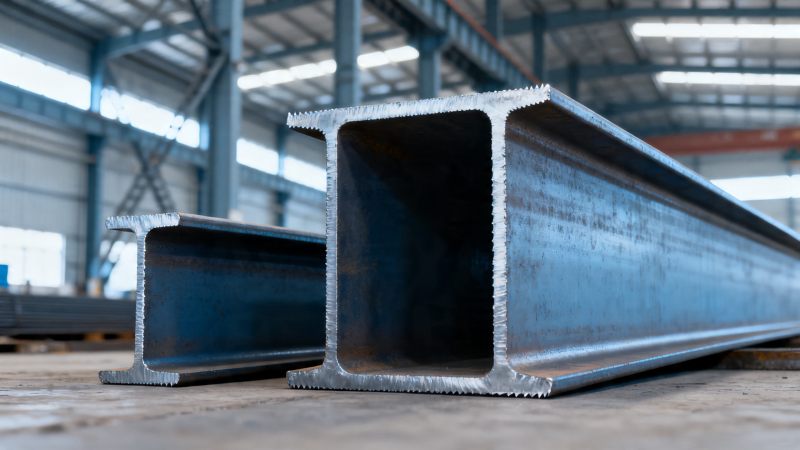
In practical steel design, bending strength is not decided by the name alone. The real difference between an I beam and an H beam comes from section geometry, flange width, web thickness, steel grade, span length, and support condition. Two beams may look similar in a catalog, but their resistance to bending can differ significantly once the section modulus and moment of inertia are compared.
As a rule, H beams usually perform better under heavy bending loads because they have wider flanges and a more balanced cross-section. This allows the material to be distributed farther from the neutral axis, which improves bending resistance. In many building frames, industrial platforms, and transfer structures, this wider geometry makes H beams a stronger option for long spans and high-load applications.
I beams still have value. They are often efficient in lighter structural systems, secondary framing, and projects where weight control matters. For short to medium spans, especially when load levels are moderate, an I beam can deliver sufficient strength with lower material use. The right answer depends on whether the beam is designed for primary bending, combined loading, or simply economical support.
For procurement teams and technical reviewers, the first 3 checkpoints are simple: confirm load direction, verify span range, and compare section properties instead of relying on shape labels. In many export projects, beam selection also has to match ASTM, EN, JIS, or GB dimensional systems, so cross-standard conversion is often part of the decision process.
Why shape matters under bending
When a beam bends, the top area goes into compression and the bottom area goes into tension. The more steel placed away from the centerline, the greater the beam’s ability to resist this stress pattern. That is why flange width and flange thickness strongly influence performance. H beams generally offer a larger bending section because both flanges are wider and more substantial.
The web mainly helps with shear transfer, while the flanges carry much of the bending stress. If a project involves high bending moments over spans of 6–12 meters or more, wider flanges often become more valuable than a narrow profile. This is especially relevant in warehouses, equipment supports, mezzanines, and steel building portals where uniform load and point load combinations are common.
Key factors engineers and buyers should compare
- Section modulus: a direct indicator of how well the beam handles bending stress under a given moment.
- Moment of inertia: critical for deflection control, especially over spans above 5–8 meters.
- Flange geometry: wider and thicker flanges generally improve bending resistance and stability.
- Self-weight and fabrication impact: lighter sections may reduce cost, transport load, and connection complexity.
The table below summarizes the most decision-relevant differences for users comparing I beam vs H beam strength in real purchasing and design situations.
This comparison shows why many engineers prefer H beams when bending is the controlling design factor. However, the strongest section on paper is not always the best commercial choice. Material cost, connection design, coating requirements, and delivery lead time must also be considered before final approval.
Which one handles bending better in real structural applications?
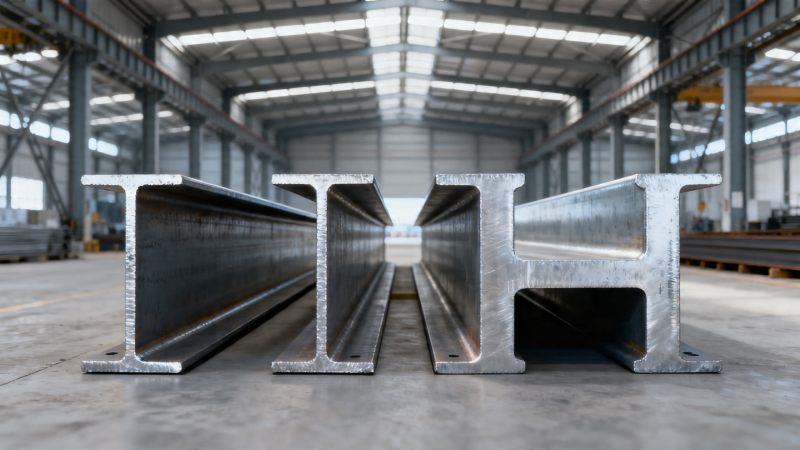
If the question is limited to bending performance alone, H beams usually handle bending better than I beams of similar depth because the flange arrangement gives them a larger bending capacity. This is most visible in structures with high live loads, machinery loads, or long unsupported spans. In these cases, better stiffness can also reduce visible sag and vibration concerns.
That said, actual beam performance depends on design data. A deeper I beam can outperform a smaller H beam if its section modulus is higher. This is why structural buyers should ask for section property sheets and not compare only by nominal height. A 200 mm section and a 200 mm section from different standards may not deliver the same bending behavior at all.
In industrial and commercial construction, beam choice often follows a 4-part evaluation: design load, span length, deflection limit, and fabrication method. For example, if a warehouse mezzanine requires tight deflection control under repetitive loading, the engineer may favor an H beam. If a lighter secondary member is needed for a shorter span, an I beam may be more cost-efficient without compromising safety.
Buyers also need to consider transport and installation. Heavier H beams can increase crane demand and freight cost, especially in export shipments. But if choosing an underperforming beam leads to extra stiffeners, more supports, or thicker connection plates, the apparent savings may disappear quickly during fabrication and erection.
Application-based judgment for beam selection
The best beam is often the one that balances structural performance and project economics. In practice, projects fall into 3 broad groups: light-duty framing, medium-duty building structures, and heavy-duty industrial systems. Each group places different emphasis on weight, stiffness, local buckling resistance, and installation efficiency.
For steel manufacturers and exporters, this distinction matters because global buyers often need not only standard beams, but also processing support such as cutting, hole punching, welding preparation, or OEM-based structural assemblies. Matching the beam type to the fabrication route can shorten procurement cycles by 7–15 days in some project schedules compared with reselecting materials after design review.
Where each beam is usually more practical
- I beam: often practical for medium loads, shorter spans, secondary support members, and projects where dead load reduction is beneficial.
- H beam: often preferred for major girders, column systems, industrial plants, bridge approaches, and equipment support structures with larger bending moments.
- Both can work: when the design team has accurate loading data and can compare section properties across ASTM, EN, JIS, or GB specifications.
The next table helps project teams compare beam choice according to typical use conditions rather than shape alone.
For design review meetings, this table can shorten debate by moving the discussion from names to actual performance. It also helps finance and procurement teams understand why a higher unit price for one section may still reduce total installed cost.
What should buyers, engineers, and project managers check before ordering?
A correct beam decision is rarely just an engineering issue. It is also a supply chain issue. Buyers need to verify dimensions, tolerances, steel grade, coating needs, fabrication readiness, and applicable standards. In export-oriented steel procurement, 5 key checks usually prevent the most common problems: section equivalency, load requirement alignment, standard compliance, processing scope, and delivery schedule.
This is where working with an experienced structural steel manufacturer matters. Hongteng Fengda supplies structural steel products including angle steel, channel steel, steel beams, cold formed steel profiles, and customized structural steel components. For overseas projects, that means one supplier can often support both standard beam supply and coordinated OEM processing under ASTM, EN, JIS, or GB related requirements.
Procurement teams should also look beyond the beam itself. Construction and industrial projects frequently need related lifting, hoisting, or load-handling components. In some project packages, buyers source beams together with wire rope systems for cranes, elevators, drilling, or marine-related applications. When these packages are coordinated early, it becomes easier to manage lead times, corrosion protection grades, and technical approvals across the full steel supply scope.
For example, mid-project buyers who also need wire rope products can review Galvanized Steel Wire Rope 1470Mpa to 1960Mpa for related industrial lifting and equipment applications. Available constructions include 6X7+FC, 6X19+IWR, and 8x19S+FC, with diameter ranges from 1.0 mm to 22 mm, and surface options such as plain, electro galvanized, and hot dipped galvanized.
A practical 5-point procurement checklist
Many procurement delays happen because the inquiry is too general. If the RFQ only says “I beam” or “H beam,” the supplier may still need several rounds of clarification. A better approach is to define load case, standard, quantity, finish, and processing requirements from the beginning. That can save 2–4 rounds of communication and reduce re-quotation risk.
- Confirm the section standard and equivalent designation. ASTM, EN, JIS, and GB beams are not always interchangeable by name.
- Request section property data, not just dimension drawings. Bending strength decisions require section modulus and inertia values.
- Define surface condition and environment. Indoor dry service, outdoor exposure, and corrosive industrial zones may require different treatment plans.
- Clarify whether processing is needed. Cut-to-length, drilling, welding preparation, and custom assemblies affect delivery and cost.
- Align inspection documents early. Mill test certificates, dimensional checks, and standard references should match the approval workflow.
If your project includes beam structures plus auxiliary steel products, it is useful to compare technical requirements side by side. The table below shows how different product categories are evaluated during project procurement.
This kind of side-by-side review helps project managers package inquiries more efficiently. It is especially useful when one project includes structural steel, lifting interfaces, and corrosion-related requirements within the same approval timeline.
Common mistakes, FAQs, and the safest way to choose
One of the most common mistakes in the I beam vs H beam strength debate is assuming that all H beams are stronger in every situation. In reality, strength must be verified by exact section data, steel grade, span, and loading condition. Another common error is focusing only on maximum load capacity while ignoring deflection, vibration, and fabrication constraints.
A second mistake is using domestic naming habits for international procurement. A buyer may request an “I beam” based on local terminology, while the project drawings are based on a different regional standard. This can create confusion in dimensions, flange shape, and equivalent section selection. For global sourcing, clear standard mapping is just as important as price comparison.
A third mistake is approving the cheapest section without reviewing total project cost. If a lower-cost beam causes more supports, more labor, or delayed approval, the project may spend more overall. In many cases, the best procurement decision is the one that reduces redesign, minimizes fabrication changes, and keeps delivery within the target schedule of 2–6 weeks depending on order scope.
The FAQ below addresses the questions most often raised by technical evaluators, purchasers, and project stakeholders before final beam selection.
Does an H beam always have higher bending strength than an I beam?
Not always. H beams often provide better bending performance because of wider flanges, but the final answer depends on exact section properties. A larger or deeper I beam may carry more bending than a smaller H beam. The correct comparison should use section modulus, moment of inertia, steel grade, and span condition rather than beam name alone.
Which beam is better for long-span steel structures?
For many long-span applications, H beams are favored because they usually provide better stiffness and bending resistance. This can help control deflection over spans such as 6–12 meters or longer, depending on design requirements. Still, long-span design must consider live load, point load, support layout, and connection behavior before confirming the final section.
What should procurement teams request from suppliers?
At minimum, request 4 groups of information: dimensional specification, section property data, steel grade or standard, and processing scope. If the beam will be exported, also confirm packing method, marking, inspection documents, and expected lead time. This information reduces the risk of ordering a beam that fits the drawing visually but not structurally.
Are I beams cheaper than H beams?
They can be, but not in every case. A lighter I beam may have a lower unit cost, yet the project may need more pieces, shorter spacing, or added reinforcement. H beams may cost more per ton or per piece, but they can reduce total structural complexity. The useful comparison is total installed cost, not only base material price.
Why work with Hongteng Fengda for structural steel sourcing?
For buyers comparing I beam vs H beam strength, the best supplier is one that can support both technical judgment and delivery execution. Hongteng Fengda is a professional structural steel manufacturer and exporter from China, supplying angle steel, channel steel, steel beams, cold formed steel profiles, and customized structural steel components for construction, industrial, and manufacturing projects.
Our advantage is not limited to product supply. We help customers align section selection with application needs, applicable standards, and project timelines. With modern manufacturing facilities and strict quality control, we support standard and OEM-based structural steel supply for buyers in North America, Europe, the Middle East, and Southeast Asia. This is important when your team needs stable production capacity, consistent quality, and dependable lead times instead of fragmented sourcing.
If you are evaluating whether an I beam or H beam is more suitable for bending performance, we can support the decision with section comparison, standard confirmation, fabrication suggestions, and export-oriented supply coordination. We can also discuss related steel products when your project includes multiple categories under one procurement package.
You can contact us for 6 practical topics: beam parameter confirmation, section selection by load case, steel grade and standard matching, custom processing scope, delivery schedule planning, and quotation support. If needed, we can also review sample requirements, surface treatment expectations, and documentation requests before order placement, helping your team reduce sourcing risk and move faster from inquiry to approval.
Please give us a message


Please enter what you want to find