Can an ASTM A106 Gr.B equivalent truly replace the original spec without affecting safety, performance, or cost? For buyers, engineers, and project managers, understanding ASTM A106 Gr.B specification, ASTM A106 Gr B mechanical properties, and ASTM A106 Gr B chemical composition is essential before selecting ASTM A106 Gr B pipe or alternative steel materials for demanding industrial and construction applications.
What does ASTM A106 Gr.B actually require before you consider any equivalent?
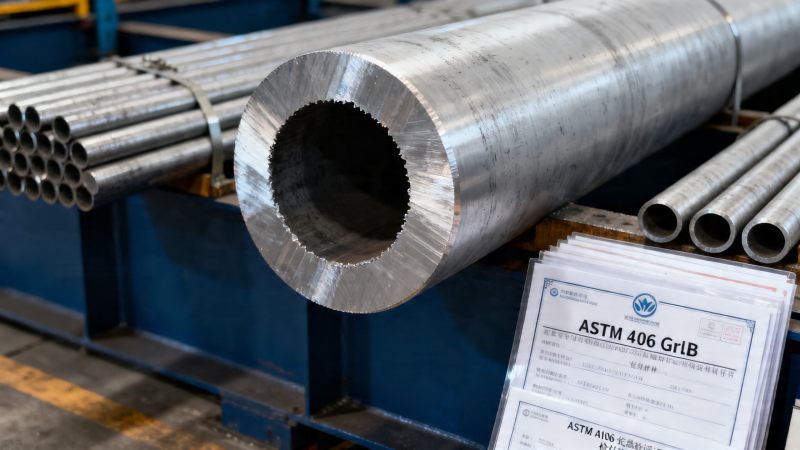
ASTM A106 Gr.B is widely used for seamless carbon steel pipe in high-temperature service. In practical procurement, many misunderstand “equivalent” as “close enough.” That is risky. A true replacement decision must start from the original ASTM A106 Gr.B specification, then move to service temperature, pressure level, manufacturing route, inspection scope, and project approval requirements.
For technical evaluators and quality teams, ASTM A106 Gr B mechanical properties are only one part of the review. Yield strength, tensile strength, and elongation matter, but so do heat treatment condition, dimensional tolerance, hydrostatic testing, NDT requirements, and traceability. In many industrial projects, 3 layers of review are common: design review, procurement review, and incoming inspection review.
For purchasers and financial approvers, the key question is not simply whether a lower-cost substitute exists. The real question is whether a substitute can pass compliance checks without causing rework, delayed approval, or site failure. A small unit-price difference can create a much larger cost impact if it leads to 2–4 weeks of engineering clarification or replacement.
In steel sourcing, especially for export projects across North America, Europe, the Middle East, and Southeast Asia, document consistency is often as important as material performance. Hongteng Fengda supports buyers by matching product supply with ASTM, EN, JIS, and GB standard expectations, helping reduce sourcing risk before orders move into production and shipment.
Core items that define ASTM A106 Gr.B beyond the grade name
- Seamless manufacturing requirement for pressure and elevated-temperature service.
- Chemical composition control, including carbon, manganese, phosphorus, sulfur, silicon, and limits for specific elements.
- Mechanical property thresholds, typically including tensile strength and yield strength minimums.
- Testing and inspection scope, such as hydrostatic testing, flattening tests, bending tests, and marking requirements.
- Project-specific acceptance documents, often including MTC, heat number traceability, and dimensional verification.
How to compare ASTM A106 Gr.B equivalents without making a costly mistake
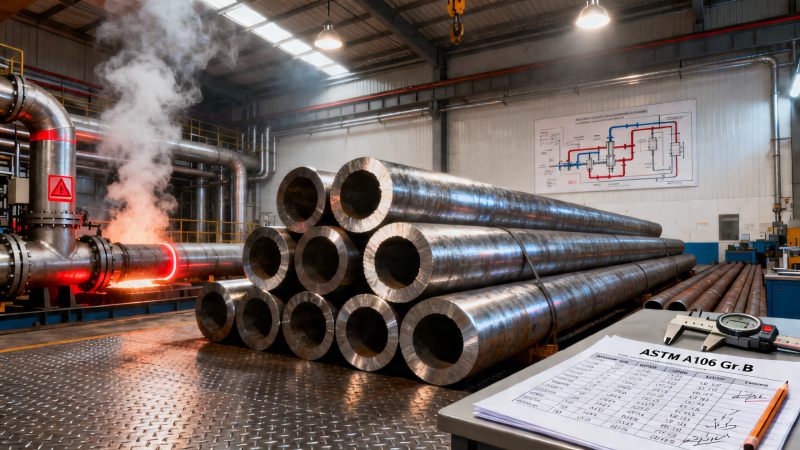
A material may look similar on paper but still fail as a direct substitute. Engineers usually compare 5 key areas: application scope, production process, chemical composition, mechanical performance, and code acceptance. If one of these mismatches the design basis, the material may be “similar” but not truly interchangeable with ASTM A106 Gr B pipe.
This is especially important in boiler systems, refineries, power plants, process pipelines, and industrial structural systems where temperature and pressure fluctuate. In these environments, a substitute must perform not only in a lab range but also under continuous operating conditions, startup cycles, shutdown cycles, and possible overload events over months or years.
The table below helps procurement teams and project managers compare decision factors before approving an equivalent to ASTM A106 Gr.B. It is not a code replacement, but it gives a practical screening framework that can be used during RFQ, technical clarification, and supplier qualification.
This comparison shows why substitution should never be decided by grade label alone. A procurement team may save 3%–8% on material cost but still lose more through engineering review delays, inspection rejection, or shipment hold. A controlled comparison process is usually more economical than a fast but weak replacement decision.
Why “equivalent” often fails in real projects
The first failure point is assuming that similar tensile strength means full equivalence. In reality, design codes, owner specifications, and welding procedures can reject a material even when headline strength values look close. The second failure point is ignoring test and inspection requirements. The third is failing to check whether the substitute matches the original corrosion allowance, thickness tolerance, and fabrication method.
For distributors and traders, this is a frequent issue in cross-border supply. One market may accept a local standard conversion, while another project requires the exact ASTM callout with supporting certificates. That is why standard interpretation should happen before order confirmation, not after production starts.
In adjacent steel applications, buyers also compare alternatives based on forming and corrosion resistance rather than pressure service. For example, in roofing, cladding, or cold-formed fabrication, a product such as DX52D Galvalume Steel Coil may be selected for low-carbon steel formability, yield strength not exceeding 260 MPa, tensile strength of 300–360 MPa, elongation of at least 28%, and corrosion resistance that can outperform galvanized coating by 2 to 6 times in suitable environments. This highlights an important sourcing principle: the right substitute depends on the actual application, not just on nominal steel grade familiarity.
For manufacturing and construction buyers, this distinction matters. ASTM A106 Gr B pipe serves pressure and temperature duties, while other coated or formed steel products may serve enclosure, structural, or fabrication needs. Good sourcing decisions begin by separating service function into 3 categories: pressure-bearing, load-bearing, and corrosion-exposed forming applications.
What should buyers check in ASTM A106 Gr B mechanical properties and chemical composition?
When assessing a possible equivalent, engineers should review ASTM A106 Gr B mechanical properties and ASTM A106 Gr B chemical composition together, not separately. A material can reach a strength threshold yet still differ in weldability, toughness behavior, or process performance because of composition changes. This is one reason technical approval often takes 3–7 working days after documents are submitted.
For many projects, the most relevant checks are tensile strength minimum, yield strength minimum, elongation requirement, carbon content, manganese range, and impurity limits. These values influence fabrication, onsite welding, heat input control, and long-term operating reliability. They also affect whether QC teams can approve incoming material without extra testing.
The following table provides a practical review structure. Exact acceptance must still follow the current project specification, drawing notes, and applicable standard edition, but these checkpoints are useful for technical assessment meetings and supplier document review.
For project managers, this table also helps allocate responsibilities. Engineering checks design fit, procurement checks supply consistency, and QC checks documentation and incoming material. That 3-part coordination is often the difference between a smooth delivery cycle and a site-level dispute after arrival.
A practical 4-step screening method
- Confirm whether the original callout is mandatory or whether approved substitution is contractually allowed.
- Compare service condition, including temperature, pressure, media, and fabrication method.
- Review mechanical properties, chemical composition, and testing records line by line.
- Obtain written approval from the design authority, EPC, or end user before purchasing.
This process may add several review days, but it often prevents much larger delays later. For urgent projects with lead times of 2–6 weeks, this front-end discipline protects both schedule and budget.
When does an equivalent make sense, and when should you avoid replacement?
An equivalent may make sense when the design permits alternatives, the service is not highly critical, supporting documents are complete, and the substitute has already been accepted in similar applications. It may also be reasonable when supply pressure is high and the original spec has an unusually long procurement cycle, such as 4–8 weeks compared with a faster local or regional option.
Replacement should be avoided when the line is safety-critical, when owner documents specify exact ASTM compliance, or when there is no clear test record and approval path. It should also be avoided when the project involves third-party inspection, insurance-linked review, or high accountability environments such as energy, petrochemical, or public infrastructure systems.
For business evaluators and decision-makers, the decision is often a balance of 4 factors: direct material cost, approval time, risk exposure, and delivery certainty. A cheaper substitute that creates uncertainty in one of these areas is not always a better buying decision. This is why experienced exporters provide not only product supply but also technical clarification support during pre-order discussion.
Hongteng Fengda works with global buyers who need standard structural steel products, cold formed profiles, and customized solutions. In many sourcing programs, buyers need more than a quote. They need cross-standard interpretation, specification review, and stable production planning so that engineering, purchasing, and finance can align before the PO is issued.
Typical risk signals before approving a substitute
- The supplier cannot clearly explain whether the product is seamless, welded, hot finished, or cold drawn.
- The MTC lacks heat number traceability or does not match the offered standard edition.
- Only mechanical values are shown, while chemical composition and test scope are incomplete.
- The proposed equivalent is justified only by “market common practice” without written owner approval.
- Lead time seems unusually short, such as 5–7 days for a specification that normally requires broader document review and production planning.
Procurement advice for different roles
Operators and end users should focus on service safety and fit-for-use. Technical reviewers should focus on standard equivalence and fabrication impact. Procurement teams should compare delivery, certificates, and total landed cost. Finance teams should ask whether a low initial price could create hidden approval, inspection, or replacement costs later in the project cycle.
Distributors and agents should also check resale market acceptance. A technically similar product may still move slowly if local buyers insist on the original ASTM A106 Gr.B specification. In that case, inventory risk matters just as much as purchase price.
FAQ and next-step guidance for buyers, engineers, and project teams
The questions below reflect common concerns from information researchers, procurement teams, quality managers, and project decision-makers. They also help narrow the gap between specification language and real purchasing action.
Can ASTM A106 Gr.B equivalent be used in every project?
No. Use depends on contract terms, design approval, service condition, and inspection requirements. In some projects, substitution is possible after technical review within 3–7 working days. In others, the exact ASTM callout is mandatory and cannot be changed without formal owner approval.
What is the most overlooked issue when comparing alternatives?
The most overlooked issue is assuming mechanical strength alone is enough. In reality, ASTM A106 Gr B chemical composition, manufacturing method, testing records, and code acceptance all matter. A substitute can match one data point and still fail the full project requirement.
How should buyers handle urgent lead times?
For urgent demand, ask suppliers to provide 4 items early: available stock range, production window, certificate format, and any approved alternative route. This can shorten internal review time and avoid repeated clarification. A realistic lead time discussion is usually better than accepting a fast but non-compliant offer.
What documents should be requested before order approval?
At minimum, request the material test certificate, dimensional list, applicable standard reference, manufacturing description, and inspection scope. For more critical applications, also confirm traceability, heat number control, and whether third-party inspection is required before shipment.
Why work with Hongteng Fengda for steel sourcing and specification review?
Global buyers often need more than supply. They need a manufacturing and export partner that understands standard matching, delivery planning, and documentation control. Hongteng Fengda provides structural steel products and customized solutions supported by modern production capability and strict quality control, with familiarity across ASTM, EN, JIS, and GB frameworks.
For buyers comparing ASTM A106 Gr.B-related material options or adjacent steel solutions, we can help clarify 5 practical points before you commit: specification fit, product type, available size range, certification needs, and shipment timing. This reduces the chance of ordering the wrong material or losing time during approval.
If your project also involves corrosion-resistant formed steel for construction or fabrication, we can discuss options such as DX52D Galvalume Steel Coil , including width from 500–1500mm, thickness from 0.12mm–4mm, length from 100mm to 12000mm, and certifications such as ISO 9001, SGS, and BV based on supply scope. This helps buyers consolidate sourcing decisions across multiple steel categories.
Contact us for parameter confirmation, equivalent screening support, product selection, delivery cycle discussion, OEM customization, certification review, sample support, or quotation planning. If you share your drawing, standard callout, size list, and project schedule, our team can help you evaluate whether replacement is feasible and which steel solution best fits your commercial and technical objectives.
Please give us a message


Please enter what you want to find