Choosing the right API 5L pipe for oil or water service depends on pressure, corrosion, medium compatibility, and project standards. As a trusted structural steel manufacturer and exporter from China, Hongteng Fengda helps buyers compare API pipe, seamless steel tube, carbon pipe, and corrosion-resistant pipe options to improve safety, control costs, and ensure reliable performance in industrial and construction applications.
How should buyers judge API 5L pipe for oil service versus water service?
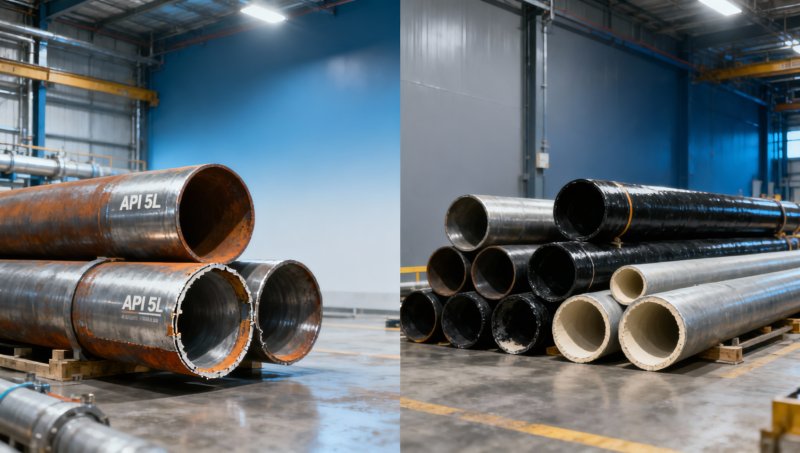
API 5L pipe is widely used for line pipe systems that transport oil, gas, water, and related fluids. However, the same grade does not automatically fit every medium. Oil service often involves higher pressure classes, stricter sour service concerns, temperature variation, and tighter welding control. Water service may place more attention on internal corrosion, coating choice, and long-term flow stability across municipal, industrial, or site distribution systems.
For procurement teams, the first practical question is not only “Is this API 5L pipe available?” but “What operating conditions will it face over 10–20 years?” Technical evaluators normally review 4 core factors: design pressure, transported medium, corrosion environment, and applicable project code. If one of these is ignored, the result may be over-specification with unnecessary cost or under-specification with avoidable risk.
Operators and project managers also look beyond the pipe body itself. They need to consider joint reliability, field weldability, inspection scope, and coating repair during installation. In many projects, delays are caused not by material shortage but by mismatched documentation, retesting, or coating damage found during site acceptance. That is why a steel supplier should support not only product delivery but also specification confirmation and quality alignment before shipment.
Hongteng Fengda supports global buyers with structural steel and customized steel supply experience across North America, Europe, the Middle East, and Southeast Asia. For customers comparing steel material options across industrial and construction projects, early communication on standards, dimensions, and lead time can reduce sourcing risk during the first 2–4 weeks of project planning.
What makes the service medium so important?
Oil service may include crude oil, refined products, multiphase fluids, or media containing sulfur compounds, sediment, or water. These conditions can change the required grade, toughness, and coating approach. Water service can range from raw water and cooling water to processed or chemically treated water, each with different corrosion and cleanliness expectations. The selection logic changes once chloride content, pH range, temperature, or pressure cycles increase.
- Oil pipelines often prioritize pressure containment, fracture resistance, and compatibility with welding procedures.
- Water pipelines often prioritize internal lining, external corrosion protection, and maintenance simplicity.
- Industrial mixed-service lines may require a balanced approach, especially when water carries chemicals or solids.
This is why the question “API 5L pipe for oil or water?” should always be answered by system conditions, not by product name alone.
Key comparison: where do oil and water pipeline requirements differ?
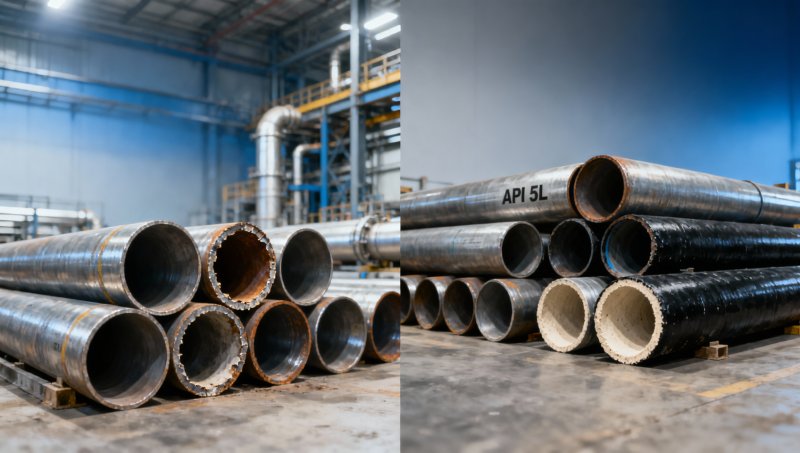
A clear comparison helps purchasing, finance, and engineering teams make faster decisions. In practice, the most common mismatch happens when buyers select by grade only, without checking wall thickness, manufacturing route, coating, and inspection requirements. The table below summarizes typical evaluation points for API 5L pipe in oil service and water service.
The comparison shows that API 5L pipe is suitable for both oil and water service, but the project specification must define the right combination of grade, process, and protection. In many industrial projects, the real cost difference comes from inspection scope and anti-corrosion treatment rather than from the pipe steel alone.
How do seamless steel tube and welded API pipe fit into the decision?
Seamless steel tube is often preferred where smaller diameters, higher pressure, or stricter mechanical reliability are required. Welded API pipe is commonly selected for larger diameters and cost-sensitive transmission systems. Neither choice is automatically better in all cases. Buyers should compare pressure class, outside diameter, wall thickness tolerance, and project inspection requirements over the full supply cycle of 3 stages: material confirmation, production control, and final shipment review.
In related construction and fabrication work, support structures also affect pipeline reliability. For pipe racks, equipment frames, and reinforcement around industrial utility lines, buyers often source structural items together with line materials. In such cases, Carbon Steel Angle can be integrated into framework, bracing, corner reinforcement, and steel structure applications, helping simplify procurement across one project package.
This product is available in equal or unequal shapes, with thickness from 0.8mm to 25mm, common lengths from 1m to 12m, and processing options such as hot rolled, cold drawn, bending, and welding. For project managers handling mixed steel procurement, combining line pipe evaluation with structural support planning can shorten sourcing coordination time by 7–15 days in many standard export schedules.
Typical selection checkpoints before placing an order
- Confirm medium details, including whether the line carries clean water, process water, crude oil, refined product, or mixed fluid.
- Check design temperature and pressure range, because these directly influence wall thickness and grade choice.
- Review coating, testing, and documentation requirements before production starts.
- Align shipping length, end preparation, and packaging with site installation needs.
What technical and compliance points matter most in steel pipe sourcing?
For technical evaluators and quality control teams, selection is rarely limited to material grade. They also review manufacturing standard, dimensional tolerance, heat treatment condition where applicable, end finish, and inspection records. API 5L is one important benchmark, but project documents may also reference ASTM, EN, JIS, or GB-related requirements for associated steel items, especially when a full construction package includes supports, frames, and connection components.
Hongteng Fengda works with buyers who require standard specifications as well as OEM-oriented steel solutions. This matters when a project needs both pipeline-related materials and structural steel items under a coordinated quality plan. Stable production capacity and consistent quality control help reduce common sourcing issues such as mixed dimensions, incomplete certificates, and shipment delays that can disrupt installation windows by 1–3 weeks.
The table below provides a practical compliance checklist that procurement and QA teams can use before approving a steel pipe order for oil or water service.
A disciplined checklist is especially useful when finance teams want cost control while project teams need dependable quality. It helps avoid hidden costs from re-inspection, rejected batches, coating rework, or urgent replacement purchases after site delivery.
Which standards usually appear in mixed steel procurement?
For line pipe, API-related requirements are often central. For associated structural steel used in supports and auxiliary systems, buyers may need compliance with ASTM, EN, JIS, or GB according to project geography and engineering practice. A supplier familiar with multiple standard systems can simplify communication between engineering, procurement, and site teams, especially on export projects where document review can take 5–10 working days.
- ASTM is frequently referenced in North American-oriented projects.
- EN is common in European and internationally harmonized specifications.
- JIS and GB may appear where regional supply chains or local design habits apply.
The main goal is not to collect more standards, but to ensure the supplied steel matches the actual approval path of the project.
How can procurement teams balance cost, lead time, and risk?
In real B2B purchasing, the best option is usually not the cheapest quotation and not the highest specification. It is the option that controls lifecycle risk within the project budget. For API 5L pipe, cost depends on grade, size, seamless or welded process, coating, inspection scope, quantity, and export packing. A low unit price can quickly become expensive if it creates welding difficulty, coating failure, or delayed customs documentation.
Buyers often divide projects into 3 quantity bands: small trial orders, medium recurring orders, and large project lots. Small volumes may prioritize availability and flexible packaging. Medium volumes typically focus on repeat consistency and delivery rhythm. Large volumes require stronger production planning, batch traceability, and shipping coordination, especially when lead times are tied to EPC milestones or civil installation schedules.
A practical sourcing strategy is to compare at least 5 dimensions before approval: technical suitability, unit price, coating cost, inspection cost, and schedule reliability. This comparison is especially important for distributors, agents, and project buyers who must manage both margin pressure and end-user expectations.
Common cost drivers buyers should not overlook
- Wall thickness changes can significantly affect total steel tonnage even when outside diameter stays the same.
- Internal lining or external anti-corrosion treatment may add meaningful cost but extend service life in aggressive environments.
- Shorter required delivery windows, such as 7–15 days, can limit manufacturing flexibility and increase freight pressure.
- Extra testing, third-party inspection attendance, and special packing all influence landed cost.
When buyers combine structural steel items with pipe-related materials, one coordinated supplier can also reduce communication layers, document duplication, and partial shipment risk. That is often valuable for project managers trying to keep installation crews active without idle waiting time.
A simple decision path for purchasing teams
- Define the service medium and actual operating condition first.
- Match the line pipe standard, size, and inspection scope to that condition.
- Add coating, delivery, and documentation requirements into the same inquiry.
- Review structural support materials together if the project includes racks, bracing, or equipment frames.
FAQ: practical questions before choosing API 5L pipe
Many searches around API 5L pipe come from users trying to shorten decision time while avoiding technical mistakes. The questions below address common concerns from engineers, purchasers, quality teams, and distributors.
Is API 5L pipe only for oil pipelines?
No. API 5L pipe is widely used for oil, gas, water, and other fluid transport systems when the project specification allows it. The key issue is not the name of the medium alone but the combination of pressure, corrosion exposure, temperature, and code requirements. Water lines in industrial plants may need a very different protection system from clean municipal water lines.
What should be checked first: grade or coating?
Grade should be checked together with service conditions, then coating should be selected based on corrosion risk. Choosing a higher grade without proper anti-corrosion treatment may not solve the actual problem. In many water projects, internal protection has a direct influence on maintenance frequency over the first 3–5 years of operation.
How long is a typical export supply cycle?
It depends on quantity, specification complexity, and inspection scope. For standard steel items, planning often begins with a 1–2 week confirmation stage, followed by production and shipment scheduling. More customized orders or combined steel packages may require longer coordination, especially when multiple dimensions, coatings, or OEM details are involved.
Can one supplier support both line-related steel and structural steel items?
Yes, and this can reduce procurement complexity. For industrial and construction projects, buyers often need line pipe together with angle steel, channel steel, beams, cold formed profiles, or customized steel components. Coordinated sourcing helps align documents, shipment batches, and quality communication across the full material package.
Why work with Hongteng Fengda for steel sourcing and project support?
For buyers comparing API 5L pipe options for oil or water service, the right partner should do more than quote a tonnage price. Hongteng Fengda supports global customers with standard and customized structural steel supply, stable production capacity, strict quality control, and familiarity with international standards such as ASTM, EN, JIS, and GB. This helps reduce sourcing uncertainty when projects involve multiple steel categories and tight delivery targets.
Our team can assist with parameter confirmation, product selection, structural support matching, delivery schedule discussion, OEM requirements, sample support, and documentation alignment for export orders. If your project includes oil service, water service, industrial utility lines, pipe rack structures, or fabrication-related steel packages, early technical communication can save time and lower revision risk before mass production begins.
You can contact us to discuss 6 practical topics: medium and service condition review, grade and dimension selection, coating and inspection scope, support steel integration, lead time planning, and quotation comparison. This is especially useful for procurement teams, engineering reviewers, project leaders, distributors, and financial approvers who need a clear basis for supplier selection.
If you are evaluating a current requirement, send your drawings, standard references, size list, quantity range, and target delivery window. Hongteng Fengda can help you review whether the planned API 5L pipe solution is more suitable for oil service, water service, or a mixed operating environment, while also coordinating related structural steel needs for a more efficient purchasing process.
Please give us a message


Please enter what you want to find