Understanding structural steel dimensions is becoming more important as projects demand tighter tolerances, faster sourcing, and better cross-border specification matching.
From angle steel to beams and custom profiles, dimensional clarity now affects cost control, compliance, fabrication efficiency, and long-term structural performance.
This guide explains how to read structural steel dimensions clearly, why dimension standards matter more today, and what details deserve closer attention before ordering.
Why structural steel dimensions are drawing more attention today
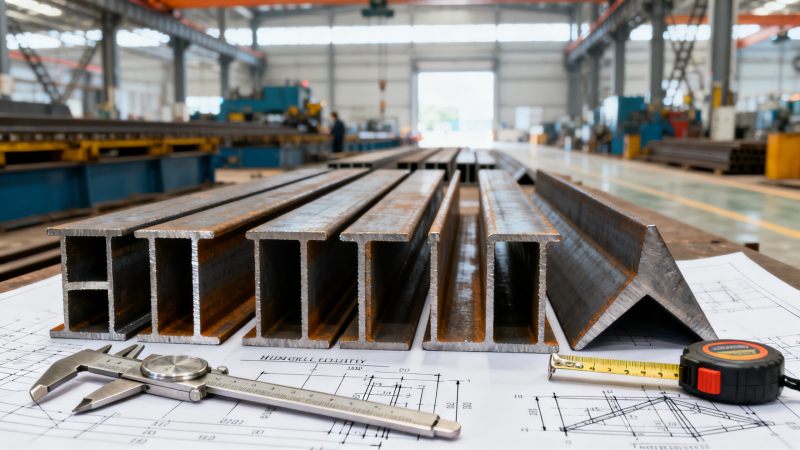
In the past, many projects focused mainly on steel grade and price. Today, structural steel dimensions have become a frontline decision factor.
Design files are more digital. Fabrication lines are more automated. International projects also rely on exact dimensional interpretation across ASTM, EN, JIS, and GB standards.
A small misunderstanding in flange width, web thickness, leg size, or length tolerance can delay installation and increase waste.
That is why structural steel dimensions are no longer just technical data. They are part of risk management and project coordination.
The market signal is clear: dimensions now affect more than fit
Current demand shows a shift from simple size confirmation to full dimensional evaluation.
Projects increasingly compare section properties, coating impact, tolerance range, and compatibility with downstream processing.
This trend is especially visible in construction, industrial frames, equipment supports, logistics facilities, and export-oriented fabrication orders.
What buyers are checking more often
- Nominal size versus actual measured size
- Section depth, width, and thickness combinations
- Length tolerance and straightness
- Corner radius and root radius
- Weight per meter and sectional area
- Standard equivalence between countries
What is driving the stronger focus on structural steel dimensions
How to read structural steel dimensions without confusion
The first step is knowing that each steel profile uses a different dimension logic.
For angle steel, the key values are leg size, leg thickness, and length. Equal and unequal angles must be identified correctly.
For channel steel, dimensions usually include section depth, flange width, web thickness, and flange thickness.
For I beams and H beams, buyers should check overall height, flange width, web thickness, flange thickness, and theoretical weight.
For cold formed profiles, structural steel dimensions often include formed radius, opening size, lip dimension, and custom punching positions.
The most important measurements to verify
- Depth or section height
- Flange or leg width
- Web thickness
- Flange thickness
- Length and cut tolerance
- Unit weight per meter
- Surface condition or coating thickness
A dimension sheet should never be read as numbers alone. It should be checked together with standard code, grade, tolerance, and application purpose.
Why related steel products are also measured by dimensional logic
The same trend affects other steel solutions used in lifting, mining, marine, and industrial systems.
For example, Galvanized Steel Wire Rope depends on clear diameter, construction type, tensile strength, and coating definition.
Typical constructions include 6X7+FC, 6X19+IWR, and 8x19S+FC, with diameter ranges from 1.0mm to 22mm.
Its normal tensile strength ranges from 1470Mpa to 1960Mpa, and coating options include plain, electro galvanized, and hot dipped galvanized finishes.
This shows a broader sourcing reality: dimensional understanding supports not only structural sections, but also steel components used beside them.
How dimensional misunderstandings affect project results
When structural steel dimensions are misread, the damage often appears later, not at quotation stage.
A beam with the wrong flange thickness may fail connection detailing. A channel with a different root radius may not match brackets or machine bases.
A custom profile with acceptable width but incorrect hole spacing may become unusable after shipment.
Typical impact areas
- Fabrication compatibility and nesting efficiency
- Connection accuracy during welding or bolting
- Transport loading and container planning
- Site installation speed and safety
- Final structural performance and inspection approval
Where international standards can create hidden dimension gaps
Many sourcing issues happen because similar profile names do not always mean identical structural steel dimensions.
An H beam under one standard may have a different flange thickness than a visually similar section in another standard family.
Theoretical weight can also differ due to radius details or dimensional tolerances defined by the standard.
Reliable suppliers reduce this risk by linking section drawings, mill standards, and inspection data before production begins.
Points that deserve extra checking
- Standard code and revision year
- Nominal versus actual tolerance values
- Section designation method
- Mass per meter calculation basis
- Coating or finishing impact on final dimensions
What should be reviewed before confirming an order
A strong review process helps prevent avoidable mistakes in structural steel dimensions.
- Match drawings with the exact profile standard.
- Confirm all critical dimensions and tolerances in writing.
- Check whether theoretical weight matches the referenced standard.
- Review downstream processes such as punching, welding, galvanizing, or assembly.
- Request section sketches for custom or substituted profiles.
- Clarify inspection method for dimension verification before shipment.
How reliable steel partners support clearer dimension decisions
As global projects become more specification-driven, supplier capability matters as much as material availability.
Hongteng Fengda, a structural steel manufacturer and exporter from China, supplies angle steel, channel steel, steel beams, cold formed profiles, and customized components.
With modern manufacturing facilities and strict quality control, its products align with major standards such as ASTM, EN, JIS, and GB.
That support is valuable when structural steel dimensions must be translated accurately for construction, industrial, and manufacturing applications worldwide.
A practical way to judge structural steel dimensions with confidence
The trend is clear: clearer structural steel dimensions lead to fewer project surprises and better sourcing results.
Instead of checking size at the last moment, review dimensions early with standards, tolerances, section properties, and fabrication needs together.
When every measurement is verified in context, steel selection becomes more accurate, more compliant, and more cost-effective.
If a project involves standard sections or custom steel components, the next practical step is to compare drawings with supplier dimension data before quotation and production.
Please give us a message


Please enter what you want to find