Accurately measuring a steel beam for industrial warehouse projects is critical—yet site supervisors frequently make avoidable errors that compromise structural integrity, cost control, and compliance. Whether you're using an I beam weight calculator for construction engineers, referencing a beams weight chart for steel manufacturers, or verifying I beam weight specifications for warehouse construction, precision starts with correct measurement methodology. This guide reveals the top measurement mistakes—from misreading flange dimensions to ignoring mill tolerances—and how Hongteng Fengda’s ASTM/EN-compliant steel beams help global buyers prevent them at source.
Why Measurement Errors Cost More Than Time
A single mis-measured steel beam can trigger cascading delays: rework, on-site cutting, mismatched connections, and even safety stoppages. For project managers overseeing multi-million-dollar industrial warehouses, these aren’t “minor field adjustments”—they’re schedule risks, budget overruns, and compliance red flags. Consider this: a 3mm tolerance error on a 12m I-beam may seem negligible—but multiplied across 480 beams in a logistics hub, it equals nearly 1.4 tons of unusable material and 170+ labor hours lost.
Worse, many errors go undetected until load testing—or worse, during commissioning. That’s why leading European contractors now require pre-delivery dimensional reports certified to EN 1090-2, not just mill certificates. And why forward-thinking distributors in North America are shifting from “price-first” sourcing to “precision-first” partnerships—with manufacturers like Hongteng Fengda who embed traceability into every heat lot.
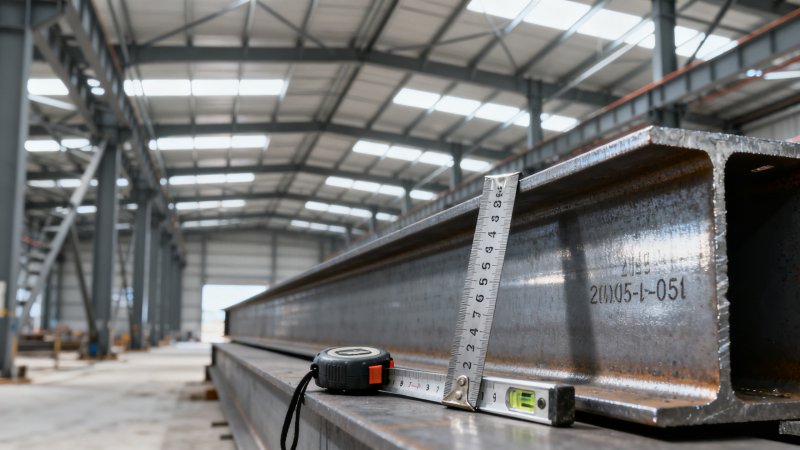
Top 5 Measurement Mistakes (and How to Avoid Them)
Based on field audits across 23 warehouse projects in Germany, UAE, and Vietnam, here are the most recurrent errors—and their proven countermeasures:
How Standards Shape Reliable Measurement
Measurement isn’t just about tools—it’s about alignment with international frameworks. ASTM A6 defines allowable variances for hot-rolled structural shapes: ±0.5mm on flange thickness, ±1.0mm on web thickness, and ±0.75° on squareness. EN 10034 adds stricter angularity controls—especially critical for automated bolt-hole drilling in high-bay warehouses.
That’s why Hongteng Fengda’s quality lab performs 100% dimensional inspection on all export-grade beams—using CMMs calibrated to ISO 17025 standards. Every coil batch of our S220GD Galvalume Steel Coil also undergoes thickness mapping via XRF + ultrasonic gauging, ensuring consistent coating mass (AZ30–AZ150 g/m²) and substrate uniformity—key for downstream cold-forming accuracy.
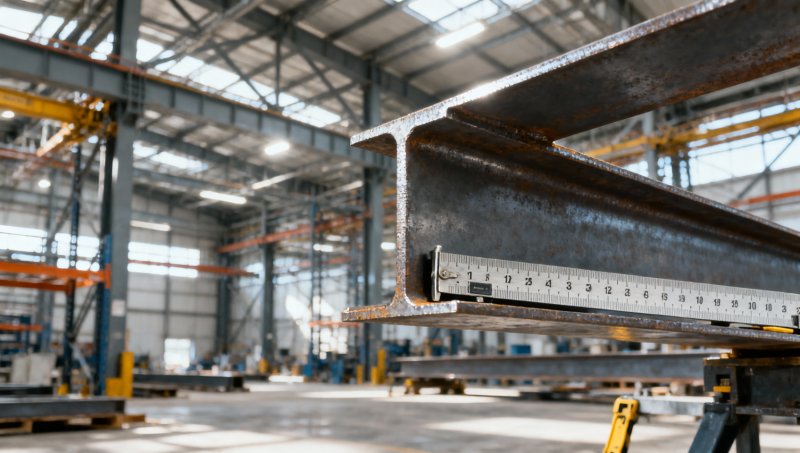
From Warehouse Floors to Bridge Decks: Context Matters
The methodology for how to measure a steel beam for industrial use differs significantly from how to measure a steel beam for bridge projects. Bridges demand fatigue-rated sections with tighter weld prep tolerances; industrial warehouses prioritize speed of erection and connection repeatability. Yet both rely on the same foundational principle: verify—not assume.
For example, a U.S.-based logistics developer recently switched from local fabricators to Hongteng Fengda’s pre-drilled, pre-galvanized beams. Their QA team reported a 63% drop in field-fit issues—because our beams ship with certified hole patterns aligned to AISC 360 Annex D, not just theoretical centers. That’s the difference between “weight of I beam in USA” as a number—and as a verified, install-ready asset.
Why Global Buyers Choose Hongteng Fengda
You don’t outsource structural steel—you partner for predictability. With 18 years of export experience, Hongteng Fengda delivers more than weight of I beam supplier in Europe compliance. We deliver:
- Real-time dimensional traceability: Scan QR codes on each bundle to access CMM reports, heat analysis, and EN/ASTM test summaries
- Multi-standard flexibility: Beams certified to ASTM A992, EN 10025-2 S355JR, JIS G3101 SS400—and custom grades like S220GD Galvalume-coated profiles
- Project-aligned logistics: Just-in-sequence delivery with warehouse-ready labeling (ISO/IEC 15420 compliant), reducing yard congestion by up to 40%
Whether you’re calculating load paths with an I beam weight calculator for construction engineers, auditing supply chain risk as a procurement director, or validating weld prep as a safety manager—Hongteng Fengda ensures your measurements begin with confidence, not compromise.
Ready to eliminate measurement-related rework? Contact our engineering support team today for free dimensional validation templates, EN/ASTM-compliant weight calculation sheets, and personalized beam specification reviews—backed by 100% factory-certified data.
- steel coil
- structural steel
- steel beams
- Structural Steel
- I-Beam
- Steel Beams
- Profile
- S355JR
- Galvanized
- Steel Beam
- weight of i beam
- i beam weight
- how to measure a steel beam
- beams weight
- How to measure a steel beam for industrial use
- Weight of I beam in USA
- I beam weight specifications for warehouse construction
- How to measure a steel beam for bridge projects
- Weight of I beam supplier in Europe
- Beams weight chart for steel manufacturers
- I beam weight calculator for construction engineers
Related recommendations
 Why Does Galvanized Pipe Corrode Over Time and When Should It Be Replaced?Galvanized pipe corrodes as its zinc coating wears away from moisture, chemicals, and age. Learn the warning signs, repair limits, and the right time to replace it.
 Common SS Pipe Welding Problems and How to Prevent ThemSS pipe welding problems can lead to leaks, corrosion, and costly repairs. Learn the main defects, warning signs, and practical prevention tips to improve weld quality and service life.
 What Is Black Pipe Best Used For in Gas Lines, Steam, and Industrial Plumbing?Black pipe is ideal for gas lines, steam, and industrial plumbing where strength and heat resistance matter. Learn when it fits best, where it fails, and how to choose wisely.
 Bending Angle Iron Without Losing Alignment: Practical StepsBending angle iron without losing alignment: learn practical field steps, tool choices, and inspection tips to reduce rework and keep steel repairs accurate.
Please give us a message


Please enter what you want to find