Selecting the right angle carbon steel is essential for ensuring strength, stability, and cost-efficiency in industrial projects. As a leading supplier of steel shelf angle, right angle sheet metal, and h shape steel solutions, Hongteng Fengda helps global buyers meet diverse structural demands. Whether you require an industrial i beam, h 20 beam, or customized steel h sections, understanding key specifications and application needs in 2024 will guide you to the most reliable and performance-driven option for your project. For engineers, procurement officers, and decision-makers facing evolving construction standards and sustainability goals, identifying the correct steel grade and section type can make a significant difference in performance and lifetime cost management.
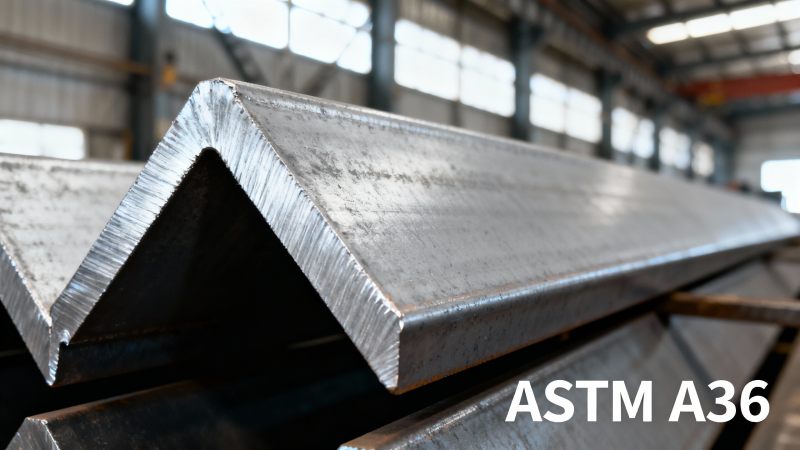
Key Considerations When Selecting Angle Carbon Steel for Industrial Projects
Choosing the proper angle carbon steel begins with understanding the mechanical properties that define its performance. Carbon steel, depending on its composition and heat treatment, offers varying levels of tensile strength, flexibility, and weldability. For instance, medium carbon steels deliver an excellent balance of toughness and ductility, ideal for structural applications like bridges, industrial buildings, and machinery frames. High-carbon steels, on the other hand, provide greater hardness and strength but can be more challenging to weld and bend. In industrial design, the structure’s load-bearing capability, environmental conditions, and fabrication process play a decisive role in selecting the correct material.
Engineers must assess the required yield strength and tensile capacity when designing with steel shelf angle or right angle sheet metal. A typical industrial i beam or h shaped steel beam used in heavy-duty projects must meet standards such as ASTM A36 or EN10025 S355. Compliance ensures that the steel resists deformation and fatigue stress under dynamic loads. Moreover, product certification is another indicator of reliability. At Hongteng Fengda, all structural steel, including h metal beam and steel h sections, adhere to ASTM, JIS, GB, and EN standards. This compliance allows buyers to optimize procurement, ensuring material performance consistency and safety compliance.
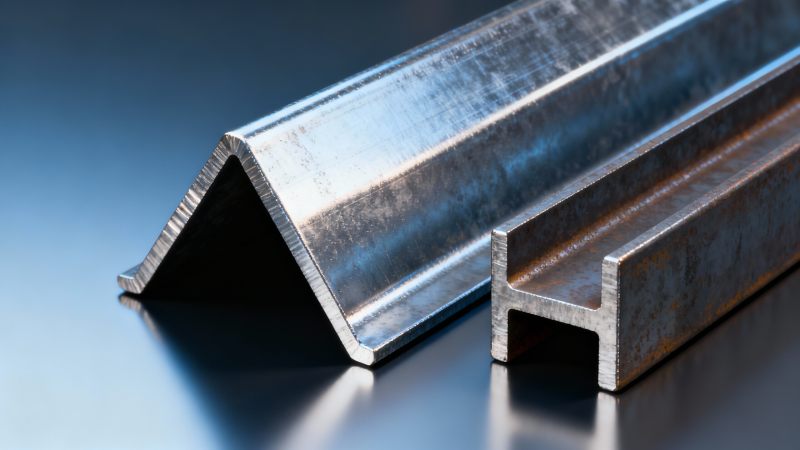
One often overlooked factor is the angle type’s geometry. The leg length and thickness ratio affect how the angle resists bending and twisting. For heavy structural applications, equal angle carbon steel is often preferred due to balanced load distribution, while unequal angles are widely applied in tri-support frameworks or reinforcement designs. Selecting the correct section size based on the design drawing and expected load will improve efficiency during installation and enhance overall stability under pressure and vibration.
Advantages of Using High-Quality h Shape Steel and Industrial i Beams
In the construction of factories, bridges, and infrastructure, h shape steel and industrial i beam components are indispensable. Their symmetrical design and parallel flange surfaces make them ideal for carrying both bending and shear loads. An h shaped steel beam offers superior mechanical properties thanks to uniform internal stress distribution, allowing engineers to reduce weight while maintaining structure integrity. Furthermore, their high dimensional precision reduces fabrication tolerances and accelerates onsite assembly, saving costs for labor and transportation.
When compared with other sections, the h 20 beam provides remarkable versatility because of its strong compression capacity and adaptability to composite structures. Hongteng Fengda serves as a trusted supplier i beam source, offering a comprehensive range of h steel products for offshore platforms, warehouse roofing, high-rise frameworks, and energy industry components. Whether produced as hot-rolled or cold-formed profiles, the controlled production process ensures smoother surfaces, consistent thickness, and superior weldability. Selecting an experienced manufacturer guarantees high repeatability of mechanical performance, especially for cross-continental projects where consistent specifications across batches are crucial.
The arrangement of h metal beam and steel h sections contributes significantly to a project’s energy efficiency. Lightweight yet strong frameworks minimize material consumption, while their compatibility with modern connection systems like bolted or welded joints accelerates construction phases. Choosing sustainable steels also aligns with global green construction trends, easing certifications like LEED and BREEAM. In 2024, more buyers are expected to prioritize low-carbon steel sourcing, improving lifecycle performance and compliance with environmental regulations in major industrial zones.
Understanding Technical Parameters and Processing Options
Technical parameters define how angle carbon steel behaves in practice. Properties such as tensile strength, yield point, and elongation rate determine its ability to endure mechanical stress. Equally important are surface treatment and post-processing options. Galvanization is one of the most effective ways to enhance resistance to environmental damage. For example, the Galvanized Round Steel manufactured by Hongteng Fengda undergoes hot-dip galvanizing, providing excellent anti-corrosion performance suitable for outdoor and marine environments.
This product features diameter options from 16 to 250 mm and meets ISO h8–h9 tolerance grades. With a tensile strength between 570–820 MPa, it is applicable in electric power towers, railway systems, and street light poles, while also fitting precision sectors like optical fiber connectors, medical devices, and automotive components. Its multiple heat treatment methods—soft annealing, normalizing, and quenching—allow it to meet diverse functional requirements across light and heavy industries. For industrial buyers seeking both strength and corrosion protection, this integration of durability and processing flexibility is a practical example of how customized steel products support modern manufacturing supply chains.
Surface treatments such as peeling, grinding, or chamfering improve the appearance and dimensional accuracy of both h shape steel and angle carbon steel sections. Furthermore, ultrasonic and spectrotest controls ensure internal homogeneity, minimizing the risk of hidden defects. Advanced inspection technologies are a hallmark of Hongteng Fengda’s production protocol, reinforcing the confidence of buyers in demanding sectors. Whether serving as a load-bearing component in energy projects or as precision material in automated lathe processing lines, employing materials like Galvanized Round Steel enhances long-term reliability and optimizes overall lifecycle costs.
Market Trends and Sourcing Strategies for 2024
As global construction evolves toward greener and more modular methods, 2024 presents fresh challenges and opportunities for the steel industry. The demand for angle carbon steel, steel shelf angle, and right angle sheet metal is driven by lightweight construction requirements and precision fabrication. Markets in North America and Europe are emphasizing the reuse and recyclability of structural steel materials, while Asia’s infrastructure expansion keeps pushing demand for h metal beam and industrial i beam products. In this context, partnering with a competent structural steel manufacturer like Hongteng Fengda offers a competitive advantage not only in product quality but also in supply chain transparency.
Procurement specialists are increasingly focusing on vendor reliability and production traceability. A supplier i beam partner capable of batch certification, mill test reports, and third-party inspection can mitigate project delays and minimize rework risks. In the global sourcing environment, logistical efficiency is another key factor. Fast lead times, large inventory pools, and flexible packaging help meet tight construction schedules. Moreover, digital platforms for ordering and documentation are transforming how industrial buyers collaborate with steel suppliers. Hongteng Fengda’s digital integration allows clients to customize h shaped steel beam solutions based on specification sheets and receive timely manufacturing updates throughout production cycles.
Sustainability also shapes material selection criteria. Recycled content ratios, reduced carbon footprint in manufacturing, and anti-corrosion longevity are priorities influencing purchasing decisions. In addition, standard compliance—ASTM, EN, and JIS—ensures international compatibility, making exports smoother across different engineering jurisdictions. Buyers are encouraged to review suppliers’ quality systems, examine factory capacity, and confirm certifications before contract engagement to secure long-term success in large-scale projects. Choosing the correct angle carbon steel not only improves project durability but also builds confidence among investors and inspectors alike.
Practical Applications and Case Insights
Angle carbon steel finds extensive applications across construction, mechanical, and energy sectors. In bridge engineering, steel shelf angle sections reinforce joints and enable modular assembly. In manufacturing facilities, right angle sheet metal serves as foundational support for machines, conveyors, and mezzanine floors. In high-rises, the combination of h shape steel columns and industrial i beam girders guarantees load-bearing efficiency while allowing wider spans and open workspaces. Case studies show that integrating steel h sections from reputable sources can reduce structural weight by up to 15% without compromising load capacity.
Hongteng Fengda’s structural steels are also used in marine facilities and heavy machinery frameworks owing to their corrosion resistance and precision calibration. The customized machining process allows tight tolerances for h 20 beam structures used in energy substations and offshore platforms. When paired with galvanized coatings, the service life of such components increases substantially, reducing maintenance intervals. Global clients in the Middle East, Southeast Asia, and Europe rely on consistent quality to meet project timelines under harsh environmental conditions. Continuous investment in advanced rolling and inspection technologies enables the company to deliver precision-engineered solutions that align with globally recognized standards.
From city infrastructure to renewable energy installations, structural reliability depends on well-selected angle steel and h section beams. Understanding local regulation codes, safety factors, and load combinations is crucial during design and sourcing phases. Collaborating with specialized suppliers who can tailor material composition and dimensions to project drawings ensures that each assembly achieves both strength and cost balance, allowing project managers and quality controllers to optimize overall performance indicators.
Conclusion and Next Steps
Selecting the optimal angle carbon steel, h metal beam, or right angle sheet metal in 2024 requires an integrated perspective—considering design demands, material standards, and lifecycle economics. Working with a reliable supplier like Hongteng Fengda ensures access to standardized and customized solutions meeting ASTM, EN, JIS, and GB certifications. The company’s expertise across angle steel, h shape steel, and industrial i beam production enables clients to achieve high-performance milestones with efficiency and assurance. Supported by advanced galvanization techniques and precision quality controls, Hongteng Fengda continues delivering structural steel that meets tomorrow’s industrial challenges.
For corporate buyers, contractors, and distributors planning upcoming industrial or construction projects, now is the ideal time to reassess sourcing strategies. Choose certified materials designed for sustainability, verify mechanical data against load requirements, and seek long-term partnerships founded on transparency and technical excellence. Contact Hongteng Fengda today to explore tailored structural steel solutions or to request a quotation for your next global project—ensuring your foundation is as strong as your vision.
- steel i
- h section beam
- steel h sections
- h shaped steel beam
- industrial i beam
- h metal beam
- h shape steel
- h 20 beam
- supplier i beam
- right angle sheet metal
- l angle
- angle steel
- steel shelf angle
- equal angle
- angle carbon steel
- steel supplier
- steel suppliers
- ASTM A36
- structural steel
- Structural Steel
- Profile
- Galvanized
- Steel Beam
- carbon steel
Related recommendations
 Common Leak Risks When Using Galvanized Pipe for Plumbing SystemsGalvanized pipe for plumbing can hide corrosion, joint wear, and pressure-related leak risks. Learn the key warning signs, causes, and smart maintenance actions to prevent costly failures.
 Oil Tempered Carbon Steel Wire for Valve Spring: What Standards and Tests Matter?Oil tempered carbon steel wire for valve spring: learn which JIS, EN, and ASTM standards, decarburization checks, surface inspections, and fatigue-related tests truly protect spring life.
 Rebar for Foundation: Grade, Cover, and Spacing Mistakes to AvoidRebar for foundation guide: avoid costly grade, cover, and spacing mistakes that weaken durability, bonding, and concrete flow. Learn practical checks before the pour.
 Steel Tubing Dimensions: OD, Wall Thickness, and Gauge DifferencesSteel tubing dimensions explained clearly: compare OD, wall thickness, and gauge differences to avoid sizing mistakes, improve fit, and choose the right steel tube with confidence.
Please give us a message


Please enter what you want to find