Introduction
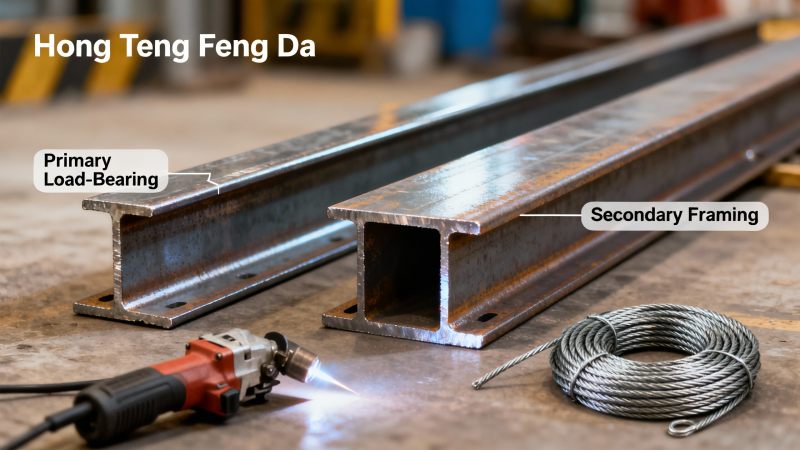
Choosing between H-beam and Z-beam for structural projects hinges on cost, delivery timelines and weldability—and these choices directly affect procurement, on-site operators, safety managers and long-term maintenance budgets. This practical 2025 guide helps technical evaluators, project leaders and buyers compare fabrication, transport and welding trade-offs, while highlighting how related materials—Stainless Steel Welded Mesh, Galvanized Steel Wire Rope 1470Mpa to 1960Mpa, Hot dipped Galvanized Steel Wire Rope, Galvanized Steel Wire Rope, Rebar, DX53D Galvalume Steel Coil, AZ150 Galvalume Steel Coil and Hot diped-Galvanized Pipe—impact performance and total project value. In modern structural procurement, the initial decision to specify H-beam or Z-beam sets a cascade of downstream requirements that influence budget forecasting, delivery windows and on-site labor processes. Procurement personnel and project managers must translate design intent into practical procurement options: H-beam sections are often specified for primary load-bearing columns and long-span girders, while Z-beam sections are selected for purlins, secondary framing and situations where nested stacking and lightweight profiles reduce shipping costs and handling time. Both the H-beam and Z-beam selections interact with ancillary materials — stainless steel welded mesh in composite slabs, galvanized steel wire rope for temporary bracing, and rebar for concrete connections — thereby shifting total installed cost beyond raw steel tonnage. Technical evaluators should view weldability and fabrication profiles as cost drivers rather than afterthoughts. Weld profiles for H-beam fabrications differ from Z-beam details in fillet sizes, access for welders and potential for distortion. When galvanic protection is required, the choice between DX53D Galvalume Steel Coil or AZ150 Galvalume Steel Coil for ancillary cladding, or specifying hot dipped galvanized pipe for handrails and service risers, changes surface treatment lead times and may require sacrificial anodes or seam welding strategies. Similarly, specifying Galvanized Steel Wire Rope 1470Mpa to 1960Mpa for lifting or guying applications can reduce rigging weight and increase safety margins, but will affect procurement lead time and cost. This guide addresses the practical trade-offs that matter to the list of stakeholders — operators, safety managers, quality control personnel, distributors and end users — by offering measurable criteria: unit cost per ton, effective lead time to site, on-site labor hours per connection, and weld rework probabilities. It also summarizes how source material choices, including primary rolled coil chemistries and coatings, influence weldability and long-term maintenance costs for H-beam and Z-beam systems.
Cost comparison: material, fabrication and installed cost drivers
Understanding the total cost of an H-beam versus a Z-beam requires looking well past the quoted per-ton price. Material price, fabrication complexity, transportation, on-site assembly and protective treatment all feed into the overall installed cost. H-beam members typically carry a higher raw material cost per unit length because they are deeper, heavier and often rolled to tight section tolerances for primary structure. Z-beam sections, used as purlins and secondary members, are rolled in thinner gauges and can be nested for efficient shipping, which often produces lower freight cost and quicker delivery for comparable linear spans. However, Z-beam installations can require more connections, brackets and fasteners on a per-square-meter basis, raising labor and hardware costs. When procurement teams bundle ancillary materials, cost dynamics change. For example, selecting DX53D Galvalume Steel Coil or AZ150 Galvalume Steel Coil for roof sheeting or flashings can reduce lifecycle maintenance expenditures due to better corrosion resistance compared with untreated coils, but these coils add to upfront purchase cost and may extend supplier lead times. Likewise, choosing Galvanized Steel Wire Rope or Hot dipped Galvanized Steel Wire Rope for temporary bracing influences insurance and safety risk profiles; higher-strength Galvanized Steel Wire Rope 1470Mpa to 1960Mpa options can reduce rope diameter and weight, lowering shipping and handling costs for rigging operations but raising unit price. Rebar and hot diped-galvanized pipe specifications for concrete integration increase embedded costs but may reduce long-term corrosion remediation expenses. Fabrication cost differences between H-beam and Z-beam also hinge on material source. Rolled sections produced from consistent chemistry coils (for instance from carbon steel grades like Q235, Q345 or St52.4) minimize scrap and rework. Coils with uniform carbon and manganese content allow for predictable welding parameters and fewer trial welds in the shop. Suppliers who can supply certified coils meeting GB/T 700-2006, AiSi, ASTM or DIN standards reduce quality control overhead. An example in procurement is sourcing primary flange and web stock from a supplier with a broad rolled coil portfolio: a supply of Rolled Coil that conforms to standard tolerances can shorten fabrication set-up and cut total cost per member by reducing wasted cutting and preheating time. Finally, logistics and customs duties can tilt the cost balance. Heavier H-beam shipments attract higher ocean freight and inland rigging costs. Z-beam, with higher pack density, may benefit from consolidated container shipments. For global projects, harmonizing coil and accessory orders — DX53D Galvalume Steel Coil for cladding, hot dipped galvanized pipe for MEP, and standardized stainless steel welded mesh for composite slabs — can unlock volume discounts and reduce lead times, thereby lowering effective installed cost beyond the headline unit prices for H-beam or Z-beam steel.
Delivery, logistics and site handling considerations
Delivery timelines for structural projects are frequently the gating factor that drives the selection of H-beam or Z-beam. Because H-beam sections are larger and heavier, they often require special transport permits, route surveys and crane capacities at both origin and destination. These requirements translate into longer lead times for delivery slots, more expensive lift plans and staged offloading on congested urban sites. Z-beam sections, being thinner and more modular, can frequently be supplied faster, nested for compact packaging and delivered on standard flatbeds without escort vehicles, reducing on-site handling time and permitting faster erection of secondary structures like purlins and façade subframes. Logistics planning must also consider the compatibility of coatings and ancillary materials with site storage and weather exposure. For instance, DX53D Galvalume Steel Coil and AZ150 Galvalume Steel Coil require dry, ventilated storage to avoid white rust formation on bare coil edges; conversely, hot dipped galvanized pipe and galvanized steel wire rope tolerate more variable storage but still benefit from protected stacking. Scheduling deliveries of galvanized components—Galvanized Steel Wire Rope, Hot dipped Galvanized Steel Wire Rope, or Hot diped-Galvanized Pipe—just-in-time to minimize on-site corrosion risk can reduce rework and improve QA outcomes. Freight consolidation is another critical lever. Projects can reduce per-unit freight and handling by combining shipments of primary steel sections (H-beam or Z-beam) with supplementary coils and reinforcement bars when inbound logistics allow for volume discounts. For example, pairing orders of cladding materials like AZ150 Galvalume Steel Coil with the main structural sections can shorten the procurement cycle and the number of distinct vendors to manage. Additionally, choosing higher-strength rigging such as Galvanized Steel Wire Rope 1470Mpa to 1960Mpa for lifts can allow larger bundle sizes and fewer lifts per day, improving productivity on-site and shortening erection schedules. Site handling capacity—crane reach, laydown area, and qualified welders—should be assessed before finalizing whether to prioritize H-beam or Z-beam. An H-beam-first strategy demands robust crane scheduling and larger laydown yards, whereas a Z-beam-dominant approach can enable staged delivery, smaller crew sizes and faster enclosure of the building envelope. Finally, don’t overlook customs and certification lead times for international supply chains; sourcing from suppliers who offer traceable certificates to standards such as ASTM or GB/T can shave days off customs clearance and internal QA sign-off processes.
Weldability, fabrication practice and material compatibility
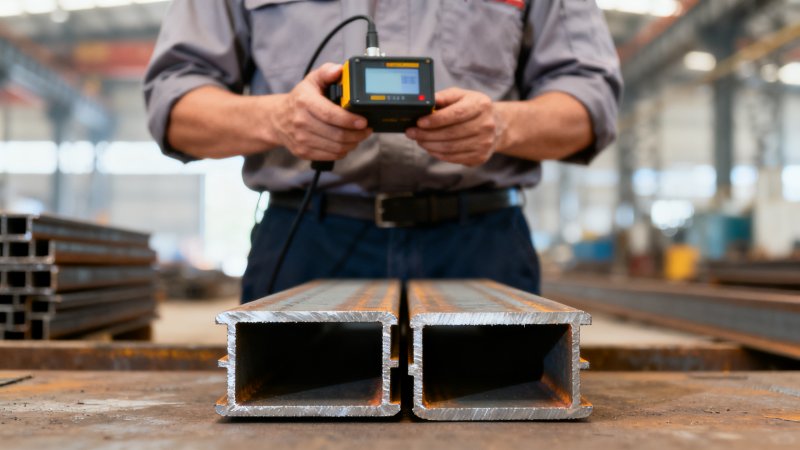
Weldability is a decisive factor when comparing H-beam and Z-beam solutions because it directly affects shop hours, distortion control and long-term joint performance. Material chemistry governs what welding processes are feasible and whether preheat or post-weld heat treatment is necessary. For common carbon steel grades used in rolled sections — Q235, Q235B, Q345, Q345B and the various St grades listed under international standards — welding is generally straightforward with conventional SMAW, GMAW and submerged arc processes, provided FCAW and other parameters are adjusted for section thickness. The inherent weldability of these steels is reflected in their chemical ranges: carbon content typically between 0.12% and 0.20%, manganese between 0.30% and 0.70%, and silicon not exceeding 0.30%, with low phosphorus and sulfur. These chemistries support predictable heat input windows and reduce hydrogen crack susceptibility in typical structural applications. Rolled coil feedstock with consistent characteristics enables multiple welding methods without the need for special post-weld heat treatment — a practical advantage during both H-beam fabrication and Z-beam splicing. Suppliers who provide certification to GB/T 700-2006, AiSi, ASTM or DIN standards reduce the welding qualification burden for fabricators and can shorten the shop schedule. For thicker H-beam webs or flanges, submerged arc welding with controlled heat input reduces distortion, whereas Z-beam connections often use fillet welds and self-drilling fasteners; in those cases, the welded mesh, rebar and pipe connections also require compatible filler metals and weld procedures. Compatibility with coated products is also important. Welding through galvanized coatings or Galvalume surfaces like DX53D Galvalume Steel Coil or AZ150 Galvalume Steel Coil requires operator awareness: zinc and aluminum in coatings can produce fume hazards and affect weld bead appearance and corrosion protection near the weld zone. Hot dipped Galvanized Steel Wire Rope and hot dipped galvanizing on pipes influence connection details; welders must remove coating at weld joints or specify mechanical attachments where appropriate. Choosing base materials with documented weldability and predictable mechanical properties reduces QA hold-ups and post-weld repairs. Practically, selecting H-beam for primary members and Z-beam for secondary elements can optimize welding workflows: heavy, shop-fabricated H-beam assemblies benefit from controlled jigs and submerged-arc processes, while lighter Z-beam work can be spot-welded, bolted or tactically welded on-site with portable GMAW rigs. Ensuring supply of compatible filler metal, access to certified welding procedure specifications and qualified operators will minimize weld rework and secure long-term integrity for the structure.
Summary, supplier trust and next steps
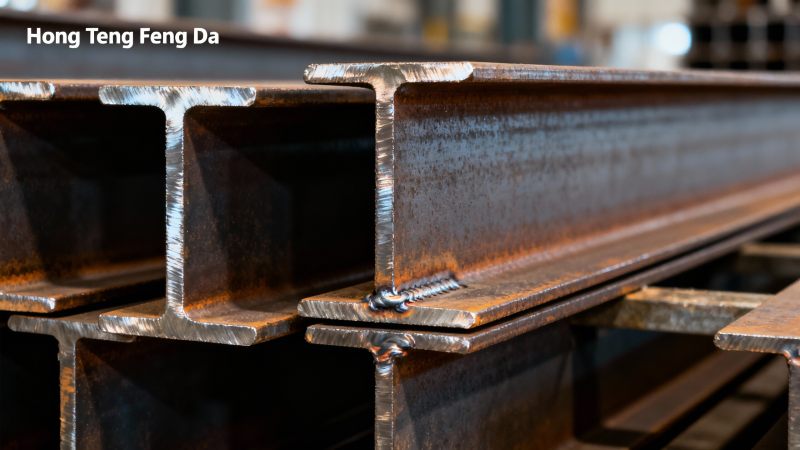
Choosing between H-beam and Z-beam involves a matrix of commercial, logistical and technical considerations. H-beam sections typically suit primary structural roles where higher load capacity and stiffness are prioritized; they demand more investment in transport and heavy lifting but can reduce the number of long-span members and simplify load paths. Z-beam solutions often win on speed and cost for secondary framing and lightweight roof systems because of nesting efficiency, lower transport cost and simpler on-site handling, but they may increase connection counts and fastener schedules. Across both choices, weldability and material chemistry — including the properties of standard rolled coils and coil-based coated products — determine fabrication speed and long-term maintenance needs. For procurement and technical evaluation teams, the pragmatic approach is to quantify unit cost, expected fabrication hours, transport complexity and projected maintenance costs over the asset lifecycle. Factor in the impact of complementary materials — Stainless Steel Welded Mesh for composite slabs, rebar for concrete ties, Galvanized Steel Wire Rope and Hot dipped Galvanized Steel Wire Rope for temporary works and lifting, and protective coatings like DX53D Galvalume Steel Coil or AZ150 Galvalume Steel Coil for cladding — to gain a complete picture of total installed value. Where weldability questions persist, specify material certificates and welding procedure qualifications and request sample welds or heat-affected zone reports from prospective suppliers. Shandong Hongteng Fengda Metal Materials Co. Ltd. positions itself to meet these combined needs with a complete production line and global sales footprint, enabling consolidated supply of primary rolled products and ancillary coated coils, reinforcement and pipes. Their ability to supply certified coil chemistries, a wide range of specifications, and fast logistics supports both H-beam and Z-beam strategies and helps reduce procurement complexity. To explore tailored solutions — whether you need certified rolled coil feedstock, galvanized pipe, high-strength wire rope or finished sections — contact the supplier to request technical datasheets, lead-time estimates and sample certificates. Immediate next steps: request a comparative quotation for H-beam and Z-beam scenarios including freight and fabrication allowances, obtain welding procedure specifications for your specified steel grades, and schedule a short material compatibility review that includes the use of galvanized coatings or Galvalume components. Act now to reduce procurement risk and accelerate project scheduling: contact the supplier to obtain sample material certificates, erection guides and lead-time guarantees, or request a feasibility review for your specific project. Immediate action will protect your schedule, cost base and safety margins — reach out to learn more about tailored supply options and delivery windows.
- rolled coil
- hot dipped galvanized steel wire
- galvanized steel wire
- ot Dipped Galvanized Steel Wire
- galvanized pipe
- hot dipped galvanized pipe
- steel coil
- galvanized steel
- Profile
- Hot diped-Galvanized Pipe
- AZ150 Galvalume Steel Coil
- DX53D Galvalume Steel Coil
- Rebar
- Galvanized Steel Wire Rope
- Galvanized Steel Wire Rope 1470Mpa to 1960Mpa
- Stainless Steel Welded Mesh
- Z-beam
- H-beam
Related recommendations
 Is acero galvanizado para exterior vulnerable to white rust formation during monsoon storage?Acero galvanizado para exterior *is* vulnerable to white rust in monsoons — but it’s preventable. Discover proven storage & handling strategies that protect your structural steel.
 Does ASTM A 36 plate meet impact toughness requirements for low-temperature bridge girders?Does ASTM A 36 plate meet low-temp bridge requirements? Short answer: no—unless specially tested. Discover why toughness matters more than strength in cold climates.
 Does ASTM A653 certification cover both zinc-coated and zinc-iron alloy coated steels?ASTM A653 covers both zinc-coated and zinc-iron alloy coated steels—but they’re not interchangeable. Learn key differences in testing, performance & certification.
 Does acero prepintado require surface pretreatment before welding or cutting?Does acero prepintado require pretreatment before welding or cutting? Discover when grinding is essential—and when it’s not—for safety, weld integrity & corrosion resistance.
Please give us a message


Please enter what you want to find