High strength structural steel offers major advantages in load capacity, efficiency, and design flexibility, but common mistakes in material selection, specification review, and application can lead to costly risks. From understanding structural steel properties to comparing lightweight structural steel options and related uses like rebar for retaining wall systems, this guide highlights the pitfalls buyers, engineers, and project teams should avoid.
Where High Strength Structural Steel Projects Usually Go Wrong
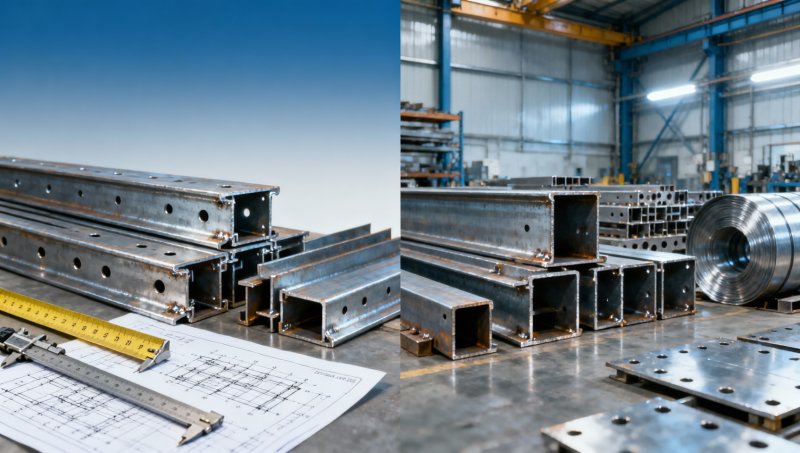
High strength structural steel is not simply “stronger steel.” In real projects, it changes weldability, fabrication routes, inspection criteria, and cost structure. A beam, channel, angle, or cold formed profile that performs well in one load case may create unexpected risks in another if the project team focuses only on yield strength and ignores toughness, coating, tolerances, and connection design.
This is why many structural steel procurement mistakes happen before production starts. Technical evaluators may approve a grade based on ASTM, EN, JIS, or GB equivalency, while purchasing teams compare only unit price per ton. Later, site teams face cutting issues, rework, delayed welding, or mismatched hole patterns. A 2–4 week schedule can quickly become a 5–8 week disruption when the original review misses practical fabrication details.
For global buyers, the risks increase when projects involve multiple standards, offshore fabrication, and tight delivery windows. A structural steel manufacturer and exporter must support more than supply. The supplier should help confirm grade selection, dimensional tolerance, coating expectations, packaging method, and inspection points across at least 3 stages: pre-production, in-process, and pre-shipment.
Hongteng Fengda works with international construction, industrial, and manufacturing customers that need stable production capacity and specification control. In structural steel exports, this matters because many failures are not material failures. They are coordination failures between design intent, mill supply, fabrication conditions, and installation realities.
The 5 most common pitfall categories
- Selecting steel grade by strength alone without checking toughness, ductility, forming behavior, or weld compatibility.
- Assuming international grades are directly interchangeable, even when chemistry limits, coating systems, or tolerances differ.
- Overlooking section geometry and connection details, especially in lightweight structural steel designs where local buckling can govern performance.
- Failing to define inspection scope, such as dimensional checks, coating mass, heat numbers, or welding documentation before production.
- Treating delivery lead time as a shipping issue only, instead of managing manufacturing, galvanizing, testing, packing, and customs as one chain.
For decision makers, the lesson is clear: high strength structural steel delivers value only when engineering review and sourcing control move together. The technical grade is one decision. The manufacturable and inspectable solution is another.
How to Judge Material, Section, and Processing Requirements Correctly
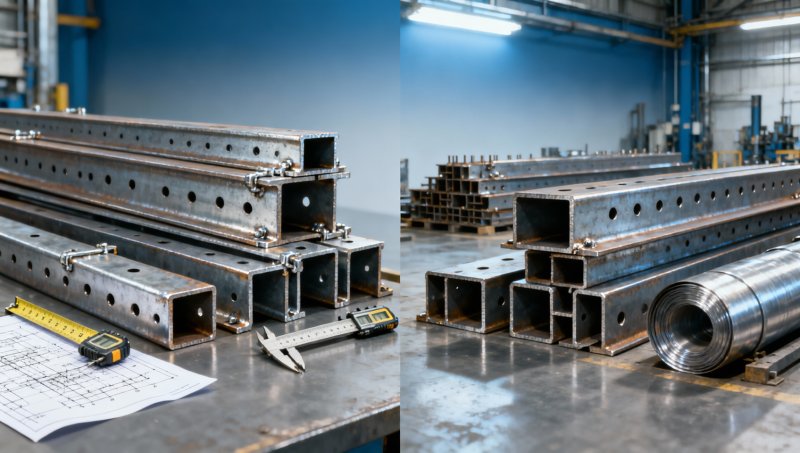
A sound evaluation starts with 3 linked questions. What load and service environment must the member resist? What fabrication operations will be required, such as cutting, punching, welding, bending, or cold forming? Which standard governs acceptance? If one of these is unclear, the project may select a high strength structural steel grade that looks efficient on paper but becomes expensive in execution.
In steel structures, mechanical values such as yield strength and tensile strength are only part of the picture. Buyers should also review thickness range, elongation, coating system, and whether the part is a hot rolled section, beam, angle, channel, or cold formed profile. For outdoor or processing-related applications, corrosion resistance and coating consistency can affect service life as much as base steel strength.
This is also where adjacent products matter. In some building processing or construction scenarios, teams combine structural members with galvanized sheet-based components for decking, bracing covers, formed accessories, or protective applications. A practical example is Gi Sheet Coil, available in grades such as DX52D and SGCD1, with thickness from 0.12mm to 3.5mm, width from 600mm to 1500mm, and zinc coating ranges of 60–275g/m² for hot galvanizing and 80–275g/m² for pre-galvanized supply.
When such galvanized materials are part of the broader package, engineers should not assume identical processing behavior across all steel items. Yield strength of 140–300 MPa and tensile strength of 270–420 MPa can suit forming and welding operations in many building applications, but they should be matched to the role of the component rather than confused with the performance target of the main high strength structural steel frame.
Key technical checks before approval
The table below helps procurement teams and technical reviewers align on what should be verified before releasing a structural steel order. This is especially useful when multiple departments evaluate the same project from cost, compliance, and installation perspectives.
The practical value of this review is speed and clarity. Instead of rechecking specifications after a production problem appears, project teams can close 4 core questions early: suitability, manufacturability, inspectability, and durability.
A short decision rule for mixed steel packages
- Use high strength structural steel where load-bearing efficiency and section reduction create measurable project value.
- Use galvanized coil-based fabricated parts where corrosion protection, formability, and lighter secondary applications are the main target.
- Do not merge approval criteria for primary and secondary steel elements into one simplified checklist.
That distinction helps engineering teams avoid one of the most common pitfalls: using a single procurement logic for materials that perform different structural and processing functions.
What Buyers Should Compare Beyond Price Per Ton
In B2B steel sourcing, unit price is easy to compare, but total project cost is not. A lower quotation may still produce higher overall cost if the steel needs extra machining, fails inspection, arrives with poor packaging, or requires reclassification because documentation is incomplete. For procurement managers and financial approvers, the right comparison model should include at least 5 dimensions, not just tonnage price.
Those dimensions usually include material compliance, dimensional accuracy, processing compatibility, delivery reliability, and claim risk. For projects running on 30-day, 45-day, or 60-day installation plans, late or non-conforming structural steel can cost much more than the visible material savings. This is especially true in export projects that involve sea freight, port handling, and customs release.
A competent structural steel supplier should help the buyer understand where the quotation boundary sits. Does the price include cutting, hole making, marking, primer, galvanizing coordination, third-party inspection support, or only raw mill supply? Ambiguity at quotation stage often becomes a dispute after the purchase order is confirmed.
The comparison table below is a practical tool for procurement, project management, and commercial review teams that need to assess structural steel offers more accurately.
This table shows why a “cheaper” structural steel offer is not always the lower-risk choice. For importers, distributors, and project owners, consistent lead times and clear compliance documents can protect both cash flow and project milestones.
A practical 4-step procurement review
- Lock the standard, grade, dimensions, and application environment before requesting final quotations.
- Separate raw material price from processing, coating, testing, and shipping cost.
- Check whether the supplier can support OEM, customized components, and document control for export.
- Review delivery milestones in weeks, not just estimated departure date, to reduce schedule surprises.
For companies buying from China, this structured method improves internal communication between engineering, procurement, finance, and site execution teams.
Standards, Inspection, and Application Pitfalls That Are Easy to Miss
Another common mistake is assuming compliance ends with a material certificate. In steel projects, conformity usually includes several layers: base material standard, dimensional tolerance, fabrication quality, coating requirement, and delivery documentation. If any one of these is vague, the risk does not disappear. It simply moves downstream to inspection, installation, or maintenance.
For example, projects involving retaining wall support, platforms, industrial frames, or secondary construction elements may combine rebar, structural sections, and galvanized accessories. Each product category has different acceptance logic. Rebar for retaining wall applications is evaluated differently from beams or cold formed profiles, even if all arrive on the same project schedule. Treating them as one generic steel purchase can create specification gaps.
Quality control teams should build a 6-item inspection focus: material identity, dimensions, surface condition, coating or finish, fabrication details, and shipping marks. For export projects, pre-shipment review is especially important because replacement cycles can take another 3–6 weeks after the original vessel date. That delay is often more damaging than the value of the defective batch itself.
Hongteng Fengda supports buyers with standard structural steel products and customized solutions, including angle steel, channel steel, steel beams, cold formed profiles, and tailored structural components. For international customers, that mix is valuable because sourcing risk often comes from package coordination, not from one isolated item.
Frequently overlooked application realities
1. Lightweight structural steel is not always lower risk
Lighter sections may reduce dead load and transport cost, but they can also increase sensitivity to local deformation, connection detailing, and handling damage. Engineers should compare section efficiency with stiffness and installation robustness, not just total weight reduction.
2. Galvanized or coated steel needs process planning
Coating adds durability, but if welding, cutting, or rework happens after coating, the repair plan should be defined in advance. This is relevant when combining structural frames with formed galvanized components made from products such as Gi Sheet Coil for construction-related assemblies.
3. Export packing is part of quality control
Long sections, fabricated parts, and mixed bundles need clear marks and protective packing. Poor packing can turn compliant structural steel into a claim case by the time it reaches North America, Europe, the Middle East, or Southeast Asia.
FAQ for buyers and project teams
How should I choose between standard specifications and OEM structural steel components?
Choose standard specifications when your project uses common sections, limited processing, and flexible installation tolerances. Choose OEM or customized structural steel components when the project needs pre-cut lengths, punched holes, welded assemblies, or strict site sequence control. In many cases, the higher unit cost of OEM supply can reduce total labor and shorten installation by several days to 2 weeks.
What should procurement teams ask before ordering high strength structural steel?
Ask for 5 essentials: grade and standard, dimension and tolerance, surface treatment, processing scope, and delivery schedule. If the project is international, also ask about packing method, document package, and whether the supplier supports pre-shipment inspection or sample confirmation.
Are ASTM, EN, JIS, and GB grades always interchangeable?
No. Some grades may be close in mechanical range, but chemistry limits, testing conditions, impact requirements, or thickness-based performance can differ. Substitution should be reviewed against the project specification and fabrication method, not assumed from a simple name comparison.
What is a reasonable lead time expectation?
It depends on product type, tonnage, processing depth, and shipment route. Standard material supply may move faster than customized fabricated components. In practice, buyers should track production, finishing, inspection, and shipment as separate milestones rather than relying on one estimated lead time number.
Why Global Buyers Work with a Structured Steel Supply Partner
When structural steel sourcing involves multiple standards, multiple product categories, and overseas delivery, the best supplier is not simply the one that can quote fast. It is the one that can reduce uncertainty. That means understanding application needs, confirming feasible specifications, controlling production, and communicating clearly across technical and commercial teams.
Hongteng Fengda supports global buyers with structural steel products and customized solutions for construction, industrial, and manufacturing projects. Its supply scope includes angle steel, channel steel, steel beams, cold formed steel profiles, and customized structural components. With modern manufacturing facilities and strict quality control, the company works to align supply with ASTM, EN, JIS, and GB-based project requirements where applicable.
For importers, distributors, contractors, and project owners, the value is practical. Stable production capacity helps manage rolling demand. Consistent quality reduces claim risk. Dependable lead times improve installation planning. Customized support helps buyers balance standard items and OEM parts within one procurement strategy instead of splitting responsibility across too many vendors.
If you are reviewing high strength structural steel for a current project, you can discuss several points before placing an order: grade and standard confirmation, section selection, lightweight structural steel alternatives, corrosion protection options, fabrication scope, sample support, documentation needs, and delivery timing. Clear discussion at this stage often prevents the most expensive mistakes later.
What you can consult before requesting a quotation
- Parameter confirmation for beams, channels, angles, cold formed profiles, and customized structural components.
- Selection advice for standard versus OEM supply, including processing depth and packaging requirements.
- Lead time planning by production stage, coating route, and shipment window.
- Certification and standard alignment for ASTM, EN, JIS, and GB-based projects.
- Sample support, quotation communication, and mixed-product sourcing for structural steel packages.
A well-planned structural steel purchase is not only about getting material delivered. It is about getting the right material, in the right form, with the right documentation, on the right timeline. That is the difference between a low quote and a reliable project outcome.
Please give us a message


Please enter what you want to find