Wondering whether angle iron for shelving is a smart choice for strength, cost, and long-term use? For buyers, fabricators, and project teams in structural steel, the short answer is yes—angle iron is a practical shelving material when the load, span, environment, and fabrication method are matched correctly. It offers a strong balance of load-bearing capacity, easy cutting and welding, and cost control. However, it is not automatically the best choice for every shelf. The right decision depends on what the shelves will carry, where they will be used, and how long they need to perform with minimal maintenance.
Is angle iron good for shelving? The short answer
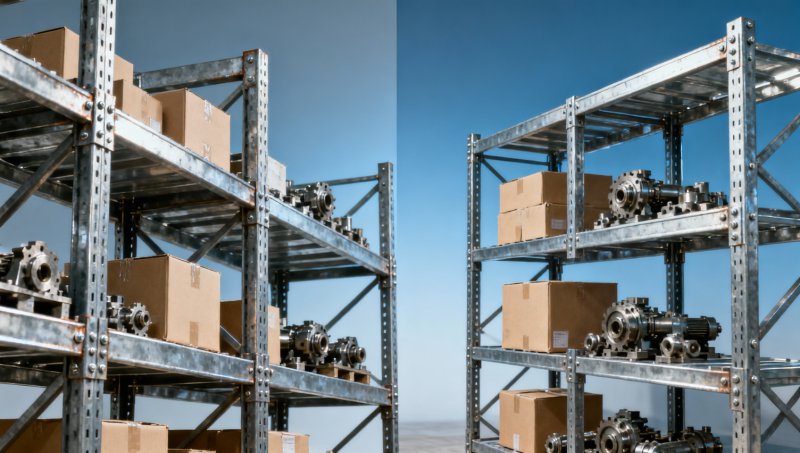
Angle iron is good for shelving because it provides structural strength, straightforward fabrication, and design flexibility for many storage and industrial applications. It is commonly used for warehouse racks, workshop shelves, utility shelving, equipment stands, and custom storage frames.
For most users, the main value of angle iron shelving is simple: it can hold meaningful loads without requiring overly complex fabrication. Compared with lighter sheet-metal shelving, angle iron often performs better under heavy or repeated loading. Compared with larger structural sections, it is usually more economical and easier to work with for compact shelf systems.
That said, its performance depends on section size, steel grade, bracing, connection design, shelf span, and corrosion protection. If these are overlooked, even a strong-looking shelf can deflect too much, become unstable, or fail earlier than expected.
When angle iron shelving makes the most sense
Angle iron is especially suitable when shelving needs to be durable, customizable, and cost-efficient. Common use cases include:
- Workshops and maintenance rooms: for tools, spare parts, and equipment storage
- Warehouses and back-of-house storage: for cartons, packaged goods, and medium-duty inventory
- Industrial plants: for components, fixtures, and production support materials
- Commercial utility storage: for stock rooms, service areas, and mechanical spaces
- Custom fabrication projects: when standard shelving sizes do not fit the available space
It is often a good choice when buyers need a shelf frame that can be drilled, welded, bolted, expanded, or repaired without difficulty. This matters to project managers and procurement teams because it helps control installation time and future modification costs.
What buyers and engineers should evaluate before choosing angle iron
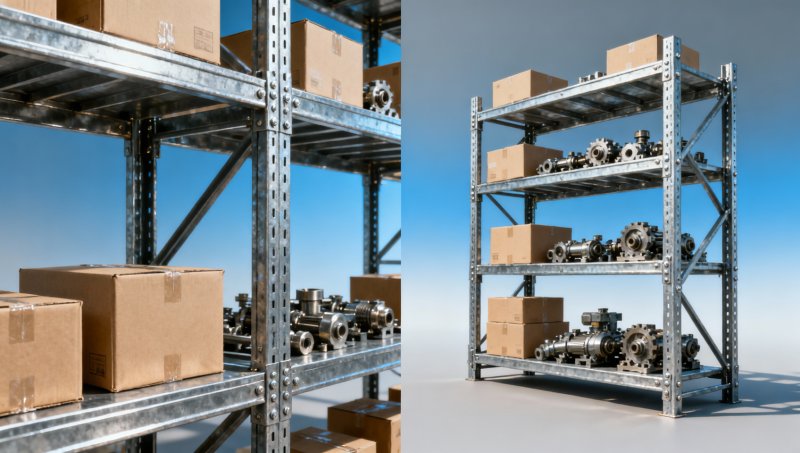
If the question is not just “Can it work?” but “Is it the right long-term choice?”, then the evaluation should focus on actual operating conditions rather than appearance alone.
The most important factors are:
- Load per shelf: static load, point load, and any impact loading
- Shelf span: longer spans increase bending and deflection
- Support spacing: more intermediate support improves stiffness
- Connection type: welded or bolted joints affect rigidity and installation method
- Environment: dry indoor, humid, chemical exposure, or outdoor use
- Safety margin: required by local standards or internal quality procedures
- Future changes: whether shelf layout or load requirements may increase later
For technical evaluators and quality teams, deflection control is just as important as ultimate strength. A shelf may not collapse, but if it bends excessively during use, it can still create safety and maintenance problems. For procurement and finance teams, the better question is often total lifecycle cost, not only the lowest material price.
Strength advantages of angle iron for shelving
The biggest advantage of angle iron is structural efficiency in a compact profile. Its L-shaped section offers a useful combination of strength and edge support, making it suitable for shelf frames and support members.
Key advantages include:
- Good load-bearing ability: especially for medium-duty and heavy-duty shelf frames
- Easy fabrication: cutting, drilling, welding, and bolting are straightforward
- Flexible design: can be used in simple open shelves or more rigid framed systems
- Wide availability: many sizes and standards are available for export and project sourcing
- Cost effectiveness: often less expensive than overdesigned structural alternatives
For structural steel buyers, this makes angle steel a practical solution for standard and custom shelving projects. Manufacturers with stable production and strict dimensional control can further reduce assembly issues and material waste during fabrication.
Its limitations: where angle iron may not be the best option
Angle iron is not ideal in every shelving application. Its limitations should be understood early to avoid redesign, delays, or premature replacement.
- Long unsupported spans: may require larger sections or additional bracing
- Corrosive environments: untreated carbon steel can rust if not protected
- Cleanroom or food-grade settings: stainless or more hygienic systems may be better
- High-precision modular storage: proprietary shelving systems may install faster
- Very light-duty decorative shelving: lighter materials may be more economical or visually suitable
In humid, chemical, or washdown environments, shelf design may need a corrosion-resistant combination of structural support and shelf infill material. In some projects, the frame may use structural steel while the shelf surface uses mesh or stainless materials for drainage, airflow, or hygiene.
For example, in shelving systems used near filtration, chemical handling, or ventilation-related storage zones, buyers may consider integrating materials such as 304 Stainless Steel Welded Mesh as shelf panels or inserts. With options including SS 201, 304, 304L, 316, 316L, and 430, and features such as rust resistance, corrosion resistance, chemical resistance, high strength, and durability, this kind of mesh can complement angle iron frames in applications where airflow, drainage, or cleaner surfaces matter.
How to make angle iron shelving last longer
Durability depends on both material selection and fabrication quality. If shelving is expected to perform for years under daily use, several practical measures make a major difference:
- Choose the correct angle size and thickness based on actual load, not guesswork
- Add bracing to reduce sway and improve overall frame stability
- Control weld quality and hole positioning for better fit-up and strength
- Use protective finishes such as painting, galvanizing, or suitable coatings
- Consider stainless or mixed-material designs for corrosive conditions
- Inspect shelves periodically for deformation, corrosion, and loose fasteners
For safety managers and maintenance teams, preventative inspection is important. Shelving often fails gradually through overload, corrosion at joints, or connection loosening. A shelf that looks acceptable from a distance may already be showing early warning signs.
What a reliable structural steel supplier adds to a shelving project
Choosing the right supplier can be as important as choosing the right section. A capable structural steel manufacturer helps buyers reduce risk in several ways:
- Consistent dimensions: easier fabrication and assembly
- Compliance with standards: ASTM, EN, JIS, or GB requirements as needed
- Stable production capacity: better support for repeat or large-volume orders
- Customization support: OEM sizes, punching, cutting, and project-specific processing
- Quality control: lower risk of material defects and delivery inconsistency
- Export reliability: smoother logistics for international buyers and distributors
For project owners, distributors, and sourcing teams, this translates into fewer delays, better cost control, and more predictable installation outcomes. A manufacturer experienced in global structural steel supply can also help match the shelving material to regional standard requirements and application needs.
Final verdict
Yes, angle iron is a good choice for shelving in many industrial, commercial, and utility applications. It is especially valuable when strength, affordability, customization, and fabrication simplicity are priorities. But the best result comes from matching the section size, connection method, protection system, and shelf layout to the real load and environment.
If your shelving project needs dependable structural performance rather than just the lowest upfront price, angle iron is often a smart and practical solution. The key is to evaluate load, span, corrosion exposure, and lifecycle cost carefully—and work with a reliable structural steel supplier that can deliver consistent quality and the right specifications for the job.
Please give us a message


Please enter what you want to find