Introduction: Why grade selection matters for crane and hoisting systems
Choosing the right wire rope grade can make or break crane and hoisting performance. This guide compares Galvanized Steel Wire Rope 1470Mpa to 1960Mpa options—covering hot-dipped galvanizing benefits, tensile strength, fatigue life, corrosion resistance, and compliance with lifting standards—to help operators, engineers, procurement and safety managers specify the best rope for load, cycle frequency and environment. Whether evaluating Hot dipped Galvanized Steel Wire Rope for offshore or construction rigs, you’ll learn practical selection criteria, inspection tips and cost-effective sourcing strategies to maximize safety and service life. In heavy lifting and material handling projects, the decision between Galvanized Steel Wire Rope 1470Mpa to 1960Mpa is often driven by three intertwined priorities: safety margin under rated loads, long-term fatigue performance under cyclic loading, and resistance to environmental corrosion that accelerates wear. Operators and technical evaluators must balance initial cost against lifecycle cost, and that trade-off is central when comparing Galvanized Steel Wire Rope 1470Mpa to 1960Mpa. Procurement teams are looking for clear, quantifiable selection criteria; project managers need traceable compliance with lifting codes; and maintenance teams require predictable inspection and retirement metrics that minimize downtime. This introduction clarifies those stakeholder needs so that subsequent sections map grade properties—tensile strength, construction types, galvanizing methods and inspection protocols—directly to operational concerns. Practical distinctions between Galvanized Steel Wire Rope 1470Mpa to 1960Mpa also include handling characteristics and termination compatibility. Higher tensile grades like 1960Mpa achieve greater breaking strength for a given diameter, which can reduce rope size and weight on a crane drum but demand tighter control on bending radii and termination techniques. Conversely, Galvanized Steel Wire Rope 1470Mpa to 1960Mpa in the lower range (1470 Mpa) may tolerate more aggressive flexing but require larger diameters for the same rated capacity. Safety managers should therefore consider not only breaking strength numbers but also fatigue resistance, abrasion behaviour, and galvanizing quality—especially where Hot dipped Galvanized Steel Wire Rope is exposed to salt spray or industrial contaminants. This article addresses these technical trade-offs and provides sourcing and inspection guidance tailored for B2B buyers and technical teams in the steel and lifting industries.
Understanding tensile grades and mechanical trade-offs: 1470 Mpa versus 1960 Mpa
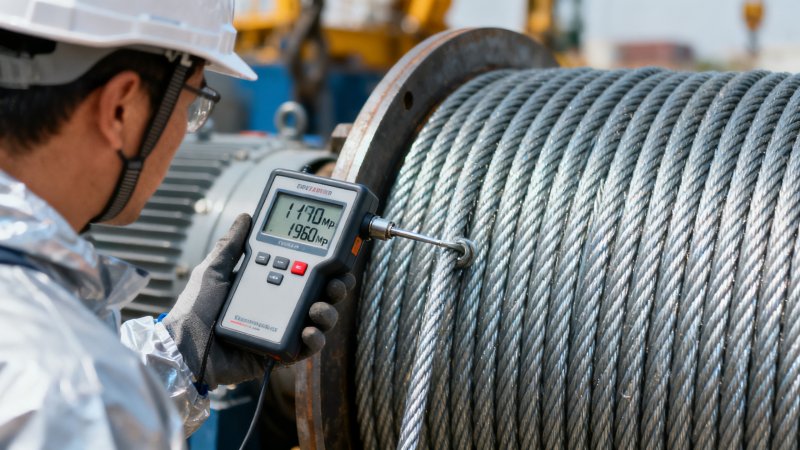
When evaluating lifting ropes, the primary mechanical attribute is tensile strength; comparing Galvanized Steel Wire Rope 1470Mpa to 1960Mpa clarifies how higher-strength steels change design and maintenance choices. Galvanized Steel Wire Rope 1470Mpa to 1960Mpa denotes a tensile range where 1470 Mpa delivers robust performance with relatively higher ductility, while 1960 Mpa offers exceptional specific strength allowing smaller-diameter ropes for the same rated working load. However, increased tensile strength typically correlates with reduced elongation and lower fatigue endurance in some constructions if not properly engineered. That means for high-cycle hoisting applications, the choice between Galvanized Steel Wire Rope 1470Mpa to 1960Mpa must consider expected cycles per hour, average load factor, and drum/sheave diameters. Design teams assessing Galvanized Steel Wire Rope 1470Mpa to 1960Mpa should incorporate the rope’s construction (e.g., 6x37, 6x19, Warrington) and core type (fiber vs. steel) into calculations. For example, a compacted strand 6x36 construction in 1960 Mpa material may provide the needed broken strength while offering improved resistance to wire migration and abrasion; still, fatigue life under repeated bending should be validated against manufacturer fatigue data. The fatigue and wear behaviour for Galvanized Steel Wire Rope 1470Mpa to 1960Mpa also interacts with lubrication practices and contact conditions: inadequate lubrication or undersized sheaves can negate the advantages of a higher tensile grade. Procurement personnel should request detailed mechanical test certificates showing tensile, yield, elongation, and strand break data for Galvanized Steel Wire Rope 1470Mpa to 1960Mpa batches to ensure batch-to-batch consistency. From a specification standpoint, using Galvanized Steel Wire Rope 1470Mpa to 1960Mpa can permit downsizing of drums and anchors, reduce spool weight, and improve payload margins. Conversely, installing higher-strength ropes without adjusting drum grooves, sheave diameters, or termination hardware may introduce early failures. Therefore, engineering assessments must treat Galvanized Steel Wire Rope 1470Mpa to 1960Mpa as part of a system, not a standalone component, and verify compatibility with reeving plans, safety factors, and regulatory lifting standards. Including conservative fatigue factors and mandating manufacturer fatigue test data in procurement contracts reduces risk and aligns product performance with operational expectations.
Corrosion protection and galvanizing methods: hot-dipped versus other coatings
Corrosion is a primary degradation mode for wire rope in marine, chemical, and outdoor construction environments. Selecting between Galvanized Steel Wire Rope 1470Mpa to 1960Mpa must therefore include an assessment of galvanizing technique and post-treatment. Hot dipped Galvanized Steel Wire Rope provides a metallurgical zinc coating that bonds to steel surfaces and offers sacrificial protection even when minor coating damage occurs during handling. Hot dipped Galvanized Steel Wire Rope tends to offer longer service life in salt-laden atmospheres compared with electro-galvanized alternatives, and it is commonly specified for offshore rigs, marine cranes and coastal construction where consistent performance is required. When specifying Galvanized Steel Wire Rope 1470Mpa to 1960Mpa, review coating thickness, adhesion tests and salt spray performance data. Hot-dip galvanizing standards and test results should be part of the technical submittals; procurement should require certification of zinc coating mass (g/m2) and evidence of uniform coverage on strands and cores. Field inspection protocols for Galvanized Steel Wire Rope 1470Mpa to 1960Mpa include monitoring white rust in early stages and red rust beneath breached zinc layers. Preventive measures such as periodic lubrication with compatible, water-displacing greases, and mechanical protective fittings at entry points through fairleads and sheaves, extend the service interval for Galvanized Steel Wire Rope 1470Mpa to 1960Mpa. Corrosion and contamination also impact electrical continuity, which is important for some monitoring systems. Where Hot dipped Galvanized Steel Wire Rope is part of critical load monitoring, document cleaning, lubrication and inspection intervals in the maintenance plan. For projects with mixed structural material, coordinate galvanic compatibility to avoid accelerated corrosion in contact zones — for example, when Galvanized Steel Wire Rope 1470Mpa to 1960Mpa operates adjacent to stainless components or copper-based fittings. These engineering controls, combined with appropriate coating specifications, produce a robust corrosion strategy that preserves lifting capacity and reduces unplanned replacements.
Fatigue life, inspection criteria and compliance with lifting standards
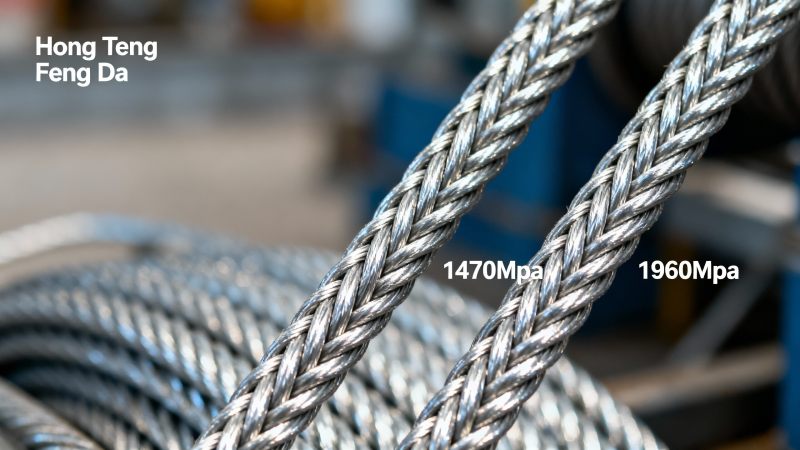
Fatigue failure is often the silent risk in hoisting systems. For operational safety, inspection regimes and retirement criteria should be defined specifically for the selected Galvanized Steel Wire Rope 1470Mpa to 1960Mpa grade and construction. Industry standards and manufacturer guidance provide metrics—such as visible broken wires per length, core protrusion, diameter reduction and corrosion level—that trigger rope removal. When dealing with Galvanized Steel Wire Rope 1470Mpa to 1960Mpa, note that higher tensile grades may show different early warning signs; they can exhibit more localized wire breaks under severe flexing before global diameter loss, so inspectors must be trained to identify such patterns. Rigorous inspection should combine visual, tactile and measurement-based checks. Record sheave and drum groove wear, measure residual diameters against nominal values, and document the number of broken wires in a specified length. For Galvanized Steel Wire Rope 1470Mpa to 1960Mpa, also monitor end fittings for necking, and check for core redirection or strand collapse which can precede catastrophic failure. For high-cycle applications, consider non-destructive testing techniques—magnetic flux leakage or electromagnetic rope testers—to quantify internal wire loss that is invisible during visual inspections. Linking these inspection outcomes to service-life models for Galvanized Steel Wire Rope 1470Mpa to 1960Mpa helps operations move from reactive replacement to predictive maintenance. Compliance with lifting standards is non-negotiable. Specify safety factors, proof testing and certification that reference recognized codes, and ensure traceability back to mill test reports. Lifting managers should mandate proof load tests for new assemblies, and maintain documentation that correlates rope grade—Galvanized Steel Wire Rope 1470Mpa to 1960Mpa—construction, and termination method. A structured maintenance plan that aligns inspection frequency with rope grade, duty cycle and environment reduces operational risk and supports regulatory compliance during audits and insurance inspections.
Procurement strategy, lifecycle costing and practical selection matrix
Procurement decisions should be informed by a lifecycle costing approach rather than lowest upfront price. When comparing Galvanized Steel Wire Rope 1470Mpa to 1960Mpa, calculate total cost of ownership: initial acquisition, installation labour, downtime risk, inspection and predicted replacement frequency. In many cases, a higher-priced Galvanized Steel Wire Rope 1470Mpa to 1960Mpa with superior fatigue life and better hot-dip galvanizing will deliver lower cost per operational hour. Technical buyers should request sample certificates, third-party test reports and references from similar operating environments. A practical selection matrix for Galvanized Steel Wire Rope 1470Mpa to 1960Mpa considers five variables: required working load, duty cycle (low/medium/high), environmental aggressiveness (inland/urban/coastal/offshore), required drum/sheave compatibility, and allowed weight/diameter constraints. Weight constraints, for example, often drive selection toward 1960 Mpa ropes because they reduce rope diameter and drum space requirements. Conversely, if frequent flexing over small sheave diameters is unavoidable, Galvanized Steel Wire Rope 1470Mpa to 1960Mpa in the 1470 Mpa range with an appropriate construction may offer superior life. Engage vendors who can supply technical data tailored to these matrix inputs and who demonstrate consistent manufacturing controls. For buyers in steel structure projects who also source components like H-beam, Z-beam, Rebar or finished products such as DX53D Galvalume Steel Coil and AZ150 Galvalume Steel Coil, coordinate lead times and logistics to optimize inventory and reduce project bottlenecks. Suppliers with broad catalogues and export experience can bundle deliveries and provide traceable quality. For structural accessories and channels, consider quality-certified options like Channel In Steel to standardize connections and simplify procurement. This integration reduces the number of vendors to manage and often shortens project schedules while maintaining high quality and compliance.
Conclusion and recommended next steps
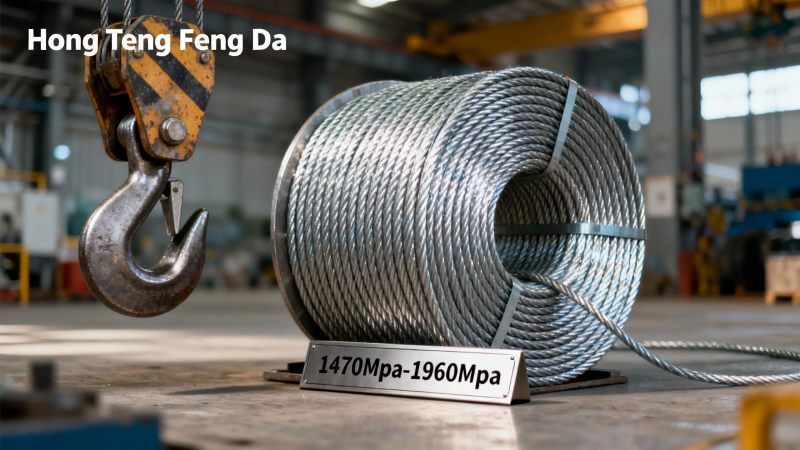
Selecting the appropriate rope between Galvanized Steel Wire Rope 1470Mpa to 1960Mpa requires a systems-level assessment that balances tensile capacity, fatigue life, corrosion protection and compatibility with hoist hardware. For high-capacity lifts where space and weight are constrained, 1960 Mpa grade ropes often deliver superior strength-per-diameter, while 1470 Mpa grade ropes can be advantageous where ductility and abrasion tolerance are prioritized. Regardless of grade, Hot dipped Galvanized Steel Wire Rope typically offers the most reliable corrosion protection for demanding outdoor and marine conditions, and it should be specified with clear coating and test criteria. To convert this guidance into actionable procurement and maintenance plans: define duty-cycle and environment in the tender documents; require mill and galvanizing certificates; mandate proof testing and documented inspection intervals; and include clauses for traceability and sample retention for batch verification. Maintenance teams should adopt predictive inspection techniques and align replacement triggers with recognised standards to minimize safety risk and operational disruption. Shandong Hongteng Fengda Metal Materials Co.. Ltd. provides a broad portfolio of steel products and the procurement support necessary to match rope selection to project needs. Our focus on consistent production technology, export experience and prompt logistics means we can support complex sourcing requirements for Galvanized Steel Wire Rope 1470Mpa to 1960Mpa alongside other structural materials such as H-beam, Z-beam, Stainless Steel Welded Mesh and Hot diped-Galvanized Pipe. For a detailed quotation, technical submittal or lifecycle cost analysis tailored to your project, contact our sales engineering team to discuss specifications, delivery timelines and sample testing. Act now to align rope grade selection with safety, cost and performance goals—reach out to learn more or request a quote and technical dossier.
- channel in steel
- hot dipped galvanized steel wire
- galvanized steel wire
- ot Dipped Galvanized Steel Wire
- galvanized pipe
- steel coil
- galvanized steel
- Hot diped-Galvanized Pipe
- AZ150 Galvalume Steel Coil
- DX53D Galvalume Steel Coil
- Rebar
- Galvanized Steel Wire Rope
- Galvanized Steel Wire Rope 1470Mpa to 1960Mpa
- Stainless Steel Welded Mesh
- Z-beam
- H-beam
Related recommendations
 How to Calculate Structural Steel Weight for Accurate Material TakeoffsStructural steel weight calculation made simple: use proven formulas, section masses, and takeoff tips to improve accuracy, control costs, and plan material efficiently.
 How to Control Distortion in Structural Steel Welding for Heavy SectionsStructural steel welding distortion control for heavy sections: learn proven fit-up, heat input, sequencing, and monitoring methods to reduce rework and improve accuracy.
 What Should Be Included When Calculating the Price of SS 304 Sheet?Price of SS 304 sheet explained: compare grade, finish, weight, processing, testing, freight, duties, and payment terms to calculate true landed cost.
 How Plate Dimensions and Mill Certification Influence SS304 Plate PriceSS304 plate price explained: see how dimensions, tolerances, surface finish, and mill certificates affect true purchasing cost, quality assurance, and fabrication value.
Please give us a message


Please enter what you want to find