As the NEC 2026 edition approaches, safety managers and project engineers must verify whether galv steel conduit — including galvanized metal tubing, electrical galvanized conduit, and industrial galvanised pipe — meets updated outdoor enclosure requirements. For structural steel manufacturers like Hongteng Fengda supplying galv electrical conduit and galvanised steel tubes globally, compliance isn’t just about corrosion resistance; it’s about alignment with ASTM A53, UL 6, and NEC Article 344. This checklist helps procurement teams, quality controllers, and EPC contractors evaluate material specs, coating thickness (≥1.8 mils), and installation practices — ensuring black steel plumbing pipe or metal pipe black alternatives never compromise safety or code acceptance.
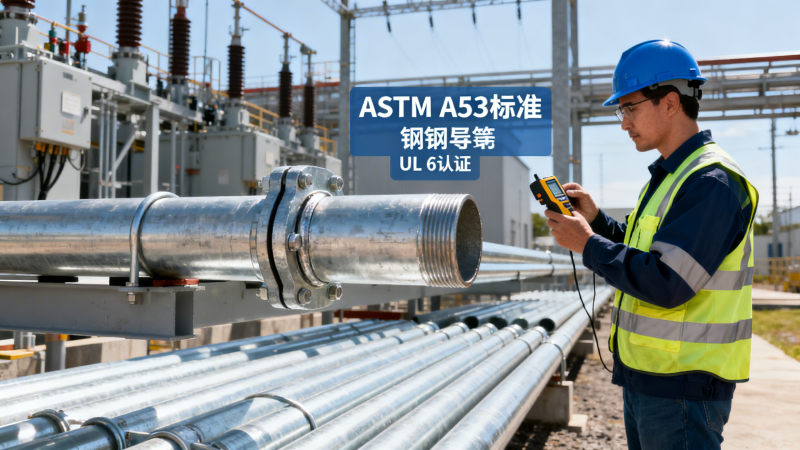
Does Galvanized Steel Conduit Meet NEC 2026 Outdoor Requirements?
The 2026 National Electrical Code introduces stricter performance benchmarks for metallic raceways exposed to weather, UV radiation, and coastal environments. Unlike earlier editions, NEC 2026 explicitly references minimum zinc coating mass (per ASTM A123) and mandates verification of galvanizing process control — especially for hot-dip galvanized conduits used in rooftop solar arrays, offshore substations, and industrial perimeter lighting.
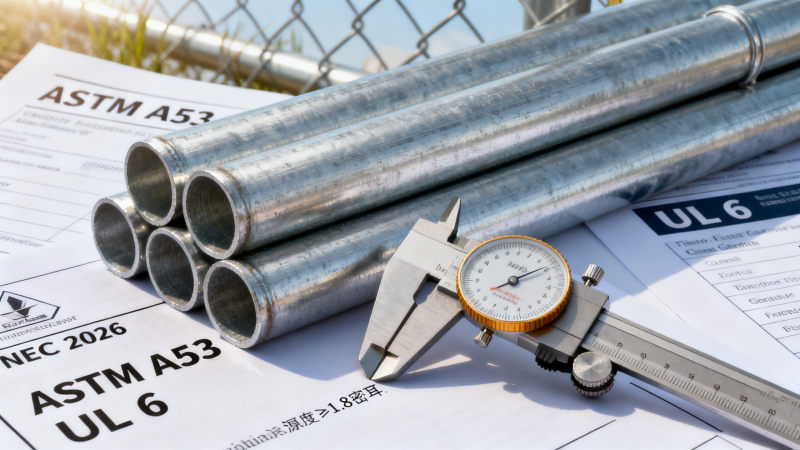
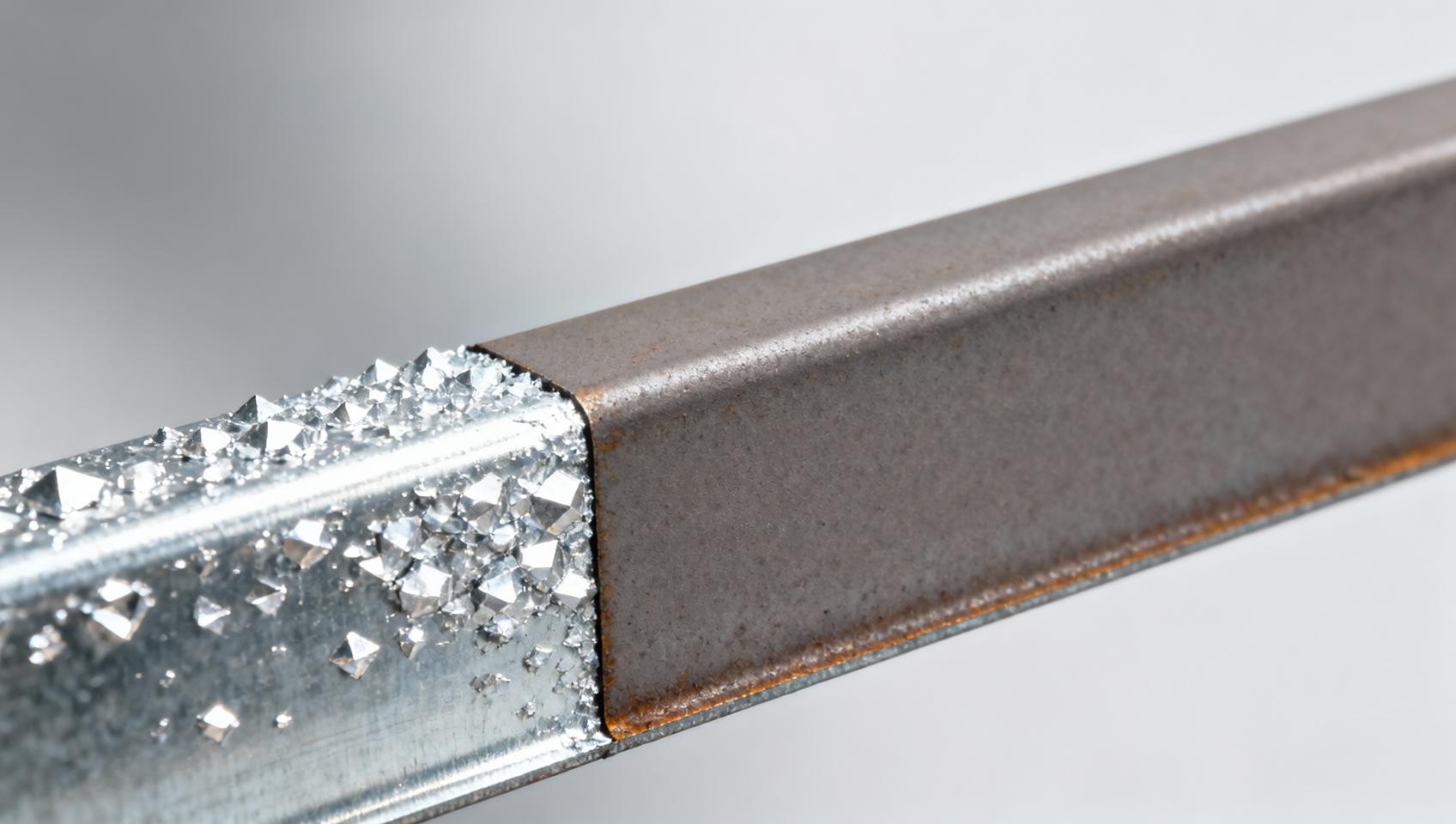
For structural steel suppliers such as Hongteng Fengda — which produces galvanized conduit components under ASTM A53 Grade B and EN 10255 — compliance hinges on three verifiable criteria: (1) zinc coating ≥1.8 mils (45.7 µm) measured per ASTM B697, (2) absence of uncoated weld seams or cut edges without post-fabrication touch-up, and (3) traceable batch documentation showing immersion time, bath temperature (449–460°C), and post-dip cooling rate.
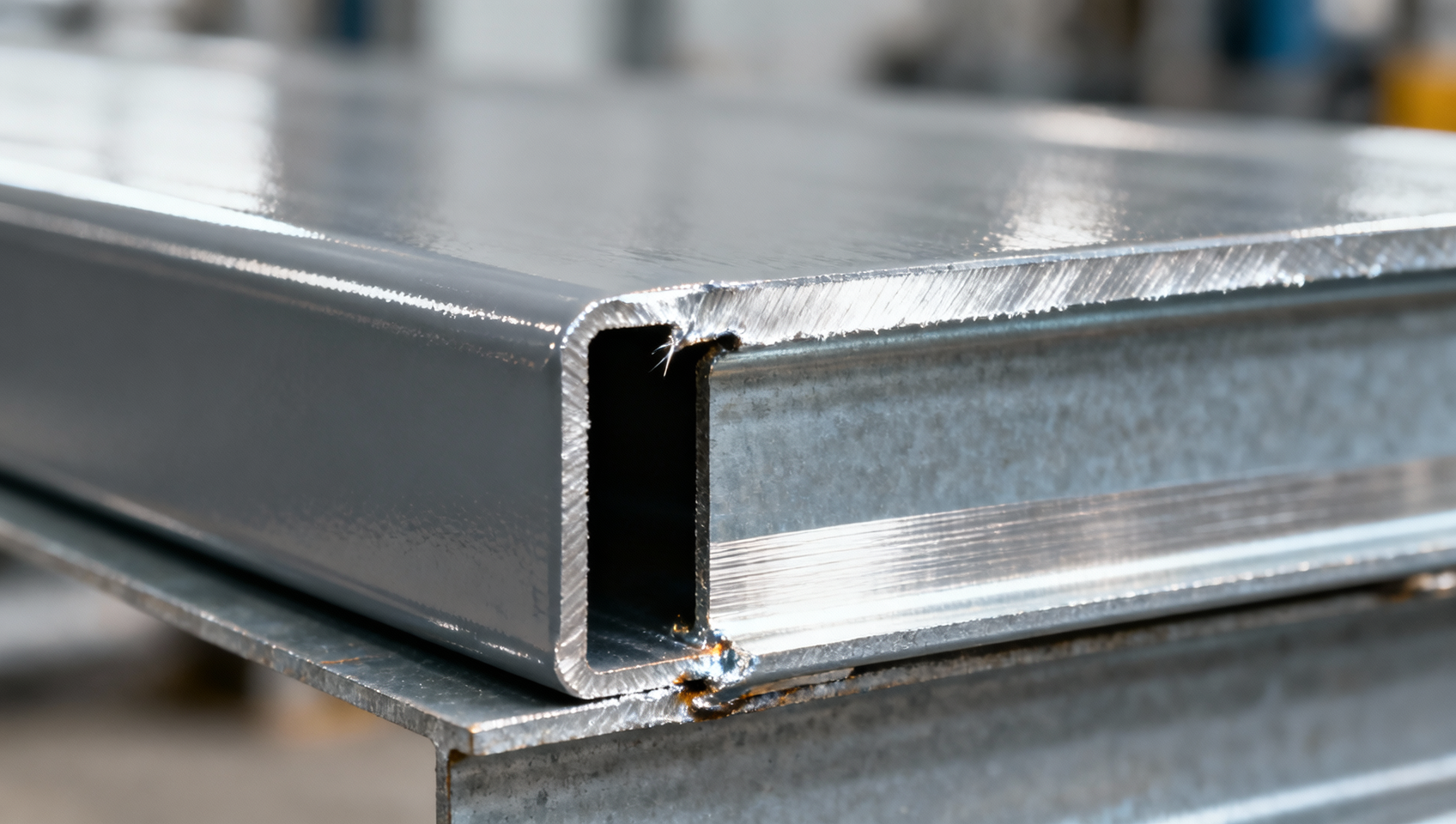
Notably, NEC 2026 does not prohibit cold-formed galvanized conduit — but requires that all bends, couplings, and fittings maintain full coating integrity. This makes pre-galvanized coil-based production (as used in Hongteng Fengda’s cold-formed conduit lines) subject to additional bend-testing protocols per UL 6 standards — a step many importers overlook during pre-shipment inspection.
Key Compliance Thresholds for Outdoor Galv Conduit
This table reflects real-world verification points — not theoretical benchmarks. Hongteng Fengda’s ISO 9001-certified QA system ensures every shipment includes coating thickness logs, salt-spray test summaries, and mill certificates aligned with ASTM A53, EN 10255, and GB/T 3091. For projects requiring traceability beyond standard export documentation (e.g., U.S. federal infrastructure or EU CE-marked installations), we provide full batch-level digital certification packs.
How Structural Steel Manufacturers Support NEC-Compliant Procurement
Unlike commodity steel traders, structural steel manufacturers like Hongteng Fengda integrate compliance into upstream production — not just final inspection. Our cold-formed galvanized conduit lines use continuous hot-dip galvanizing with bath chemistry control (Zn ≥98.5%, Pb<0.02%), enabling consistent coating thickness across diameters from ½” to 4”. This eliminates the variability common in batch-galvanized pipe — where inner-diameter coverage often falls below 1.2 mils.
We also support engineering teams with pre-submission material review packages, including: (1) UL 6 listing excerpts, (2) ASTM A123 coating mass tables per nominal pipe size, and (3) dimensional tolerances per EN 10255 (±0.5 mm OD, ±10% wall thickness). Lead times for certified conduit orders range from 7–15 days for standard sizes, and 25–35 days for custom-threaded or laser-cut variants — with full documentation included at no extra cost.
For large-scale infrastructure work, our cofferdam solutions leverage similar metallurgical rigor. Steel Sheet Piles produced under ASTM A690 and EN 10248 meet marine-grade corrosion resistance thresholds — making them ideal for integrated electrical conduit support systems in deep-water substation foundations.
5 Critical Checks Before Approving Galv Conduit for NEC 2026 Projects
- Confirm zinc coating is measured on both interior and exterior surfaces — not just exterior (required for conduit >2” diameter per NEC 344.10(A)(2))
- Verify thread lubricant is non-conductive and UL-listed (e.g., dielectric grease meeting UL 157)
- Require mill test reports showing tensile strength ≥330 MPa and elongation ≥20% — critical for bending integrity in seismic zones
- Check interlock compatibility if conduit integrates with Steel Sheet Piles in marine cofferdams (e.g., Larssen-type interlocks aligned with conduit anchor brackets)
- Validate packaging includes humidity-controlled desiccant bags — mandatory for shipments exceeding 45 days transit time to tropical regions
Why Global Buyers Choose Hongteng Fengda for Code-Critical Steel Supply
When sourcing galvanized conduit or structural components for NEC 2026-compliant builds, buyers face three persistent risks: inconsistent coating thickness across production lots, delayed certification turnaround, and lack of technical support during AHJ (Authority Having Jurisdiction) review. Hongteng Fengda mitigates each through dedicated engineering response units — staffed by bilingual application engineers fluent in NEC, IEC 61558, and GB 50054.
Our clients across North America, the Middle East, and Southeast Asia report average certification cycle reduction of 3–5 weeks versus standard exporters — thanks to embedded QA checkpoints at coil slitting, tube forming, galvanizing, and final threading stages. Every order includes free access to our Digital Compliance Hub: a secure portal where users download real-time test reports, view coating thickness heatmaps per bundle, and submit AHJ-specific documentation requests.
Whether you’re validating conduit for a rooftop PV farm in Arizona, specifying marine-grade raceways for a UAE port expansion, or integrating electrical pathways into deep-water cofferdams, Hongteng Fengda provides more than steel — we deliver auditable, install-ready assurance. Contact us to request: (1) NEC 2026-compliant conduit sample kits with full test reports, (2) OEM conduit customization quotes (thread type, length, marking), or (3) cofferdam-integrated conduit anchoring design support.
- galvanized coil
- metal pipe black
- black steel plumbing pipe
- galv electrical conduit
- electrical galvanized conduit
- galv steel conduit
- industrial galvanised pipe
- galvanised steel tubes
- galvanized steel conduit
- galvanized metal tubing
- steel supplier
- steel suppliers
- hot-dip galvanized
- galvanized steel
- structural steel
- Structural Steel
- Galvanized
- Steel Sheet Pile
- steel sheet
- steel conduit
- steel tube
Related recommendations
 Is acero galvanizado para exterior vulnerable to white rust formation during monsoon storage?Acero galvanizado para exterior *is* vulnerable to white rust in monsoons — but it’s preventable. Discover proven storage & handling strategies that protect your structural steel.
 Does ASTM A 36 plate meet impact toughness requirements for low-temperature bridge girders?Does ASTM A 36 plate meet low-temp bridge requirements? Short answer: no—unless specially tested. Discover why toughness matters more than strength in cold climates.
 Does ASTM A653 certification cover both zinc-coated and zinc-iron alloy coated steels?ASTM A653 covers both zinc-coated and zinc-iron alloy coated steels—but they’re not interchangeable. Learn key differences in testing, performance & certification.
 Does acero prepintado require surface pretreatment before welding or cutting?Does acero prepintado require pretreatment before welding or cutting? Discover when grinding is essential—and when it’s not—for safety, weld integrity & corrosion resistance.
Please give us a message


Please enter what you want to find